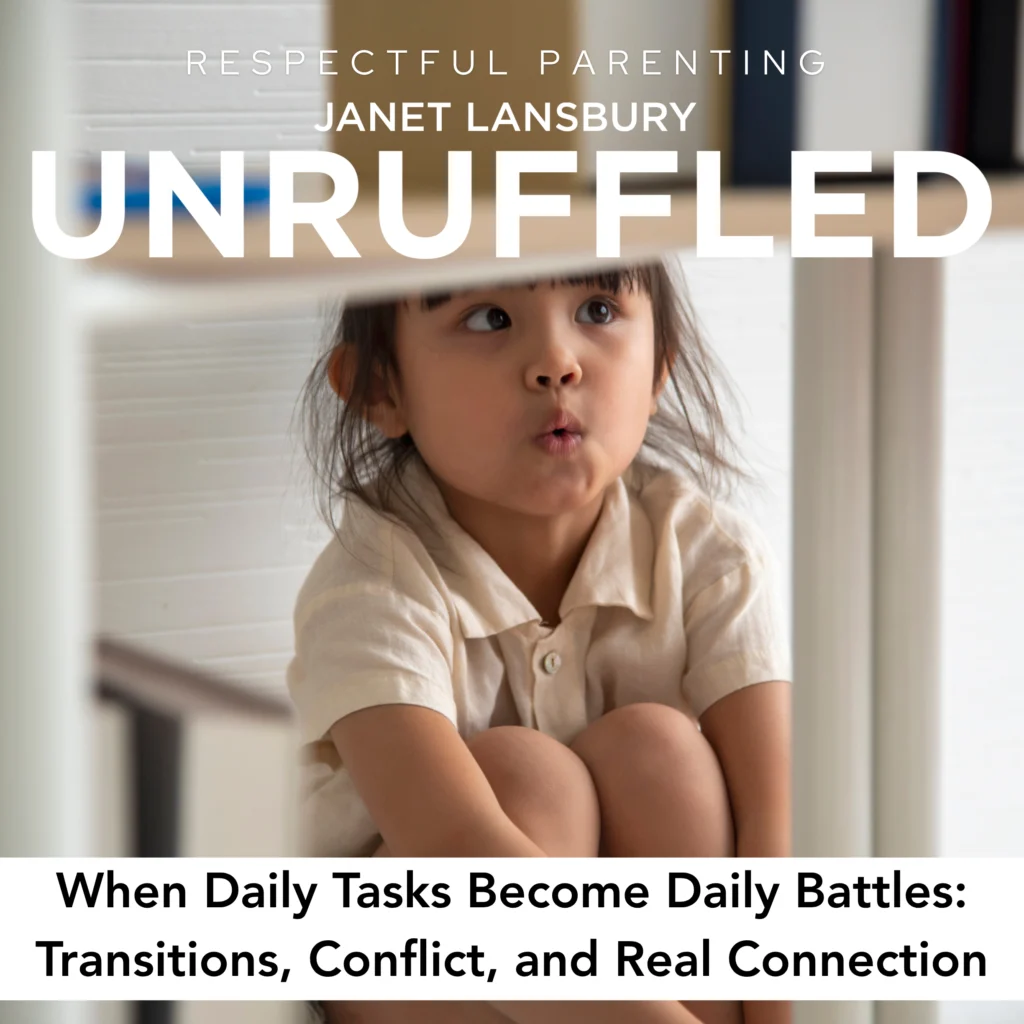
Renowned parenting author and podcast host Janet Lansbury has tackled one of the most common and exhausting challenges of early childhood: the daily battle over basic transitions and routine tasks. In a recent episode of her podcast, Unruffled, titled "When Daily Tasks Turn Into Daily Battles: Transitions, Conflict, and Real Connection," Lansbury responded to a deeply candid letter from a single working mother struggling to get her five-year-old daughter through elementary hygiene and dressing routines without hours of conflict.
The listener, a busy medical professional and single mother, described a daily cycle of resistance that has persisted since her daughter turned three. According to the mother, simple household transitions—such as getting dressed, brushing hair, taking a bath, or brushing teeth—regularly deteriorate into hour-long standoffs. Despite trying a myriad of standard parenting strategies, including timers, countdowns, reward charts, silly games like the "Get Dressed Race," and even punishments, the mother reported that both she and her daughter consistently end up overwhelmed, with the tasks frequently remaining unfinished.
The parent shared that while her daughter is a sweet, affectionate, and social child preparing to enter first grade this fall, the lack of consistency in their lives—exacerbated by a demanding work schedule, limited family support, and an unpredictable co-parenting arrangement—seems to compound the difficulty of daily transitions. The mother questioned whether she was inadvertently undermining her goals of connection and leadership by trying too hard to avoid conflict, or if she was missing a fundamental balance between empathy and boundary-setting.
In her response, Lansbury praised the mother for her profound self-reflection and emotional intelligence, noting that acknowledging the complexity of the dynamic is already more than half the battle. Lansbury addressed the root causes behind the resistance, explaining that children frequently manifest their deeper anxieties and internal transitions through minor daily friction points. For a young child navigating fluctuating home environments, separation, and the looming milestone of first grade, everyday tasks can serve as an outlet for accumulated stress and emotional overwhelm.
Lansbury pointed out that well-intentioned tactical interventions—such as reward charts, timers, and performative games—often act as outside fixes that distance parents from genuine, person-to-person connection. When parents rely on these strategies out of a desire to bypass discomfort or force cooperation, children can sense the underlying avoidance. Instead of fostering real trust, these tools can sometimes make both parent and child feel like they are performing rather than relating honestly to the immediate reality.
Reframing the concept of connection, Lansbury emphasized that conflict and connection are not mutually exclusive. Many adults, shaped by their own upbringing, carry an internal script that views negative emotions as something to be stuffed down, corrected, or avoided to maintain peace. Lansbury challenged this perspective, asserting that true parental leadership does not mean preventing a child from being upset. Rather, it means stepping into the conflict with calm confidence, welcoming the child’s messy feelings, and holding steady as a supportive guide.
Lansbury encouraged parents to lean into what she terms "confident momentum," allowing children to express their frustrations fully while still following through on necessary routines. She suggested that instead of leaning on gimmicks or trying to keep the atmosphere artificially cheerful, parents should practice transparent, authentic communication. Acknowledging that a task is tedious or that a transition is hard validates a child’s internal experience without compromising the adult’s responsibility to lead.
Throughout the discussion, Lansbury reassured listeners that children do not require perfection from their caregivers. Even when routines are disrupted or a task is abandoned for the day, the overarching dynamic—built on mutual respect, emotional safety, and a willingness to face discomfort together—is what ultimately builds lasting resilience. By reframing daily resistance not as a behavioral failure to be corrected, but as an opportunity for deep and authentic connection, Lansbury offered a comforting roadmap for parents navigating the turbulent waters of early childhood transitions.
Light has quietly emerged as one of the most transformative yet overlooked wellness tools available today. While modern society often treats lighting as a mere functional necessity for navigating dark rooms, emerging discussions among health advocates suggest that thoughtful engagement with natural and artificial light can profoundly impact overall well-being. From the physiological impacts of morning sunshine to the subtle stressors hidden within indoor bulbs, the way human beings interact with the light spectrum touches nearly every facet of daily health, including hormonal balance, circadian rhythms, and immune function.
For years, wellness advocates have explored the multifaceted dimensions of light exposure, ranging from natural sunlight and blue light management to targeted red light therapy. Bringing these insights together reveals a cohesive narrative about how intentional light exposure can optimize daily vitality. While healthy lighting is ultimately just one component of a holistic lifestyle that includes stress reduction, quality sleep, and proper hydration, experts argue that optimal light exposure acts as a powerful catalyst, amplifying the positive effects of these other foundational health habits.
At the core of this discussion is the profound role of natural sunlight. Overall sunlight functions as a powerful biological stimulus. When natural light hits human skin and eyes, it triggers the body to synthesize vitamin D, a crucial hormone that supports immune function, bone health, mood regulation, and hormonal equilibrium. Despite these well-documented physiological benefits, modern lifestyles have created a profound disconnect from the natural world. Experts note that a significant majority of the population spends the vast majority of time indoors, sheltered beneath flickering artificial illumination.
Statistical indicators paint a striking picture of modern indoor confinement. Studies and observations of daily habits indicate that children now spend an average of only four to seven minutes outside daily, with some preschool polls showing that young children go out to play just once a week or even less frequently. Adults show little improvement, with most reporting less than an hour of outdoor time per day, and nearly a fifth of the adult population spending less than fifteen minutes outside daily. Reversing this trend by prioritizing natural light exposure at various intervals throughout the day could yield substantial public health improvements, offering a compelling rationale for stepping outdoors.
Morning light, in particular, possesses unique physiological properties that set it apart from the light of midday or evening. Early daylight serves as an exceptional natural source of red and near-infrared wavelengths while playing an instrumental role in recalibrating the human circadian rhythm and stabilizing cortisol trajectories. Historically, individuals recovering from chronic fatigue or autoimmune challenges have utilized early morning routines, such as stepping outside at sunrise, to gently cue their biology. Even for those without specialized recovery goals, morning sunlight offers a reliable mechanism to support natural energy levels and foster systemic resilience.
This synchronization ties directly into the broader mechanics of circadian alignment and endocrine regulation. According to the Cleveland Clinic, the circadian rhythm operates as the body’s intrinsic twenty-four-hour biological clock, overseeing a complex network of physiological processes that include the sleep-wake cycle, hormonal secretion, digestive efficiency, and stress management. Light exposure serves as the primary Zeitgeber, or time-giver, that anchors this internal clock to the external environment.
Crucially, light also governs the secretion of cortisol, widely recognized as the body’s primary stress hormone. While cortisol is essential for daily function and alertness, problems arise when modern humans encounter artificial blue light at inappropriate hours alongside chronic psychological stressors. This nocturnal or mistimed blue light exposure can disrupt natural cortisol rhythms, leading to downstream complications in sleep quality and metabolic health. Understanding how to leverage natural light cycles helps restore harmony to both cortisol production and circadian timing.
The conversation surrounding light naturally extends to the realm of skin protection and sun exposure. Conventional dermatology has long championed rigorous sun avoidance and the ubiquitous application of sunscreen to mitigate the risk of skin damage and malignancies. However, alternative perspectives advocate for a more nuanced, balanced approach that acknowledges the human body’s evolutionary need for sunlight. While severe sunburns and cumulative cellular damage remain genuine health concerns, complete sun avoidance carries its own physiological costs, particularly regarding vitamin D deficiency and disrupted circadian signalling. Developing a balanced relationship with the sun involves recognizing when sunscreen is genuinely useful, selecting cleaner formulations, and embracing gradual, sensible sun exposure to harness the benefits of outdoor living without compromising skin health.
Beyond natural sunlight, targeted light technologies have gained significant traction, most notably red light therapy. While sunrise and sunset provide natural, ambient red light free of charge, modern engineered devices offer a more concentrated application. These technologies now span a diverse array of consumer products, ranging from specialized facial masks and therapeutic blankets to whole-body panels and even targeted dental care tools like red light toothbrushes designed to support gum health. Exploring these devices allows individuals to incorporate specific therapeutic wavelengths into their routines for targeted cellular support.
Indoor lighting, meanwhile, remains a critical yet frequently neglected piece of the puzzle. The artificial illumination inside modern homes and offices can inadvertently undermine wellness efforts if deployed without regard for biological impact. Standard LED lights often exhibit microscopic flicker frequencies that, while frequently imperceptible to the conscious human eye, can induce subtle stress on the nervous system and brain. Furthermore, exposure to high-intensity blue light from digital screens and overhead fixtures late into the evening signals the brain that it is still daytime, suppressing melatonin production and hindering the natural wind-down process necessary for restorative sleep. Implementing healthier indoor lighting swaps, minimizing late-night screen exposure, and utilizing warmer evening bulbs represent practical steps toward mitigating these disruptions.
Over the years, extensive discussions with medical professionals, researchers, and wellness practitioners have continued to illuminate the intricate relationship between light biology and human health. These explorations frequently delve into how optimizing light exposure influences cellular energy production within the mitochondria, regulates complex hormonal cascades, and supports overall vitality. As awareness grows around the profound impact of photons on human physiology, the simple act of stepping into the morning sun or rethinking indoor lighting choices stands out as an accessible and transformative strategy for modern living.
Play has long been viewed by adults as a welcome distraction or a simple way for children to burn off excess energy between academic lessons. However, an expanding body of interdisciplinary research confirms what many educators, developmental psychologists, and parents have instinctively known for generations: unstructured, child-led play is not a luxury, but rather a foundational pillar of healthy childhood development.
Over the past quarter-century, thousands of scientific studies have explored the profound impact of play on executive function, self-regulation, emotional intelligence, cognitive flexibility, creativity, and overall physical development. Across neurology, pediatrics, and education, the empirical findings have proven remarkably striking and consistent. Far from being a trivial pursuit, play serves as the primary vehicle through which children construct their understanding of the world, test their limits, and build the intricate neural networks required for lifelong success.
A Strong Start: Physical and Cognitive Development
Society has long recognized play’s obvious role in motor development. Whether children are climbing trees, building towering block structures, or balancing precariously on a log, they are actively strengthening both their fine and gross motor skills through movement-rich environments. These physical activities build muscle tone, spatial awareness, and physical coordination that support active lifestyles well into adulthood.
At the same time, neuroscience reveals that play literally builds the brain. A rapidly growing body of research demonstrates that core executive functions—such as working memory, cognitive flexibility, and impulse control—develop primarily through playful, hands-on activity. Higher-order cognitive capacities like problem-solving, creative thinking, advanced planning, and symbolic reasoning are nurtured most effectively through open-ended engagement where children dictate the rules, materials, and outcomes.
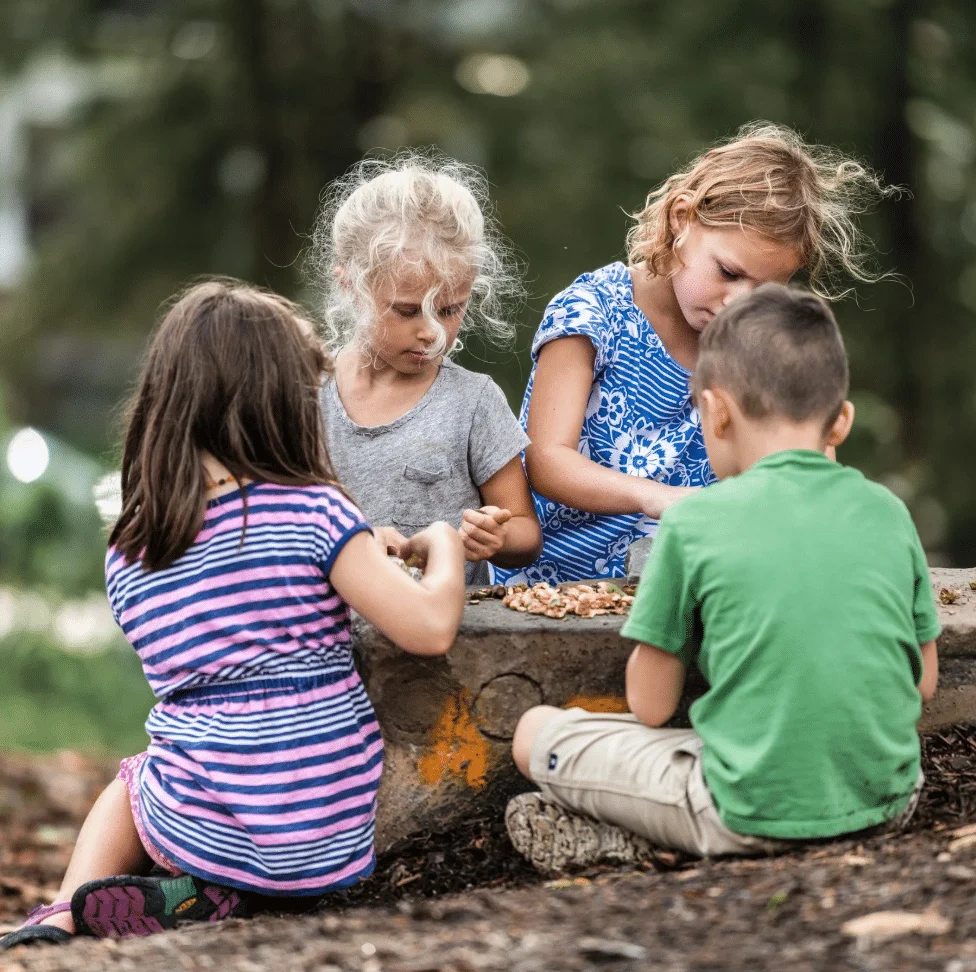
Recent scientific literature underscores these developmental pathways. For instance, a comprehensive systematic review published in 2025 in the Journal of Intelligence analyzed 25 empirical studies and concluded that loose parts play—which involves giving children open-ended, unstructured materials like wood scraps, stones, fabric, and boxes—significantly enhances problem-solving abilities, divergent thinking, and overall academic readiness.
Complementing these findings, a 2024 review published in Frontiers in Public Health confirmed that physical play remains a primary contributor to early motor coordination. Furthermore, the review highlighted that pretend play allows young children to safely explore the consequences of their actions, integrate complex new information, and simulate intricate real-life social scenarios. The researchers also noted that both structured and unstructured play within preschool environments significantly improved both motor and cognitive skills, with the most pronounced benefits occurring when early childhood programs incorporated more than 3,000 minutes of play into their curricula.
The Brain at Play
To gain a granular look at the brain’s inner workings during play, researchers have frequently turned to controlled animal models to observe neurological development. A prominent 2018 study published in ScienceDirect focusing on juvenile rats demonstrated that social play is biologically essential for the proper development of inhibitory synapses in the medial prefrontal cortex. This specific region of the brain is critical for complex decision-making and impulse control. Notably, when young rats were experimentally deprived of social play, they displayed lasting, permanent deficits in cognitive flexibility, underscoring the absolute necessity of early, unstructured social interaction for long-term neurological health.
These animal model findings are strongly echoed in human studies examining child development over time. A longitudinal Australian study published via ScienceDirect in 2022 followed a large cohort of children from the ages of two to seven. The researchers discovered that engaging in one to five hours of active, unstructured play per day strongly predicted significantly enhanced self-regulation capabilities later in life, regardless of the children’s earlier cognitive baselines or socioeconomic backgrounds.
Intrinsic Motivation and Lifelong Learning
Beyond immediate cognitive and social gains, play fosters a deeper psychological asset: intrinsic motivation. When children immerse themselves in play, they do so purely for its own sake—driven by the sheer joy of discovery, mastery, and creative expression, rather than by external rewards, grades, or praise from adults. This internal drive forms the psychological bedrock of lifelong learning and genuine curiosity.
Rigorous research consistently backs up this connection. The longitudinal study tracking free play and self-regulation demonstrates a clear, measurable link between early childhood free play and long-term personal autonomy and creative problem-solving capacities. Similarly, the Encyclopedia of Early Childhood Development, in its 2023 expert reports, confirms that exploratory play environments naturally nurture imagination, independence, and an enduring love of learning that protects against academic burnout.
Mental Health and Emotional Resilience
Among the most compelling and frequently overlooked benefits of contemporary play research are those concerning pediatric mental health and emotional well-being. Play acts as a natural emotional regulator, helping children process stress, build psychological resilience, and protect against the onset of anxiety and depression.
Recognizing these critical mental health implications, the American Academy of Pediatrics issued a landmark 2018 policy statement titled The Power of Play: A Pediatric Role in Enhancing Development. In the statement, pediatricians are explicitly urged to advocate for play during regular checkups with the same urgency and dedication they apply to foundational health pillars like adequate sleep and proper nutrition. The Academy emphasizes that imaginative and physical play directly reduces toxic stress responses and fosters robust emotional well-being.
Further reinforcing these guidelines, a 2020 study published through the National Library of Medicine documented measurable, statistically significant increases in children’s reported happiness, emotional stability, and overall playfulness following targeted play-based psychological and educational interventions.
The Bottom Line for Educators and Policymakers
When educational leaders, school boards, and government policymakers sit down to shape modern curricula, pedagogical methods, and school system policies, the scientific evidence points in a singular direction. Play is not an optional extra or a reward to be earned after "real" learning has taken place. It is the essential work of childhood and the proven developmental foundation of executive function, creative capacity, social competence, and emotional resilience.
Systematically reducing, marginalizing, or eliminating playtime from school schedules in the pursuit of narrow academic focus not only contradicts decades of interdisciplinary research, but it actively undermines the very cognitive and emotional capacities that children require to successfully navigate school and life.
Institutions like Waldorf education have long understood these principles, placing imaginative play firmly at the heart of their early childhood pedagogy. By intentionally integrating creative play, rich sensory experiences, and wide-ranging unstructured exploration into the daily schedule, Waldorf schools provide children with the deep developmental foundation necessary to grow into capable, resilient, and joyful learners.
Ultimately, by investing time, space, and institutional resources into environments, practices, and public policies that prioritize play, society invests in far more than just happier children. We are actively investing in healthier, more emotionally intelligent, highly capable, and adaptable adults for the future.
With you, we are creating a world that works for everyone. This core philosophy has guided the Centers for Spiritual Living (CSL) for nearly a century, establishing a global network of spiritual communities dedicated to personal transformation, inclusivity, and the practical application of universal spiritual principles. Founded in 1927 by Dr. Ernest Holmes—the very same year he launched the influential Science of Mind magazine—Centers for Spiritual Living has grown into a worldwide movement encompassing more than 300 spiritual communities. Designed to serve spiritual seekers and adventurers alike, these centers offer a welcoming environment for individuals exploring deeper philosophical and metaphysical questions.
Operating on principles that parallel the teachings found within Science of Mind magazine, CSL communities provide a unique approach to spiritual education. Their teachings draw upon what is often referred to as the golden thread of truth—the underlying spiritual commonalities found across all major faith traditions—combined with foundational New Thought principles. This synthesis is specifically designed to promote profound personal growth, emotional healing, and a deeper understanding of the self and the divine. Through a wide variety of services, classes, and community gatherings, these spiritual hubs strive to create an atmosphere where individuals are embraced, loved, and accepted exactly as they are, without judgment or dogma.
To help individuals and study groups better understand and share their mission, CSL provides comprehensive informational resources. Those interested in learning more about the organization can access detailed overviews that outline the history, philosophy, and community structure of the movement. For leaders, practitioners, and active members, print-ready PDFs of these informational overviews are available for download directly through digital resource archives. These materials are formatted for easy printing and distribution, making them ideal resources for local centers, study groups, workshops, and community outreach programs. By downloading the compressed zip folder containing all four summaries, local leaders are equipped with standardized tools to introduce newcomers to the core tenets of the Centers for Spiritual Living.
Everyone is included on the path to God. This uncompromising stance on inclusivity forms the bedrock of the organization’s overarching purpose and vision. The stated purpose of the Centers for Spiritual Living is to awaken humanity to its inherent spiritual magnificence, reminding individuals of their divine nature and potential. Looking toward the future, the organization’s grand vision remains focused on creating a world that works for everyone—a society rooted in cooperation, mutual respect, and spiritual maturity. To bridge the gap between this lofty vision and everyday reality, the organization’s mission is centered on providing practical spiritual tools designed to facilitate both personal evolution and broader global transformation.
For individuals seeking a warm, dynamic, and loving community, CSL encourages people to explore the various locations operating worldwide. Whether someone is newly awakening to spiritual concepts or has spent decades on a metaphysical path, local centers offer a sanctuary for connection, study, and shared practice. Those interested in experiencing a service or connecting with fellow seekers can find a center near them by visiting the official CSL online mapping directory. Through these local chapters, participants are invited to engage deeply with teachings that empower them to claim the authentic, fulfilling life their soul is seeking.
For families navigating the Classical Conversations curriculum, the arrival of Cycle 3 marks an exciting shift toward mastering the geography, history, and physical landscape of the United States. While the core memory work provides students with a foundational mental map of the nation, educators and parents are increasingly turning to creative, multi-sensory activities to help those foundational memory pegs take deeper root. By pairing weekly recitations with immersive projects, families are transforming abstract memorization into tangible, lasting knowledge.
The curriculum is naturally divided into two distinct seasonal phases. The fall semester is dedicated to memorizing all fifty states and their respective capitals, while the spring semester focuses on the country’s diverse physical features, ranging from sweeping mountain ranges and river systems to historic trails, deserts, and prominent landmarks. To bridge the gap between rote memorization and true comprehension, parents are integrating everyday experiences, artistic projects, and localized explorations into their homeschooling routines.
During the fall, the daily rhythm of learning often begins with traditional map drills. Parents point to blackline maps, prompting students to identify specific capitals and state locations with precision. While this simple, rapid-fire recitation remains a cornerstone of the Foundations program, families are expanding the exercise through imaginative projects such as the creation of capital road trip journals. In these custom binders or passport booklets, students record vital state data, including state birds, nicknames, admission years, and historical facts, alongside hand-drawn outlines or coloring pages. This multi-generational project accommodates learners of various ages, allowing younger siblings to engage visually while older students handle more rigorous research.
Another popular method for reinforcing state recognition involves observational games during routine family errands. By tracking state abbreviations on license plates during trips to the grocery store or highway commutes, students turn ordinary travel into an active geography hunt. Similarly, families are bringing culinary traditions into the classroom by preparing regional dishes tied to specific state capitals, connecting historical memory work directly to cultural heritage.
Musical traditions also offer a rich avenue for geographic exploration. Educators note that American geography possesses a distinct soundtrack, varying widely by region. From Appalachian bluegrass and Deep South blues to New England classical hymnody, regional musical styles provide an auditory layer to spatial learning. Special attention is often given to states like Alaska and Hawaii, whose indigenous traditions and historical paths to the Union predate continental settlement, offering students a broader perspective on American culture. Additional creative touches, such as tracking state flags and their underlying symbols, further deepen the connection between civics and geography.
As the academic year transitions into spring, the focus shifts dramatically toward the physical features of the continent. Across a demanding twelve-week span, students encounter a vast array of geographic terms, including mountain ranges, the Great Lakes, major river systems, historic overland trails, engineering canals, Native American regions, and prominent natural landmarks.
To internalize the topography of the country, students frequently engage in tactile sculpting projects. Molding mountain ranges out of salt dough, clay, or even shaving cream provides a critical spatial memory peg. Educators point out that these hands-on cartography exercises serve as vital preparation for advanced academic programs, such as Challenge A, where students eventually master freehand drawing of the United States and the world.
Water systems and historical migration routes receive similar treatment. When studying historic overland trails and nineteenth-century canals, families frequently trace paths across floor maps or construct working models of canal locks using basic materials to understand how engineers altered water levels to move goods and settlers westward. Meanwhile, lessons on Native American regions and desert ecosystems encourage students to examine how geography directly influences human survival, diet, and culture, often utilizing primary sources and authentic historical context.
For many participants, the concepts learned at the kitchen table find their ultimate expression in the field. Families frequently align weekend getaways and summer vacations with their weekly curriculum, visiting national parks, historic sites, and major metropolitan centers tied directly to their studies. Programs like the National Park Service’s Junior Ranger initiative often provide structured educational activities during these visits, turning a simple family hike into a memorable milestone.
Ultimately, the comprehensive approach to Cycle 3 geography is designed to cultivate a lasting appreciation for the nation’s land and heritage. Through song, art, culinary exploration, and travel, students move beyond simple recitation, developing a deep, working familiarity with the geography of the United States that persists long after the school year concludes.
In an era defined by constant connectivity and urban noise, finding moments of genuine mental stillness has become both a luxury and a necessity. Contemporary wellness discussions increasingly focus on the physical environments we inhabit, exploring how the spaces around us either exacerbate everyday anxieties or provide a vital sanctuary for the nervous system. Emerging insights from environmental psychology and stress research suggest that the secret to a deeper, more sustainable mindfulness practice may lie not just in mental discipline, but in the deliberate curation of our physical surroundings.
The restorative qualities of the natural world have long been championed by wellness advocates, but scientific inquiry is rapidly catching up to these intuitive observations. Spending time in green spaces has been consistently linked by researchers to lower physiological markers of stress, including reduced levels of cortisol circulating in the bloodstream. One leading explanation for this phenomenon is known as attention restoration theory. This psychological framework posits that natural settings provide a unique environment where human directed attention—which is heavily taxed by modern work, screens, and urban stimuli—can gently rest and recover without demanding cognitive effort.
When individuals take their practice outdoors, they tap into a sensory landscape defined by fresh air, the open sky, and organic sounds that naturally soothe the nervous system. Backyard gardens offer an accessible entry point for many practitioners, transforming a patch of cultivated greenery and a comfortable seat into a private retreat. For those without private yards, local parks and beaches serve a similar function, working exceptionally well when situated near natural bodies of water. The rhythmic, ambient sound of flowing streams or ocean waves can act as a powerful anchor for the human mind, easing racing thoughts and fostering a deep sense of groundness.
Even urban dwellers with limited access to sprawling landscapes can benefit from a change of scenery. A modest apartment balcony or a quiet patch of grass in a city park provides a sufficient shift in environment to signal the nervous system that it is time to unwind. For practitioners who find traditional seated meditation challenging or restless, alternative modalities such as walking meditation offer a practical bridge. By anchoring focus to the deliberate rhythm of each step, the wandering mind is given a steady, physical point of contact to settle upon, making mindfulness accessible even in motion.
Beyond stepping into the great outdoors, optimizing an indoor meditation space involves a series of small, intentional adjustments that can profoundly impact the depth and consistency of a daily practice. Experts in habit formation and mindfulness emphasize that environmental cues play a vital role in psychological conditioning. Establishing a designated, regular spot in the home—complete with a cushion, a blanket, and any other items routinely used during sessions—creates a powerful psychological trigger. When a practitioner returns to the exact same physical location day after day, ideally around the same hour, the process of settling into a meditative state begins to feel increasingly automatic.
Creating a sense of physical and visual privacy within that designated space is another critical factor. Facing away from domestic clutter toward a neutral surface, such as a blank wall or an unobstructed window, can immediately reduce visual distractions. In shared living arrangements where private rooms are scarce, improvised boundaries such as a folding screen or a simple blanket draped over the back of a chair can successfully carve out a distinct corner. Even with closed eyes, the subconscious feeling of being tucked away in a secure, private enclave helps the body let go of hyper-vigilance and settle more deeply into relaxation.
Acoustic management is equally essential for maintaining focus amidst the unpredictability of daily life. Unwanted background noises, such as passing traffic or a neighbor’s television, can easily disrupt concentration. Introducing steady, controlled auditory input—such as soothing natural soundscapes or ambient instrumental tracks—can effectively mask intrusive interruptions. Furthermore, the tempo of auditory content can actively influence physiological states. Researchers note that listening to audio tracks paced between sixty and eighty beats per minute has been linked to a natural slowing of the heart rate. For daytime focus, minimalist ambient tracks or structured guided meditations often provide the necessary framework to keep the mind gently engaged rather than drifting into sleep.
Minimizing technological and interpersonal distractions further safeguards the integrity of a mindfulness session. Simple logistical choices, such as placing a mobile device on "Do Not Disturb" mode and communicating availability boundaries to household members ahead of time, can prevent sudden disruptions. Selecting hours when family members or roommates are occupied or asleep allows practitioners to enter their sessions with greater peace of mind.
Finally, addressing physical comfort through proper posture is vital for sustaining a practice over the long term. Physical strain in the lower back or knees can quickly derail concentration, turning a meditation session into an exercise in endurance. Utilizing supportive props, such as a dedicated meditation cushion or a folded blanket, helps elevate the hips slightly above the knees, relieving pressure on the spine and allowing the body to remain upright with minimal effort. Practicing near a structural wall or keeping a supportive chair nearby provides additional stability for those moments when prolonged upright sitting becomes fatiguing.
Environmental temperature also plays a subtle yet significant role in maintaining alertness. Keeping the practice space on the cooler side prevents the physical sluggishness and lethargy that an overly warm room can inadvertently induce, ensuring that the mind remains clear, balanced, and receptive throughout the duration of the session.
In the immediate wake of the 2017 presidential inauguration, as a palpable tension settled over the political and cultural landscape of the United States, two friends sat down together for a quiet lunch. Before either of them could take a bite of their meal, the conversation naturally turned to the anxieties weighing heavily on their minds. They unpacked their deepest concerns regarding the shifting political climate, the rising tide of polarization, and the increasingly harsh public rhetoric targeting immigrants, marginalized groups, and people of color.
At the time, Roman Williams was a professor of sociology teaching alongside the Rev. Michael Bos at the Duke Divinity School. Sitting across from one another, they grappled with a fundamental question that many educators, faith leaders, and concerned citizens were asking themselves during that turbulent period.
“We asked, ‘What are a minister and a professor of sociology supposed to do at this moment?’” Williams recalled.
They recognized the limitations of their positions. They were not wealthy philanthropists, nor were they household names with the platform to command a national audience overnight. Yet, they shared an intense conviction that inaction was not an option.
“We emptied the lint out of our pockets,” Williams said. “We were not famous people or rich people, but we wanted to bring what we had to bear on this problem.”
Before their lunch plates had even been cleared, the outlines of a concrete plan began to take shape. They decided to leverage a tool that nearly every modern citizen carries in their pocket—the smartphone camera—to foster genuine relationships and build cross-cultural understanding between individuals who might otherwise never cross paths, let alone engage in meaningful dialogue.
They named their nascent initiative “Interfaith Photovoice.” The title was a deliberate nod to Photovoice, a well-established sociological research methodology developed in the 1990s. Traditional Photovoice invites participants to capture and share personal photographs as a means of granting them a voice and agency within their communities. Interfaith Photovoice adapts this core concept, deploying it specifically as a bridge between individuals hailing from diverse religious traditions, cultural backgrounds, and worldview perspectives.
“It’s the idea that contact across differences can create positive impacts on people,” Williams explained. “It changes them. They begin to ask questions of genuine curiosity; to see through the lens of other people and imagine ways their community might need to change so everyone can flourish, everyone can experience belonging.”
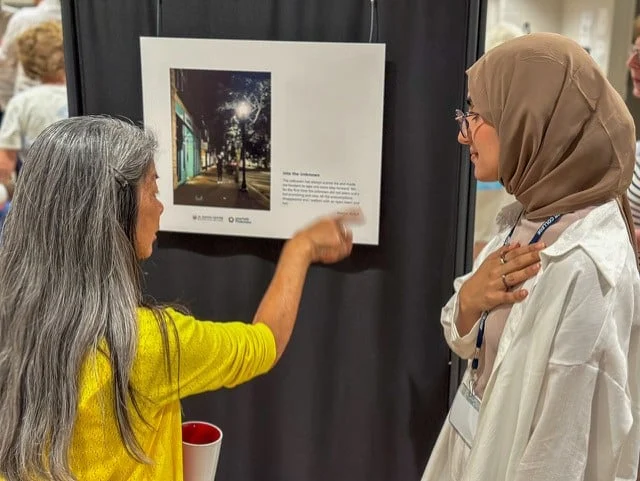
Years after that initial brainstorming session over lunch, the method has grown from a localized experiment into a dynamic, cross-border initiative. Recently, Williams demonstrated the power of Interfaith Photovoice at the Interfaith Leadership Summit in Chicago, an annual gathering organized by Interfaith America that brings together student leaders and student affairs professionals from colleges and universities across the United States.
During the demonstration, Williams asked each participant to share a personal photograph that exemplified their individual interpretation of hope. The instructions were simple yet profound: attendees showed their chosen images to their tablemates, articulating the personal meaning behind the snapshot. Once everyone at the table had shared their story, the floor opened up for organic questions, allowing participants to explore the deeper narratives hidden within each frame.
“A sense of unity”
Among those participating in the Chicago summit was Cameron Town, a 19-year-old Christian student attending the University of Northwestern, St. Paul. Town brought forward a striking snapshot capturing himself and his best friend mid-leap into the bracing, frigid waters of Lake Superior on a day weather-wise better suited for polar bears than recreational swimming.
“I chose this photo because all five friends I was with that day are some of my longest, most cherished friends, and yet many of us disagree on many levels about really important issues,” Town explained to the two women students with whom he was paired for the exercise. “At the end of the day—none of it changes the fact of our love and kinship for one another.”
When the session concluded, Town reflected on the emotional resonance of the exercise, noting that he felt “a surprising sense of unity” with his two partners, both of whom came from entirely different religious backgrounds.
“That sense of togetherness—despite being strangers—really left an impact on me,” he said.
That capacity to bridge profound divides has fueled the rapid expansion of Interfaith Photovoice since its formal launch in 2018. Backed by an initial grant, the earliest pilot sessions brought together Muslims and Christians in Richmond, Virginia; New Brunswick, Nova Scotia; and Grand Rapids, Michigan, where Williams was teaching as a professor at Calvin College.
“We learned a ton about the method, a ton about the experience,” Williams said. “By 2019, we realized we were on to something.”
When the COVID-19 pandemic disrupted in-person gatherings globally, the initiative adapted by migrating online. This pivot paradoxically allowed Williams to expand the scope of Interfaith Photovoice far beyond its initial Christian-Muslim framework, incorporating individuals from an extensive array of faiths, secular perspectives, and cultural backgrounds.
Today, the organization facilitates specialized workshops, intensive retreats, and collaborative team-building exercises for colleges, universities, corporate entities, and nonprofit organizations throughout the United States and Canada. Sessions have even reached as far internationally as Oman.
The photographs brought to the table by participants are wonderfully diverse, running the gamut from the lighthearted and goofy to the deeply reflective and majestic. In a single workshop, one might see a group of college friends posing alongside a Teenage Mutant Ninja Turtle costumed performer, followed immediately by a brilliant sunset casting golden light over an expansive forest, a quiet family dinner, or a beloved, lop-eared pet dog.
During the Chicago demonstration, Williams projected a seemingly mundane image of an Amazon delivery truck parked outside a suburban home, challenging the room to find deeper meaning within it. The single photograph yielded a dozen distinct interpretations from the audience. One participant saw the image as a symbol of happy anticipation, representing a long-awaited package and the excitement of gift-giving. Another found reassurance in a small “green vehicle” sticker affixed to the truck’s body, sparking a conversation about corporate sustainability. A third pointed out a striking reflection of sunlight glinting off the vehicle’s metallic rear bumper.
Crucially, darker and more complex social issues were not swept under the rug. Multiple participants immediately voiced concerns regarding the driver’s demanding working conditions, the systemic pressures of the gig economy, and the broader socioeconomic plight of low-wage workers.
This ability to transform everyday imagery into a canvas for nuanced, empathetic discourse is, according to organizers, the secret sauce of Interfaith Photovoice—harnessing the absolute ubiquity of personal smartphone photography and pairing it with an innate human desire to imbue personal experiences with shared meaning.
“An invitation to wonder”
“Interfaith Photovoice is an invitation to wonder,” said Kyle Kooyers, director of the Kaufman Interfaith Institute in Grand Rapids, Michigan. “It brings us into a place of inquisitiveness about the person across from us and that really does bring us into a profound place of human connections.”
In 2024, institutional support from a Kaufman Institute grant helped establish a semester-long Interfaith Photovoice workshop series at Grand Valley State University, a comprehensive public institution operating across multiple campuses in the Grand Rapids area. As part of a core exercise, a cohort of nine students representing Christian, Muslim, Hindu, Jewish, and secular backgrounds were tasked with capturing photographs that honestly expressed what it felt like to navigate their spiritual and ideological lives within the university environment.
“We got into questions of where they were experiencing barriers to expressing their faith or feeling like they belonged on campus or in their communities,” said Liz English, campus program manager for the university’s interfaith center. “Those were some wonderful sessions.”
A parallel, semester-long Interfaith Photovoice program is currently active at the University of Maryland, Baltimore County. Much like the initiatives in Michigan and elsewhere, these structured programs culminate in public photography exhibitions. These showcases provide a vital platform where student creators can interact directly with the broader campus community, discussing their submitted photographs and the deeply personal stories that anchor them.
For Williams and his colleagues, the ultimate goal of these exhibitions is to deepen and enrich the practice of pluralism on college campuses in ways that traditional academic lectures, assigned textbooks, or the well-worn idiom about “walking a mile in another’s shoes” simply cannot achieve on their own.
“These days we need to learn to walk a mile in one another’s views so we can be prepared to live together in a community called university life,” Williams said. “That visual dimension opens a different side of us, and it allows us to think creatively and compassionately about ourselves and others so we aren’t just sitting in a circle and singing ‘Kumbaya.’”
Embarking on an adoption journey begins with a series of foundational decisions that will shape the entire experience for prospective parents, the child, and the broader family network. While some families choose to navigate this intricate landscape through the guidance of specialized attorneys or independent adoption consultants, the vast majority of prospective adoptive parents work directly through a licensed, child-placing agency. Selecting the right agency is arguably the most critical early milestone in the process, serving as the operational and emotional bridge between a family’s aspirations and the realization of bringing a child home.
To help prospective parents navigate this complex selection process, adoption advocates and family support organizations have outlined several key benchmarks. These considerations range from legal credentials and financial transparency to educational resources and ongoing post-adoption support systems, ensuring that families are thoroughly prepared for every phase of the journey.
Look for Hague Accreditation
Among the first and most critical criteria for prospective parents is verifying whether an agency holds Hague Accreditation. This formal accreditation serves as an essential benchmark, guaranteeing that the agency meets rigorous international and federal standards as established by the Hague Convention on Protection of Children and Co-operation in Respect of Intercountry Adoption. While the Hague Convention primarily governs international placements, looking for organizations that adhere to these elevated operational standards often provides an additional layer of reliability, ethical oversight, and accountability for families.
For those beginning their search, navigating the sheer volume of available organizations can be overwhelming. Experts recommend starting the exploration process by utilizing established directories that allow users to filter for accredited entities. Trusted resources such as the National Council for Adoption directory and the Christian Alliance for Orphans member directory offer comprehensive databases designed to help families identify licensed, reputable child-placing agencies that align with their specific criteria and values.
Choose an Agency That Is Transparent About the Process
Every adoption journey is inherently unique, shaped by the specific type of adoption, the country or state involved, and the individual circumstances of the child and birth family. However, a hallmark of a reputable and trustworthy agency is its ability to clearly explain each step of the process before prospective parents ever formally commit or sign a contract. Uncertainty can breed anxiety during an already emotional time, making upfront clarity a vital component of a healthy agency-client relationship.
Understanding the typical trajectory of a placement—from the initial application and rigorous home study phase to the waiting period, matching process, and finalization—allows families to mentally and emotionally prepare for what lies ahead. Comprehensive timelines, such as those provided by organizations like Christian Adoption Services, illustrate the step-by-step nature of domestic and international adoption journeys, helping parents visualize the road map from start to finish and demystifying the procedural milestones along the way.
Get a Clear Breakdown of Costs Upfront
Financial planning is an undeniable reality of the adoption process, and prospective parents must approach agency selection with a clear understanding of the economic commitments involved. A professional, ethical agency should be fully transparent regarding its fee structure, providing a complete and itemized list of costs upfront. This transparency should encompass all financial obligations, including home study fees, administrative costs, dossier preparation, in-country or domestic travel expenses, and final placement fees.
Having a comprehensive financial picture from the very beginning empowers families to plan accordingly, explore fundraising avenues, and secure necessary financial resources without facing unexpected or hidden expenses mid-journey. Financial predictability helps mitigate stress, allowing parents to focus their energy on the emotional and relational preparations required for welcoming a child into their home.
Prioritize Education Resources
Adoption is a lifelong journey of learning, growth, and adaptation. Consequently, education is a vital aspect of the adoption process, particularly during the critical pre-placement phase before a child arrives. Prospective parents must look for agencies that view education not merely as a box to check, but as an ongoing commitment to family well-being.
An agency that robustly invests in comprehensive education opportunities—spanning both pre- and post-adoption phases—serves as an invaluable resource for the entire family. These educational offerings often cover critical topics such as trauma-informed parenting, attachment, transracial adoption, and navigating open adoption dynamics. Specialized learning experiences, such as those offered through online platforms by Lifeline Children’s Services, exemplify the type of thorough educational support that equips families to handle complex challenges and fosters long-term family flourishing.
Look for Thorough Agency Support
The responsibilities of a quality adoption agency extend far beyond matching a child with a family. Strong, comprehensive agency support systems are essential for safeguarding the well-being of every party involved in the adoption triad: the adoptive parents, the child, and the child’s birth parents. Navigating the emotional complexities of adoption requires compassionate, professional guidance at every turn.
Prospective parents should inquire about the level of ongoing support an agency provides after the placement has occurred and even after the adoption has been legally finalized. Specialized programs and resources, such as Nightlight Christian Adoptions’ Post Adoption Connection Center, illustrate the type of continued support networks that help families and birth parents navigate the lifelong nuances of the adoption journey, ensuring that help is available long after the initial paperwork is signed.
Adoption Agency and Show Hope Eligibility
For many families pursuing adoption, financial assistance organizations play a vital role in bridging the gap between estimated costs and available resources. Organizations such as Show Hope offer Adoption Aid grants designed to ease the financial burdens associated with the adoption process. However, securing such grants requires careful adherence to specific eligibility guidelines tied directly to the chosen agency.
To be eligible to apply for a Show Hope Adoption Aid grant, prospective parents must be working with a licensed, child-placing agency that operates as a recognized 501(c)(3) nonprofit organization. Additionally, families must be mindful of timing and agency arrangements. For instance, individuals who find themselves on the waiting list with multiple agencies simultaneously, or those working in tandem with an independent adoption consultant, must refrain from submitting a grant application until they have been officially matched with a child through a licensed placing agency.
Choosing an adoption agency is widely recognized as one of the most significant initial steps on the adoption journey. Organizations like Show Hope remain committed to walking alongside prospective parents through every phase of the process, providing guidance, resources, and support. Families seeking further information regarding grant opportunities and organizational support can find comprehensive details by visiting the official Show Hope platform.
Five years ago, writer, podcaster, and homeschooling veteran Jamie C. Martin found herself standing at an unexpected precipice. While the global pandemic upended daily routines worldwide in 2020, her personal life entered an entirely separate crucible of reckoning. What began as a routine decision by her husband to enter therapy ultimately catalyzed a profound, tumultuous, and ultimately redemptive transformation in Martin’s own life, forever altering her worldview, her parenting, and her relationship with the demanding world of education and writing.
Martin, co-founder of the educational resource platform Simple Homeschool and founder of the Introverted Moms community, recently shared her deeply personal journey in a vulnerable essay. For years, she balanced the rigorous demands of raising three teenagers—including two children with special needs—while maintaining a prolific career writing books, managing online communities, and keeping up appearances. Yet beneath a composed exterior, an internal crisis was quietly brewing.
The Catalyst for Change
The journey inward began innocently enough during the early months of COVID-19 lockdowns. When Martin’s husband announced he was starting therapy—a move she initially likened to hearing someone casually declare they were getting plastic surgery, given his traditional British "keep calm and carry on" upbringing—she was completely taken aback.
After observing his therapeutic process for six months, Martin decided to seek counseling herself. She initially envisioned it as a practical tool to help her better manage the day-to-day stress of homeschooling three adolescents amidst a global health crisis. Instead, the decision cracked open a lifetime of deeply buried emotional weights.
Early in her sessions, her therapist asked her to recount one of her earliest childhood memories. Martin shared an anecdote that she had always viewed as typical and mildly humorous. Her therapist, however, paused and offered a different perspective, noting that the thought patterns and behaviors described were unusual for a typical preschooler. The observation pointed toward deeper emotional layers that required the expertise of a trauma specialist.
Around the same time, while selecting reading material for her Introverted Moms book club community, Martin chose Holley Gerth’s book The Powerful Purpose of Introverts. Within its pages, she encountered a concept she had never previously considered: "high functioning depression." As she read through the diagnostic characteristics, she was struck by how intensely she resonated with the majority of them.
Confronting High-Functioning Depression
The realization presented a jarring contradiction. By all external metrics, Martin was thriving. She woke up early every morning, successfully homeschooled her children, authored books, maintained blogs, and led a thriving online network of women.
Internally, however, the reality was starkly different. She frequently experienced profound physical lows where her entire body ached, sleep eluded her, and she battled pervasive feelings of unworthiness and internal despair. Yet, driven by sheer resilience, she continued to hold her life together on the outside. Looking back, Martin credits grace for bringing these hidden truths to the surface, refusing to let them stay buried any longer.
The ensuing five years unfolded as what she describes as a grief-filled arc of death and resurrection. The internal defense mechanisms that had protected her for decades finally demanded to be heard. Navigating this phase meant honoring long-suppressed pain without any immediate guarantee of resolution or relief.
Balancing Public Leadership with Private Healing
Even as she unraveled internally, Martin maintained her public commitments. She completed her final years of homeschooling, continued writing, managed her team at Simple Homeschool, and engaged regularly with her online community. However, the emotional toll of carrying out creative work while undergoing deep psychological reconstruction was immense.
At the conclusion of one particularly grueling year, Martin admitted to a friend that everything she created seemed to wound her. The breaking point arrived when she was forced to pause a major book project, an experience that culminated in tears during a Zoom call with her literary agent. It felt as though everything she thought she knew was falling apart—because, in many ways, it was.
Though her platform was built on emotional authenticity, she initially struggled to find the words to explain her absence or internal turmoil. She captured her experiences in private journals, relying on them as a lifeline to rewrite her personal story, even if those pages were meant only for her eyes.
A Transformation Realized
Very gradually, as she processed and released repressed negative emotions, the internal climate began to shift. The transformation was so thorough that longtime acquaintances frequently noted her physical appearance and demeanor had completely changed. Today, she radiates an inner confidence she once believed was reserved exclusively for others.
While her pain has not vanished entirely, Martin’s relationship to it has evolved. She understands its origins, recognizes that it was never her fault, and—crucially—knows that she is finally safe. Sadness no longer threatens to swallow her whole; instead, she can experience grief while effectively modeling emotional regulation for her children.
Five years after first encountering Holley Gerth’s checklist for high-functioning depression, Martin recently revisited the criteria and found that she no longer resonated with a single item. On the eve of her 50th birthday, she commemorated this profound personal metamorphosis with a tattoo, sealing a chapter defined by courage rather than conventional survival.
By sharing her story, Martin hopes to offer a quiet solidarity to other parents who find themselves quietly navigating trauma while tending to the daily demands of family life and education. For those treading water, caught in the heavy, unglamorous phase of healing without a clear horizon, her message is simple: endurance is not failure. It is courage, and it is survival.
The unpredictable nature of profound loss is a reality that many bereaved parents come to understand all too well, discovering that healing is rarely a linear path of steady improvement. For Kay Barclay, a mother and grandmother from Texas who began writing to honor her daughter, Jennifer, following her passing in 2019, grief has proven to be an experience without a predictable pattern. In reflections shared through The Compassionate Friends, Barclay explores the complex emotional landscape of surviving the death of a child, detailing how the heavy fog of sorrow eventually learns to share space with unexpected moments of peace and joy.
Reflecting on the months immediately following Jennifer’s death, Barclay describes a period defined by mechanical survival and the quiet burden of simply going through the motions. During that initial phase, daily existence required conscious effort just to maintain basic functions—talking when necessary, showing up where life demanded, and constantly reminding herself to breathe and put one foot in front of the other. In those days, she notes, merely managing the physical weight of existence was often all she could summon the energy to do.
Yet, as time progressed without a strict calendar or defined schedule, a shift occurred. Without a precise moment she can definitively pinpoint, Barclay realized she was beginning to experience something other than numbness. It felt like a quiet and entirely unexpected sense of peace, akin to a physical release after holding one’s breath for several years. In that emerging state of feeling "okay"—not fully healed or arbitrarily happy, but simply stable—she discovered she could hold two opposing realities in her mind at the same time: the acute, enduring awareness of Jennifer’s absence alongside a profound sense of gratitude for her daughter’s life and her beautiful children.
This realization challenged Barclay’s earlier assumptions about the emotional architecture of bereavement. For a long time, she wrestled with the common fear that experiencing joy again would somehow constitute a betrayal of Jennifer’s memory. Many parents navigating similar losses grapple with the misconception that sadness and joy must take turns, or that the return of happiness implies a diminishing of love for the person who has passed away. However, that moment of unexpected peace brought a different perspective, reframing joy not as a form of moving on, but as a way of moving forward. It represented a realization that love can continue to exist and flourish inside a broken heart without being canceled out by sorrow.
The emotional weather of grief, however, remains changeable. Barclay acknowledges that the fog still returns. There are days when the absence of her daughter is felt with an unbearable ache, reminding her that grief is not something that is ever completely cured or left behind. Yet, those difficult intervals are now balanced by moments where Jennifer’s presence is felt tangibly—whether in the quiet beauty of a sunrise or in the sound of her grandchildren’s laughter. In those instances, she encounters the enduring gift of Jennifer’s life, a gift that continually invites her to remain present in her own.
This evolving perspective has fundamentally transformed Barclay’s understanding of healing. Rather than viewing recovery as a process of "getting over" a devastating loss, she now sees it as the ongoing practice of learning how to carry it. It involves navigating daily life with both love and sorrow intertwined, and granting permission for joy to enter without demanding that the underlying pain be erased or ignored. By sharing these insights, she hopes to offer a sense of validation and companionship to others walking similar paths.
As she continues to navigate this journey one day at a time, acknowledging that some days bring stability while others bring struggle, Barclay remains grounded in a comforting truth. Allowing herself to experience joy, even in the smallest and most fleeting moments, is not an act of forgetting Jennifer. Instead, it is a way of honoring her memory and carrying her forward into the future.