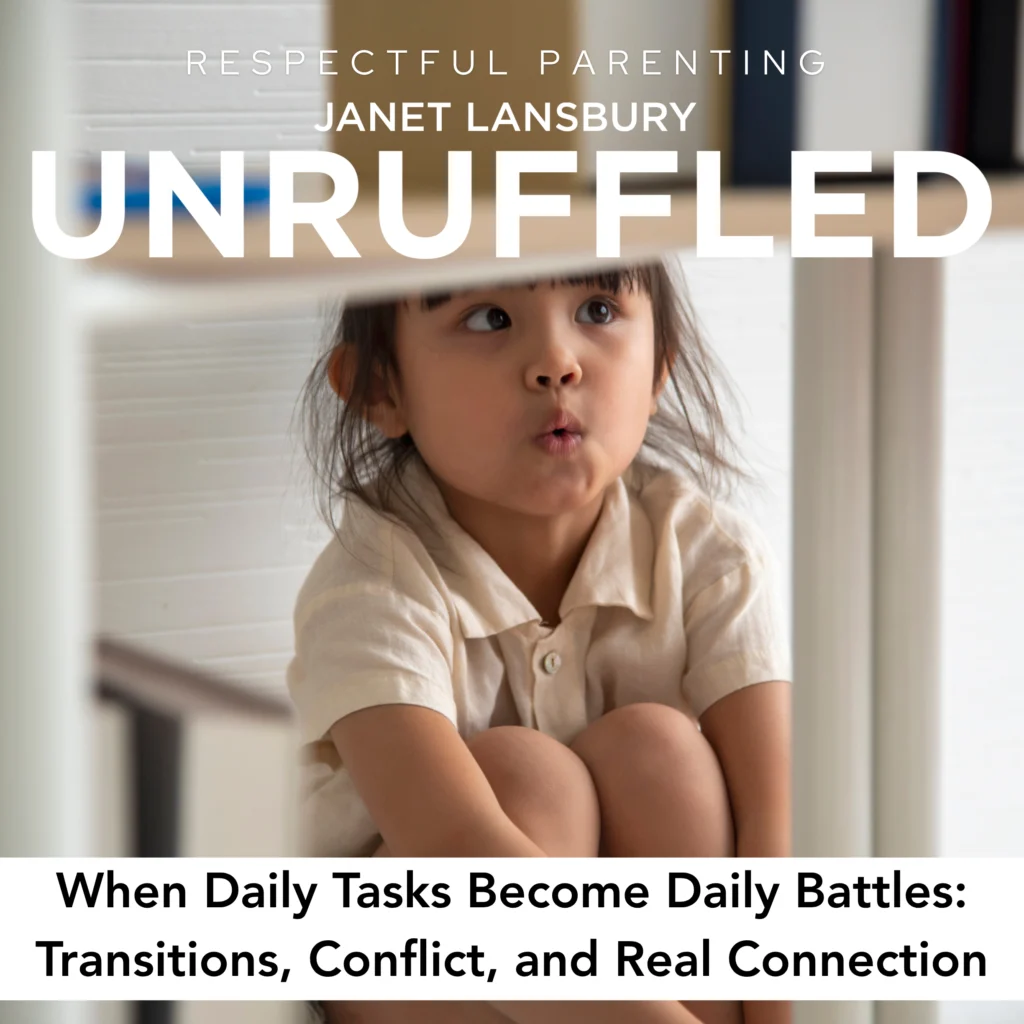
Renowned parenting author and podcast host Janet Lansbury has tackled one of the most common and exhausting challenges of early childhood: the daily battle over basic transitions and routine tasks. In a recent episode of her podcast, Unruffled, titled "When Daily Tasks Turn Into Daily Battles: Transitions, Conflict, and Real Connection," Lansbury responded to a deeply candid letter from a single working mother struggling to get her five-year-old daughter through elementary hygiene and dressing routines without hours of conflict.
The listener, a busy medical professional and single mother, described a daily cycle of resistance that has persisted since her daughter turned three. According to the mother, simple household transitions—such as getting dressed, brushing hair, taking a bath, or brushing teeth—regularly deteriorate into hour-long standoffs. Despite trying a myriad of standard parenting strategies, including timers, countdowns, reward charts, silly games like the "Get Dressed Race," and even punishments, the mother reported that both she and her daughter consistently end up overwhelmed, with the tasks frequently remaining unfinished.
The parent shared that while her daughter is a sweet, affectionate, and social child preparing to enter first grade this fall, the lack of consistency in their lives—exacerbated by a demanding work schedule, limited family support, and an unpredictable co-parenting arrangement—seems to compound the difficulty of daily transitions. The mother questioned whether she was inadvertently undermining her goals of connection and leadership by trying too hard to avoid conflict, or if she was missing a fundamental balance between empathy and boundary-setting.
In her response, Lansbury praised the mother for her profound self-reflection and emotional intelligence, noting that acknowledging the complexity of the dynamic is already more than half the battle. Lansbury addressed the root causes behind the resistance, explaining that children frequently manifest their deeper anxieties and internal transitions through minor daily friction points. For a young child navigating fluctuating home environments, separation, and the looming milestone of first grade, everyday tasks can serve as an outlet for accumulated stress and emotional overwhelm.
Lansbury pointed out that well-intentioned tactical interventions—such as reward charts, timers, and performative games—often act as outside fixes that distance parents from genuine, person-to-person connection. When parents rely on these strategies out of a desire to bypass discomfort or force cooperation, children can sense the underlying avoidance. Instead of fostering real trust, these tools can sometimes make both parent and child feel like they are performing rather than relating honestly to the immediate reality.
Reframing the concept of connection, Lansbury emphasized that conflict and connection are not mutually exclusive. Many adults, shaped by their own upbringing, carry an internal script that views negative emotions as something to be stuffed down, corrected, or avoided to maintain peace. Lansbury challenged this perspective, asserting that true parental leadership does not mean preventing a child from being upset. Rather, it means stepping into the conflict with calm confidence, welcoming the child’s messy feelings, and holding steady as a supportive guide.
Lansbury encouraged parents to lean into what she terms "confident momentum," allowing children to express their frustrations fully while still following through on necessary routines. She suggested that instead of leaning on gimmicks or trying to keep the atmosphere artificially cheerful, parents should practice transparent, authentic communication. Acknowledging that a task is tedious or that a transition is hard validates a child’s internal experience without compromising the adult’s responsibility to lead.
Throughout the discussion, Lansbury reassured listeners that children do not require perfection from their caregivers. Even when routines are disrupted or a task is abandoned for the day, the overarching dynamic—built on mutual respect, emotional safety, and a willingness to face discomfort together—is what ultimately builds lasting resilience. By reframing daily resistance not as a behavioral failure to be corrected, but as an opportunity for deep and authentic connection, Lansbury offered a comforting roadmap for parents navigating the turbulent waters of early childhood transitions.
Books have long been celebrated as more than mere collections of words bound between covers; they are frequently described as lanterns that illuminate human lives in extraordinary ways. For centuries, literature has provided solace, education, escape, and community connection, acting as a vital lifeline during periods of profound societal hardship. Exploring this enduring theme of literary access and resilience, a recent feature from the Read-Aloud Revival podcast shines a light on a remarkable chapter of American history when literature served as an essential beacon of hope for remote communities.
In episode number 285 of the podcast, host and creator engages in a deep-dive conversation with acclaimed author Caroline Starr Rose. The episode, titled Becoming a Book Woman with Caroline Starr Rose, centers around the fascinating history of the Packhorse Librarians and explores Rose’s newest release under the Waxwing Books imprint, Books Up the Mountain: A Packhorse Librarian Story. Throughout the discussion, listeners are invited to journey back into a difficult period of American history to discover the true stories of ordinary women who endured immense hardship to ensure that isolated citizens had access to the transformative power of books.
Caroline Starr Rose, widely respected as an author and editor specializing in middle-grade literature and picture books, brings her unique perspective to the podcast to discuss the real-life historical program that inspired her latest work. During the conversation, Rose details the rigorous, scavenger-hunt-like process of conducting historical fiction research, emphasizing the dedication required to unearth the authentic details of a bygone era. Furthermore, she shares her philosophy on writing stories that genuinely honor children, respecting their intellectual and emotional experiences during turbulent times.
The historical backdrop of the conversation is rooted in the Depression-era United States, specifically within the rugged and isolated terrain of the Appalachian Mountains. During the 1930s, as part of the broader federal relief efforts administered through the Works Progress Administration (WPA), the Packhorse Library Project was established to bring reading materials to rural families who were otherwise entirely cut off from traditional library systems. Braving treacherous mountain trails, harsh weather conditions, and immense physical strain, these dedicated librarians—mostly women—rode horses and mules day in and day out, carrying saddlebags packed with books, magazines, and educational resources directly to remote homesteads and mountain schools.
For many isolated families, these mounted book women were the sole connection to the outside world, bringing not only classic literature and instructional guides but also scavenged recipes, newspapers, and handmade scrapbooks that offered comfort and a sense of shared humanity during the economic devastation of the Great Depression. The sheer physical endurance and dedication demonstrated by these librarians have become the stuff of American folklore, inspiring modern storytellers like Rose to preserve their memory for contemporary audiences.
In her discussion with the Read-Aloud Revival podcast, Rose elaborates on how she translated this rich piece of history into an accessible narrative for young readers through Books Up the Mountain. Crafting historical fiction for children, as Rose explains, requires a delicate balance of factual accuracy and emotional resonance. Young readers need characters they can authentically connect with—children and families who navigate fear, hope, and perseverance in ways that mirror their own contemporary experiences, even when set against the starkly different backdrop of 1930s Appalachia.
The conversation also touches upon the broader mission of children’s literature and the lifelong impact of early reading habits. Both the host and the author reflect on how stories shape young minds, acting as windows into different cultures, historical periods, and human perspectives, while simultaneously serving as mirrors that reflect readers’ own inner lives. This philosophical approach aligns closely with the foundational ethos of the Read-Aloud Revival platform, which consistently champions the idea that reading aloud together fosters deep family connections and nurtures a lifelong love of learning.
As the episode unfolds, listeners are treated to insights not only into the creative mind of Caroline Starr Rose but also into the meticulous craftsmanship that goes into producing high-quality picture books and middle-grade literature. Rose discusses the collaborative nature of working with publishers like Waxwing Books and the distinct challenges of distilling complex historical movements into a format that engages young children without oversimplifying the realities of the past.
While the podcast episode delves deeply into the historical context and creative process behind Books Up the Mountain, it also serves as a broader reminder of the enduring value of literacy initiatives. The legacy of the Packhorse Librarians demonstrates that access to books is not merely a luxury, but a fundamental human need that people have fought fiercely to preserve across generations. Through modern media channels, contemporary authors like Caroline Starr Rose continue to honor these historical pioneers, ensuring that their courage and commitment are not forgotten by future generations of readers and writers.