Why Handwriting and Cursive Remain Essential for the Modern Brain, According to Neuroscience
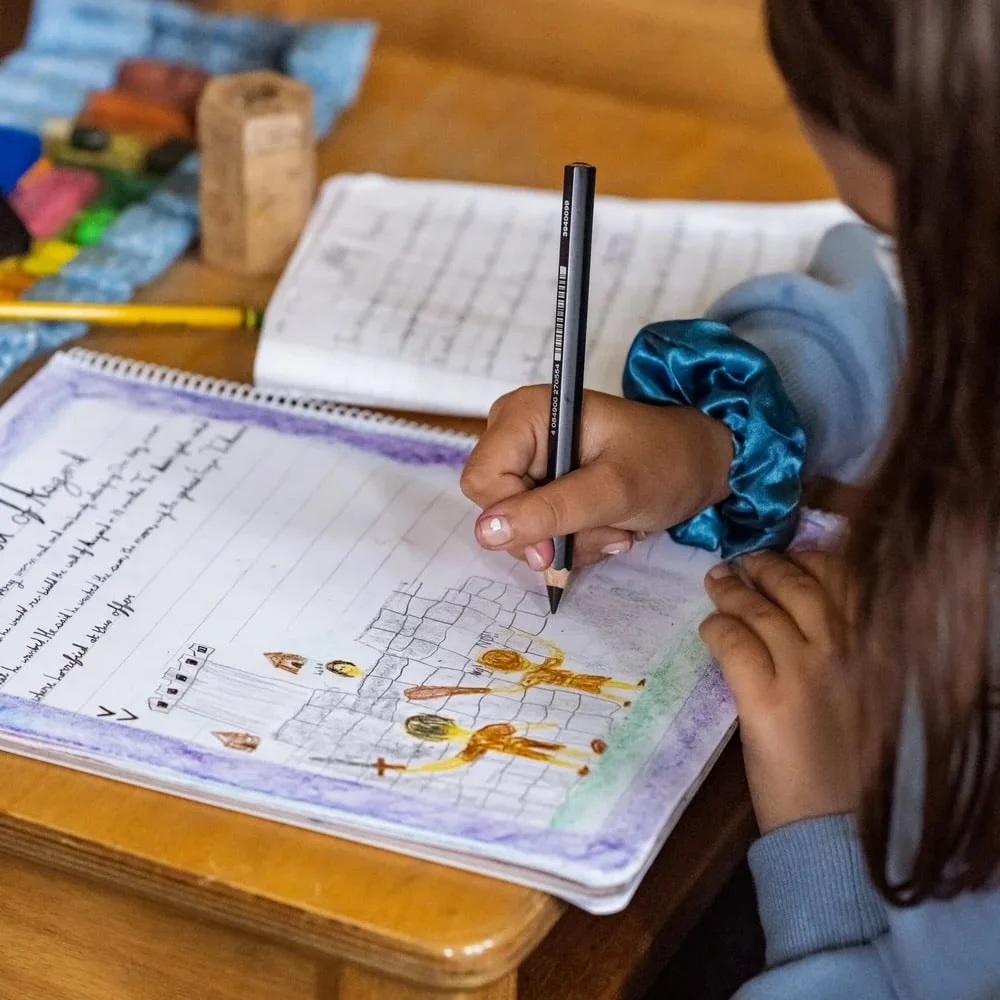
In an era where most students can type on a keyboard significantly faster than they can write with a pen, it is easy to wonder whether learning handwriting and cursive is still relevant in a modern classroom. Yet, a growing body of neuroscience research suggests that these traditional skills are anything but obsolete. Rather than being mere relics of the past, writing by hand activates unique neurons and varying areas of the brain in ways that digital typing simply cannot replicate. As educators and policymakers continually debate the integration of technology in schools, scientific insights are increasingly pointing to the irreplaceable value of putting pen to paper.
What Handwriting Does in the Brain
When a student writes by hand, the sensory, motor, and cognitive regions of the brain work together in close coordination, activating far more neural pathways than typing does. This intricate physical and mental exercise leads to deeper learning and much stronger memory formation.
A 2024 study published in Frontiers in Psychology utilized high-density electroencephalography (EEG) to compare brain activity during handwriting versus typing. The results were striking: handwriting produced far more elaborate and widespread connectivity, engaging complex networks associated with attention, language, and memory. Existing scientific literature indicates that connectivity patterns in these specific brain areas are crucial for memory formation and for encoding new information, making them inherently beneficial for learning. The authors of the study concluded that handwriting actively supports the very neural foundations of learning and therefore should remain central in education.
This deeper cognitive processing is echoed across other international studies, including a Japanese investigation that looked at adult foreign language learning and the semantic encoding of new words. The 2021 study, published on PubMed Central, confirmed that handwriting—whether executed with a traditional ink pen or a digital stylus on a tablet—builds significantly stronger memory traces and fosters more robust language comprehension than keyboarding alone.
Perhaps the most widely cited research regarding classroom application focuses on how students’ brains engage with material when writing by hand versus typing. In a landmark series of experiments conducted by Mueller and Oppenheimer in 2014, researchers found that college students who took notes longhand consistently outperformed laptop note-takers on conceptual questions related to the lecture material. While typing allowed students to capture more words verbatim, it frequently led to shallow processing because students could quickly transcribe lectures without actively digesting the information. Writing by hand, however, required students to engage the material more deeply as they actively processed, rephrased, and summarized complex ideas in real time. Regardless of the age of the learner, the mounting evidence points to a single, consistent conclusion: handwriting fundamentally improves how we think and process information.
Handwriting Builds Literacy
Beyond conceptual understanding, the physical act of writing letters—rather than merely recognizing them visually or typing them on a keyboard—helps the developing brain build the precise circuitry needed for fluent reading. Handwriting is a complex visual-motor skill supported by a widespread neural system that comprises ventral-temporal, parietal, and frontal motor regions. Young children who are actively learning to read and write are simultaneously developing these crucial neural pathways.
Two distinct modern studies link early literacy development directly to the neural systems forged through handwriting. Both Wiley and Rapp in 2021, and Vinci-Booher and James in the same year, found that handwriting experience accelerates literacy learning and directly engages the visual-motor areas that are critical for reading comprehension.
Students who engaged in literacy learning that incorporated handwriting, compared to those learning exclusively through nonmotor practice, showed significantly faster learning curves and greater generalization capabilities. Researchers believe this occurs because handwriting practice leads to learning both motor and amodal symbolic letter representations. In simpler terms, writing by hand—and crucially, only writing by hand—helps the brain connect the physical formations of letters directly with word meanings.
Earlier foundational work by James and Engelhardt in 2012 also demonstrated that when young children practiced writing letters by hand, their brains subsequently activated the reading network automatically when those same letters were viewed later. Neither typing nor passive tracing produced the same neurological effect.
In a similar vein of deciphering visual symbols and abstract forms, a 2014 study by Pegado and colleagues showed that handwriting experience helps the human brain distinguish mirror-image letters, such as the lowercase b and d. Each of these scientific findings reinforces the core idea that forming letters by hand literally shapes the physical architecture of the brain to read them more effectively. Taken together, these studies indicate that handwriting helps create the neurological foundation necessary for more efficient and comprehensive reading skills.
Cursive Writing: Flow, Focus, and Fluency
Cursive writing, once considered a standard and mandatory part of primary schooling, has been quietly disappearing from many educational curricula in recent years. Yet, contemporary research and classroom experience suggest that this flowing script offers unique cognitive and developmental advantages that print writing and typing do not.
Because cursive involves continuous, fluid motion, it requires sustained attention and precise coordination, thereby reinforcing fine-motor control and rhythm. Neuroimaging studies demonstrate that writing by hand in a continuous motion fosters synchronization across multiple brain regions responsible for motor planning and language processing.
According to research out of Norway examining the EEGs of 12-year-olds, conducted by Ose Askvik, van der Weel, and van der Meer in 2020, strengthened connections between the hand and the brain directly improve letter recognition, spelling precision, and overall reading fluency.
Furthermore, cursive writing serves an important cultural and historical function. As noted by Smithsonian Magazine in 2023, the ability to read and write in cursive connects modern students to centuries of handwritten history—ranging from personal family letters to foundational national documents. Losing cursive literacy risks cutting future generations off from their own historical past, leaving them unable to read original source materials without transcription.
Handwriting in the Future
Handwriting and cursive deeply and effectively connect areas of the brain tied to motor function, memory, cognitive processing, and reading comprehension. Relegating these foundational skills to a nostalgic practice is short-sighted at best and actively detrimental at worst. In a modern world dominated by endless keyboard typing and digital screens, handwriting remains an essential tool for building thoughtful, connected, and capable learners. Educational frameworks like Waldorf education, which maintain a steadfast commitment to educating the whole child and preserving lessons using handwriting and cursive, closely align with what current cognitive research continues to reveal about the human brain.