The editorial team at Kveller emphasizes that the selection is independently chosen to highlight unique voices within the contemporary Jewish marketplace. While the collection spans a wide variety of categories, a notable trend in this year’s lineup is the prominent inclusion of mah jongg-themed accessories, reflecting the enduring popularity of the tile-based game within modern Jewish cultural spaces. Alongside these gaming tributes, the guide offers everything from luxury home goods and beauty products to children’s wear and literary journals.
Among the standout items featured in the guide is a festive, advent calendar-style surprise box from GeltPop, designed to add an interactive element to the eight nights of celebration. For the home, the collection highlights an embroidered cotton decorative pillow created in collaboration with designer Susan Alexandra and retailer Anthropologie, offering a whimsical yet pointed reminder for anyone who takes a seat in a host’s home.
The mah jongg obsession noted by the editors is well-represented through several distinct offerings. Haute Mahjong contributes a set of intricately designed tiles named "Francesca," praised by the curators for their striking aesthetics. Additionally, Noli June brings a specialized mah jongg mat to the lineup, thoughtfully named "Marlene Put Out a Spread on the Eighth Night"—a title that honors the tradition of naming each mat after one of the creator’s bubbe’s mah jongg friends. Rounding out the game-night theme, Peace Love Light offers jasperware-inspired paper plates featuring a mah jongg motif, aimed at simplifying entertaining for hosts.
Fashion and apparel also play a significant role in the curated selection. Mamaleh offers a witty toddler t-shirt featuring the Yiddish word "schmatta," which translates to a rag or piece of clothing, capturing a charmingly humorous piece of cultural vernacular for the youngest family members. For cozy nights in, the Six Bells Inn in New York provides a set of ecru logo-stripe house pajamas. Meanwhile, designer Rachel Antonoff contributes a playful sock bundle in collaboration with Leggs, making for a colorful addition to a holiday wardrobe.
The intersection of Jewish tradition, daily life, and modern design is further bridged through literary and journaling projects included in the guide. The SHAVUA journal is highlighted as a guided personal journal that utilizes Jewish wisdom as a foundational framework for personal reflection, praised for being both beautifully crafted and thoughtfully Jewish. Additionally, Rebekah Lowin’s book, "A Year of Jewish Joy," brings the author’s widely followed online take on Jewish life and seasonal celebrations into a comprehensive printed format.
Home decor and lifestyle products occupy a substantial portion of the guide, blending contemporary aesthetics with subtle cultural touches. Tsu Lange Yor, a housewares brand founded by Jewish singer Troye Sivan—whose name draws inspiration from the Yiddish phrase wishing "to long years and to good years"—is featured for its aromatic candles, such as the Sages Rose scent. Designer Jonathan Adler contributes a chic set of black-and-white Como candle holders, adding a touch of distinct modern artistry to candle-lighting traditions. Alison Ivy’s needlepoint canvases, specifically a cheeky design bearing the phrase "Here for the Gossip," offer a humorous nod to community dynamics. Furthermore, a stoneware mixing bowl from television host Molly Yeh’s collection with Anthropologie provides a functional yet stylish piece of kitchenware intended to remain on display year-round.
Personal accessories and beauty items round out the selection with offerings from notable names in the creative sphere. Jewelry and accessories designer Rachel Pfeffer is featured for her "Spring Has Sprung" flower-holding necklace—a piece designed to be both a charming necklace on its own and a practical tool for children who love collecting flowers during walks—as well as her alternative Star of David hair pin and squiggle evil eye accessories. In the realm of cosmetics, Bobbi Brown’s beloved beauty line, Jones Road, is represented by its popular "Hero Kit," targeted at beauty enthusiasts looking to explore the brand’s minimalist approach to makeup.
Through this diverse collection, Kveller continues its mission of amplifying Jewish voices and supporting independent creators, providing readers with a multifaceted resource for holiday gift-giving that bridges traditional heritage with contemporary design.
In an era defined by deep political polarization and increasingly fractured social landscapes, community leaders and interfaith advocates are issuing a renewed call for solidarity. This urgent appeal is directed toward Christian, Jewish, and other faith-based communities across the United States, urging them to stand shoulder-to-shoulder with their Muslim neighbors against a backdrop of manufactured hostility and calculated Islamophobia.
The immediate catalyst for this appeal arose from political discourse that targeted deeply revered traditions and names. To understand the gravity of the recent rhetoric, faith leaders suggest visualizing a scene at a high-profile public gathering where a crowd is invited to laugh at the name of Mary, Moses, or Joseph. For billions of people worldwide, these names are not merely historical identifiers; they are sacred anchors tied to foundational figures of faith, and personally, to beloved family members—mothers, grandfathers, and sons—held closest to the heart.
For the American Muslim community, that hypothetical scenario became a harsh reality. During a political rally held in Dalton, Georgia, then-President Donald Trump addressed the crowd with remarks targeting Middle Eastern names. Suggesting to the audience that individuals unsure of a person’s heritage should simply use a common name like "Mohammad" because it carries a high statistical probability of accuracy, the discourse quickly shifted to personal targeting. Directing his comments toward a Muslim Senate candidate from Michigan, the speaker dismissed standard decorum by asserting the freedom to use whichever moniker he pleased.
While media reports from outlets like Reuters noted that the immediate crowd response inside the venue was remarkably muted—a quiet hesitation that many observers viewed as a silent acknowledgment that such mockery falls well beneath the dignity of the nation’s highest office—the reverberations were felt deeply within Muslim communities nationwide. For millions, the name Muhammad is borne out of profound reverence for the Prophet of Islam, a figure whose legacy remains central to their spiritual lives. When that name is treated as a punchline on a national stage, the emotional toll ripples through families who see it reflected in the names of their fathers, sons, and brothers.
The Broader Context: Attacks on Muslims in the Name of Sharia
Community advocates emphasize that this rhetorical jab did not occur in a vacuum. For months, Muslim Americans have frequently found themselves framed as a societal and legal threat under the recurring banner of "Sharia law." In reality, no mainstream American Muslim organization, civic group, or community leadership body has ever advocated for the implementation of religious law to replace the United States Constitution or state legal codes. Despite this clear and consistent reality, political rhetoric and legislative proposals continue to surface as though an active push for religious jurisprudence is underway.
When viewed as part of a larger pattern, these occurrences cease to appear as isolated incidents. A casual dismissal of a sacred name during a campaign rally, curriculum debates in classrooms framing foundational religious figures in hostile terms, and legislative measures designed to neutralize entirely non-existent threats all converge on a singular, underlying message: the persistent insinuation that Muslims do not truly belong in the American fabric. People of faith from various traditions recognize the historical precedents of such rhetoric and understand all too well where systemic othering ultimately leads.
Muhammad Ali and the Meaning of a Name
Amidst the contemporary challenges surrounding identity, public perception, and respect, historians and interfaith advocates often look back to enduring historical touchstones that illustrate the transformative power of a name. The life of legendary heavyweight boxing champion Muhammad Ali remains a powerful testament to dignity, conviction, and national reconciliation.
When Cassius Clay chose to adopt the name Muhammad Ali in 1964 upon embracing the Nation of Islam, the reaction from the mainstream sports media and large segments of the public was marked by resistance, skepticism, and outright mockery. Many prominent commentators and fans steadfastly refused to honor his new name. A few years later, in 1967, Ali took a principled stance against military induction during the Vietnam War based on his religious convictions. The cost was severe: he was stripped of his championship titles, barred from the sport at the peak of his career, and faced the threat of federal imprisonment.
Yet, history shifted. In 1971, the United States Supreme Court ruled unanimously in his favor in an eight-to-zero decision, vindicating his conscientious objection. Over the decades that followed, Ali’s unwavering integrity, athletic brilliance, and philanthropic grace transformed him from a figure of controversy into a universally beloved American icon.
The arc of his public life reached historic milestones when he lit the Olympic flame at the 1996 Summer Games in Atlanta and received the Presidential Medal of Freedom in 2005. When Ali passed away in 2016, his final farewell in Louisville, Kentucky, was deliberately designed as a comprehensive interfaith service, featuring prayers and reflections from Muslim, Christian, Jewish, and other religious leaders—a gathering structured precisely according to his own wishes.
The legacy of Muhammad Ali demonstrates how a man bearing one of the most common and revered names in the Islamic world could ultimately become a source of immense pride for the entire nation. For interfaith coalitions seeking to foster constructive dialogue surrounding faith, identity, and public dignity, his story remains an invaluable resource.
As communities navigate the complexities of modern social and political environments, interfaith leaders continue to emphasize the importance of mutual support. By recognizing the shared values that bind diverse religious traditions together, advocates hope to counter artificial divisions and foster a society where every name and every faith community is met with fundamental respect.
Parenting expert and author Janet Lansbury is turning her attention to a paradox familiar to many families: the child who rules the roost with a booming voice and unshakeable opinions at home, yet seemingly transforms into a different person the moment they step into the outside world. In a recent episode of her widely followed Unruffled podcast, Lansbury dissected a parent’s letter concerning a three-and-a-half-year-old girl who is vibrant and talkative in private, but paralyzed by quietness and hesitation in social settings, ranging from playdates with familiar cousins to weekly gymnastics classes.
The dilemma touches on a broader anxiety many parents face—particularly those who remember experiencing shyness themselves—as they watch their children approach milestones like preschool. However, Lansbury offers a counterintuitive perspective that reframes the behavior entirely. Rather than viewing the child as painfully shy, fearful, or broken, she suggests that these young children are simply strong-willed individuals who have gotten stuck in a powerful psychological position of observation, exacerbated by well-meaning adult interventions.
The Paradox of the Publicly Reserved Child
The core issue was brought forward by a mother who described her three-and-a-half-year-old daughter as fun, loud, busy, smart, and opinionated within the comfort of her home. Yet, to anyone outside of her immediate household—including grandparents, close cousins, and peers she has known for a long time—the child appears painfully shy. According to the mother, relatives are often confused by her lack of response when greeted enthusiastically.
This dichotomy becomes particularly pronounced during the child’s weekly gymnastics classes. The little girl eagerly anticipates the class, participates enthusiastically in initial warm-ups and early rotations like the bars, but abruptly freezes when it is time to transition to the next event, such as the balance beam. Despite knowing the coaches well and being encouraged gently with offers of held hands, the child sits silently, sometimes shaking her head or refusing to budge until the class concludes. When asked afterward if she enjoys gymnastics and wants to continue, her response is an unhesitating "yes."
With preschool looming on the horizon, the mother expressed profound nervousness about how her daughter will navigate an environment where parental intervention is not readily available. Her ultimate wish echoes that of many caregivers: she wants her daughter to feel confident, happy, and proud of who she is, without feeling the need to constantly fix or force an outgoing personality.
Redefining "Shyness" as Alpha Behavior
Drawing from years of experience facilitating parent-toddler classes, Lansbury reassured listeners that this behavioral split is far more common than many realize. She challenges the traditional label of shyness, opting instead to view these children through the lens of positive, strong-willed "alpha behavior."
Lansbury describes these children as "big, bright lights that are very powerful." With that strength comes a set of traits that include being opinionated, loud, and intense. When placed in social environments, these children are not necessarily operating from a place of fear or social anxiety. Instead, they are often holding onto a specific vantage point: they want to enter a situation already knowing how it works and executing it perfectly, rather than risking vulnerability by making a mistake or appearing less than competent in front of others.
According to Lansbury, these children get temporarily stuck in a power position. It is an internal standoff where they refuse to yield to the expectations or coaxing of others, even when those expectations come from their most trusted caregivers. The child resolves to stand back, observe, and protect her sense of autonomy.
The Counterproductive Nature of Parental Intervention
A significant portion of Lansbury’s analysis focuses on how well-intentioned reactions from parents and instructors can inadvertently reinforce the behavior. When coaches urge the child to take her turn, offer her a hand, or when parents step into the gym to rescue or coax them, the child feels the heavy weight of expectation.
This external pressure, Lansbury explains, creates a dynamic where the child feels even more compelled to hold her ground. The more adults try to draw them out, the more entrenched the children become in their defensive, observant stance. The child senses the underlying worry and trepidation of the parent, which inadvertently validates the idea that something is wrong with how they are behaving.
Rather than viewing the child’s frozen demeanor as a sign of genuine fear, Lansbury interprets it as an intelligent, albeit stubborn, preservation of control. The child is thinking through transitions carefully, weighing her options, and deciding not to comply with demands to perform on someone else’s timeline.
Shifting Perspective to Support Social Confidence
To help these children truly thrive, Lansbury advises a fundamental shift in perspective. Parents must first let go of their own worry, anxiety, and the compulsion to fix what they perceive as a social deficit. By dropping the internal "cloud of worry," parents send a powerful, non-verbal message of trust in their child’s natural instincts and developmental process.
Lansbury recommends stepping back entirely from intervention during social gatherings and structured classes. For interactions with cousins, parents should announce the visit with enthusiasm but refrain from orchestrating play or attempting to force the child to join group activities. If the child chooses to shadow the adults or sit quietly nearby, parents should accept that choice warmly without trying to entertain them or bridge the social gap on their behalf.
In settings like gymnastics or upcoming preschool environments, Lansbury suggests that parents hold their ground physically and emotionally. If a child retreats to a parent’s side and asks for a hand, the response should be a calm boundary coupled with acceptance: acknowledging the child’s desire for comfort while affirming that the parent is happy to stay put right where they are. This transforms the parent’s presence into a truly secure base rather than a springboard for rescue.
Ultimately, Lansbury emphasizes that true confidence cannot be forced through coaching or encouragement to be more outgoing. It grows when children feel completely accepted for who they are in the moment—whether they choose to leap into the center of the activity or sit quietly at the sidelines, taking their time to process the world on their own terms.
In the ever-evolving landscape of modern home cooking, culinary boundaries continue to blur as chefs and home cooks alike seek innovative ways to reinvent classic dishes. The latest creation capturing the attention of busy households and food enthusiasts is the smash chicken Caesar taco—an unconventional fusion that bridges the gap between the familiar comfort of a traditional Caesar salad and the beloved, handheld versatility of a taco.
This inventive recipe delivers a protein-packed, vegetable-forward meal designed to satisfy both discerning adults and enthusiastic children alike. The concept behind the dish stems from a simple culinary experiment: taking the iconic flavors of a time-tested restaurant salad and adapting them into a crispy, pan-seared format that offers a balanced and deeply satisfying dining experience.
Smash Chicken Caesar Tacos
The foundation of any great Caesar salad traditionally relies on crisp romaine lettuce leaves, large croutons, and a rich, creamy dressing crafted from anchovies, garlic, and mustard. Over generations, this classic combination has evolved into countless variations, yet its core flavor profile has remained remarkably resilient. The smash chicken Caesar taco takes those foundational elements and reimagines them through a modern lens, transforming the components into a textured, high-protein meal.
Like most traditional tacos, this variation uses a tortilla shell as its base. Home cooks have flexibility in their choice of wrappers, with organic flour tortillas serving as a popular option. Alternative bases such as almond flour or cassava flour tortillas work equally well, provided they remain manageable in size to ensure easy handling and flipping during the cooking process.
The true innovation of the recipe lies in its unique preparation technique. A seasoned chicken mixture is firmly pressed—or "smashed"—directly onto the surface of the tortilla before hitting a hot skillet. As the taco cooks, the chicken adheres to the shell, searing until it turns golden brown and achieves a savory, crispy texture. This method not only locks in moisture and maximizes protein content but also infuses the entire base with a robust seasoning blend featuring Italian seasoning, lemon pepper, garlic, and onion.
Caesar Dressing
While the crispy smash chicken provides the structural and protein core of the dish, the soul of any Caesar-inspired recipe ultimately rests in its dressing. Traditional preparations lean heavily on ingredients like anchovy paste, garlic, and Worcestershire sauce to impart earthy complexity, balanced by the bright, acidic punch of fresh lemon juice.
To adapt these flavors for a family-friendly weeknight dinner, the dressing utilizes a balanced blend of mayonnaise and yogurt, creating a texture that is simultaneously creamy and tangy. Fresh herbs and Parmesan cheese are folded into the mixture to add further layers of depth and richness.
For home cooks balancing busy schedules, ingredient sourcing offers multiple pathways. While crafting homemade mayonnaise from scratch remains a straightforward option for those prioritizing wholesome pantry staples, commercially available options provide significant convenience. Premium avocado oil mayonnaise brands, alongside curated pantry selections from online specialty markets, offer reliable shortcuts for parents managing large households or demanding daily routines. Furthermore, culinary enthusiasts note that preparing the dressing in advance allows the distinct flavors of the anchovy, garlic, and citrus to meld harmoniously in the refrigerator over time.
Making Ahead
Balancing the demands of meal preparation with the desire for fresh, high-quality family dinners often requires strategic planning. While the assembled smash chicken Caesar tacos are undoubtedly best enjoyed immediately after cooking to preserve their distinct crunch, the individual components lend themselves remarkably well to advance preparation.
Home cooks can easily double the recipe batches, mixing the seasoned chicken and preparing the Caesar dressing well ahead of time to streamline the final cooking process. Nutritional data for the dish indicates a substantial profile, offering approximately 475 calories per serving, alongside notable levels of dietary protein, healthy fats, and essential micronutrients including Vitamin A, calcium, and iron. Culinary suggestions also point toward creative additions, such as incorporating crispy bacon into the dressing for an extra layer of savory depth.
As home kitchens continue to embrace hybrid recipes that merge nutrition with unexpected flavor profiles, the smash chicken Caesar taco stands out as a practical yet inventive addition to the modern culinary rotation.
A growing body of comprehensive, large-scale educational research is reinforcing what many progressive educators have argued for decades: students learn best not through rote memorization and abstract lectures, but through direct, lived experience. Across multiple decades, academic disciplines, and age groups, recent meta-analyses and systematic reviews indicate that experiential learning provides superior academic, emotional, and developmental outcomes compared to traditional, passive teaching models.
Defined broadly as an educational approach in which true understanding grows from direct experience, experiential learning transforms students from passive listeners into active participants. Whether young children are learning fractions by baking in a kitchen, observing the properties of light to grasp foundational physics, exploring history through dramatic role-play, or studying biology through careful outdoor observation, this hands-on methodology anchors abstract concepts in reality.
As children mature, the nature of this engagement evolves. While younger learners process the world primarily through play, physical movement, storytelling, sensory exploration, and art, adolescents deepen their comprehension by adding critical reflection, robust discourse, and experiential projects embedded within the broader community. When education aligns naturally with human development by inviting students into an active relationship with their coursework, learning ceases to feel like a chore and instead becomes a natural extension of growth.
A Comprehensive Look at the Research
The empirical backing for this hands-on approach is substantial. Two umbrella meta-analyses spanning 60 distinct studies over a 30-year period have conclusively demonstrated the efficacy of experiential learning across diverse subjects and grade levels. Among these, a landmark study published in 2023 evaluated project-based and inquiry-driven learning environments, discovering that these methods significantly outperformed traditional instructional models. Specifically, students immersed in experiential frameworks showed measurable gains not only in traditional academic achievement, but also in the development of a growth mindset and critical thinking skills.
Building upon these findings, a deeper meta-analysis published in 2025 sought to isolate the precise mechanisms within experiential education that drive success. The researchers categorized these variables and identified "fully embodied learning"—experiential learning that actively engages a student’s entire body and full suite of senses—as having the most profound impact on overall student achievement. When learning involves physical presence and sensory integration, information is encoded more deeply and retained far longer.
Learning Across the Curriculum and Nature’s Vital Role
Among the most thoroughly researched and effective avenues for experiential education is the great outdoors. A systematic review examining 20 years of research dedicated to nature-specific outdoor learning highlighted the profound emotional, academic, and wellbeing benefits associated with classrooms without walls.
Researchers analyzed a wide array of nature-based educational formats, including targeted curricular lessons, specialized fieldwork, and multi-day expedition programs conducted in natural environments. Their findings revealed that sustained time spent in nature—coupled with hands-on activities, peer collaboration, and guided reflection—consistently fostered positive academic outcomes, heightened student engagement, and improved emotional resilience.
Deepening Language Comprehension Through Movement and the Senses
The benefits of physical and sensory engagement extend deeply into language education as well. Authors of a comprehensive study published in ScienceDirect reviewed three decades of research focusing on embodied learning in literacy and language acquisition. They examined how physical movement and sensory participation support language learning, comprehension, and human connection.
The review concluded that whole-body, sensory-rich experiential approaches consistently increased student participation. More importantly, these methods allowed for deeper cognitive processing and comprehension across all grade levels. In particular, the use of physical gestures and purposeful movement was frequently linked to accelerated vocabulary acquisition and heightened emotional and intellectual engagement with complex language tasks.
Furthermore, arts-based activities such as drama, music, and the visual arts contributed significantly to both language learning outcomes and the emotional and motivational states of learners. Drama and role-play, in particular, created authentic, highly meaningful language learning environments, giving students the contextual framework necessary to use language naturally and effectively.
Mastering Mathematics Through Collaboration and Manipulatives
Mathematics education has traditionally relied heavily on abstract symbols and pencil-and-paper drills, but research suggests a dramatic shift is warranted. A prominent meta-analysis focusing on primary school mathematics learning outcomes demonstrated that project-based learning substantially improves students’ collaborative, problem-solving, and critical thinking capabilities.
In this mathematical context, the most successful approach was sustained, collaborative project work. Students engaged in multi-week projects where they united to explore and solve authentic problems. This collaborative structure naturally advanced students’ interpersonal abilities, teaching them how to promote their peers’ viewpoints, speak out constructively, listen actively, and participate in thoughtful, analytical discussions.
Similarly, the use of physical manipulatives—a staple of experiential mathematics education—was found to be beneficial across the educational spectrum, stretching from early childhood classrooms all the way to collegiate instruction. However, the research emphasized that guidance is critical to success. Students derived the greatest benefit when manipulatives were explicitly and intentionally integrated into daily instruction, with teachers actively scaffolding the intellectual bridge between concrete physical tools and abstract mathematical concepts. Utilizing manipulatives resulted in superior long-term retention of concepts compared to learning math through abstract symbols alone.
Strengthening Science Through Inquiry and Project-Based Learning
In the realm of science education, comparing conventional instructional methods to inquiry-based approaches reveals a stark contrast. A major meta-analysis examining the impact of inquiry-based learning found that it exerts a significantly large and positive effect on students’ higher-order thinking skills.
When the study authors broke down various forms of inquiry, they discovered that guided inquiry, research-based inquiry, and argument-driven inquiry yielded the largest positive effects. These formats succeeded primarily because they required students to actively investigate complex questions, analyze empirical evidence, and logically justify their conclusions. Inquiry methods embedded in authentic, real-world problems also demonstrated exceptional outcomes, as they naturally demanded deeper reasoning, self-reflection, and collaborative discourse to apply knowledge effectively.
The Lived Experience: Perspectives from Waldorf Education
Taken as a whole, this vast body of contemporary educational research strongly affirms principles that alternative pedagogical models, such as Waldorf education, have maintained at their core for generations: learning unfolds most fully when children encounter the world, both indoors and out, through full sensory experiences, hands-on, purposeful projects, and inquiry-based problem-solving.
In an increasingly abstract, screen-driven, and digital society, experiential education offers something both timeless and essential. It provides a style of learning that engages the whole child, fostering an understanding of the world that is lasting, human, and alive. Ultimately, experiential learning invites students into a profound process of transformation—shaping both their understanding of themselves and their comprehension of the world around them.
Each month, readers turning to “Science of Mind Afterglow” are treated to a full-length feature from the previous month’s edition of the publication. Serving as a free preview of transformational spiritual content, the recurring series frequently introduces fresh spiritual contemplations designed to enhance daily practice, invite new divine signals, and uncover deeper insights. In the latest installment, writer and spiritual practitioner Rev. Lauren Martin addresses a timeless human dilemma: the perception of unanswered prayers and how even the most dedicated skeptics can reframe their relationship with intention and manifestation.
For many individuals navigating spiritual or contemplative paths, the journey often involves moments of profound doubt. It is common to feel that prayers go unanswered, whether because of a frustratingly long delay between the initial request and its realization, or because the outcome appears to be a resounding, flat refusal from the universe. However, Martin posits a comforting paradigm shift for those grappling with disappointment, suggesting that a lack of immediate gratification does not mean a prayer has been ignored.
According to Martin, the universe and the subconscious mind operate under a fundamental rule: neither truly understands the concept of a definitive "no." Instead, the universe responds in one of three distinct ways: granting the request immediately, taking the necessary time to carefully create the desired outcome, or providing something far more remarkable than the human mind can initially comprehend.
This perspective directly challenges the viewpoint of skeptics who point to unfulfilled desires or delayed outcomes as absolute proof that prayer is ineffective. By examining how individuals can strengthen their prayer work, Martin outlines a path that allows even the most analytical or doubtful minds to engage meaningfully with the practice and become powerful conscious manifesters.
Freedom of Speech in Spiritual Practice
When Martin first began studying the Science of Mind, one of the most liberating discoveries was the realization that practitioners are not required to memorize rigid prayers or recite them by rote. Recognizing that formal, highly structured approaches can often feel intimidating to newcomers, the philosophy encourages a much simpler, more personal method of communication.
Ernest Holmes, a foundational figure in the movement, established a framework for affirmative prayer built upon specific steps. How an individual chooses to approach those steps, however, remains entirely up to the practitioner. Some people naturally gravitate toward flowery language, rich metaphors, and poetic phrasing, treating each prayer almost like a love sonnet addressed to the universe. Others prefer a more direct, grounded approach, bypassing elaborate prose to get straight to the point. Ultimately, the style matters far less than the authenticity of the voice; the primary objective is to speak in a manner that feels true to the individual and genuinely helps them feel heard and understood.
To simplify the process for those seeking a quick, accessible prayer framework, Martin offers a foundational template. The structure begins with the fundamental premise that the divine is omnipresent, meaning it exists inherently within every individual. From that realization, the practitioner affirms what they wish to experience, have, or know, and concludes by releasing the intention outward with gratitude, trusting that it is resting in higher hands.
This approach shifts the focus away from anxious begging or pleading and moves it toward acceptance and alignment. By anchoring the mind in the belief that the desired state is already spiritually present, the practitioner opens themselves up to reception without the burden of constant worry.
The Role of Feeling and Energy in Manifestation
Beyond the specific words chosen during a moment of quiet contemplation, Martin emphasizes that every word spoken and thought entertained functions as an active prayer. Individuals are in a state of constant communication with the universe, and the universe is perpetually listening to the subtle and overt frequencies of human consciousness.
Because of this continuous dialogue, whatever an individual invests their energy into is what they are ultimately destined to manifest. Importantly, the universe does not make moral distinctions between positive and negative energy. It simply mirrors back what it receives, saying yes to whatever captures our primary focus and emotional investment.
This reality underscores the importance of monitoring one’s internal dialogue and emotional state. When persistent worry, fear, or doubt dominates a person’s mental landscape, those feelings act as powerful creative forces just as much as optimism and joy do. Understanding this mechanism helps explain why certain unintended outcomes manifest in our lives, pointing directly back to where our deepest anxieties and dominant thoughts have resided.
Treating and Moving Your Feet
In the tradition of Science of Mind, releasing a prayer into the creative medium of the universe is often compared to planting a seed in fertile soil. Spiritual teachers frequently caution against the habit of repeatedly digging up the seed to check whether it has begun to sprout, as this disruption halts the natural growth process. At the same time, however, a planted seed cannot simply be ignored; it requires consistent watering and adequate light to thrive.
Translating this metaphor into daily life means that an individual’s words and actions must remain in strict alignment. Martin notes the inherent contradiction of praying for physical vitality while remaining sedentary and consuming poor nutrition all day. Under such conditions, the universe receives mixed signals, lacking a clear picture of the intended creation. True manifestation requires active participation—moving the physical body, altering daily habits, and making tangible choices that reflect the reality one wishes to bring into existence.
Acknowledging that this level of consistency is difficult, Martin admits to facing similar personal struggles on a daily basis. Yet, the overarching message remains one of profound encouragement. Spiritual growth does not demand perfection. Emotional responses such as worry, fear, and doubt are entirely normal parts of the human experience, especially when navigating major life changes or working deliberately with the universe to shape one’s destiny.
The challenge lies in refusing to remain trapped in those difficult emotional states. The practice invites individuals to feel their emotions fully, acknowledge them without judgment, and then gently recalibrate their awareness, remembering their inherent connection to an abundant universe that is always working in their favor.
Forming new thought patterns and breaking old habits is rarely a seamless process. Every hesitant, clumsy step taken in a constructive direction narrows the distance between where a person is and where they want to be. Recognizing that everyone is continually doing their absolute best, Martin suggests that the true value of prayer lies in its ability to focus that best effort, helping individuals align their energy so they can receive more of what they genuinely desire from life.
The purpose of Advent has long been understood as a season to prepare the human heart for Christ’s coming, to look back with gratitude at His humble birth, and to wait with steadfast hope for His eventual return. For many families, however, this liturgical season offers more than just a countdown to Christmas morning; it provides a profound laboratory for faith, presence, and the unscripted spiritual inquiries that children inevitably bring home from the world.
Robert Bortins, the Chief Executive Officer of Classical Conversations and a father of three, recently reflected on how the quiet, often challenging art of waiting has transformed his own household’s understanding of spiritual formation. In an era dominated by relentless schedules, digital distractions, and institutionalized learning, Bortins argues that the unhurried nature of Advent points back to a foundational truth of family life: that the most enduring questions of faith do not arrive on a syllabus, but rather at the dinner table, in the ordinary flow of an unhurried Sunday afternoon.
A Question After Communion
The reflection on modern patience and family discipleship began with a routine moment in a very ordinary setting. Following communion at his family’s church, the congregation recited a familiar liturgical creed in unison: “Christ has died, Christ has risen, Christ is coming again.”
Shortly after the service concluded, Bortins’s nine-year-old son turned to him with a blunt, disarming question that cuts to the core of Christian theology: “We’ve been saying this for nine years. When is He coming?”
It was a query that defied a tidy, pat response. Yet, as Bortins came to realize, his son’s inquiry embodies the very essence of Advent itself. It also touches upon one of the overarching challenges of family life: learning how to navigate the tension when the things individuals wait for—whether divine intervention, personal milestones, or simple daily answers—do not arrive according to a human timetable.
The Theological Weight of Advent
To understand the gravity of such a question, one must first look at the meaning of the season. The word "Advent" derives from the Latin adventus, which translates simply to "arrival" or "coming." Spanning the four weeks leading up to Christmas, the liturgical season invites Christians to simultaneously commemorate Christ’s first historical advent in Bethlehem and anticipate His promised second advent.
In doing so, the season asks believers to inhabit the exact same spiritual tension that the Old Testament saints endured for centuries. The divine promise is absolute, yet the ultimate fulfillment often tarries. Echoing the ancient observations of church father Saint Augustine—who famously noted that human hearts remain restless until they find their rest in God—Advent serves as a rigorous training ground. It redirects the inherent restlessness of the human spirit into enduring hope, reminding believers that divine timing operates far outside human constraints and that purposeful work occurs even in the silent hours of waiting.
Why Faith Questions Surface at the Family Table
What struck Bortins most profoundly about his son’s inquiry was not merely its theological depth, but its organic venue. The boy did not raise his hand in a formal Sunday school classroom, nor did he wait for a school bell to signal the end of a scheduled discussion. Instead, he turned to his father in the unscripted space of their own home, in a moment neither parent nor child had planned.
This spontaneous timing mirrors the timeless instruction found in Deuteronomy 6:7. Ancient Hebrew law did not instruct parents to enroll their children in weekly seminars to learn the commandments; rather, it commanded them to discuss spiritual truths continually—when sitting in the house, walking by the way, lying down, and rising up.
The historical model of soul formation was always intended to take place within the unhurried, repetitive rhythms of daily domestic life. It is precisely within these domestic spaces, free from the rigid constraints of institutional bells and schedules, that children feel safe enough to voice their hardest, most probing questions about existence, suffering, and faith.
The Economic and Domestic Realities of Presence
This conviction regarding the home as the primary center of education forms the ideological backbone of Bortins’s recent book, SILK: More Kids, More Wealth. The acronym stands for Single Income, Lots of Kids. While the book addresses the economic viability of traditional household structures at length, its core thesis is fundamentally cultural and theological. It examines where, and by whom, the questions that truly shape human character are ultimately answered.
A child who wonders aloud about the return of Christ, who grapples with the problem of human suffering, or who questions why a family must decline certain cultural luxuries accessible to neighbors, requires a parent within immediate earshot. Furthermore, that parent must possess the luxury of time, emotional presence, and theological grounding required to sit with the question rather than delegate the responsibility to an external institution.
According to Bortins, no educational institution, regardless of its academic excellence, can fully outsource the intimate presence required to guide a developing soul. Building a household that allows for this level of attentive availability requires a deliberate structural and financial design.
The Classical Vision of the Household
In classical philosophy, thinkers like Aristotle referred to the household, or the oikos, as the foundational human community. It represents the primary sphere where human life is first directed toward the good long before a broader civic society takes form. This classical framework resonates deeply during the Advent season, which is inherently domestic in its observance. Whether gathered around a simple wreath or watching the slow progression of candles burn down week by week, families practice a form of waiting that modern technology cannot accelerate.
Educators and parents understand this principle intuitively. Just as a farmer plants seeds in September without witnessing a harvest until spring—or perhaps years down the line—teachers sow academic and moral truths that may not manifest in a child’s understanding until much later. The sudden realization, the moment of clarity, or the delighted epiphany rarely arrives on a synchronized calendar; it emerges in due time.
However, modern economic pressures often make this kind of domestic patience difficult. When both parents are stretched thin across full-time employment and demanding institutional schedules for their children, the margin of time required to sit with a nine-year-old child’s theological inquiries simply evaporates. Important conversations are postponed, deferred, or reduced to hurried answers delivered on the way out the door.
A household organized around a single income and the steady presence of a parent at home creates the structural precondition necessary for genuine discipleship. True instruction in the home relies heavily on the simple reality of someone actually being in the home to listen.
Echoes From Ancient Philosophy and Modern Literature
Long before modern educational debates emerged, classical philosophers recognized the supreme importance of the early domestic environment. Plato, in his treatise Laws, argued that the most decisive years of a child’s moral formation occur under the consistent, observant care of parents who shape habits and affections long before formal schooling begins. A parent perceptive enough to recognize when a child’s inquiry stems from genuine spiritual wonder rather than idle curiosity is performing the most critical educational work imaginable.
This theme of rootedness and patient endurance also echoes through modern literature, most notably in the works of J.R.R. Tolkien and C.S. Lewis. In Tolkien’s legendarium, it is the seemingly unremarkable, unhurried inhabitants of the Shire who ultimately prove equal to the greatest trials, having been formed slowly through a culture that cherished permanent, enduring things rather than rapid advancement.
Similarly, in The Abolition of Man, C.S. Lewis warned that a culture losing its confidence in objective moral values risks producing individuals with intellects and appetites, but lacking a formed moral center—what he termed "men without chests." Such a moral center, Lewis suggested, is cultivated slowly through intentional education in truth, goodness, and beauty, much like the patient conversations that take place around a family dinner table.
The Continuing Tradition of Hope
When Bortins ultimately answered his son’s question regarding the return of Christ, he did not offer a date or a simplistic timeline. Instead, he reminded the boy that Christians have awaited Christ’s return for nearly two millennia, and that this shared patient expectation serves as a bridge connecting generations of believers.
By anchoring the discussion in biblical passages such as Isaiah 40—which promises that those who wait upon the Lord shall renew their strength—the family viewed their daily questions not as interruptions, but as invitations to deeper faith.
As families navigate the holiday season, the challenge remains to reclaim the unhurried nature of domestic life. Whether through the quiet observance of Advent or the deliberate restructuring of daily routines to prioritize parental presence, the ultimate lesson of the season is that the wait itself is meaningful. For parents willing to stay in the room and sit with difficult questions, the domestic table remains the primary place where enduring faith takes root.
Human connection is the foundation of society, shaping how individuals interact, form relationships, and build communities. Within the broad spectrum of human emotion and social interaction, two terms frequently surface when discussing how people relate to one another: empathy and compassion. While both concepts serve as essential avenues for connecting with others, their core essence, psychological mechanisms, and real-world impacts are fundamentally different. Recognizing these distinctions reveals how emotional resonance and proactive kindness work together to shape human relationships and community well-being.
At its core, empathy allows individuals to achieve an emotional understanding of another person’s state, but compassion takes that connection a significant step further by actively driving behavioral intervention. It represents the vital transition from simply feeling to actually doing, moving away from passive emotional resonance toward proactive kindness. Through a deeper understanding of these concepts, people can better appreciate the value of cultivating empathy while simultaneously practicing compassion in daily life, ultimately enriching personal relationships and positively impacting the wider community.
Emotional Connection Versus Deep Understanding
When examining the mechanics of human interaction, empathy steers emotional connection. It involves feeling the exact same emotions that another person is experiencing at a given moment, effectively aligning oneself emotionally because of that shared similarity. This mirroring allows individuals to step directly into another person’s emotional shoes, experiencing the weight of their joy, sorrow, or frustration firsthand.
On the other hand, compassion drives individuals toward a deep, objective understanding of another person’s distress, coupled with an intrinsic desire to make them feel better. Compassion transcends the boundary of merely feeling what someone else feels; instead, it centers on comprehending their situation and taking meaningful action. While empathy asks an individual to inhabit the emotional world of another, compassion observes that world with clarity, warmth, and an inherent readiness to assist.
Feeling Versus Recognizing
Another critical distinction lies in the internal cognitive and emotional processes of feeling versus recognizing. Empathy is deeply rooted in experiencing what another person is going through on a visceral level, mirroring their internal emotional state within one’s own nervous system. When an empathetic person encounters someone in pain, their own emotional system registers a similar frequency of distress.
Compassion operates through a different lens. It focuses on acknowledging and recognizing what other people are going through rather than absorbing the emotion oneself. This distinction is crucial for emotional sustainability. By recognizing distress without necessarily absorbing the emotional weight of it, an individual can maintain a clear perspective, allowing them to assess the situation objectively and determine the most effective way to offer support without becoming overwhelmed by the shared trauma or grief.
Inward Versus Outward Focus
The directional flow of energy in empathy and compassion also highlights their contrasting natures. Empathy frequently revolves around an inward reflection that permits individuals to tap into their own emotional reserves, enabling them to feel the exact emotions that another person is experiencing. This inward turn requires looking inside oneself to find a parallel emotional memory or current feeling that matches the other person’s state.
Conversely, compassion propels individuals outward. It encourages active engagement with the external world and prompts concrete action based on that initial recognition of need, specifically designed to help alleviate another person’s discomfort. While empathy looks inward to mirror a feeling, compassion looks outward to address a reality, shifting the focus entirely from the observer’s internal emotional experience to the recipient’s well-being.
Emotion Versus Action
The ultimate outcome of each state underscores the divergence between emotion and action. Empathy primarily consists of feeling the emotional state of another person, existing largely as an internal affective experience. It is the emotional echo chamber that validates a person’s experience by letting them know they are not alone in their feelings.
Compassion, however, is fundamentally action-oriented. It prompts individuals to take tangible steps to ease another person’s suffering, regardless of how small or modest those steps might be. Whether through a comforting word, practical assistance, or long-term support, compassion bridges the gap between internal sentiment and external reality. It transforms passive sympathy into active benevolence, ensuring that the recognition of suffering translates into a constructive effort to reduce it.
Momentary Connection Versus Long-Term Commitment
Finally, the temporal dimension of these two human experiences reveals much about their roles in social life. Empathy, although a profound and deeply felt emotion, can often function as a momentary emotional connection. Such connections are frequently fleeting, fading away once the immediate shared emotion dissipates or the environmental trigger is removed.
Compassion reflects a long-term commitment to assisting others and maintaining a consistent readiness to help over time. While an empathetic response might flare brightly and briefly during an acute crisis, a compassionate disposition endures, sustaining individuals through the extended process of recovery, support, and community building. By integrating both emotional understanding and proactive kindness into daily routines, people can foster deeper interpersonal bonds and contribute meaningfully to the world around them.
When a man identified as “Tommy” pressed Abdul El-Sayed at a town hall in Caro, Michigan, to disavow the Muslim Brotherhood, the Democratic Senate nominee answered without hesitation: yes.
It was a direct, unambiguous response to a loaded question, but El-Sayed did not stop there. He immediately turned the tables, challenging the very premise of the inquiry. He asked whether the man was assuming that, because he is a Muslim, he must inherently harbor “dual loyalties.” In the days that followed, as the exchange quickly went viral across social media and news broadcasts, local reports emerged revealing that the questioner, Tommy, was a former political staffer, adding a layer of calculated political theater to what was presented as a grassroots encounter.
Rather than shrinking from the provocation, El-Sayed used the moment to address a recurring undercurrent in American political life. “I’m not running to be a Muslim senator,” El-Sayed declared to the crowd. “I’m running for the U.S. Senate and happen to be Muslim.”
In making that distinction, El-Sayed was deliberately evoking one of the most famous moments in modern American political history: John F. Kennedy’s historic address to a room of skeptical Protestant clergy in Houston in September 1960. Back then, anxious ministers wanted to know whether a Catholic president would ultimately answer to Rome and the Pope. Kennedy met the challenge head-on, famously telling the audience, “I am not the Catholic candidate for president. I am the Democratic Party’s candidate for president, who happens also to be a Catholic.”
That historical parallel resonates deeply for many Americans who have watched religious minorities navigate the treacherous waters of national political ambition. The author of these reflections first encountered that Kennedy story as an eight-year-old child, sitting quietly in the back of a car while flipping through an illustrated book about the American presidents. When turning the page to John F. Kennedy, a father proudly piped up from the front seat, noting that Kennedy was the nation’s first Catholic president. Hearing the distinct joy and validation in his father’s voice, the young child asked why that milestone was so special.
In response, the father shared the very same story that El-Sayed recounted on the campaign trail in Michigan—the tale of a candidate who had to stand before his fellow citizens and personally assure them that his deeply held faith did not render him untrustworthy or un-American.
The father explained during that long-ago car ride that they lived in an America where too many neighbors looked at religious differences and saw a looming threat rather than something the country could collectively be proud of. When the child asked whether he thought another Catholic would ever be elected president again, the father sighed, took a thoughtful beat, and performed the quiet calculus every parent does when deciding whether to be entirely honest with a child about a hard, uncomfortable truth.
“Pray to Saint Jude,” the father said gently, invoking the patron saint of impossible causes. “That might be an impossible cause.”
Thirty years later, when Joe Biden was elected to the presidency, the author called the aging father, and they shared a laugh over the phone about the conversation from decades past. “Honestly, it’s a miracle,” the father said with genuine wonder. “Chalk one up for St. Jude.”
Memories like these serve as a vital tool, helping citizens recognize an old, familiar accusation when it returns wrapped in a new form. Speaking to reporters in Flint, Michigan, just a day after the tense town hall exchange, El-Sayed described the charge of dual loyalty as an attack with “a long history in our politics,” consistently aimed at people who “might pray a little bit differently.”
Kennedy made the exact same argument to those anxious ministers in Houston in 1960. He reminded them of their own shared history, pointing out that Virginia’s historical harassment of Baptist preachers had directly led to Thomas Jefferson drafting the foundational statute of religious freedom. Kennedy warned the ministers that while a Catholic might be the specific target of suspicion and religious anxiety that year, in other eras of American history, the target had been Jews, Quakers, and Baptists.
El-Sayed essentially asked the man in that Caro town hall to cultivate the same kind of historical memory that Kennedy had demanded of those Protestant ministers—a willingness to recognize that the religious freedom and pluralism so many take for granted today had been fought for and won by people whom their own forebears once deeply distrusted. Throughout the nation’s history, the commitment to religious liberty has been extended slowly and unevenly, frequently only after marginalized communities on the outside insisted repeatedly, and at great personal cost, that they belonged.
Remembering both parts of that complex history—the long, dark record of suspicion and the resilient record of Americans who kept pushing past it—is what prevents either narrative from passing for the whole story. Suspicion has predictably moved from one community to the next across the span of American history. Those whose families once lived under the heavy cloud of that suspicion have a particular calling to speak up when it lands on someone else, even if they share little in common, disagree on deeply important policy matters, or pray a little differently.
Standing together in defense of constitutional principles does not have to mean endorsing a candidate, nor does it require Michigan’s diverse Muslim, Jewish, and Christian communities to set aside the very real, painful disagreements that are currently straining their relationships. But it does mean flatly refusing the premise that an individual’s faith is inherently evidence against their love of country or their fundamental worth as a citizen.
El-Sayed told the man in Caro that the United States Constitution is “the guiding light” for him, and he asked his interlocutor to carefully consider why he was asking the question in the first place. What conclusions, El-Sayed challenged, had the questioner jumped to based solely on the lazy assumption that a differing creed means a citizen does not value their civic duty in the same way?
Yet, there is genuine encouragement to be found in how this story has played out before. When the author was eight years old, a father could not honestly say whether another Catholic would ever reach the Oval Office. By the time one finally did, the old, anxious question about whether a Catholic would answer to Rome had largely fallen away, relegated to the dustbin of political trivia.
History does not offer any absolute guarantees that the specific brand of suspicion El-Sayed faced on the campaign trail will fade in the exact same way, but it proves unequivocally that it can. That suspicion tends to fade fastest when people are finally willing to ask themselves the very hard question El-Sayed put to the man in Caro.
When someone’s faith makes others wary or uncomfortable, it is always worth pausing to ask what we actually know about that person as an individual. It is equally worth remembering that community after community, once asked to endlessly prove its loyalty to the American experiment, has gone on to help shape what patriotism and loyalty to this country truly look like.
Editor’s Note: On November 3, 2026, Democrat Abdul El-Sayed defeated Republican Mike Rogers in a closely watched campaign for Michigan’s Senate seat, making history by becoming the nation’s first Muslim senator.
For the vast majority of human history, childhood was defined by the open air, unscripted exploration, and the boundaries of the imagination. Long before the advent of television screens, glowing video games, and mass-manufactured plastic toys, children spent the vast majority of their free time immersed in natural surroundings. Woods, fields, creeks, and backyards served as the ultimate classrooms, and nature was quite literally home.
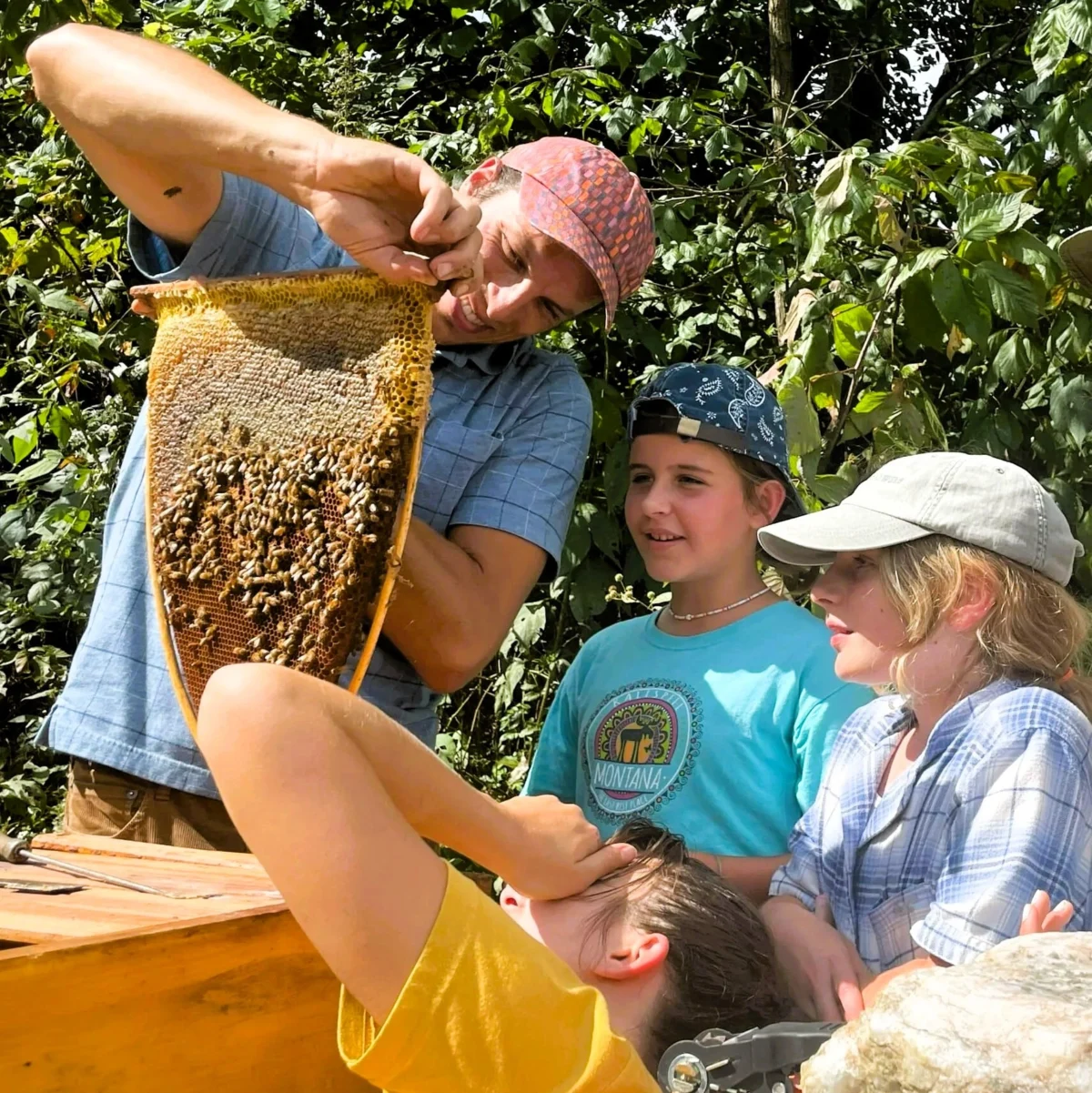
In the modern era, however, that deep-seated connection to the outdoors has faced unprecedented competition from digital distractions. Yet, tucked away in the natural landscape, programs like the Wilderness Awareness School are working to reverse this trend. On the surface, the institution looks and feels much like any traditional nature camp. The daily curriculum involves plenty of play, encounters with bugs, camp songs, and getting wonderfully muddy. Campers participate in hands-on activities, spend long stretches of time near water and beneath the canopy of towering trees, and gather around the campfire to roast food. But upon closer examination, educators and parents discover that this camp operates on an entirely different philosophy.
Piquing Curiosity Is Key
At the heart of the Wilderness Awareness School’s approach is curiosity, an element that instructors intentionally ignite by utilizing a signature teaching technique known as Coyote Mentoring. Throughout folklore and history, the coyote has long appeared in stories as a master of cleverness—a cunning creature that frequently uses wit and trickery to achieve a desired outcome. Coyotes live fluidly on the edge of wild landscapes, uniquely capable of navigating both developed and natural habitats with ease. Furthermore, the animal emulates heightened awareness, remaining fully tuned into its senses at all times.
Coyote Mentoring draws learning organically out of children rather than forcing information into them. This educational philosophy requires instructors to keep a keen, observant eye on the children in their care, actively watching for those fleeting moments when something in the environment captures a camper’s attention. These are the moments that create ideal, organic learning opportunities. A trained Coyote Mentor notices precisely what is sparking a child’s natural curiosity and uses that specific spark as a catalyst to engage campers in active, self-directed learning. This intricate process creates a supportive space where mentors can pass on valuable knowledge without the campers even realizing that formal instruction is taking place.
Teetering On The Edge
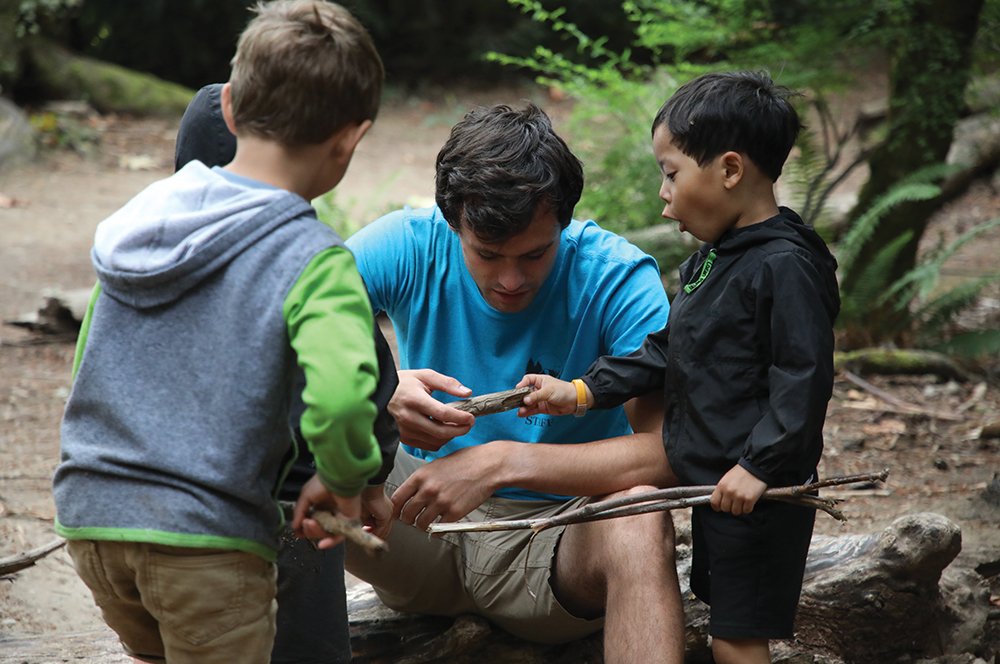
Enlisting the subtle art of questioning is another primary method Coyote Mentoring employs to stir up organic curiosity among participants. For instance, rather than simply telling a group of children that a stray feather discovered on the forest floor belongs to a Barred Owl, a Coyote Mentor engages the group with a strategic series of questions. What specific colors are they seeing on the quill? What size bird do they imagine the feather belonged to? How long does it look like the feather has been resting there? How might this object have come to rest on the ground? Mentors typically begin with a basic question that campers likely already have the answer to, and then progressively build to more challenging levels until an intellectual or emotional "edge" has been reached.
Developing an acute awareness of a child’s individual edge is an essential component of the Coyote Mentoring framework. A camper who reaches the edge of engagement may suddenly appear hesitant, scared, distracted, or entirely stuck. Instructors pay careful attention to the group dynamics and then masterfully guide a member right up to their edge, knowing precisely when to pause, take a break, and move on to something else, while simultaneously remaining alert to prime opportunities for future re-engagement.
Variables such as the time of day, communication styles, individual learning styles, and unique personality traits are all treated as critical factors when gaining a comprehensive understanding of a student. Instead of a Coyote Mentor adopting a rigid, one-size-fits-all teaching style, instructors dynamically cater to each camper’s preferred learning style based on continuous, careful observation.
Planting Seeds Engages An Audience
Instructors at the Wilderness Awareness School intentionally avoid enforcing a rigid, minute-by-minute agenda for each day. Instead, they may only loosely plan activities for the first portion of the day, allowing the remainder of the schedule to be organically determined by the natural flow, energy, and interests of the students.
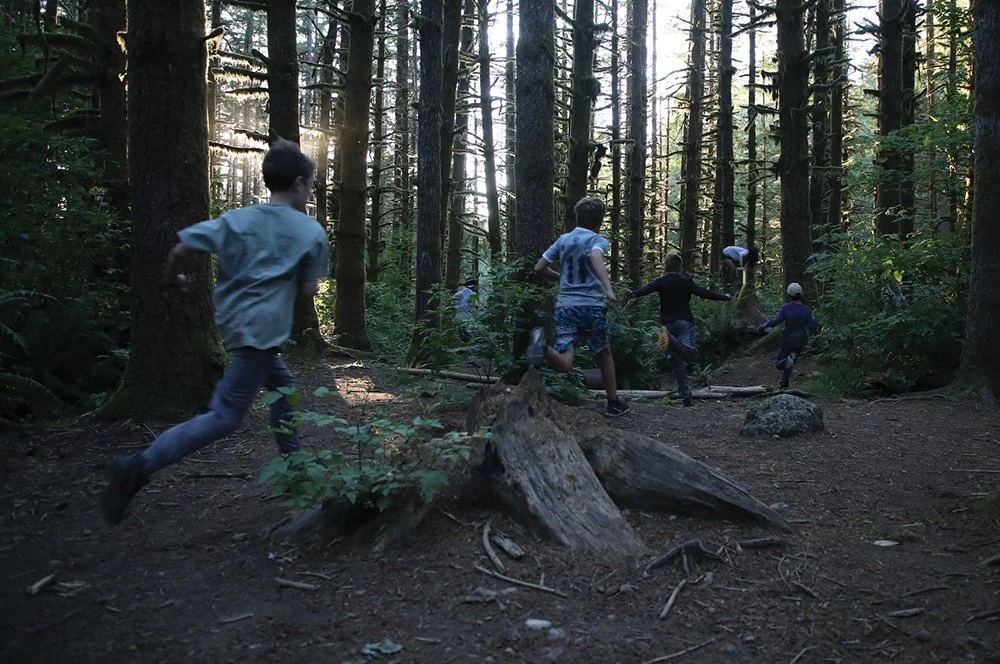
Coyote Mentors typically begin each day with an energetic game designed to break the ice, have fun, and help children release residual energy. During these games, instructors subtly "plant seeds"—perhaps assigning a role where one camper acts as an eagle chasing several sparrows, or encouraging children to run around an imaginary mud pit. The mentors remain vigilant, watching for the exact moment when a few campers begin to tire of the game, catching this transition just before the entire group loses engagement entirely. During this natural lull, when the group’s collective energy shifts downward, instructors will transition the children to a shaded spot to listen to a story.
Storytelling serves as yet another powerful opportunity to plant educational seeds. Stories provide a highly relatable, captivating way to draw out excitement and curiosity. For example, a mentor might tell an engaging tale about a young girl who develops a special relationship with spiders and learns the art of weaving simply by observing eight-legged creatures in her garden. Inspired by the narrative, the group might then set off on an impromptu trek through the woods to search for actual spiders, driven by a genuine, self-generated curiosity to learn how a spider weaves its web.
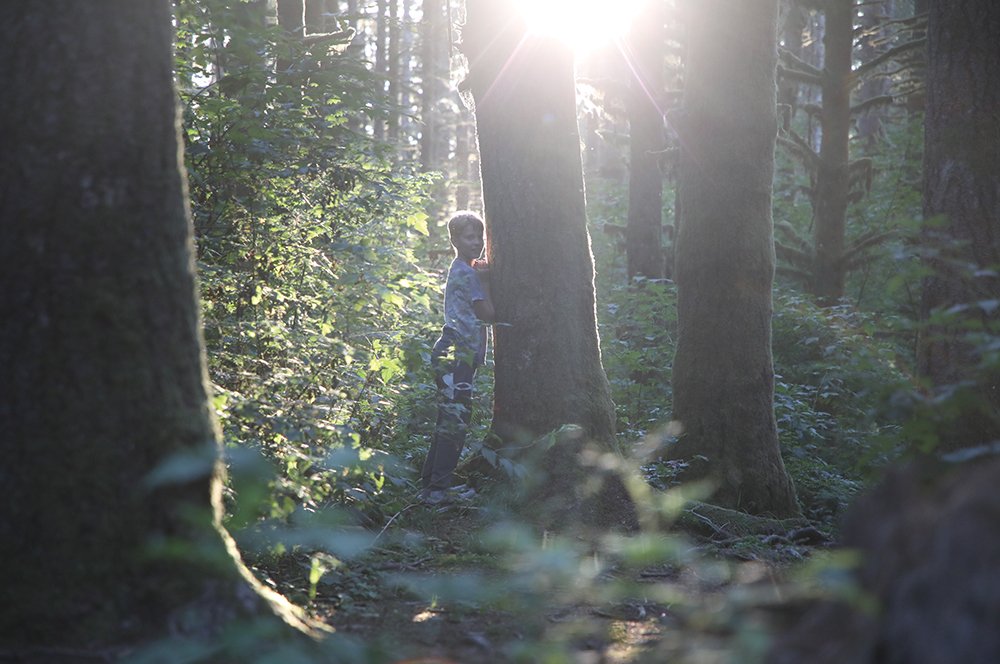
When adventuring through the landscape, campers are given the freedom to step into their own awareness of the natural world, deciding independently which components of nature truly speak to them. The Coyote Mentor watches these interactions unfold, choosing whether to ask timely, relevant questions on the spot, or opting to weave these newly discovered curiosities back into the official curriculum later in the day.
Recalling the conceptual seeds planted earlier during the morning activities, mentors can further deepen engagement by referencing earlier games. Remember that imaginary mud pit from the morning icebreaker? The children are often delighted when an afternoon wilderness adventure naturally leads them to an actual mud pit in the forest, where they can either reenact the morning’s imaginative game or simply dive straight in and get their hands dirty. In this way, a single day of summer camp blossoms organically into a living story of its own.
Opportunities To Explore
By utilizing targeted questioning, immersive storytelling, flow learning, and attentive observation, mentors possess a versatile toolkit designed to foster deep, meaningful relationships with the natural world and with one another. Through the cultivation of these foundational connections, the Wilderness Awareness School has spent decades watching its students grow into individuals who are remarkably resilient, compassionate, self-aware, and resourceful.
Although the Wilderness Awareness School might outwardly appear to be a straightforward nature camp—simply a way for children to get some fresh air, burn off energy, and meet new friends during summer vacation—the entire experience is carefully and thoughtfully curated by instructors who understand the subtle dynamics of youth development. They know their campers intimately, grant them the necessary space to explore independently, orchestrate organic opportunities for curiosity, and gently guide them past their comfort zones. When a camper eventually returns home and surprises their parents by voluntarily leaving a tablet on the coffee table and asking if the family can go for a hike, the work of the mentor is complete.
For those looking to explore the methodology further, the Wilderness Awareness School offers various training opportunities dedicated to the art of Coyote Mentoring. Resources such as Coyote’s Guide to Connecting with Nature serve as comprehensive manuals for parents and educators. The organization also hosts specialized events like the Coyote Mentoring Weekend each spring, alongside its intensive Nature Instructor Training program for those seeking a deep dive into the philosophy.
Originally reported by Leah Carlson, Marketing and Communications Director at the Wilderness Awareness School, these insights into modern nature-based education continue to highlight the enduring value of connecting children with the great outdoors.