Beyond the Screen: How Wilderness Awareness School is Reviving Childhood Through "Coyote Mentoring"
No Comments

For the vast majority of human history, a child’s primary classroom was the natural world. Long before the advent of television screens, illuminated video game consoles, and mass-manufactured plastic toys, generations of children spent their free hours exploring forests, fields, and streams. Nature was not merely a weekend destination or a seasonal vacation spot; it was home, a dynamic landscape where imagination and innate curiosity were the primary tools for development.

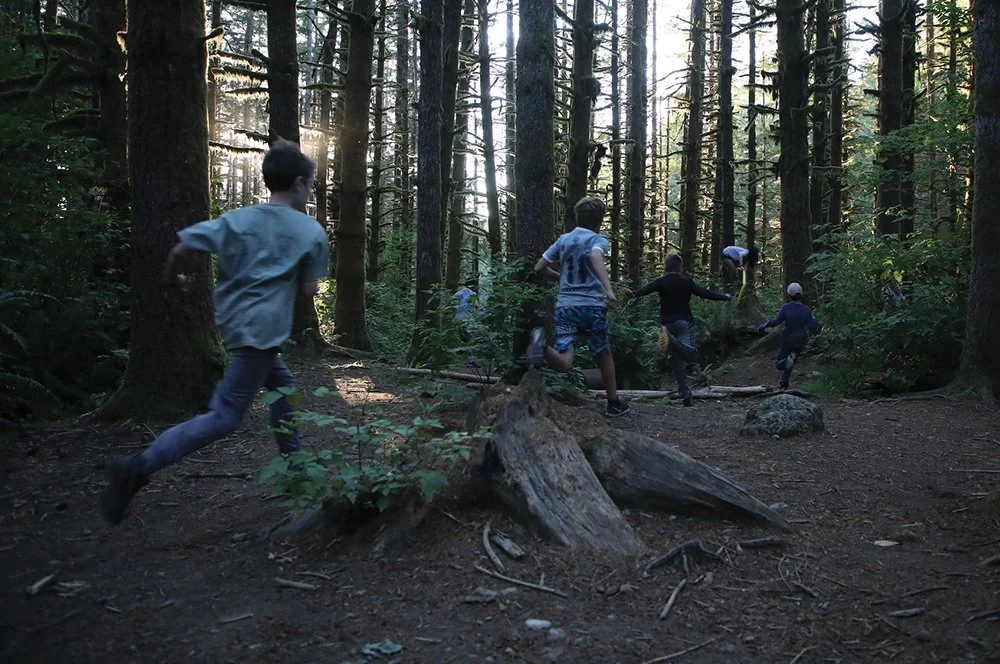
Today, however, children navigate a vastly different reality defined by digital distractions and indoor lifestyles. Yet, tucked away in the natural environment, specialized programs are striving to reconnect youth with their historical roots. At first glance, the daily routine at the Wilderness Awareness School looks much like any traditional summer camp. The curriculum is delightfully familiar, filled with bug-catching, mud, songs, hands-on activities near water and trees, and the simple joy of roasting food over an open campfire.

However, beneath the surface of these classic camp traditions lies an intentional, sophisticated educational philosophy that fundamentally alters how children interact with the outdoors. Rather than relying on rigid lesson plans or top-down instruction, the educators at the school operate under a unique framework designed to awaken deep, self-directed learning.

Piquing Curiosity Is Key

At the heart of this unconventional approach is curiosity, which instructors ignite through a signature teaching technique known as Coyote Mentoring. Throughout folklore and natural history, the coyote has long appeared as a master of cleverness—a cunning creature that often relies on adaptability and keen perception to navigate its surroundings. Coyotes live comfortably on the edge of wild landscapes, able to move with ease through both developed areas and dense wilderness. More importantly, the coyote serves as a living embodiment of awareness, entirely tuned into its senses.

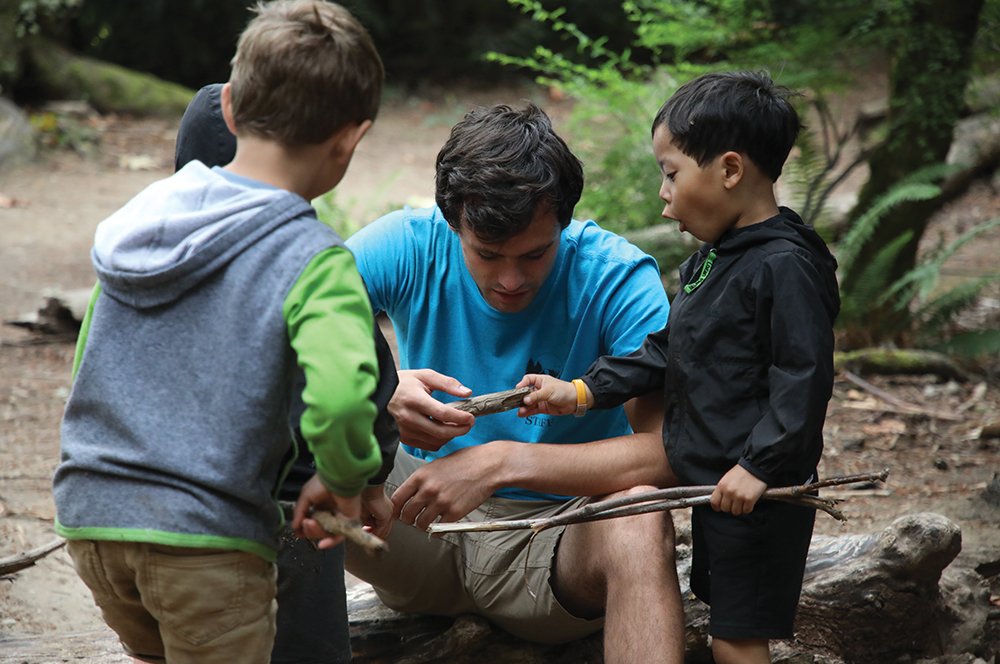
Coyote Mentoring flips traditional education on its head by drawing learning out of children rather than forcing it into them. This philosophy requires instructors to maintain a watchful eye, constantly scanning the group for moments when a specific discovery captures a camper’s attention. These fleeting instances create ideal, organic learning opportunities. A trained Coyote Mentor notices what is sparking a child’s natural curiosity and uses that specific point of interest as a catalyst to engage campers in active, self-driven learning. Through this subtle process, mentors create a space where knowledge is seamlessly passed on, often without the campers even realizing that an educational lesson is taking place.
Coyote Mentors

Teetering On The Edge

Enlisting the art of questioning is another primary method Coyote Mentors use to stir up organic wonder. Instead of simply delivering facts—such as casually announcing that a feather found on the forest floor belongs to a Barred Owl—a Coyote Mentor responds with a cascade of targeted questions. They might ask the children what colors they notice in the plumage, what size bird they think the feather belonged to, how long it appears to have rested on the ground, or how it might have fallen from the canopy. Mentors deliberately begin with basic questions that campers likely already know how to answer, then progressively build toward more challenging levels of inquiry until the children reach what instructors call an "edge."

An awareness of a child’s individual edge is an essential component of the Coyote Mentoring model. When a camper reaches the edge of their engagement, they might temporarily appear distracted, hesitant, or stuck. Mentors pay exceptionally close attention to the group dynamic, skillfully guiding a member up to their personal edge while remaining acutely aware of when to pause, take a break, or move on to a different activity. They also continuously seek out prime opportunities for re-engagement.

To achieve this, mentors evaluate a multitude of factors, including the time of day, communication styles, distinct learning styles, and individual personality traits. Rather than forcing a rigid, one-size-fits-all teaching style onto every participant, a Coyote Mentor constantly adapts, catering directly to a camper’s preferred way of processing information based on continuous, careful observation.

Planting Seeds Engages An Audience

To maintain this fluid, responsive environment, instructors at the Wilderness Awareness School avoid strict, minute-by-minute agendas. While they may outline activities for the early part of the day, the schedule is purposefully left flexible, allowing the remainder of the itinerary to be determined by the natural flow, energy, and interests of the students.

Typically, Coyote Mentors kick off each morning with an energetic game designed to break the ice, foster camaraderie, and help children burn off excess energy. During these activities, instructors subtly "plant seeds." For instance, a game might involve one camper playing an eagle chasing several designated sparrows, or children darting around an imaginary mud pit. The mentors closely monitor the group’s collective stamina, watching for the exact moment when a few campers begin to tire of the game, intervening just before the entire group loses interest. Capitalizing on this natural dip in energy, the mentors gather the children for a storytelling break.

Storytelling serves as yet another powerful vehicle for planting educational seeds. Compelling stories provide a relatable, engaging framework to draw out excitement and curiosity. A mentor might tell a narrative about a young girl who develops a special relationship with spiders, learning the art of web-weaving simply by observing the eight-legged creatures in her garden. Suitably inspired, the group of campers will often set off on a trek through the surrounding woods specifically to search for spiders, eager to witness firsthand how the creatures construct their webs.
Coyote Mentors

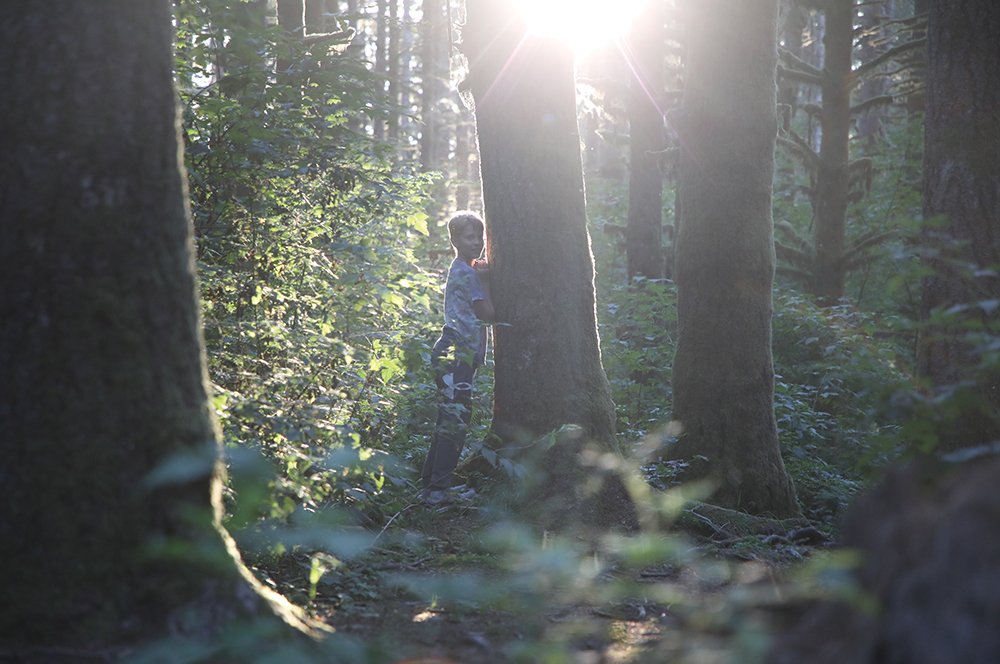
As they adventure through the landscape, campers step directly into their own awareness of the natural world, retaining the autonomy to decide which components of the ecosystem capture their imagination. The Coyote Mentor observes quietly, choosing either to ask relevant questions in the moment or to weave these specific curiosities back into the formal curriculum later in the day.

Later, mentors can recall the seeds planted earlier in the morning by directly referencing the day’s opening activities. Children who participated in the morning game involving an imaginary mud pit, for example, are often delighted when an afternoon adventure leads them to an actual, physical mud pit. Here, they have the freedom to reenact the morning’s game or simply dive in and get their hands dirty, transforming a standard day of summer camp into an unfolding, memorable narrative of their own.

Opportunities To Explore

By mastering the tools of questioning, storytelling, flow learning, and keen observation, mentors at the Wilderness Awareness School help young people forge lasting relationships with the natural world and with one another. By fostering these deep connections over the course of decades, the institution has consistently watched its students grow into resilient, compassionate, self-aware, and resourceful individuals.

While the Wilderness Awareness School might outwardly resemble a traditional nature camp—providing a space for children to breathe fresh air and make new friends during the summer months—the underlying experience is carefully curated by educators who understand the psychology of youth engagement. They provide children with the physical and mental space to explore, orchestrate intentional opportunities for discovery, and gently push them toward their personal learning edges. Ultimately, when a camper returns home at the end of the day, leaves their digital tablet on the coffee table, and spontaneously asks the family to go for a hike, the quiet work of the coyote mentor is complete.

Rethinking Screen Time: How Homeschool Educators Are Turning Video Games into Powerful Learning Tools

No Comments

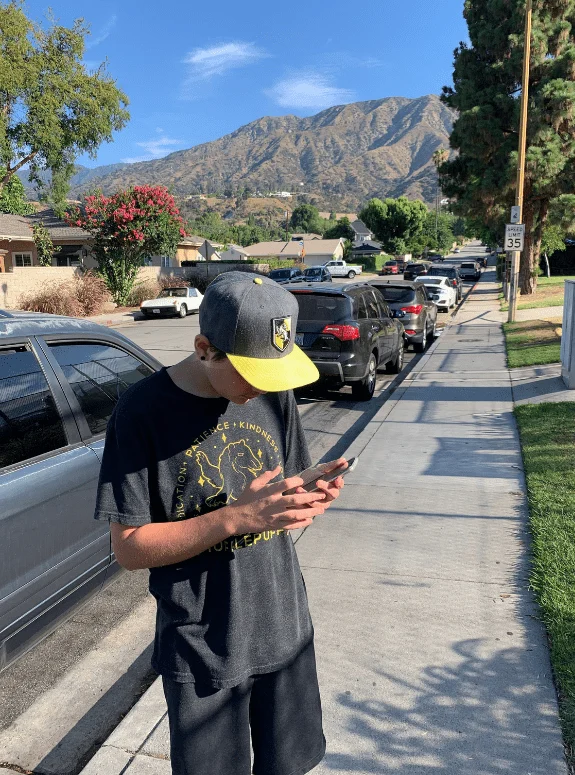
For many parents navigating the daily challenges of educating their children at home, the eternal struggle against screen time remains a constant source of friction. The scene is familiar to countless households: a parent striving to implement a structured, enriching curriculum, while a preteen or teenager resists traditional instruction with every fiber of their being. Last week, during a routine phone call with a fellow homeschooling mother, education writer and advocate Shawna Wingert encountered this exact scenario once again.

The mother was grappling with how best to educate her twelve-year-old son without suffering through the daily bouts of resistance that had derailed their academic schedule the previous year. Wingert gently suggested implementing an interest-led approach to learning, a method that aligns academic concepts with a child’s natural curiosities. Frustrated and visibly discouraged, the mother offered a reply that many modern educators and parents frequently echo: "How can I take an interest-led approach when his only interest is video games?"

It is a concern that Wingert, a veteran homeschooling parent and author who runs the resource platform Different by Design Learning, understands intimately. For years, the prevailing sentiment within many educational and homeschooling communities has positioned video games as a primary adversary of academic achievement and cognitive development. Wingert admits she once shared that exact perspective, viewing digital screens as a distraction at best and a detriment at worst.

Interest-Led Learning When Your Child Only Likes Video Games

However, over the course of several years, as her own sons matured into teenagers and she sought new, effective ways to bridge the communication gap, her perspective shifted dramatically. Rather than viewing video games as a threat to traditional education, Wingert began to recognize them as a sophisticated, versatile tool capable of unlocking engagement and fostering deep learning. The more she observed her sons’ deep-seated passion for gaming, the more convinced she became that the broader educational community was overlooking substantial opportunities to connect with children on their own terms.

Not All Games Are Created Equal

A central anxiety among parents is the persistent fear that children will spend countless hours isolated in dark rooms immersed in violent or degrading content. While such titles undeniably exist within the vast landscape of the gaming industry, industry observers and educators point out that a massive spectrum of games exists that offer genuine, high-value educational opportunities.

Wingert points to practical examples from her own household to illustrate this point. The sandbox building phenomenon Minecraft has remained a cornerstone of their educational routine ever since she discovered that in-game signs could be strategically placed throughout virtual landscapes. By utilizing these text features, she was able to help one of her sons practice sight words and improve his reading skills in a low-pressure, highly motivating environment.

Interest-Led Learning When Your Child Only Likes Video Games

Similarly, historical strategy and war simulations have proven to be surprisingly potent pedagogical resources. Wingert notes that through playing the historical shooter Battlefield One, another of her sons absorbed a depth of knowledge regarding the realities, geography, and historical context of World War I that far surpassed anything presented in a standard textbook. By engaging with complex historical simulations, students often transition from passive recipients of historical dates to active participants who seek out additional context and research independently.

Building Bridges: Connecting with Children Through Their Passions

The integration of video games into an educational framework extends far beyond simple knowledge acquisition; it fundamentally transforms the relational dynamic between parent and child. Just as children eagerly share their latest physical artwork, sculptural creations, or athletic tricks on a skateboard, they derive immense pride from demonstrating their virtual mastery and problem-solving skills within a digital environment.

By familiarizing themselves with the games their children enjoy, asking thoughtful questions about game mechanics, and offering genuine positive reinforcement, parents can cultivate an environment rooted in mutual respect. Wingert emphasizes that this foundational respect serves as the bedrock for any successful interest-led educational model. Just as a parent might enthusiastically support a child’s fascination with zoology or fine arts, video game interests can be leveraged with equal validity, provided the adult is willing to take the time to learn about the medium with the child acting as the guide.

Interest-Led Learning When Your Child Only Likes Video Games

This collaborative approach naturally paves the way for strength-based learning models. Wingert, a passionate advocate for centering a child’s education around their innate capabilities rather than their academic deficits, has frequently highlighted how unexpected avenues can reveal a child’s true cognitive gifts. For instance, her youngest son demonstrated an extraordinary aptitude for three-dimensional spatial reasoning and architectural building within virtual spaces. Recognizing this strength in a gaming context allowed her to intentionally incorporate spatial thinking and structural design into offline learning activities, creating a holistic educational plan that bridges the digital and physical worlds.

Practical Applications for the Modern Homeschool

Translating the concept of gaming-integrated education into daily practice does not require parents to become expert gamers themselves. Educators who successfully utilize this approach generally rely on a few consistent strategies to maintain a healthy balance between screen engagement and academic rigor.

The primary recommendation centers on active involvement and dialogue. While a parent does not necessarily need to hold a controller, sitting alongside children while they play, inquiring about their strategic choices, and inviting them to explain their in-game accomplishments fosters critical thinking and verbal communication skills. When children articulate their goals, challenges, and problem-solving strategies, they are actively practicing narration, logic, and persuasion.

Interest-Led Learning When Your Child Only Likes Video Games

Furthermore, virtual environments frequently serve as natural springboards for broader academic inquiries. When a child encounters a specific geographic location, historical event, or scientific phenomenon within a game, that moment offers an immediate catalyst for real-world research. Consulting physical maps, conducting online database searches, and comparing historical accuracy against digital depictions transforms idle entertainment into rigorous, inquiry-based study. In Wingert’s experience, a passing mention of Russia in a game’s setting successfully led to collaborative geography research, map analysis, and critical discussions regarding how media portrays global regions.

Beyond geography and history, interactive digital platforms frequently function as modern equivalents of traditional educational projects. Creative building games like Minecraft allow students to construct elaborate historical reconstructions, such as medieval villages, serving as an interactive alternative to traditional paper-and-pencil reports or shoebox dioramas. These virtual projects offer educators a clear, tangible method to check for understanding and assess how effectively a student has retained information from a broader unit study.

As homeschooling communities continue to adapt to the diverse learning needs of modern students, the rigid boundaries separating entertainment from education are slowly beginning to dissolve. By approaching video games with curiosity rather than skepticism, educators and parents alike are discovering that children’s digital passions can become powerful catalysts for lifelong learning, strengthening both academic comprehension and familial connection along the way.