An Open Call for Interfaith Solidarity: Responding to Islamophobia and the Politics of Division
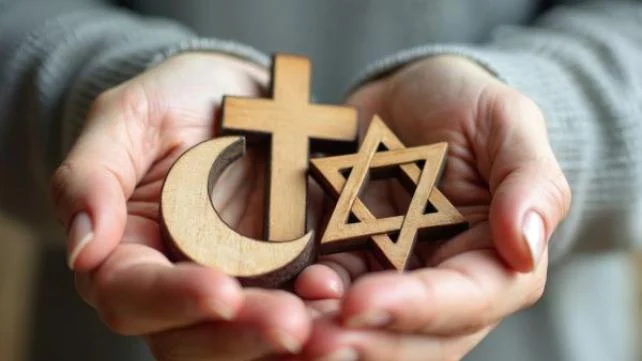
In an era defined by deep political polarization and cultural friction, communities of faith across the United States are increasingly called upon to examine how public rhetoric affects the social fabric of the nation. Recently, Muslim communities have found themselves navigating a renewed wave of tension, prompted by political discourse that critics say relies on the artificial stirring of Islamophobia by bad-faith actors. In response, community leaders and interfaith advocates have issued an open appeal to Christian, Jewish, and other faith-based allies, urging them to stand in solidarity with their Muslim neighbors during a period of distinct vulnerability.
The emotional resonance of this appeal becomes clear when viewed through a universal lens of reverence and family. One need only imagine a public crowd at a political gathering openly mocking names of profound religious significance—such as Mary, Moses, or Joseph. For billions of people, these names represent foundational figures of faith, as well as beloved family members at home: a mother, a grandfather, a son. For the Muslim community, a comparable moment occurred during a political rally in Dalton, Georgia, when political rhetoric targeted a name carried by millions worldwide.
During the event, comments were made referencing Middle Eastern names in a generalized and dismissive manner, specifically invoking the name Muhammad and later directing similar remarks toward a Muslim Senate candidate from Michigan. While subsequent news reports, including coverage from Reuters, noted that the crowd’s immediate response was relatively muted, community advocates emphasized that the quiet itself was telling. Many observers and citizens across the political spectrum recognized that publicly diminishing a person’s name—and by extension, the revered historical figure it honors—strayed far beyond the expected bounds of civic discourse, particularly for someone holding the highest office in the land.
For many Muslim Americans, the incident caused tangible hurt. The name Muhammad is carried by countless individuals, whether worn by themselves, their fathers, sons, or brothers, chosen out of a deep affection for the Prophet. The recent rhetoric, however, did not occur in a vacuum, prompting community leaders to look closely at the broader environment in which these incidents take place.
The Broader Context: Attacks on Muslims in the Name of Sharia
For months leading up to these events, Muslim Americans have frequently been framed as a cultural or legal threat under the banner of "Sharia law." Legal scholars and community organizations point out that no American Muslim organization has ever advocated for the replacement of the United States legal system with religious law. Muslims are not petitioning courts to supplant constitutional governance with religious jurisprudence. Yet, despite the complete absence of any such movement, policy proposals, legislative bills, and public speeches continue to invoke a supposed Sharia threat as a political talking point.
When viewed as a collective pattern, these occurrences are difficult to dismiss as isolated incidents. A casual joke about a sacred name at a political rally, classroom materials framing religious figures in a hostile light, and legislative efforts targeting a nonexistent legal threat all converge on a single, underlying message: that Muslims do not fully belong in the civic life of the nation. People of faith from various religious traditions understand historically where such messaging can lead if left unchecked by a strong, vocal commitment to pluralism and mutual respect.
Muhammad Ali and the Meaning of a Name
To understand the profound cultural weight attached to the name Muhammad in American history, one need only look back at the legacy of the legendary heavyweight boxing champion Muhammad Ali. When Cassius Clay formally changed his name to Muhammad Ali in 1964, the reaction from much of the mainstream media, sports establishments, and fans was marked by resistance, and at times, overt mockery. Many sportswriters and commentators steadfastly refused to use his new name, reflecting the broader societal prejudices of the era.
A few years later, in 1967, Ali took a defining stand of conscience, refusing military induction on the grounds of his religious beliefs as a conscientious objector. The consequences were severe: he was stripped of his heavyweight title, banned from boxing during the prime of his athletic career, and faced the threat of federal imprisonment. His case wound its way through the American judicial system until 1971, when the United States Supreme Court ruled unanimously in his favor, voting eight to zero to overturn his conviction.
Decades later, the public perception of Muhammad Ali underwent a profound transformation. By the end of his life, he was embraced by Americans of virtually every faith, background, and political persuasion. In 1996, he stood before a global audience to light the Olympic flame in Atlanta, Georgia. In 2005, he was awarded the Presidential Medal of Freedom, the nation’s highest civilian honor.
When Ali passed away in 2016, his memorial service in Louisville, Kentucky, was intentionally designed as an interfaith gathering. Muslim, Christian, Jewish, and other religious leaders participated side by side in a farewell that Ali had meticulously planned himself. His life demonstrated that a man bearing the name Muhammad could ultimately become a source of immense pride for the entire nation. His story remains a powerful reference point for interfaith groups seeking to discuss dignity, identity, and the place of faith in public life.
As communities continue to navigate the complexities of modern social and political discourse, advocates emphasize that standing together against prejudice remains essential. The outreach extended by Muslim communities to their Christian, Jewish, and other peers serves as a reminder of shared values and mutual resilience in the face of manufactured division.
