Beyond the Screen: How Wilderness Awareness School is Reviving Childhood Through ‘Coyote Mentoring’
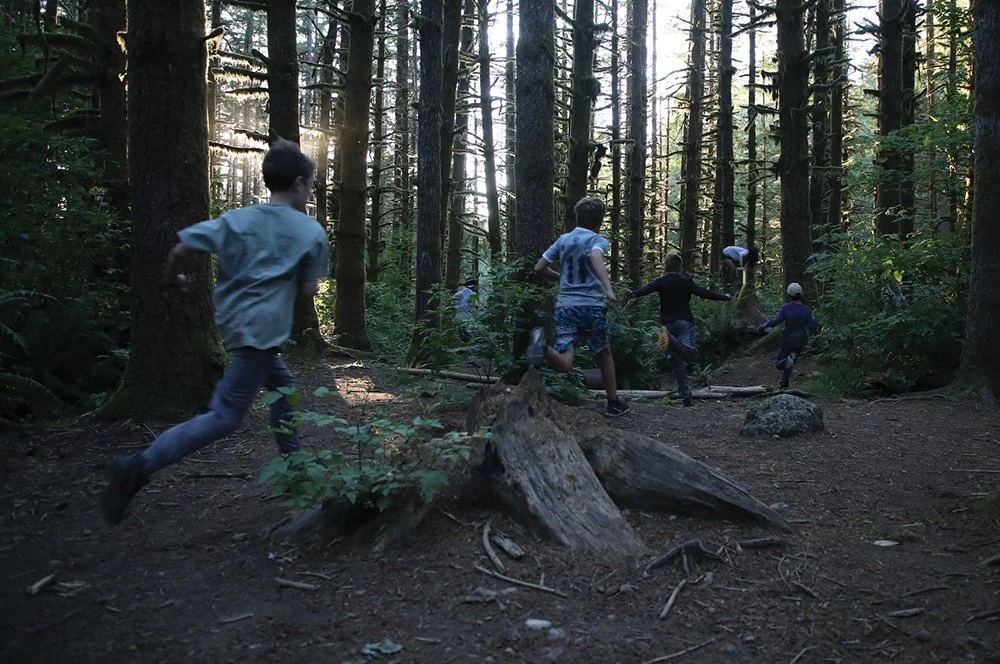
For the vast majority of human history, childhood was defined by the open air, unscripted exploration, and the boundaries of the imagination. Long before the advent of television screens, glowing video games, and mass-manufactured plastic toys, children spent the vast majority of their free time immersed in natural surroundings. Woods, fields, creeks, and backyards served as the ultimate classrooms, and nature was quite literally home.
In the modern era, however, that deep-seated connection to the outdoors has faced unprecedented competition from digital distractions. Yet, tucked away in the natural landscape, programs like the Wilderness Awareness School are working to reverse this trend. On the surface, the institution looks and feels much like any traditional nature camp. The daily curriculum involves plenty of play, encounters with bugs, camp songs, and getting wonderfully muddy. Campers participate in hands-on activities, spend long stretches of time near water and beneath the canopy of towering trees, and gather around the campfire to roast food. But upon closer examination, educators and parents discover that this camp operates on an entirely different philosophy.
Piquing Curiosity Is Key
At the heart of the Wilderness Awareness School’s approach is curiosity, an element that instructors intentionally ignite by utilizing a signature teaching technique known as Coyote Mentoring. Throughout folklore and history, the coyote has long appeared in stories as a master of cleverness—a cunning creature that frequently uses wit and trickery to achieve a desired outcome. Coyotes live fluidly on the edge of wild landscapes, uniquely capable of navigating both developed and natural habitats with ease. Furthermore, the animal emulates heightened awareness, remaining fully tuned into its senses at all times.
Coyote Mentoring draws learning organically out of children rather than forcing information into them. This educational philosophy requires instructors to keep a keen, observant eye on the children in their care, actively watching for those fleeting moments when something in the environment captures a camper’s attention. These are the moments that create ideal, organic learning opportunities. A trained Coyote Mentor notices precisely what is sparking a child’s natural curiosity and uses that specific spark as a catalyst to engage campers in active, self-directed learning. This intricate process creates a supportive space where mentors can pass on valuable knowledge without the campers even realizing that formal instruction is taking place.
Teetering On The Edge
Enlisting the subtle art of questioning is another primary method Coyote Mentoring employs to stir up organic curiosity among participants. For instance, rather than simply telling a group of children that a stray feather discovered on the forest floor belongs to a Barred Owl, a Coyote Mentor engages the group with a strategic series of questions. What specific colors are they seeing on the quill? What size bird do they imagine the feather belonged to? How long does it look like the feather has been resting there? How might this object have come to rest on the ground? Mentors typically begin with a basic question that campers likely already have the answer to, and then progressively build to more challenging levels until an intellectual or emotional "edge" has been reached.
Developing an acute awareness of a child’s individual edge is an essential component of the Coyote Mentoring framework. A camper who reaches the edge of engagement may suddenly appear hesitant, scared, distracted, or entirely stuck. Instructors pay careful attention to the group dynamics and then masterfully guide a member right up to their edge, knowing precisely when to pause, take a break, and move on to something else, while simultaneously remaining alert to prime opportunities for future re-engagement.
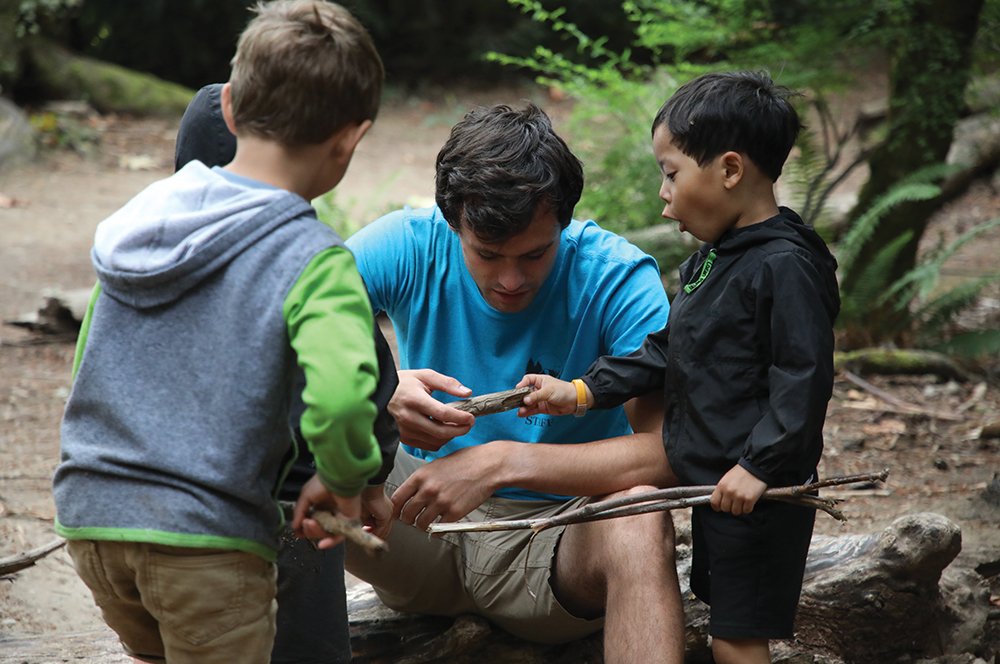
Variables such as the time of day, communication styles, individual learning styles, and unique personality traits are all treated as critical factors when gaining a comprehensive understanding of a student. Instead of a Coyote Mentor adopting a rigid, one-size-fits-all teaching style, instructors dynamically cater to each camper’s preferred learning style based on continuous, careful observation.
Planting Seeds Engages An Audience
Instructors at the Wilderness Awareness School intentionally avoid enforcing a rigid, minute-by-minute agenda for each day. Instead, they may only loosely plan activities for the first portion of the day, allowing the remainder of the schedule to be organically determined by the natural flow, energy, and interests of the students.
Coyote Mentors typically begin each day with an energetic game designed to break the ice, have fun, and help children release residual energy. During these games, instructors subtly "plant seeds"—perhaps assigning a role where one camper acts as an eagle chasing several sparrows, or encouraging children to run around an imaginary mud pit. The mentors remain vigilant, watching for the exact moment when a few campers begin to tire of the game, catching this transition just before the entire group loses engagement entirely. During this natural lull, when the group’s collective energy shifts downward, instructors will transition the children to a shaded spot to listen to a story.
Storytelling serves as yet another powerful opportunity to plant educational seeds. Stories provide a highly relatable, captivating way to draw out excitement and curiosity. For example, a mentor might tell an engaging tale about a young girl who develops a special relationship with spiders and learns the art of weaving simply by observing eight-legged creatures in her garden. Inspired by the narrative, the group might then set off on an impromptu trek through the woods to search for actual spiders, driven by a genuine, self-generated curiosity to learn how a spider weaves its web.
When adventuring through the landscape, campers are given the freedom to step into their own awareness of the natural world, deciding independently which components of nature truly speak to them. The Coyote Mentor watches these interactions unfold, choosing whether to ask timely, relevant questions on the spot, or opting to weave these newly discovered curiosities back into the official curriculum later in the day.
Recalling the conceptual seeds planted earlier during the morning activities, mentors can further deepen engagement by referencing earlier games. Remember that imaginary mud pit from the morning icebreaker? The children are often delighted when an afternoon wilderness adventure naturally leads them to an actual mud pit in the forest, where they can either reenact the morning’s imaginative game or simply dive straight in and get their hands dirty. In this way, a single day of summer camp blossoms organically into a living story of its own.
Opportunities To Explore
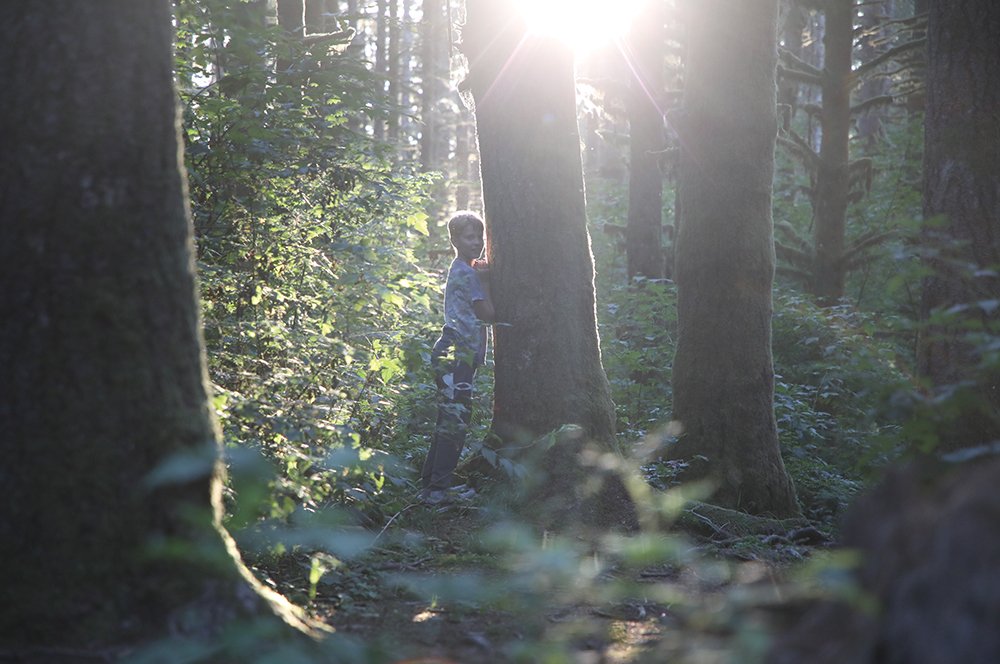
By utilizing targeted questioning, immersive storytelling, flow learning, and attentive observation, mentors possess a versatile toolkit designed to foster deep, meaningful relationships with the natural world and with one another. Through the cultivation of these foundational connections, the Wilderness Awareness School has spent decades watching its students grow into individuals who are remarkably resilient, compassionate, self-aware, and resourceful.
Although the Wilderness Awareness School might outwardly appear to be a straightforward nature camp—simply a way for children to get some fresh air, burn off energy, and meet new friends during summer vacation—the entire experience is carefully and thoughtfully curated by instructors who understand the subtle dynamics of youth development. They know their campers intimately, grant them the necessary space to explore independently, orchestrate organic opportunities for curiosity, and gently guide them past their comfort zones. When a camper eventually returns home and surprises their parents by voluntarily leaving a tablet on the coffee table and asking if the family can go for a hike, the work of the mentor is complete.
For those looking to explore the methodology further, the Wilderness Awareness School offers various training opportunities dedicated to the art of Coyote Mentoring. Resources such as Coyote’s Guide to Connecting with Nature serve as comprehensive manuals for parents and educators. The organization also hosts specialized events like the Coyote Mentoring Weekend each spring, alongside its intensive Nature Instructor Training program for those seeking a deep dive into the philosophy.
Originally reported by Leah Carlson, Marketing and Communications Director at the Wilderness Awareness School, these insights into modern nature-based education continue to highlight the enduring value of connecting children with the great outdoors.
