Beyond the Screen: How Wilderness Awareness School is Reviving Childhood Through "Coyote Mentoring"
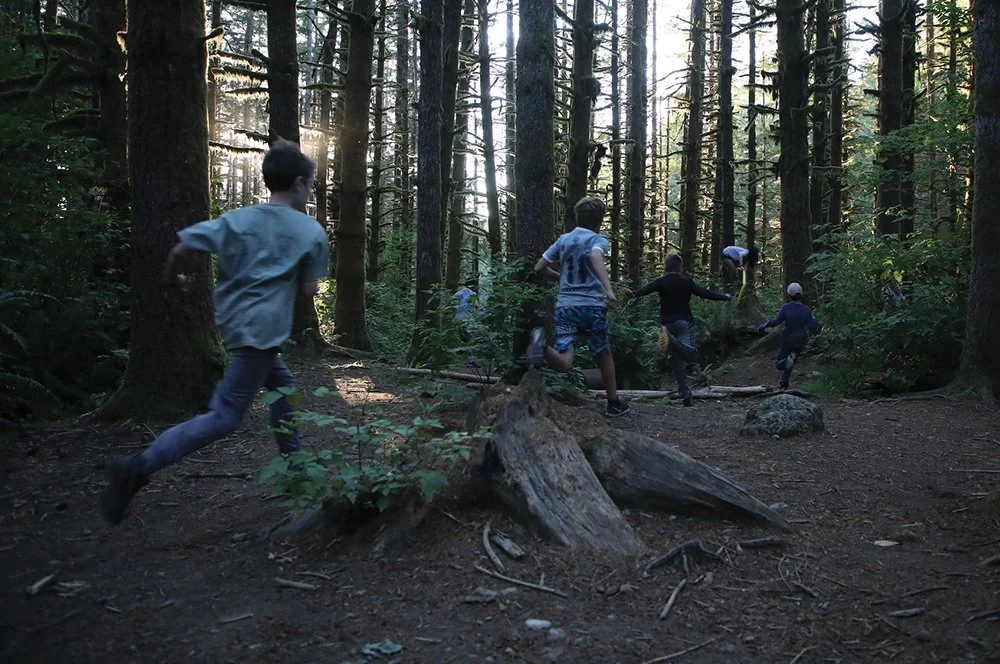
For the vast majority of human history, a child’s primary classroom was the natural world. Long before the advent of television screens, illuminated video game consoles, and mass-manufactured plastic toys, generations of children spent their free hours exploring forests, fields, and streams. Nature was not merely a weekend destination or a seasonal vacation spot; it was home, a dynamic landscape where imagination and innate curiosity were the primary tools for development.
Today, however, children navigate a vastly different reality defined by digital distractions and indoor lifestyles. Yet, tucked away in the natural environment, specialized programs are striving to reconnect youth with their historical roots. At first glance, the daily routine at the Wilderness Awareness School looks much like any traditional summer camp. The curriculum is delightfully familiar, filled with bug-catching, mud, songs, hands-on activities near water and trees, and the simple joy of roasting food over an open campfire.
However, beneath the surface of these classic camp traditions lies an intentional, sophisticated educational philosophy that fundamentally alters how children interact with the outdoors. Rather than relying on rigid lesson plans or top-down instruction, the educators at the school operate under a unique framework designed to awaken deep, self-directed learning.
Piquing Curiosity Is Key
At the heart of this unconventional approach is curiosity, which instructors ignite through a signature teaching technique known as Coyote Mentoring. Throughout folklore and natural history, the coyote has long appeared as a master of cleverness—a cunning creature that often relies on adaptability and keen perception to navigate its surroundings. Coyotes live comfortably on the edge of wild landscapes, able to move with ease through both developed areas and dense wilderness. More importantly, the coyote serves as a living embodiment of awareness, entirely tuned into its senses.
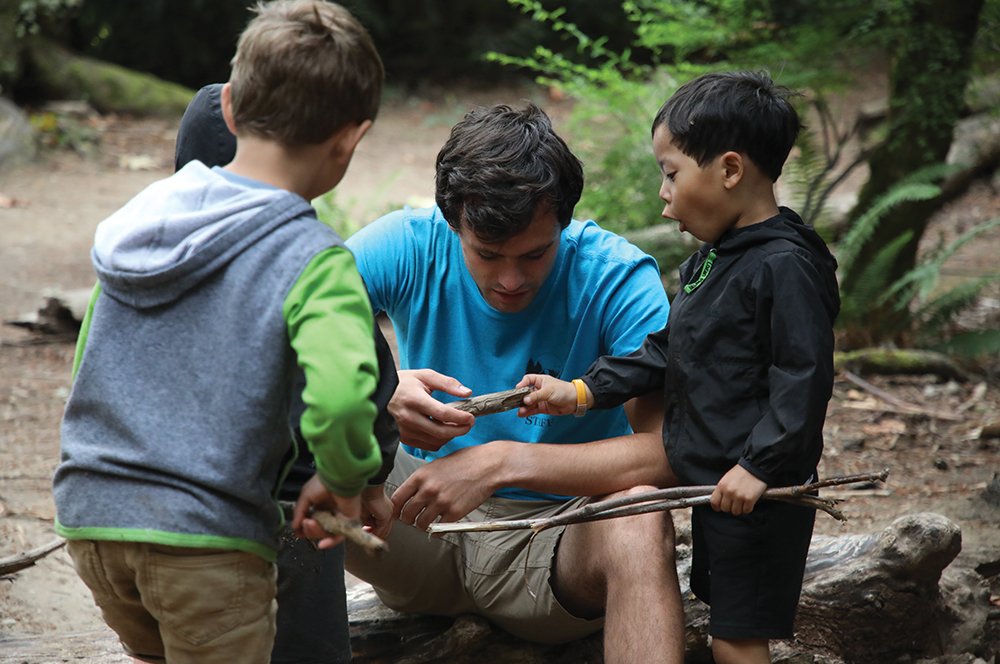
Coyote Mentoring flips traditional education on its head by drawing learning out of children rather than forcing it into them. This philosophy requires instructors to maintain a watchful eye, constantly scanning the group for moments when a specific discovery captures a camper’s attention. These fleeting instances create ideal, organic learning opportunities. A trained Coyote Mentor notices what is sparking a child’s natural curiosity and uses that specific point of interest as a catalyst to engage campers in active, self-driven learning. Through this subtle process, mentors create a space where knowledge is seamlessly passed on, often without the campers even realizing that an educational lesson is taking place.
Teetering On The Edge
Enlisting the art of questioning is another primary method Coyote Mentors use to stir up organic wonder. Instead of simply delivering facts—such as casually announcing that a feather found on the forest floor belongs to a Barred Owl—a Coyote Mentor responds with a cascade of targeted questions. They might ask the children what colors they notice in the plumage, what size bird they think the feather belonged to, how long it appears to have rested on the ground, or how it might have fallen from the canopy. Mentors deliberately begin with basic questions that campers likely already know how to answer, then progressively build toward more challenging levels of inquiry until the children reach what instructors call an "edge."
An awareness of a child’s individual edge is an essential component of the Coyote Mentoring model. When a camper reaches the edge of their engagement, they might temporarily appear distracted, hesitant, or stuck. Mentors pay exceptionally close attention to the group dynamic, skillfully guiding a member up to their personal edge while remaining acutely aware of when to pause, take a break, or move on to a different activity. They also continuously seek out prime opportunities for re-engagement.
To achieve this, mentors evaluate a multitude of factors, including the time of day, communication styles, distinct learning styles, and individual personality traits. Rather than forcing a rigid, one-size-fits-all teaching style onto every participant, a Coyote Mentor constantly adapts, catering directly to a camper’s preferred way of processing information based on continuous, careful observation.
Planting Seeds Engages An Audience
To maintain this fluid, responsive environment, instructors at the Wilderness Awareness School avoid strict, minute-by-minute agendas. While they may outline activities for the early part of the day, the schedule is purposefully left flexible, allowing the remainder of the itinerary to be determined by the natural flow, energy, and interests of the students.
Typically, Coyote Mentors kick off each morning with an energetic game designed to break the ice, foster camaraderie, and help children burn off excess energy. During these activities, instructors subtly "plant seeds." For instance, a game might involve one camper playing an eagle chasing several designated sparrows, or children darting around an imaginary mud pit. The mentors closely monitor the group’s collective stamina, watching for the exact moment when a few campers begin to tire of the game, intervening just before the entire group loses interest. Capitalizing on this natural dip in energy, the mentors gather the children for a storytelling break.
Storytelling serves as yet another powerful vehicle for planting educational seeds. Compelling stories provide a relatable, engaging framework to draw out excitement and curiosity. A mentor might tell a narrative about a young girl who develops a special relationship with spiders, learning the art of web-weaving simply by observing the eight-legged creatures in her garden. Suitably inspired, the group of campers will often set off on a trek through the surrounding woods specifically to search for spiders, eager to witness firsthand how the creatures construct their webs.
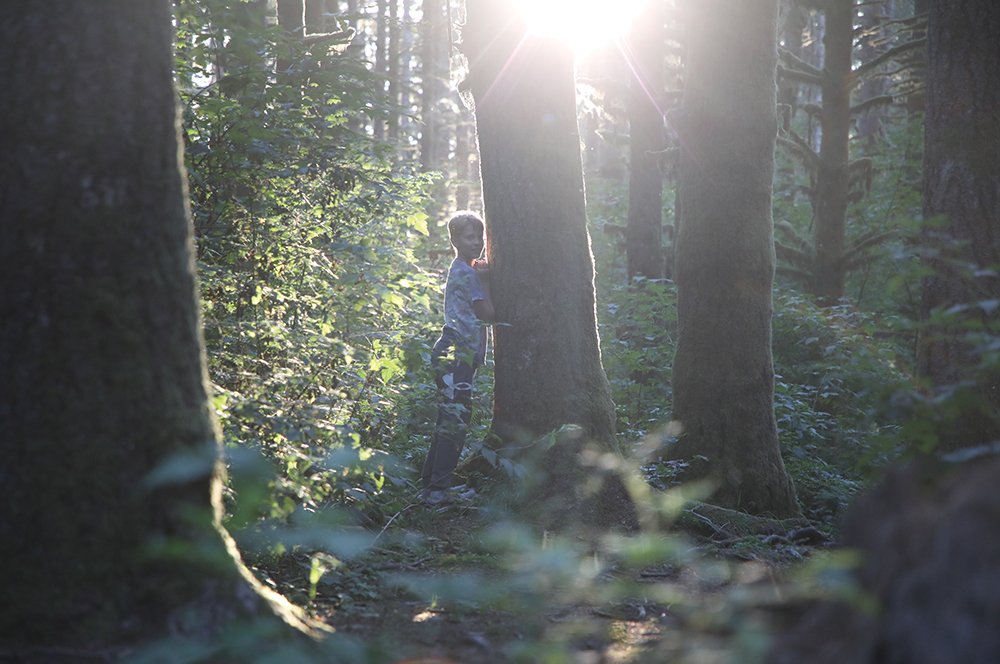
As they adventure through the landscape, campers step directly into their own awareness of the natural world, retaining the autonomy to decide which components of the ecosystem capture their imagination. The Coyote Mentor observes quietly, choosing either to ask relevant questions in the moment or to weave these specific curiosities back into the formal curriculum later in the day.
Later, mentors can recall the seeds planted earlier in the morning by directly referencing the day’s opening activities. Children who participated in the morning game involving an imaginary mud pit, for example, are often delighted when an afternoon adventure leads them to an actual, physical mud pit. Here, they have the freedom to reenact the morning’s game or simply dive in and get their hands dirty, transforming a standard day of summer camp into an unfolding, memorable narrative of their own.
Opportunities To Explore
By mastering the tools of questioning, storytelling, flow learning, and keen observation, mentors at the Wilderness Awareness School help young people forge lasting relationships with the natural world and with one another. By fostering these deep connections over the course of decades, the institution has consistently watched its students grow into resilient, compassionate, self-aware, and resourceful individuals.
While the Wilderness Awareness School might outwardly resemble a traditional nature camp—providing a space for children to breathe fresh air and make new friends during the summer months—the underlying experience is carefully curated by educators who understand the psychology of youth engagement. They provide children with the physical and mental space to explore, orchestrate intentional opportunities for discovery, and gently push them toward their personal learning edges. Ultimately, when a camper returns home at the end of the day, leaves their digital tablet on the coffee table, and spontaneously asks the family to go for a hike, the quiet work of the coyote mentor is complete.
