For generations, readers have found themselves captivated by the spirited, red-headed orphan of Prince Edward Island who changed the lives of everyone at Green Gables. For Jamie C. Martin, editor of Simple Homeschool, that influence began at the age of twelve. Spending hours under the spell of Lucy Maud Montgomery’s classic creation, Martin discovered more than just a captivating story; she found a blueprint for her future. The adventures shared with Anne—known famously with an “e”—planted seeds that would later blossom into a life defined by adoption, a deep love for literature, a career in writing, and an unapologetic embrace of starry-eyed dreaming.
Reflecting on those formative years, Martin admits a profound debt to the literary heroine. Throughout her teens and early adulthood, she revisited the entire Anne of Green Gables series, devouring nearly every other title she could source from Montgomery’s bibliography. The author’s unique voice simply resonated deeply.
Years later, however, that relationship with Montgomery’s work evolved. As a newly married adult, Martin turned the pages of all five volumes of The Selected Journals of L.M. Montgomery. For serious fans of the fictional red-head, these journals offered a starkly different reality—one of grown-up entries balancing profound joy with deep sorrow, and happiness sitting side-by-side with heartbreak. It was a revelation that challenged Martin, leaving her uncertain whether she could ever view the optimistic world of Anne Shirley through quite the same lens.
Yet, as Martin would soon discover, Anne and her creator still had valuable lessons left to impart.
Faced with the daily realities of raising her own children, Martin encountered a piece of literary wisdom suggesting that readers should approach classic books—those that have shaped generations—with a specific, personal question in mind. Now reading Anne of Green Gables through the lens of a parent of three, Martin posed a pivotal query: What can a parent truly learn about raising children from this timeless novel?
The answer she uncovered was both surprising and liberating, offering a counter-cultural perspective in a world often obsessed with immediate behavioral correction: loosen up and let maturity do its work.
In the beloved novel, a young Anne Shirley is a perpetual catalyst for mischief. From accidentally getting her best friend Diana Barry drunk on homemade raspberry cordial to falling off a roof’s ridgepole, dyeing her hair an unfortunate shade of green, and spinning elaborate falsehoods to entertain her peers, Anne tests the patience of her adoptive guardians. She also possesses a fierce temper, famously demonstrated when she shatters a slate over Gilbert Blythe’s head after he dares to mock her red hair. Even when Gilbert attempts to make amends with a candy heart bearing the message "You are sweet," Anne coldly drops it to the ground and grinds it to powder beneath her heel without a single glance.
Yet, despite this tumultuous behavior, the stern and tense Marilla Cuthbert—who adopted Anne alongside her gentle brother Matthew—gradually softens. In the wake of the broken slate incident, Marilla takes the advice of a neighbor and grants Anne a reprieve from the rigid environment of the village school. Instead, Anne learns her lessons at home, handles her daily chores, and spends quiet autumn twilights playing with Diana.
Beneath the dramatic flair, the sharp tongue, and the endless scrapes, lay genuine genius: boundless imagination, fierce creativity, high intelligence, and unyielding character. These traits simply required time to find their proper expression. In due season, that chaotic energy blossomed into brilliance.
This journey of maturation mirrors insights found elsewhere in educational literature, such as the book Unschooling Rules: 55 Ways to Unlearn What We Know About School and Rediscover Education. As noted in the book’s chapter on maturation solving problems, the truth is that maturation itself is magic. Irrational teenagers inevitably grow into rational adults, and calmness and focus eventually return. Childhood is naturally filled with periods of equilibrium and disequilibrium, and children operate on their own internal clocks that frequently refuse to align with the rigid structures imposed around them.
For modern parents and homeschoolers, this realization poses a challenging question: Has the pressure of education made caregivers overly tense or unnecessarily stern? Letting maturity do its work means trusting the underlying process, relaxing amidst the daily mischief, finding humor in the chaos, and genuinely enjoying the journey of growth rather than rushing toward perfection. As Montgomery’s text subtly reminds readers, a little appreciation often achieves just as much good as all the conscientious upbringing in the world.
LOS ANGELES — For decades, people navigating the harrowing depths of profound loss have clung to a comforting, albeit misleading, idiom: “Grief is just a season.”
It is a phrase meant to offer reassurance, implying that sorrow is temporary, bound by time, and destined to fade into a change of weather. It suggests that once the bleak winter of heartache passes, a person will eventually return to who they were before the world split apart. But for those who have walked the darkest roads of bereavement, that metaphor ultimately falls short.
Twenty-five years after the tragic drowning death of her young son, Drew, best-selling author, international speaker, and master coach Melissa Hull has a different perspective. Grief, she argues, is not a passing season at all. Instead, it is a language—one that individuals are forced to learn when their reality is irrevocably altered. It is a complex vocabulary of silence, ache, surrender, memory, and presence that reshapes how a person moves through the world for the rest of their lives.
In her ongoing advocacy and her new book, Dear Drew: Creating a Life Bigger Than Grief, Hull explores the evolution of this deeply personal language, challenging societal misconceptions about healing and offering a roadmap for anyone trying to navigate the unchartered territory of profound loss.
The First Words We Learn in Grief
In the beginning, Hull recalls, grief does not arrive with eloquence, wisdom, or neatly packaged coping strategies. It arrives with a roar.
In the immediate aftermath of her son’s death, the initial expression of her sorrow was raw, primal, and entirely outside her control. It was a guttural, breathless, and bottomless wail that human language simply could not hold. For Hull, the sound that escaped her lips in those agonizing hours was unfamiliar, yet it was the absolute truth of her shattered reality.
That raw vocalization marked the beginning of her fluency in a language she never wanted to learn. According to Hull, before a person can make sense of sorrow, grief must first express itself without restraint. It is a foundational stage where words fail, and only physical and emotional release can articulate the magnitude of the pain.
When the World Speaks a Different Language
One of the most isolating aspects of long-term bereavement is the profound disconnect between the grieving individual and the surrounding world.
For someone carrying a broken heart, daily life can feel surreal. Walking through a grocery store while strangers casually discuss weekend plans, or returning to a workplace where colleagues expect a swift return to normalcy, highlights a jarring contrast. Society often operates under the assumption that a return to routine equates to a return to a former self, viewing grief as a problem to be solved or an obstacle to be quickly overcome.
Hull notes that this disconnect is rarely malicious. Rather, the rest of the world is simply speaking a different language—one governed by productivity, goals, tasks, and surface-level interactions. Meanwhile, the grieving parent or partner is listening for echoes of a lost voice in an empty room, deciphering meaning from a stray scent, a familiar song, or a flicker of light, and quietly holding onto remnants like a favorite cup or a toothbrush.
Operating within the language of grief can make individuals feel utterly misunderstood by a society that prefers swift resolutions to deep-seated pain.
Finding the Words to Stay Alive
Eventually, a shift occurs. The exact timeline varies for every individual, but there comes a point when the objective changes from merely surviving the pain to attempting to understand it.
This is the juncture where grief transitions from chaotic noise into communication, moving from a scream to a whisper. It is the moment when sorrow stops being a destructive force that flattens a person and instead becomes a dialogue, provided the individual is willing to listen.
Hull remembers returning to journaling during this phase of her journey. She did not have profound philosophical epiphanies to write down. Instead, her early entries were simple, functional markers of survival: “I got out of bed today. I fed the dog. I cried in the car.”
Even those modest entries represented significant progress. They gave tangible shape to an amorphous sorrow, establishing a fragile rhythm within the storm and allowing her to interpret the language of grief one word at a time.
The Language Evolves Over Time
As the years pass, the dialect of grief naturally shifts. In the earliest stages, it is defined almost exclusively by sharp, unyielding pain. Over time, that pain softens into memory, which later matures into perspective.
Eventually, and often when it is least expected, grief transforms back into love.
This is not the physical, tactile love of holding hands, hearing giggles, or sharing daily cuddles. Instead, it is an infinite, spiritual, and deeply knowing kind of love that transcends time and space, surfacing quietly in unexpected moments. Hull describes feeling her son’s presence in the movement of a breeze through a room, in the unexpected lyrics of a song, or in the cadence of a stranger’s laugh.
In those moments, grief speaks in a new dialect, and love answers back.
Navigating Grief Fluency in the Real World
True fluency in the language of grief does not mean the grieving process eventually stops. Rather, it means learning how to grieve well.
It involves developing the capacity to let sorrow move through the body without allowing it to assume total control. It means understanding when to articulate the loss and when to hold it in quiet reverence, as well as finding the ability to participate in genuine joy while carrying the weight of absence with grace.
This fluency also transforms personal relationships. Learning the language of grief teaches individuals how to advocate for their own needs without apology, allowing them to state plainly, “I’m not okay.” Furthermore, it equips them to hold space for others experiencing hardship without feeling the compulsion to fix or rush their pain.
For Hull, this ongoing relationship with grief ultimately made her a better mother to her surviving children, a stronger partner, and a more compassionate guide for others. The transformation did not come from getting over the loss, but from learning how to remain present with it—and with herself—while continuing to build a meaningful life.
Giving Grief a Vocabulary
For anyone currently trapped in the initial, deafening phase of loss where words feel impossible, Hull emphasizes a reassuring message: feeling broken does not mean you are failing; it means you are learning.
Grief does not come with a standard dictionary, nor are there phrasebooks or simple translations to ease the burden. Fluency is built slowly, through repeated encounters with one’s own soul. Over time, that internal vocabulary deepens to the point where an individual can articulate their experience in a way that helps others feel seen, notice beauty with greater depth, and ultimately recognize that they did not simply get over the loss or let go—they learned how to speak it.
As a master coach, CEO, and speaker who has dedicated decades to helping others reframe their relationship with loss, Hull continues to champion the idea that grief should not be silenced, run away from, or denied. Instead, it requires a vocabulary, an understanding of its rhythms, and the courage to live honestly within its complex reality.
Grief is not a temporary season. It is a lifelong, sacred language, and learning to speak it is the key to learning how to live again.
For twelve years, the Read-Aloud Revival podcast has explored the vast landscape of children’s literature, journeying through sweeping fantasy epics, historical fiction, intricate picture books, and foundational middle-grade novels. Yet, despite more than a decade of championing the transformative power of reading aloud to youth of all ages, one foundational format has largely remained unexamined in the show’s extensive archives: the humble board book.
For infants, toddlers, and babies just beginning to explore the world around them, board books serve as an initial introduction to the magical realm of storytelling. Long before children can sit still for chapter books or comprehend complex narrative arcs, sturdy pages made of thick paperboard offer a tactile gateway to literacy. These durable volumes are uniquely designed for the youngest readers, who instinctively reach out to grab, touch, and frequently chew on the colorful illustrations placed before them.
Recognizing the profound impact of these early reading experiences, a recent episode of the program turned its focus entirely toward board books, offering a deep dive into why these physical objects are much more than mere baby toys. To unpack the science and artistry behind infant literature, host Sarah Mackenzie welcomed bestselling author, illustrator, and speech-language pathologist Tabitha Paige to the conversation. Paige brings a rare and valuable dual perspective to the genre, combining professional expertise in communication development with the creative vision required to craft visually stunning books for early learners.
During the featured discussion, Paige shed light on the remarkable capabilities of the youngest readers and explained how thoughtfully designed board books can actively support cognitive and linguistic milestones. Infants do not simply look at pages; they engage with them through a multi-sensory experience. Feeling the heavy texture of the pages, navigating the physical boundaries of a book, and listening to the cadence of a caregiver’s voice all work in tandem to wire the developing brain for future language acquisition.
As a speech-language pathologist, Paige understands the intricate mechanisms of how children learn to communicate. In her conversation on the podcast, she detailed what parents and educators should look for when selecting board books for their little ones. Not all books designed for babies are created equal, and choosing the right material can make a significant difference in keeping a child’s attention while encouraging interactive dialogue between the adult and the child. High-contrast imagery, simple yet rich vocabulary, and concepts that relate directly to a toddler’s daily lived experience are among the key elements that elevate a standard board book into a powerful developmental tool.
The discussion also highlighted the broader mission of the Read-Aloud Revival, which consistently emphasizes that reading is not merely an academic exercise, but a relational bridge connecting generations. While older children benefit from deep discussions about complex plots and character motivations, the foundation of this literary journey begins on the living room floor, with an infant gripping a thick cardboard page and hearing a parent speak rhythmically about farm animals, nature, or everyday objects.
To help families bridge the gap between early reading and meaningful engagement, the platform provides supplementary resources, including free guides designed to help parents foster rich conversations about books. Materials such as instructional PDFs and companion videos offer practical strategies for talking about literature with children of all developmental stages, ensuring that the habit of shared reading evolves naturally as the child grows.
As the conversation demonstrated, the impact of early childhood literature resonates far beyond the toddler years. By validating the importance of board books and highlighting the expertise of creators who understand child development from a clinical perspective, the episode reaffirmed that every page turned by tiny hands represents a critical step forward in a lifelong journey of literacy.
In fertility clinics around the world, practitioners observe a common thread among prospective parents: the desire not only for a healthy pregnancy, but for conception to happen swiftly and successfully. For Riannon Page, a naturopath at Mungbean Health, working with clients striving to fall pregnant is a daily endeavor. However, transforming that desire into a biological reality requires understanding the hidden timelines of human reproduction—most notably, the delicate and prolonged maturation process that occurs long before a positive test.
Scientific consensus shows that it takes approximately ninety days for an egg to mature before ovulation. This crucial three-month window serves as an ideal timeframe for individuals to get their health in check, optimize their nutrient levels, and prepare their bodies for the physiological demands of growing a healthy baby. According to fertility specialists, initiating a preconception health regimen a minimum of three months before planned conception is vital. For those managing prior health conditions or hormonal imbalances—such as polycystic ovary syndrome (PCOS) or endometriosis—an even longer preparation period is frequently advised.
When prospective parents visit clinics like Mungbean Health, the process typically begins with comprehensive pathology testing to identify specific nutritional deficits and physiological areas requiring extra support. Following these diagnostic evaluations, practitioners prescribe personalized preconception treatment plans tailored to the individual’s unique biological landscape. Within these bespoke protocols, certain nutritional supplements frequently emerge as foundational recommendations for optimizing reproductive health.
The Role of N-Acetyl Cysteine in Egg Quality and Hormonal Balance
Among the most common recommendations in naturopathic fertility care is N-acetyl cysteine, widely known as NAC. This compound functions both as an amino acid and as a potent antioxidant, playing a critical role in supporting egg quality and cellular maturation. Its therapeutic significance is particularly pronounced for women over the age of forty who are trying to conceive.
A growing body of clinical research has demonstrated the effectiveness of NAC in improving fertility outcomes through various physiological mechanisms. Studies have highlighted its benefits in enhancing ovulation and raising pregnancy rates among patients diagnosed with PCOS and those experiencing unexplained infertility. NAC achieves these results primarily by mitigating oxidative stress, a destructive process that can damage and even destroy reproductive cells. Furthermore, NAC is recognized for its ability to lower insulin levels, balance specific reproductive hormones in women with PCOS, and support regular ovulation by stabilizing the menstrual cycle.
Beyond hormonal regulation, clinical observations note that NAC helps optimize cervical mucus consistency, making it easier for sperm to pass through the reproductive tract and successfully fertilize the egg. Additional therapeutic applications observed in clinical practice include its use for women managing endometriosis and those navigating the emotional and physical complexities of recurrent miscarriage. Because dosages must be tailored to individual metabolic and clinical profiles, practitioners carefully integrate personalized compounds containing NAC into treatment plans for clients trying to conceive.
Ubiquinol: Powering Cellular Energy and Ovarian Response
The second major pillar in many naturopathic preconception protocols is ubiquinol, the biologically active form of coenzyme Q10, commonly referred to as CoQ10. This naturally occurring enzyme acts as a cellular powerhouse, providing energy to hardworking cells throughout the body, while also functioning as a powerful antioxidant that shields tissues from the damaging effects of free radicals.
CoQ10 is widely utilized within broader preconception treatments, including assisted reproductive technologies like in vitro fertilization (IVF), due to its capacity to support fertility in both women and men. For individuals undergoing IVF, ubiquinol is often considered an essential addition because clinical evidence indicates it can significantly improve egg quality and enhance ovarian responsiveness to the pharmacological stimulation required during the IVF process.
Comparative research examining IVF cycles has demonstrated distinct advantages for patients supplementing with CoQ10. Studies have shown that women taking the enzyme yielded higher numbers of eggs, produced embryos of superior quality, had more viable embryos available for freezing, and experienced fewer cancelled cycles overall. By supporting mitochondrial function within the egg cells—which require immense amounts of energy during fertilization and early cell division—ubiquinol helps bridge the gap between chronological age and cellular vitality.
Essential Fatty Acids and Early Developmental Health
The third non-negotiable element in comprehensive preconception and prenatal care involves essential fatty acids, sourced through a balanced diet and high-quality supplementation. Practitioners emphasize these nutrients primarily because of the vital role they play in supporting early brain development in the growing fetus during the earliest weeks of pregnancy.
In naturopathic practice, the preferred vehicle for securing adequate essential fatty acids is high-grade, practitioner-only fish oil formulated with a higher concentration of docosahexaenoic acid, commonly known as DHA. Biological systems operate on a priority basis during gestation; if a mother’s body does not harbor sufficient stores of DHA to support the developing baby, the maternal system will draw from its own biological reserves to supply the fetus. This depletion of maternal stores can leave the mother vulnerable to low moods, cognitive decline—popularly referred to as "baby brain"—and an increased risk of postpartum depression and anxiety.
The benefits of maintaining robust DHA levels extend far beyond the first trimester, continuing throughout the remainder of the pregnancy and well into the breastfeeding stage. While DHA can be obtained naturally through dietary sources such as oily fish, nuts, and seeds, many individuals benefit from targeted supplementation to ensure optimal intake. However, clinical protocols advise pausing DHA supplementation around thirty-six weeks of gestation to minimize the risk of increased bleeding during delivery, resuming intake after birth to continue providing essential fats to the infant via breast milk for those who choose and are able to breastfeed.
Integrating Diet, Lifestyle, and Professional Guidance
Targeted supplementation represents one of the most direct methods available for improving egg quality, boosting fertilization rates, and enhancing successful implantation, offering a streamlined approach for individuals hoping to fast-track their family-planning goals. Contemporary clinical insights indicate that these supportive measures are not exclusively beneficial for women; as modern research continues to illuminate the significant role male health plays in the fertility equation, similar nutritional interventions can offer remarkable benefits for prospective fathers as well.
Despite the accessibility of over-the-counter supplements, health professionals consistently urge prospective parents to avoid self-prescribing. Nutrient interactions, correct dosages, and individual pathology results require professional interpretation to ensure safety and efficacy. Consequently, seeking guidance from a qualified naturopath or fertility specialist remains a crucial step in any preconception journey.
Experts emphasize that optimal preparation extends well beyond the medicine cabinet. A successful preconception journey relies on a holistic foundation that integrates targeted nutrition, balanced lifestyle habits, and the careful management of environmental factors. For those preparing to grow their families, initiating a collaborative relationship with a fertility naturopath three to six months prior to actively trying to conceive provides the optimal framework for achieving lasting health and successful reproductive outcomes.
As families and educators prepare to transition into a new month of the liturgical year, a new resource is being made available to help bring Catholic traditions into everyday life. A complimentary October Saint of the Day Calendar has been released to the public, designed to serve as a visual reminder of the holy men and women commemorated throughout the month.
The printable calendar is part of a broader ongoing effort by creators dedicated to helping families incorporate the liturgical calendar into their homes and classrooms. Developed alongside educational resources from the Catholic Icing Monthly Membership, the calendar aims to make honoring saint feast days both accessible and visually engaging for children and adults alike.
October is widely recognized in the Catholic Church as a month dedicated to special devotions, most notably the Holy Rosary, alongside a rich lineup of prominent feast days. Celebrations during this period include the memorials of St. Francis of Assisi, St. Therese of Lisieux, and the Feast of the Guardian Angels. By providing a daily layout of the saints, the newly released calendar gives parents and teachers a straightforward tool to introduce these figures to children, encouraging daily discussions and deeper engagement with church traditions.
Free Printable October Saint of the Day Calendar
The newly released calendar set features two distinct pages matching the overarching design theme established for the Catholic Icing Monthly Membership during October. Formatted for standard 8.5 by 11-inch U.S. letter paper, the pages outline a Litany of Saints for October, allocating one specific saint or blessed figure to each day of the month. To accommodate different preferences and age groups, the download includes two different font choices, allowing users to select the style that best fits their home environment or classroom setting.
The flexibility of the calendar allows for multiple display options. Families can place the pages inside standard frames to sit on a home altar or prayer table, pin them to a refrigerator, or post them on bulletin boards in school classrooms. Educators and parents are also encouraged to use the calendar as a starting point for extended daily activities, where children can look up brief biographies of the designated saint or blessed individual each day to deepen their understanding of church history.
While this specific calendar layout was originally curated for subscribers of the October 2024 monthly membership packets, it is now being offered as a standalone freebie to the wider community of newsletter subscribers. Those interested in obtaining the set can request the download through the provider’s online platform.
Expanding Resources for Liturgical Living
The release of the free calendar comes as part of a larger initiative to provide ongoing resources for families seeking to live out the liturgical year without feeling overwhelmed. Many parents express a desire to celebrate feast days and maintain a home altar but struggle to find the time or organizational structure needed to sustain these practices amidst busy daily schedules.
To address these challenges, monthly membership programs and comprehensive resource binders have been developed to supply ready-to-print materials. These include home altar decorations, themed recipes accompanied by matching printables, children’s activity sheets, coloring pages, and saint-focused crafts. By streamlining the preparation process, these tools aim to help families integrate faith traditions into their homes effortlessly, preventing holiday or seasonal decorations from lingering long past their appropriate liturgical seasons.
In addition to digital memberships, comprehensive planning books such as the "Weaving the Faith" ebook and binder system have been created to help families organize their liturgical resources over the long term. Designed to be reused year after year, these physical and digital binders allow households to build a personalized library of printables covering everything from feast day celebrations and sacrament anniversaries to home altar setups.
Celebrating the Month of the Rosary and October Feast Days
Beyond the daily saint calendar, October holds a prominent place in the Catholic calendar due to its monthly dedication to the Holy Rosary. Throughout the month, parishes, schools, and families frequently emphasize rosary devotions, utilizing specialized crafts, activities, and snack ideas tailored for children to help them learn and appreciate the traditional prayer.
With numerous high-profile feast days packed into a single month, educators and parents have access to a wide array of supplementary online guides, craft tutorials, and resource roundups designed to make learning about the saints an interactive experience. By breaking down the lives of saints into relatable lessons, these resources help children connect with historical figures of the faith through hands-on activities.
The release of the free October Saint of the Day Calendar serves as an entry point for those looking to explore liturgical living for the first time or add a new visual element to their existing prayer spaces. Through accessible printables and structured planning tools, families continue to find new ways to keep the saints central to their daily routines throughout the autumn season.
The modern landscape of education is undergoing a quiet, digital revolution, challenging long-held assumptions about how children learn and what constitutes valid academic engagement. For decades, traditional academic environments and homeschool communities alike viewed video games with deep skepticism, often categorizing them as an educational adversary—a sedentary, mind-numbing distraction that kept children locked away in dark rooms. However, as parents and educators search for innovative ways to engage tech-native generations, a growing paradigm shift is reframing digital gaming from a threat into a powerful pedagogical tool.
This evolving perspective was recently highlighted by Shawna Wingert, a veteran homeschooling mother, special education professional, and author who writes extensively on alternative learning strategies through her platform, Different by Design Learning. Reflecting on a recent conversation with a fellow homeschooling parent, Wingert addressed a familiar dilemma faced by modern educators: the challenge of overcoming daily resistance from a twelve-year-old student who seemed entirely disinterested in traditional academics.
When Wingert suggested adopting an interest-led educational approach—a well-established philosophy that tailors a child’s curriculum around their natural passions—the response was swift and indicative of a widespread parental hurdle. Frustrated and discouraged, the mother replied, "How can I take an interest-led approach when his only interest is video games?"
It is a concern that resonates deeply within the global homeschooling community. For generations, academic success has been tightly bound to printed textbooks, standardized worksheets, and formal classroom instruction. Yet, as Wingert and a growing number of alternative educators have discovered over years of navigating teenage development, dismissing a child’s deep-seated passion for gaming means overlooking profound educational opportunities. By shifting the perspective from opposition to collaboration, educators are finding that video games can serve as a vital bridge to authentic, interest-led, and strength-based learning.
Not All Games Are Created Equal
The root of parental apprehension often lies in the legitimate fear that children will consume violent, degrading, or purely superficial digital media. While such content undeniably exists within the vast gaming market, educators point out that a massive segment of the gaming industry offers sophisticated, rich environments that foster critical thinking, historical context, spatial awareness, and literacy.
Wingert points to her own family’s experience as a practical case study in educational gaming. For years, the sandbox phenomenon Minecraft has remained a staple in her household’s educational routine. Far from being a mindless diversion, the game became an innovative tool for literacy development. By utilizing in-game signs placed throughout virtual worlds, Wingert found an effective, low-pressure method to practice sight words with a son who was previously struggling with reading.
Similarly, historical immersion has taken on an entirely new dimension through complex strategy and war titles. In her household, the video game Battlefield One provided one of her sons with a depth of historical understanding regarding World War I that far surpassed the capabilities of any traditional textbook. Rather than merely reading flat dates and static accounts of global conflict, the student engaged with the geography, logistics, and historical gravity of the era within an interactive environment, transforming passive memorization into active historical inquiry.
Building Bridges: Connecting with Children on Their Level
Beyond academic subject matter, video games offer a unique relational bridge between parents and children. In much the same way that a child eagerly shares a newly completed art project or demonstrates a trick on a skateboard, young gamers take genuine pride in showcasing their technical proficiency, strategic thinking, and creative accomplishments within virtual worlds.
Educational experts emphasize that taking the time to understand what children are playing, asking thoughtful questions about their motivations, and offering genuine positive reinforcement cultivates an atmosphere of mutual respect. This mutual respect forms the bedrock of any successful interest-led educational model. When parents validate their children’s passions rather than dismissing them, they establish an environment where learning flows naturally from curiosity. Wingert notes that digital gaming can be just as valid a foundation for interest-led education as a child’s fascination with zoology or fine arts; it simply requires the adult to step back and allow the child to act as the guide.
Unlocking Strength-Based Learning Through Digital Play
The intersection of student interests and natural cognitive strengths is a cornerstone of modern personalized education. For families utilizing strength-based learning models—an approach focused on identifying and amplifying a child’s innate capabilities rather than obsessing over their academic deficits—video games have proven to be an unexpected treasure trove of diagnostic insight.
Through gaming, parents and educators often observe cognitive gifts that might otherwise remain dormant or unrecognized in traditional pencil-and-paper environments. For instance, spatial reasoning, complex three-dimensional visualization, and advanced project management skills often emerge organically in virtual building and strategy games. Wingert observed that one of her sons demonstrated an extraordinary wizardry for three-dimensional thinking and structural design through his gaming habits. Recognizing this natural strength allowed her to deliberately incorporate spatial and structural concepts into offline learning plans, bridging the digital experience with tangible, real-world applications.
Practical Integration in the Modern Homeschool
Translating the philosophy of gaming integration into daily homeschooling practices does not require parents to become expert gamers themselves. Instead, successful integration relies on active observation, contextual exploration, and creative assessment.
A primary method involves active participation in the form of observation and dialogue. While a parent may not actively play complex titles, sitting alongside a child while they play, inquiring about their strategic choices, and inviting them to demonstrate their virtual accomplishments opens continuous lines of communication. These moments often serve as natural springboards for broader academic lessons.
For example, when a student mentions a specific geographic location featured in a game—such as Russia—parents can leverage that exact moment of curiosity. Retrieving a physical map, conducting collaborative online research, and subsequently returning to the digital environment to compare historical or geographical accuracy transforms screen time into a dynamic multidisciplinary study involving geography, media literacy, and research skills.
Even mobile gaming platforms can be successfully woven into a holistic lifestyle. Popular augmented-reality and mobile games that encourage physical movement and outdoor exploration can be paired seamlessly with traditional literacy goals. When a child spends time outdoors searching for virtual creatures, the physical activity and fresh air lay a healthy foundation for subsequent academic tasks, such as reading aloud from related literature series at home.
Furthermore, creative sandbox games provide innovative educators with an organic method to check for comprehension and retention. Just as traditional classrooms have long relied on shoe-box dioramas or physical models to demonstrate historical or scientific understanding, modern students can construct elaborate virtual environments—such as a medieval village built to scale within a game—to reflect the culmination of a comprehensive history unit study.
Ultimately, as the boundaries between digital literacy and traditional education continue to blur, educators who embrace rather than resist these shifts are finding rich, untapped potential in their children’s favorite pastimes. By approaching video games with curiosity, respect, and strategic intent, parents can transform a common source of household tension into an effective vehicle for lifelong learning.
WASHINGTON — In the quiet moments following a profound and life-altering loss, the human heart often grapples with a confusing and heavy paradox. When a moment of unexpected lightness occurs—a shared laugh, a sudden memory that brings a gentle smile, or an accidental immersion in the beauty of everyday life—it is frequently met with an immediate, suffocating wave of guilt. For many individuals navigating the labyrinth of bereavement, experiencing joy alongside sorrow feels like a betrayal of the pain.
However, according to grief experts and organizations dedicated to supporting families through the unthinkable, learning to accommodate both emotions is not only natural, but a vital part of the long-term journey of adaptation.
Drawing from timeless literary wisdom, poetry often provides the vocabulary that clinical definitions cannot quite capture. In his seminal 1923 poetic work, The Prophet, philosopher and writer Kahlil Gibran addressed this exact emotional dichotomy in his passage On Joy and Sorrow. Gibran wrote, “When you are joyous, look deep into your heart and you shall find it is only that which has given you sorrow that is giving you joy. When you are sorrowful look again in your heart, and you shall see that in truth you are weeping for that which has been your delight.”
For decades, this passage has served as a touchstone for individuals struggling to make sense of the emotional turbulence that follows a major loss. Yet, when this enigma is experienced in real life, those mourning often wrestle with deep unease. Engaging with the world, finding pleasure in activities, or connecting with others can initially feel entirely contradictory to the immense, crushing sorrow that defines acute grief.
During the early years of bereavement, this darkness can feel all-encompassing, casting a long shadow over every facet of daily existence. The weight of absence colors how the world is perceived, making ordinary milestones and interactions feel distant or impossible.
This sentiment was powerfully captured by a nine-year-old boy who spoke with a counselor a couple of years after the death of his brother. Describing the profound shift in his reality, the young boy remarked simply, “Since my brother died, my life lacks luster.”
This exact feeling has been articulated in countless ways by people of all ages who are navigating the death of a loved one. For many, the prospect of finding purpose, enjoying a fleeting moment of peace, or establishing meaningful connections with others can seem permanently unattainable—a state of being that feels as though it may never return.
Yet, organizations like The Compassionate Friends (TCF), a prominent national non-profit dedicated to supporting families after the death of a child, work daily to challenge the notion that a fulfilling life is entirely gone after tragedy. TCF provides living examples of individuals who have experienced what many describe as their worst nightmare, yet have ultimately found a way to reclaim meaning, purpose, community, and, eventually, joy.
Leadership within the organization emphasizes that finding this balance does not mean life simply returns to the way it was before the loss, nor does it imply that grief eventually dissipates with time. There is no secret pathway or formula that bypasses the pain. Instead, through profound struggle, heartbreak, hard-fought persistence, and the raw, unvarnished messiness of coping from one moment to the next, many people eventually discover a way to carry both joy and sorrow simultaneously, mirroring the truths articulated in Gibran’s enduring work.
Experts note that wherever a person might find themselves in their personal grief journey, recovering a sense of footing and personal agency remains entirely possible. These internal developments do not serve as replacements for grief; rather, individuals learn how to carry their grief forward, adapting to the unfamiliar landscape of life after loss. Over time, they find ways to build their lives amid sorrow while carving out space for meaning and purpose.
This reality is sustained largely through community and shared experience. The foundational strength of organizations like The Compassionate Friends lies in the simple act of presence—allowing one person to take another’s hand, and, when readiness returns, reaching out to support someone else walking the very same path.
Operating on the belief that no one should be forced to walk through bereavement alone, TCF continues to foster spaces where individuals can encounter patience, understanding, and mutual support at every stage of the process. In an effort to keep these vital lifelines open, the organization encourages community members to stay connected, share resources, and extend support to others who may be navigating similar heartbreak.
Those seeking further information regarding the wide array of programs, peer support networks, and resources offered by the organization can visit the official Compassionate Friends website. Additionally, individuals looking to explore deeper perspectives on life after profound loss can access educational materials such as the recent TCF webinar titled Living, Coping, And Grieving After Profound Loss. The presentation features personal stories and candid insights from a panel of experienced individuals who have lived through the death of a child.
The organization has also launched a new public awareness initiative titled I Know Someone, designed to foster broader community understanding and connection surrounding the realities of grief.
At the helm of these national efforts is Andy McNiel, MA, who serves as the Chief Executive Officer of The Compassionate Friends. With three decades of dedicated experience as a bereavement support professional, author, trainer, and non-profit leader, McNiel has spent his career facilitating support groups and providing compassionate care to grieving individuals of all ages.
His extensive executive leadership spans hospice care, regional and national grief organizations, and the creation of safe environments where bereaved people can connect with peers who truly understand their experience. Widely regarded as a thought leader, educator, and presenter on bereavement support, McNiel lectures extensively on topics related to grief, loss, and personal wellness.
He is the author of Understanding and Supporting Bereaved Children: A Practical Guide for Professionals, alongside numerous book chapters and articles addressing grief and loss across the human lifespan. Furthermore, McNiel contributes his expertise as a member of the Tragedy Assistance Program for Survivors (TAPS) Advisory Board, serves as a national trainer for the American Foundation for Suicide Prevention, and holds membership in the International Workgroup on Death, Dying, and Bereavement. He holds a Bachelor of Arts in Religion and a Master of Arts in Counseling.
In an era dominated by glowing screens, endless notifications, and the relentless pull of social media, fostering a genuine love of literature in children can feel like an uphill battle. Yet, education experts and parents alike point to a surprisingly simple, time-tested solution that requires no Wi-Fi or electronic devices: reading together as a family.
Far from being merely an educational chore or a bedtime ritual reserved exclusively for toddlers, reading aloud as a cohesive unit is emerging as a transformative practice. At the heart of this movement is the family book club—a casual yet intentional gathering designed to prioritize shared stories, spark meaningful conversations, and weave literature into the very fabric of daily domestic life.
Child development experts emphasize that nobody is born an avid reader. While some children seem naturally inclined toward books, others require cultivation, guidance, and exposure. A child truly becomes a reader when they are shaped by the plots, characters, and knowledge discovered within the pages of a book. Rather than viewing reading as a transactional task to complete for school, children in literacy-focused households often come to see it as a way of life, anchoring their insatiable curiosity and boundless creativity.
Research underscores this dynamic. According to observations by William Dee Nichols and Michelle Kearney from the University of Maine, older children and teenagers who identify as committed, passionate readers typically share a common background. Their families read to them from an early age, kept books readily accessible as their personal interests evolved, and treated reading together as a genuine household priority.
However, nurturing this passion amidst countless modern distractions can prove challenging for parents. This is where the concept of the family book club has gained considerable traction as a practical and enjoyable remedy.
Functioning much like a traditional family movie night, a family book club revolves around a collective experience. Just as a household might select a film and gather on the couch with a bowl of popcorn or a pizza, participants choose a book, prepare some light snacks, and read aloud together. Depending on the selection, a family book club session can often take considerably less time than a standard movie night, making it an accessible addition to busy weekly schedules.
At its core, a family book club offers a designated space to share a story with the people closest to us. Beyond that foundational element, the structure is entirely flexible.
Parents and children have found creative ways to bring stories to life. For instance, families have paired picture books like The Man with the Violin—a story based on a free subway concert by violin virtuoso Joshua Bell—with a thematic spaghetti dinner and a curated musical playlist. Such experiences leave lasting impressions, transforming reading from a solitary, isolated activity into a vibrant, communal event that the entire household can genuinely enjoy.
Beyond fostering a love of literature, proponents note that shared reading significantly strengthens family culture. When parents and children read the same material, they develop a shared vocabulary, inside jokes, and common reference points that can eventually translate into shared moral frameworks.
Significantly, the benefits of a family book club extend across a wide spectrum of ages. Whether households include toddlers, pre-teens, or older teenagers, shared reading has a unique way of drawing diverse personalities together. While siblings might occasionally struggle to find common ground during routine household chores, they can easily find themselves on the same team while following characters like Meg, Charles Wallace, and Calvin as they battle dark forces in classics like A Wrinkle in Time.
Different elements of a narrative strike readers in varied ways, allowing family members to view the world not only through the distinct lens of the characters, but also through the perspectives of one another. For younger children, the practice establishes a comforting, predictable routine. For older kids and teenagers, it offers a welcome reprieve from the social and academic pressures of middle and high school. For parents, it provides an opportunity to slow down and savor focused, quality time with their growing children.
Participants have observed that reading together acts as a catalyst for deeper interpersonal understanding. Parents frequently report discovering new facets of their children’s personalities through the organic conversations sparked by these book selections. Questions posed during or after a reading session often yield surprising insights, proving that books serve as powerful conduits for meaningful and lasting connections within the home.
When considering what material to select, educators suggest that virtually any text suitable for reading aloud is appropriate. Picture books, in particular, remain a staple recommendation even for older children and teenagers. Because they are designed specifically to be read aloud and shared, picture books often contain richer vocabulary and more complex language patterns than texts written strictly for developing independent readers.
In a column for The Guardian, writer Joel Snape highlighted the unique appeal of picture books, describing them as a great equalizer that allows anyone to jump into a compelling narrative immediately without wading through dense introductory chapters. Many adults have begun substituting their routine social media scrolling time with the shared exploration of picture-format literature.
In addition to picture books, families frequently gravitate toward middle-grade novels that can be serialized over the course of several days or weeks, as well as historical non-fiction and biographical titles.
Establishing a family book club does not require rigid adherence to a strict formula, but experienced organizers recommend a purposeful structure to help build momentum. The process typically begins with scheduling—selecting a specific date and time, placing it visibly on the household calendar, and treating it with the same commitment as any other important appointment. Establishing a regular cadence, such as a monthly gathering, helps solidify the habit before adjusting the frequency to fit the family’s needs.
Once a book and a meeting time are established, the experience generally centers around three core components: reading aloud, relating to the text, and creating memorable sensory experiences. The foundation rests entirely on enjoying the story together. Even for children who read fluently on their own, listening to someone else read aloud provides measurable academic, communicative, and psychological advantages.
Following the reading portion, families take time to explore the material more closely. With picture books, this might involve examining the illustrations for hidden visual details or discussing what stood out to individual family members. With longer chapter books, parents can invite children to reflect on specific sentences or plot points that captured their attention, utilizing open-ended questions that avoid the feel of an academic quiz. Instead, the discussion functions as an organic opportunity to wonder, cultivate curiosity, and connect ideas.
Finally, families often enhance the memorability of their book club meetings by incorporating sensory elements. Enjoying a thematic snack around the table, listening to complementary background music, or engaging in a light craft project helps anchor the experience in the memories of everyone involved.
Advocates of the family book club movement emphasize that getting started is remarkably straightforward. By visiting a local library, browsing a bookstore, or pulling a volume from a home shelf, families can take the first step toward making shared reading a permanent part of their culture. In an increasingly fragmented world, setting aside dedicated time for stories offers a gentle, structured way for families to understand and appreciate one another on a deeper level.
Printing out cherished family photographs and finding dynamic ways to exhibit them remains one of the most effective methods for transforming a standard house into a deeply personal haven. While traditional framing and hanging methods have long served households well, interior design trends and modern printing techniques have opened the door to far more inventive and unique ways to showcase treasured memories. Industry experts and imaging specialists are increasingly encouraging homeowners to look beyond the basic single-frame approach, offering inspiration for five distinct and creative ways to integrate photography into domestic living spaces.
The fundamental desire to display personal history on living room walls, hallways, and bedroom spaces has deep psychological roots. Psychologists and interior stylists frequently note that surrounding oneself with familiar faces and significant life moments fosters a sense of belonging, warmth, and emotional security. However, the mechanical act of hanging pictures has evolved beyond simple symmetry. Homeowners today are looking for flexible, artistic, and visually engaging methods to celebrate their personal archives, ranging from expansive architectural installations to intimate tabletop displays.
1 Create a photo gallery wall
A gallery wall continues to stand out as one of the most versatile and impactful methods for displaying a curated collection of family photography. Rather than scattering random frames across different rooms, grouping
images onto a single feature wall allows homeowners to tell a visual story. This approach can be executed through a variety of structural designs, depending on the architectural layout of the home and personal aesthetic preferences.
Creating a rigid grid offers a classic, structured way to feature family photos on a wall. Homeowners can employ identical frames to establish a clean, uniform look that complements modern or minimalist interior designs, or they alternatively utilize a diverse collection of varying frames to cultivate a more eclectic and unique arrangement.
Another increasingly popular method involves the use of picture ledges. This approach allows individuals to display photographs without committing to permanent hanging configurations. Because the frames rest on a protruding shelf rather than hanging from nails, pictures can be swapped out effortlessly, allowing residents to update their visual displays as frequently as they wish without damaging wall surfaces.
For households with a single, standout image that demands attention, making a statement with a large-scale photograph serves as an effective focal point. Printing a favorite family portrait in an oversized format draws the eye and anchors the entire room’s design scheme. Alternatively, mixing and matching frame sizes and styles allows for dynamic visual interest, provided the curator adheres to a specific color palette or overarching theme to maintain a cohesive look across the entire display.
2 Hang your photos with pegs
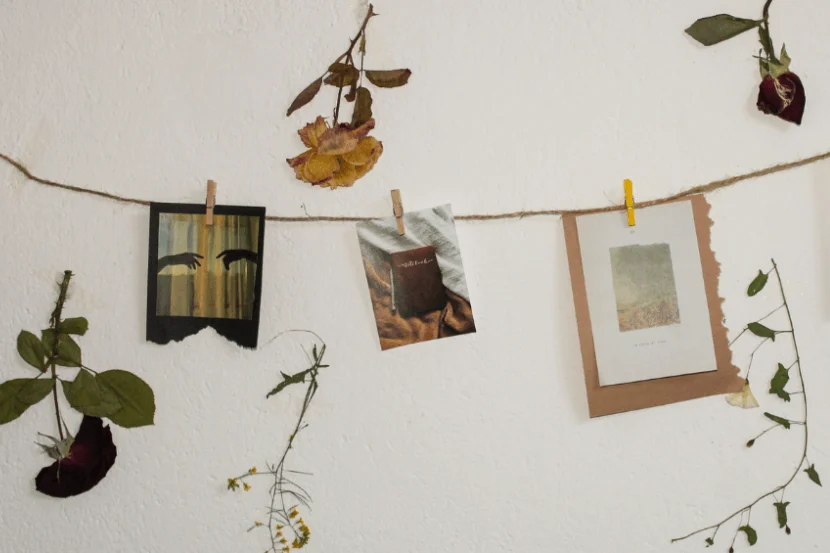
For a more casual, tactile, and customizable approach, hanging photographs with pegs provides a relaxed alternative to traditional heavy framing. This method typically involves securing a wire, a length of natural string, or a metal grid against a wall and attaching prints using lightweight pegs, creating a playful and dynamic visual display.
Homeowners looking to inject personality into their living spaces can easily embrace color by utilizing pegs and string in various vibrant hues. Furthermore, this method is not strictly limited to standard photographs. By incorporating other artistic elements, such as small sketches, collected postcards, or handwritten notes, residents can create a multidimensional narrative that reflects their daily lives and interests rather than just formal portraits.
This hanging technique also lends itself exceptionally well to thematic storytelling. For example, families can curate a travel-themed exhibit featuring candid snapshots and landscapes from past family trips, or assemble a seasonal collection dedicated to pictures captured during favorite holiday traditions and annual celebrations.
3 Make a photo book
While wall displays capture passing glances in hallways and living rooms, compiling family photography into a cohesive album offers a tactile experience akin to a personalized coffee table book. These bound volumes allow residents and guests to sit down, turn pages, and journey through years of memories in a structured, narrative format. Modern printing and binding services make it possible to customize layouts entirely, write detailed captions alongside images, and even tuck physical mementos like concert tickets or vintage postcards directly into the pages.
The production of these books involves several creative decisions, beginning with the selection of a layout. Many printing services offer a range of pre-designed templates, while others provide complete freedom for custom arrangements. Curators must carefully consider the density of images on each page and determine whether accompanying text will enhance the storytelling.
The cover design serves as the critical first impression for anyone picking up the book. Choosing a cover that reflects the thematic content within is essential, whether through standardized templates or by featuring a single, striking family photograph on the front. Additionally, modern photo book services offer sophisticated digital editing tools to enhance individual images. Homeowners can experiment with filters, precise cropping, and brightness adjustments to ensure every photograph is presented at its absolute best.
4 Use shadow boxes
When photographs need to be contextualized with physical objects, shadow boxes offer a three-dimensional display solution. These deep-framed cases allow residents to showcase tangible keepsakes—such as seashells gathered from a specific beach, theatre ticket stubs, or dried flowers—directly alongside family photographs.
Creating depth and visual interest within a shadow box relies heavily on layering. By positioning photographs and mementos at varying depths and utilizing different textures, colors, and materials, curators can build a rich, multi-layered visual appeal. Like peg displays, shadow boxes thrive on theme-based curation, bringing together photos and souvenirs from a unified moment in time, such as a milestone family vacation, a wedding, or a major holiday event.
To ensure the contents stand out, contrasting colors play a vital role. If a collection consists primarily of black-and-white portraits, mounting them against a brightly colored background can make the imagery pop. Furthermore, incorporating subtle lighting into the shadow box design can produce a striking effect, with miniature LED strips or string lights highlighting particular aspects of the display.
5 Create a photo mural
For those looking to make a bold artistic statement, transforming a collection of family memories into a full-scale photo mural turns personal history into a permanent work of interior design. Whether utilizing a single, massive panoramic image or an intricate collage of hundreds of smaller shots, murals function as stunning focal points in large living areas or entryways.
Monochrome designs remain a popular choice, with black-and-white murals offering a classic, timeless aesthetic. Selecting a thoughtful mix of candid, unposed moments alongside traditional portraits can cultivate a deep sense of intimacy and nostalgia.
Collage murals offer another avenue for creative expression, serving as a dynamic mirror for a family’s collective personality and style. Meanwhile, multi-generational murals provide a meaningful way to honor family lineage. By weaving together photographs of grandparents, parents, and children, these installations establish a continuous thread of connection and heritage within the domestic space.
Bringing Memories to Life
Translating these creative concepts into reality has been streamlined through modern photographic services. Industry providers such as Ted’s Cameras offer accessible, high-quality printing solutions designed to help households transition from digital storage to physical displays. With professional printing options ranging from traditional photographic prints to contemporary canvas, metal, and framed finishes, the technical hurdles of producing exhibition-quality pieces have been largely removed.
As interior design trends continue to emphasize personal storytelling over sterile perfection, investing time into thoughtfully displaying family photography remains a rewarding endeavor. By utilizing gallery walls, casual peg displays, bound coffee table books, dimensional shadow boxes, or expansive murals, homeowners can surround themselves with reminders of their most treasured moments, creating a living space that continually inspires and warms the heart.
No matter what time of year—whether it is the back-to-school rush, the bustling holiday season, or the slower pace of summer vacation—concern for a family’s health remains a top priority for parents everywhere. Households constantly face the challenge of balancing busy schedules while trying to ward off seasonal illnesses. According to the Centers for Disease Control and Prevention, there are between 9.1 million and 51 million cases of the flu reported each year in the United States alone, while global estimates scale as high as one billion cases annually. Coupled with ongoing concerns regarding various community health outbreaks and everyday germs, keeping children and parents healthy throughout the year has become a central focus of modern household management.
Understanding the Impact of Daily Habits
The struggle to maintain wellness is a familiar narrative in many homes. Consider a typical evening: a parent sits on the edge of a bathroom tub, gently rubbing a young daughter’s back as another cough rattles through her small frame. Between missed school days, disrupted sleep schedules, and a kitchen counter cluttered with half-finished bowls of soup, many caregivers find themselves wondering if there is more they can do to keep illness from cycling relentlessly through the household. The forgotten hand sanitizer bottle by the front door, the untouched vitamins gathering dust in the cabinet, and the late bedtimes that quietly crept in during vacation all contribute to a household’s vulnerability.
Realizing that drastic overhauls are rarely sustainable, many families opt instead for small, consistent habits that yield gradual, meaningful results. The goal is rarely a miraculous, overnight fix; rather, it involves practical, everyday choices that build physical resilience season after season. Often, the simplest steps—a thorough hand wash, an earlier bedtime, or a few more nutrient-dense foods on the dinner plate—provide the foundational strength families need to thrive.
While managing these responsibilities can sometimes feel overwhelming, many parents find comfort in grounding their daily routines in faith and community wisdom. For instance, the biblical passage in Philippians encourages a steadfast approach to worry, reminding readers to replace anxiety with gratitude and practical stewardship over their households. By combining careful household management with mindful health practices, families can better navigate the inevitable bumps in the road.
Core Practices for Preventing the Spread of Illness
Maintaining a healthy home environment relies heavily on consistent, everyday preventive measures. Among the most fundamental is proper hand hygiene. Public health experts emphasize that handwashing requires a specific technique: using soap and warm water to thoroughly lather the hands for at least twenty seconds before rinsing. Young children often benefit from humming familiar tunes, such as "Happy Birthday" or "Twinkle, Twinkle, Little Star," to gauge the appropriate duration. Essential moments for handwashing include before and after food preparation, prior to eating, following restroom use, after handling animals, and immediately after coming into contact with someone who is unwell.
While alcohol-based hand sanitizers serve as a convenient alternative when soap and water are unavailable, professionals note that they do not eliminate all types of germs and cannot fully replace the mechanical friction of a proper hand wash. In addition to personal hygiene, sanitizing high-touch household surfaces plays a critical role in minimizing germ exposure. Frequently used items—such as smartphones, television remotes, refrigerator handles, microwave buttons, and bathroom fixtures—require regular cleaning. Routine laundering of clothing worn outside the home and bed linens also helps keep lingering pathogens at bay.
Dietary habits and internal wellness further support immune function. Medical professionals frequently highlight the connection between a healthy digestive tract and a robust immune response, emphasizing the role of beneficial microbes in the gut. Incorporating balanced meals, high-fiber foods, and probiotic-rich items like yogurt can significantly bolster digestive health. Alongside nutrition, proper hydration is vital; the human body is composed of approximately 60 percent water, which is necessary for distributing nutrients and flushing out unwanted pathogens. Daily fluid intake varies by age and activity level, but general guidelines recommend that children consume several glasses of water daily, with increased amounts needed during periods of heavy physical exertion, hot weather, or illness.
Physical activity and adequate rest complete the foundation of preventative care. Regular exercise helps keep the heart rate up and strengthens the body’s natural resistance to viruses and bacteria, whether through family walks, bike rides, or outdoor winter sports. Meanwhile, sleep remains essential for cellular repair and immune defense. White blood cells, which combat harmful bacteria and viruses, are primarily generated during rest. Without sufficient sleep, recovery times from common infections can stretch significantly longer, making bedtime routines a critical component of family healthcare.
Dietary Nuances: Understanding the Nutritional Needs of Growing Children
While general wellness guidelines apply to all household members, nutritional requirements can vary dramatically depending on age and developmental stages. A dietary shift that benefits an adult may not necessarily support a growing child. For instance, while adults frequently look for ways to reduce dietary fat and caloric intake, infants, toddlers, and young preschoolers have unique nutritional demands that require careful consideration.
Pediatric experts emphasize that young children possess remarkably small stomachs. To meet their rapid energy and developmental requirements, they require calorie-rich foods delivered in smaller volumes, making high-fat foods an essential part of early childhood nutrition. Infants, for example, experience exponential growth, frequently tripling their birth weight and growing up to ten inches during their first year of life. Nursing mothers must maintain a diet rich in beneficial fatty acids—such as those found in fish, walnuts, and olive oil—to support both their own health and the nutritional composition of breast milk or formula.
As children transition into toddlerhood, these dietary requirements shift but remain focused on healthy fats. Brain development accelerates significantly around twelve months of age, coinciding with the formation of the myelin sheath, the protective covering around nerve fibers that is composed largely of fat. Pediatric guidelines frequently recommend that children between the ages of twelve and twenty-four months consume whole milk to support this critical neurological growth, with fats ideally comprising roughly half of a toddler’s daily caloric intake.
Preschoolers also require balanced fat intake, though their preferences can sometimes complicate meal planning. Picky eaters who gravitate exclusively toward sweet fruits or fruit juices may consume an excess of fructose while missing out on essential nutrients and fats. Nutritionists advise that young children generally need about 30 percent of their daily calories to come from healthy fats until they reach approximately four years of age, at which point dietary patterns can more closely resemble those of older children and adults. Throughout these developmental stages, parents are encouraged to review food labels carefully, avoiding harmful trans fats and hydrogenated oils while ensuring that everyday food choices balance out over the course of a week.
Ultimately, navigating family health requires a blend of diligent hygiene, mindful nutrition, and adaptable daily routines. By focusing on practical, sustainable habits rather than drastic measures, households can build long-term resilience against seasonal illnesses, allowing families to spend less time managing sickness and more time growing together.