For years, “gentle parenting” has been championed as the ultimate modern approach to raising children, promising open communication, emotional validation, and a harmonious household. However, a growing number of parents are discovering that the trendy style leaves them completely exhausted, constantly second-guessing their decisions, and struggling to set firm limits. According to veteran parenting expert and author Janet Lansbury, the solution isn’t adopting another reactive parenting trend, but rather stepping into a role of confident leadership.
In a recent episode of her podcast Unruffled, Lansbury addressed the widespread disillusionment surrounding gentle parenting. She noted that while the movement was designed to foster deep connections, its modern interpretation often leaves families trapped in cycles of indecision, constant verbal negotiations, and parental burnout.
The conversation around modern parenting approaches has grown increasingly polarized. Recent reports from research groups like YPulse indicate that some Gen Z and Millennial parents are already experiencing fatigue with soft-style parenting. In response, a portion of the parenting community has begun leaning toward harsher internet-driven philosophies colloquially known as "FAFO" (an acronym for "F-Around and Find Out"), where parents take a more blunt, consequence-driven approach without standing in the way of natural repercussions.
Lansbury pushes back against both extremes, arguing that shifting rapidly from one cultural pendulum swing to another will not bring families what they truly desire: a loving, respectful relationship with well-behaved children. Instead, she advocates for a foundational shift toward confident leadership rooted in respect, rather than a hesitant style mistakenly defined by perpetual gentleness.
Deconstructing the Myths of Modern Gentle Parenting
Lansbury points out that taken at face value, leading with the word "gentle" is often unhelpful. When parents view "gentle" as their primary objective, it frequently causes them to stifle their own authority, managing household rules in a tentative manner while waiting for a child’s approval or attempting to analyze and understand every single emotional outburst.
To illustrate the contrast between current cultural perceptions of gentle parenting and effective long-term practices, Lansbury examines descriptions outlined by pediatric experts, such as Dr. Laura H. Dawson of Brown University Health. These descriptions typically highlight core tenets such as acting as a teacher, maintaining developmental expectations, avoiding traditional punishments, and prioritizing emotional communication.
While acknowledging that modeling empathy and understanding appropriate developmental milestones are vital to raising children, Lansbury strongly cautions against some of the practical applications often associated with modern gentle parenting advice. For instance, she critiques the common recommendation to narrate a child’s emotional state during a full-blown tantrum—such as telling an overwhelmed toddler, "You look frustrated."
According to Lansbury, attempting to engage a child in rational dialogue or verbal processing while they are emotionally dysregulated often exacerbates the distress and prolongs the behavior. Children in the midst of a tantrum do not need lengthy explanations or intellectual analysis; they need a calm, steady adult who can safely manage the moment without being derailed by it. Similarly, she critiques lengthy conversational boundaries at bedtime or during transitions, arguing that children often need simple, authentic clarity rather than excessive talking.
Embracing Confident Leadership
Rather than relying on a style that feels tentative or exhausting, Lansbury emphasizes that true effectiveness comes from combining respect with genuine self-assurance. When parents operate from a place of quiet confidence, true gentleness naturally follows as a strength rather than a reaction born out of fear of a child’s anger.
To help parents cultivate this confidence, Lansbury outlines essential perspectives to keep in mind during challenging moments. First, she advises adults to take a step back and maintain perspective on the physical and emotional reality of young children. Although toddlers and young children can loom large in moments of high emotion or defiance, they remain fundamentally immature individuals who require bigger, steadier figures to guide them. Leaving children in charge of the household dynamics or forcing them to navigate boundaries independently places an unfair developmental burden upon them.
Additionally, Lansbury stresses the importance of understanding the root causes of misbehavior. When parents recognize that outbursts are rarely malicious or consciously targeted personal attacks, but rather signs of a child losing composure, they can respond with significantly less anxiety and expend far less emotional energy.
Another vital component is accepting the fundamental dynamic of setting a boundary and allowing children to express whatever feelings arise in response. Setting a clear, firm limit—such as ending a playdate or establishing a safety rule—inevitably invites emotional pushback. When parents make peace with the reality that children are allowed to be upset by boundaries without those boundaries changing, family life becomes markedly clearer and calmer.
Lansbury also emphasizes that cooperative tasks, such as bedtime routines or hair brushing, require a different, more flexible approach than absolute safety boundaries. In these daily cooperative moments, parents need the confidence to occasionally let go, cut their losses, and avoid turning routine chores into power struggles. Furthermore, she encourages parents to embrace the inherent messiness of family life, noting that making mistakes, losing patience, and later returning to repair the relationship are all part of the normal process of raising children.
Ultimately, Lansbury maintains that effective parenting does not require constantly changing trends or extreme disciplinary styles. By aiming consistently toward a balanced approach centered on respectful, confident leadership, parents can build secure relationships that support their children’s growth while restoring calm and clarity to the home.
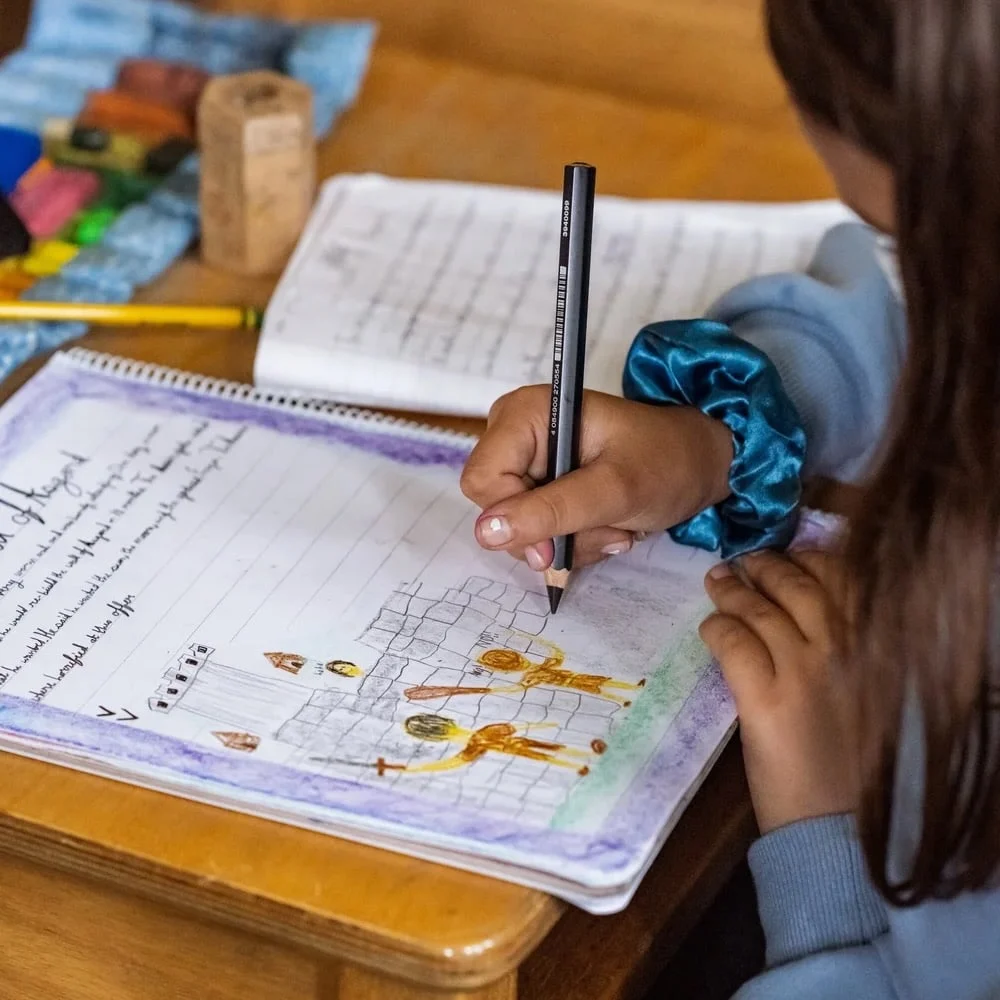
In an era where the vast majority of students can type faster on a keyboard or a touchscreen than they can write with a pen, it is easy to wonder whether traditional handwriting and cursive instruction remain relevant in modern classrooms. As schools increasingly pivot toward digital-first learning environments, laptops and tablets have largely replaced notebooks and pencils. Yet, a rapidly growing body of neuroscience research suggests these traditional skills are far from obsolete. Writing by hand engages neurons and activates diverse regions of the brain in complex ways that typing simply cannot replicate, offering profound benefits for cognitive development, memory retention, and literacy.
What Handwriting Does in the Brain
When a student picks up a pen to write by hand, sensory, motor, and cognitive regions of the brain work together in tandem. This physical act activates far more neural pathways than typing, a process that ultimately leads to deeper learning and much stronger memory formation.
A 2024 study published in Frontiers in Psychology utilized high-density electroencephalography (EEG) to closely compare brain activity patterns during handwriting versus typing. The results were striking: handwriting produced far more elaborate and widespread neural connectivity, actively engaging networks associated with attention, language, and memory. Existing scientific literature indicates that these specific connectivity patterns are crucial for memory formation and for effectively encoding new information, making them exceptionally beneficial for the overall learning process. The authors of the study concluded that handwriting supports the fundamental neural foundations of learning and, therefore, should remain a central pillar in education.
This deeper cognitive processing is consistently echoed across other international research, including a Japanese study that examined adult foreign language learning and the semantic encoding of new words. The 2021 study, published on PubMed Central, confirmed that handwriting—whether executed with a traditional ink pen or a digital stylus on a tablet screen—builds significantly stronger memory traces and more robust language comprehension than standard keyboarding.
Perhaps the most widely cited research on the subject focuses less on high-tech EEG scans and more on how students actively engage with lecture material when writing by hand. In a landmark series of experiments conducted by Mueller and Oppenheimer in 2014, researchers discovered that college students who took notes longhand consistently outperformed laptop note-takers on conceptual questions related to the lecture material. While typing allowed students to capture a higher volume of words, it frequently resulted in shallow processing because students could quickly and mindlessly transcribe lectures verbatim. Writing by hand, however, required students to engage with the material on a much deeper level as they actively digested, rephrased, and summarized complex ideas in real time.
Whether examining young children or adult learners, the overwhelming weight of scientific evidence points to the exact same conclusion: the physical act of handwriting fundamentally improves the way we think, process, and retain information.
Handwriting Builds Literacy
Beyond cognitive processing and note-taking, the act of writing letters—rather than merely recognizing them visually or typing them on a keyboard—helps the developing brain build the precise neural circuitry needed for fluent reading. Handwriting is an inherently complex visual-motor skill supported by a widespread neural system that encompasses ventral-temporal, parietal, and frontal motor regions. As young children learn to read and write, their brains are actively developing these critical neural pathways.
Two distinct studies have directly linked early literacy development to the specific neural systems that are forged through handwriting practice. Both Wiley and Rapp in 2021 and Vinci-Booher and James in 2021 found that handwriting experience actively accelerates literacy learning while engaging the visual-motor areas that are vital for reading comprehension.
Students who engaged in literacy learning activities that incorporated handwriting, compared to those who learned solely through non-motor practice, demonstrated faster learning curves and greater generalization capabilities. Researchers believe this occurs because handwriting practice leads to the simultaneous acquisition of both motor and amodal symbolic letter representations. This simply means that writing by hand—and crucially, only writing by hand—helps the brain physically connect the unique formations of letters directly with word meanings.
Earlier work by James and Engelhardt in 2012 similarly revealed that when young children practiced writing letters by hand, their brains subsequently activated the reading network automatically whenever those same letters were viewed later. Neither typing nor simple visual tracing produced this same powerful neurological effect.
In a similar vein of deciphering visual symbols and forms, a 2014 study led by Pegado and colleagues demonstrated that hands-on handwriting experience significantly helps the brain distinguish between tricky mirror-image letters such as lowercase b and d. Each of these empirical findings strongly reinforces the idea that forming letters by hand literally shapes the physical architecture of the brain to read them more effectively.
Taken together, these studies indicate that handwriting plays an irreplaceable role in creating the neurological foundation necessary for efficient, comprehensive reading and lifelong literacy.
Cursive Writing: Flow, Focus, and Fluency
Cursive writing, once a strict standard of elementary school curricula across the globe, has been quietly disappearing from many modern classrooms. Yet, both ongoing research and practical educational experience suggest that this flowing script offers unique cognitive and developmental advantages that print writing and typing do not.
Because cursive involves a continuous, fluid motion, it requires sustained attention and physical coordination, which in turn reinforces fine-motor control and natural rhythm. Advanced neuroimaging studies demonstrate that writing by hand using a continuous motion fosters robust synchronization across the various brain regions responsible for motor planning and language processing.
According to research out of Norway examining the EEGs of 12-year-olds, conducted by Ose Askvik, van der Weel, and van der Meer in 2020, these strengthened connections between the hand and the brain directly improve letter recognition, spelling accuracy, and overall reading fluency.
Beyond its cognitive benefits, cursive also serves an essential cultural and historical function. As Smithsonian Magazine highlighted in a 2023 report, the ability to read and write in cursive directly connects students to centuries of handwritten history, ranging from deeply personal family letters to foundational government documents. Losing cursive literacy risks cutting future generations off from their own historical past, rendering them unable to read original source materials without translation.
Handwriting in the Future
Handwriting and cursive writing deeply connect vital areas of the brain tied to motor control, memory, information processing, and reading comprehension. Relegating these foundational skills to a nostalgic practice from the past is short-sighted at best and potentially detrimental at worst. In a modern world saturated with endless keyboard typing and digital screens, handwriting remains an essential, irreplaceable tool for building thoughtful, connected, and capable learners. Educational philosophies that emphasize educating the whole child and maintaining dedicated lessons using handwriting and cursive align seamlessly with current cognitive research.