"The Choice": New Documentary Explores Resilience, Grief, and the Enduring Legacy of Dr. Edith Eger
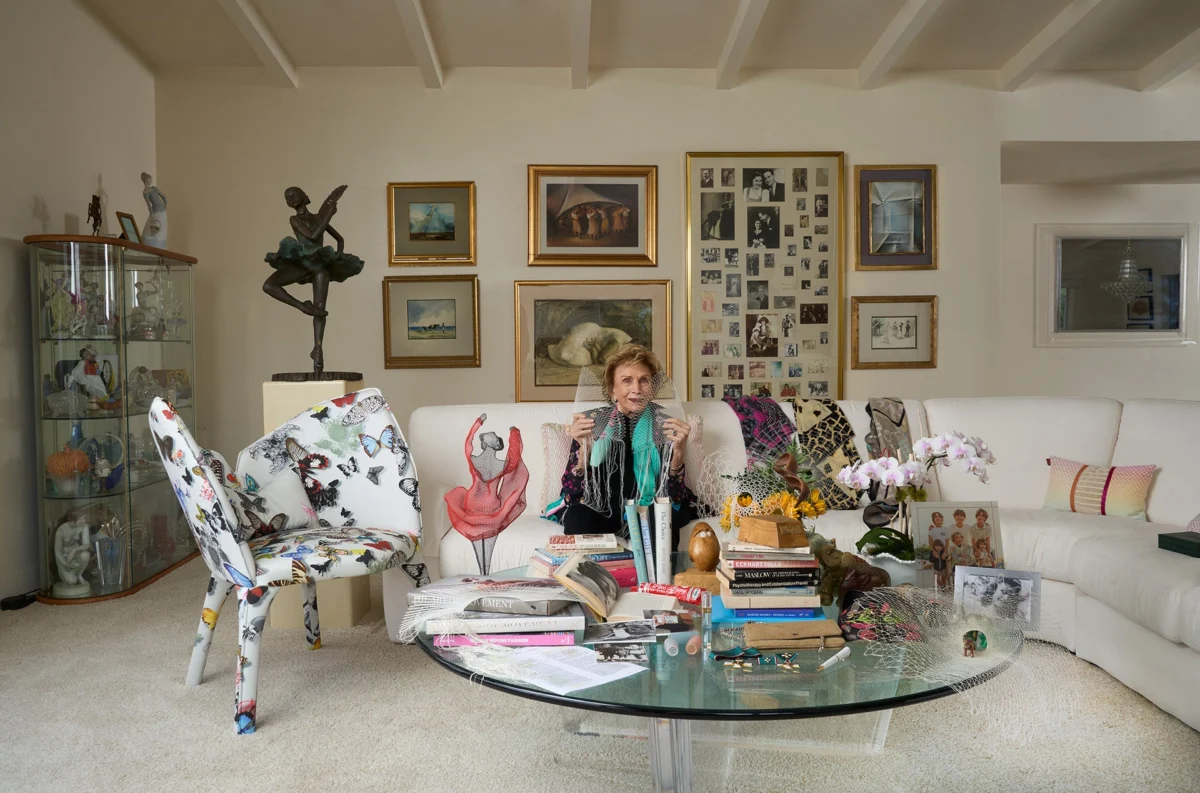
NEW YORK — Long before she became globally recognized as one of the most influential Jewish voices on grief, loss, and psychological resilience, Dr. Edith "Edie" Eger often described herself as an "ugly duckling." At just 16 years old, Edie was a slight, flexible dancer living in Kassa, Hungary, before she and her family were violently uprooted and deported to the Auschwitz concentration camp. There, her parents were immediately sent to the gas chambers, while Edie was forced to dance for the infamous Dr. Josef Mengele. She was so fragile in appearance prior to her deportation that upon her eventual return to her hometown, her neighbors could scarcely believe she had survived the atrocities of the Holocaust.
Today, Dr. Eger’s profound teachings on trauma and recovery continue to reverberate across generations. Her wisdom forms the bedrock of a powerful new documentary, "The Choice," directed by John David Coles, which is slated for release on January 15, 2027. Weaving together extraordinary perspectives on finding light in the darkest of times, the film centers on three remarkable women: Iris Haim, Sapir Cohen, and Dr. Eger herself.
Audiences recently had a chance to preview the film at The Tribeca Screening Room, followed by an intimate post-screening conversation featuring Dr. Eger’s daughter, Dr. Marianne Engle, and fashion icon Diane von Furstenberg. As the theater lights dimmed over an audience spanning multiple generations, viewers braced themselves not only for the harrowing historical tragedies depicted on screen, but also for the contemporary echoes of violence, holding fast to Dr. Eger’s simple yet transformative words of empowerment.
The foundational thesis of both Dr. Eger’s bestselling 2017 memoir, "The Choice: Embrace the Possible," and Coles’ upcoming film lies in a fundamental shift in mindset. As Dr. Eger famously recounted to Oprah Winfrey during a 2019 interview for the Super Soul Sunday series, trauma often traps individuals in the paralyzing question of "Why me?" By consciously shifting that internal inquiry to "What now?", a person takes back their power, transforming passive victimization into active agency.
This dynamic is explored deeply throughout the documentary. When Dr. Eger spoke of being forced to dance in the barracks of Auschwitz, she simultaneously shared how, within the theater of her own mind, she was performing "Romeo and Juliet" on a stage in Budapest. It is this haunting, beautiful image that defines the documentary: Edie’s graceful hands evoking a waterfall in quiet, internal rebellion, asserting an autonomy that no captor could strip away.
That exact strain of unyielding resilience reappears when Iris Haim walks through the demolished ruins of the kibbutz where her son, Yotam, once lived. Amidst devastating footage from the October 7, 2023, attacks leading up to Yotam and Sapir Cohen’s abductions, Iris deliberately focuses her attention outward—on the vibrant leaves of a surviving tree, the brilliant blue sky, and the quiet hope those natural elements represent.
When Iris appears on screen, the steady, metronomic rhythm of drums keeps time with her retelling of the agonizing days surrounding her son’s abduction and eventual tragic death. Iris, who had read Dr. Eger’s memoir prior to the October 7 attacks, stubbornly held on to hope, even when advised against optimism by those around her. Even after receiving the shattering news that Yotam had been accidentally shot and killed by Israeli Defense Forces, Iris refused to succumb to consuming bitterness or rage. Guided by Dr. Eger’s teachings, she chose forgiveness over the prison of her grief.
For Sapir Cohen, who was held hostage by Hamas in Gaza for 55 days, the concept of choice was initially complicated and difficult to access. Early in her captivity, Sapir was overwhelmed by looping questions of "what if?" and "why me?" Believing that every external circumstance was entirely beyond her control, she eventually realized that within the crushing weight of the moment, she still retained the ability to make a difference for her fellow hostages by actively choosing hope. While Sapir arrived at this realization intuitively, other trauma survivors require extensive psychological navigation. The film incorporates audio recordings of Dr. Eger working with Vietnam combat veterans, demonstrating her steadfast belief that choosing hope is never easy and that authentic grief must always be honored and experienced first.
The documentary’s emotional resonance was further underscored by real-world continuity. In June 2024, Iris and her surviving son, Tuval, visited Dr. Eger at her home in San Diego. This poignant meeting, which took place nearly two years before Dr. Eger’s passing in April 2026, highlighted the profound, enduring influence her life’s work has had on individuals grappling with fresh trauma and immense personal loss.
As the film’s credits rolled at the Tribeca Screening Room, the collective tension in the theater was palpable. Viewers who had spent the screening sitting with crossed arms, subconsciously shielding themselves from the heavy narratives, found a momentary physical release as Diane von Furstenberg took the stage. Von Furstenberg shared the survival story of her own mother, Lily, who also survived Auschwitz and came face to face with Dr. Mengele. Explaining that her mother’s fierce survival instilled in her a lifelong fearlessness, von Furstenberg noted that for her family, "fear was not an option."
Seated beside her, Dr. Marianne Engle joined in passing down the inherited wisdom of women who survived the unimaginable. At one point during the conversation, Dr. Engle and von Furstenberg playfully ping-ponged classic directives back and forth to the audience: "Don’t blame, don’t feel shame, don’t complain," drawing warm laughter from a room full of attendees familiar with the catharsis of cultural endurance.
Much of the subsequent discussion focused on effective strategies for managing grief following traumatic events, alongside urgent questions regarding how contemporary younger generations might navigate a rising wave of global antisemitism. Dr. Marianne offered a perspective deeply aligned with her mother’s worldview, suggesting that young people learn to find a way to pity those who remain perpetually imprisoned by their own hatred. Von Furstenberg echoed this sentiment by emphasizing the necessity of human kindness, comparing it to the common denominator in an algebraic equation.
The universality of Dr. Eger’s message transcends both time and specific historical atrocities, offering a mirror to descendants of survivors who carry the psychological weight of ancestral trauma. Coles’ documentary ultimately serves as a testament that while the Jewish narrative is undeniably marked by profound hardships, it is equally defined by an unbreakable spirit of resilience.
As the evening’s programming drew to a close, von Furstenberg folded her hands neatly in her lap and offered a final, definitive distinction that captured the essence of the entire gathering: "There are two types of survivors: those who did not die, and those who chose life."
Through "The Choice" and the lasting foundation of Dr. Edie Eger’s legacy, that distinction remains explicitly clear, reminding audiences that even in the darkest and most desolate of times, human beings retain the ultimate power to choose life.
