The Critical Role of Play in Childhood Development: Why Unstructured Play is Essential for Lifelong Learning and Mental Health
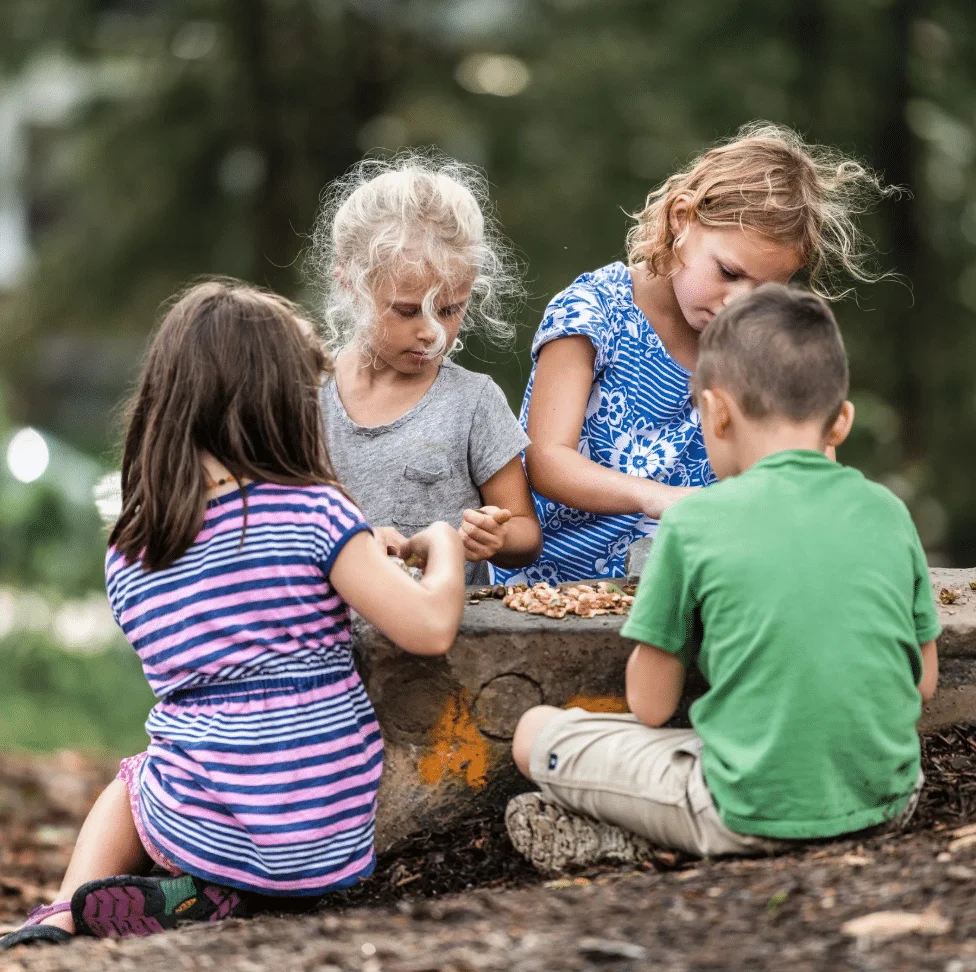
Play is often dismissed as a mere pastime or a break from serious learning, but a growing body of interdisciplinary research confirms what educators and parents have long known intuitively: play is not a luxury. It is foundational to healthy childhood development. Across the physical, cognitive, emotional, and social domains, unstructured and child-led play builds critical capacities that shape how children navigate the world and prepare for the future.
Over the past 25 years, thousands of academic and clinical studies have explored the profound impact of play on executive function, self-regulation, emotional intelligence, cognition, creativity, and physical development. The empirical findings are strikingly consistent, pointing toward an undeniable truth that play is the primary vehicle through which young minds and bodies develop the tools they need to thrive.
A Strong Start: Physical and Cognitive Development
Society easily recognizes play’s role in motor development. Whether children are climbing trees, building structures with blocks, or balancing on logs, they strengthen both fine and gross motor skills through movement-rich environments. These physical activities lay the groundwork for spatial awareness, coordination, and physical confidence.
Yet, play does much more than build muscles; it builds the brain. A rapidly expanding body of research demonstrates that executive functions—such as working memory, cognitive flexibility, and impulse control—all develop dynamically through playful activity. Complex problem-solving, creativity, long-term planning, and symbolic thinking are nurtured most effectively through hands-on, open-ended engagement rather than rote memorization or rigid instruction.
Recent academic literature underscores this connection. A 2025 systematic review published in the Journal of Intelligence analyzed 25 empirical studies and discovered that loose parts play, which involves providing children with open-ended materials that can be moved, manipulated, and combined, significantly enhances problem-solving abilities, divergent thinking, and overall academic readiness. When children are given the freedom to invent their own uses for everyday objects, their brains form flexible pathways that support higher-order thinking.
In addition, a 2024 review published in Frontiers confirmed that physical play is a critical contributor to early motor coordination. Pretend play, in particular, allows children to explore the consequences of actions, integrate new learning on the fly, and safely simulate real-life scenarios. The same review noted that both structured and unstructured play in preschool environments significantly improved motor and cognitive skills, especially when programs dedicated substantial time—specifically exceeding 3,000 minutes—to play-based activities.
The Brain at Play
To gain a granular look at the brain’s inner workings during play, researchers have frequently turned to animal models to observe neurological development. A notable 2018 study published in Science Direct focusing on juvenile rats demonstrated that social play is absolutely essential for the development of inhibitory synapses in the medial prefrontal cortex. This region of the brain is critical for complex decision-making and impulse control. Notably, rats that were experimentally deprived of social play displayed lasting, permanent deficits in cognitive flexibility, underscoring the absolute biological necessity of early, unstructured social interaction.
These neurobiological findings are consistently echoed in human developmental studies. A comprehensive longitudinal Australian study published in Science Direct in 2022 followed children from the age of two through age seven. The researchers discovered that just one to five hours of active, unstructured play per day predicted significantly stronger self-regulation later in life, regardless of the children’s earlier cognitive baselines. Play, therefore, acts as a great equalizer, building emotional and cognitive resilience independently of initial intellectual advantages.
Intrinsic Motivation and Lifelong Learning
Beyond immediate cognitive and social gains, play fosters something much deeper and more enduring: intrinsic motivation. When children play, they engage in the activity for its own sake, driven purely by the joy of discovery, mastery, and creative expression, rather than for external rewards, grades, or praise. This internal drive is the absolute cornerstone of lifelong learning.
Extensive research backs up the link between self-directed play and sustained educational curiosity. The aforementioned longitudinal study, Free Play Predicts Self-Regulation Years Later, demonstrates a clear, measurable connection between early free play and long-term personal autonomy and creative problem-solving capacities. Furthermore, the Encyclopedia of Early Childhood Development confirmed in its 2023 reports that exploratory play environments successfully nurture imagination, independence, and an authentic love of learning that persists well into adulthood.
Mental Health and Emotional Resilience
Among the most compelling and frequently overlooked benefits of play are those related to mental health and emotional well-being. In an era marked by rising rates of childhood anxiety, play serves as a vital psychological buffer. It helps children regulate stress, builds emotional resilience, and protects against the onset of anxiety and depression.
Recognizing these profound mental health benefits, the American Academy of Pediatrics issued a landmark 2018 policy statement titled The Power of Play: A Pediatric Role in Enhancing Development. The organization formally recommended that pediatricians advocate for play with the same urgency and emphasis they place on sleep, physical safety, and proper nutrition. According to the policy, imaginative and physical play actively reduce toxic stress and foster foundational emotional well-being.
Further reinforcing this clinical perspective, a 2020 study published by the National Library of Medicine demonstrated measurable, significant increases in children’s reported happiness and overall playfulness following targeted play-based interventions.
The Bottom Line for Educators and Policymakers
When it comes to shaping modern school curricula, educational pedagogies, and public policy, the scientific research is unequivocally clear. Play is not an optional extra or a reward to be earned after real work is done; it is the essential work of childhood. It forms the biological and psychological foundation of executive function, creativity, social well-being, and emotional resilience. Reducing or entirely marginalizing playtime in schools under the guise of an increased "academic focus" not only contradicts decades of robust research, but it actively undermines the very cognitive and emotional capacities children need to succeed both inside the classroom and throughout their lives.
Educational models like Waldorf education have long placed play at the absolute heart of early childhood learning. By intentionally integrating imaginative play, rich sensory experiences, and uninterrupted unstructured exploration into the daily schedule, Waldorf schools offer children the deep developmental foundation they require to grow into capable, resilient, and joyful learners.
Ultimately, by investing in environments, educational practices, and public policies that prioritize and protect play, society is investing not just in the immediate well-being of children, but in the cultivation of healthier, more capable, and far more adaptable adults.
