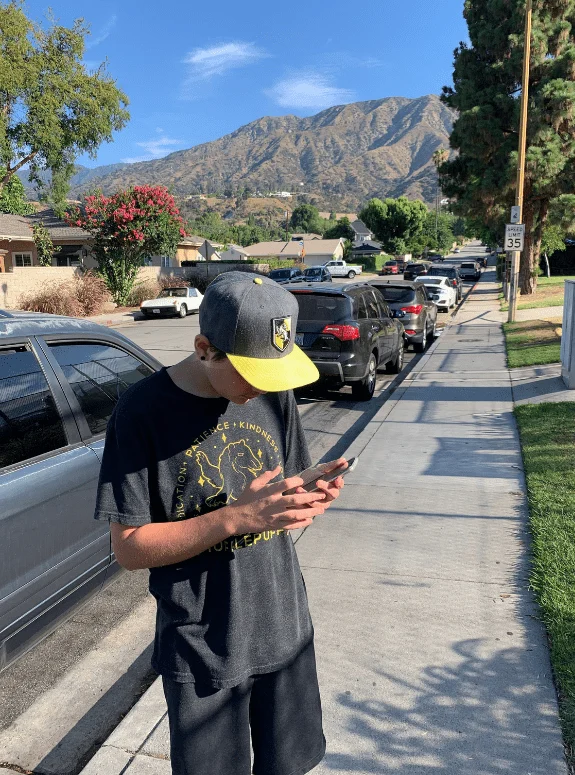
In the evolving landscape of modern education, educators and parents are increasingly looking back to classical models of instruction to provide students with a sturdy foundation for lifelong learning. Central to this classical approach is the art of grammar—not merely as a set of rules for sentence structure, but as a comprehensive method for gathering the foundational knowledge of any given subject. Within classical education, particularly in programs like Classical Conversations’ Foundations and Essentials, this approach is distilled into five distinct practices known as the Five Core Habits of Grammar.
Conveniently spelling out the acronym NAMES, these practices consist of naming, attending, memorizing, expressing, and storytelling. While these habits are deeply integrated into elementary and middle school classical curricula, they offer a versatile framework that learners of any age can apply to better discuss, understand, and master a wide variety of academic disciplines, from the sciences to the humanities.
The foundation of this educational philosophy rests upon the classical Trivium, which divides the developmental stages of learning into grammar, dialectic, and rhetoric. The art of grammar represents the initial phase, focusing entirely on gathering the foundational facts, vocabulary, and patterns of a subject. By building a rich storehouse of knowledge during these early years, students prepare themselves for deeper analysis and persuasive expression later in life.
The First Habit: Naming as the Gateway to Knowledge
The first core habit of the framework is naming, which centers on vocabulary development through active interaction. Before any student can hope to comprehend the complexities of an advanced subject or abstract idea, they must first master the basic vocabulary associated with that field of study.
In practical terms, teaching a subject like astronomy requires a student to first acquire and use key terms such as planet, star, orbit, solar system, galaxy, and constellation. Classical educators describe this foundational knowledge as the grammar of a subject. Without establishing this primary nomenclature, tackling the broader complexities of the universe becomes an impossible hurdle.
For educators and parents struggling to introduce a new topic, the remedy often lies in returning to the basics of naming. The process typically begins by asking learners to provide general definitions before gradually moving toward more specific categories. For example, a student might first define the general term planet before moving on to identify specific celestial bodies like Mercury, Venus, Earth, and Mars. By systematically laying this groundwork, both instructors and students pave the way for more detailed, advanced conversations about the topic at hand.
Attending and the Power of Sensory Focus
Once basic terms are established, the educational process moves to the second habit: attending. This practice involves differentiating details through sensory focus, functioning primarily as a compare-and-contrast exercise that enables students to clearly distinguish what something is from what it is not.
To understand attending in a practical context, one can look at the study of botany and the observation of trees. After establishing terms such as plant, tree, trunk, leaf, bark, pine, maple, and oak through the naming phase, students engage the habit of attending by examining how these terms are organized from the general to the specific. A student might be prompted to explore the relationship between a plant and a tree, recognizing that while every tree is a plant, not all plants are trees. Furthermore, learners are encouraged to identify the specific similarities and differences among the various types of trees they have defined.
Through this straightforward exercise in attending, children hone critical observation skills that prove essential for excelling across all academic disciplines. It trains the mind to look beyond surface-level definitions and perceive the underlying structures and relationships connecting different pieces of information.
Retaining Knowledge Through Memorization
The third core habit in the framework is memorizing, which focuses on retaining knowledge through consistent repetition of the vocabulary gained during the naming phase. Classical education places a strong emphasis on memory work during the early years, a practice that aligns naturally with a child’s developmental inclination toward songs, chants, and rhythmic repetition.
When approaching a subject like foreign language acquisition, the most effective strategy often involves regularly committing basic vocabulary and grammatical endings to memory. Classical educators frequently advocate starting with Latin, noting that it provides a robust structural foundation that makes studying subsequent languages, such as Spanish or French, significantly more accessible.
To aid in this retention process, educators utilize a wide variety of mnemonic devices, songs, and chants. Programs that incorporate structured memory work often provide dedicated resources designed to help students master essential vocabulary, historical events, geographic locations, and core ideas, ensuring that this foundational knowledge, known historically as memoria, remains a lasting treasure they can draw from throughout their lives.
Demonstrating Ideas Through Expressing
Moving beyond the initial gathering phases of learning, the framework introduces habits that bridge foundational knowledge with active demonstration. For those inclined toward the humanities, the fourth habit—expressing—offers a dynamic way to interact with material. Expressing means demonstrating ideas through active creation and physical or artistic representation.
Revisiting the study of astronomy, a student might engage the habit of expressing by constructing a physical model of the solar system using painted foam balls to represent the various planets. Similarly, geography lessons often invite students to attempt drawing a map of the world entirely from memory.
Creating models serves as one of the most effective learning tools because it requires the student to carefully observe a subject beforehand in order to accurately represent it. Once the model is complete, it naturally opens the door for meaningful discussion. Instructors can prompt students to explain why they chose a particular method of representation, discuss what is accurate within their model, and evaluate what could have been done differently.
Storytelling and the Narrative Reinforcement of Knowledge
The final habit in the framework is storytelling, which involves recounting events through narration. Particularly effective when working with younger students, this habit transforms the learning process into an engaging and memorable experience.
In the context of an astronomy lesson, storytelling might involve a student writing a short science fiction narrative incorporating the planetary terms they previously learned during the naming phase. When studying history, parents and students can practice storytelling together by taking turns narrating the chronological order of historical events.
Because human beings naturally process and retain information best through narrative structures, storytelling acts as a powerful capstone. Like expressing, it allows students to reinforce the foundational knowledge they acquired earlier in a way that is both intellectually rigorous and deeply enjoyable.
Applying the Core Habits Across All Ages
While these five core habits—naming, attending, memorizing, expressing, and storytelling—are woven directly into the daily fabric of structured classical curricula like Classical Conversations’ Foundations and Essentials programs, their utility extends far beyond the traditional classroom. Parents often discover that practicing these habits alongside their children not only builds confidence in teaching unfamiliar or advanced subjects, but also fosters a shared, lifelong joy of learning.
By approaching any new discipline through the systematic lens of the art of grammar, learners of all ages can dismantle intimidation, cultivate natural curiosity, and build a sturdy intellectual framework capable of supporting a lifetime of academic inquiry.
As a mother of three children, ages 14, 12, and 10, daily life is a continuous exercise in logistics and parental management. There is always a mental checklist running in the background: Who needs their violin today? Who forgot their lunch? Do we seriously need groceries again? These routine concerns fill the margins of everyday family life, anchoring parents to the immediate needs of their growing children.
Yet, somewhere between the endless school pickups, gymnastics practices, and towering piles of laundry, a much larger and more profound question frequently comes to mind. What future are we actually creating for our children? What kind of country will they inherit when they step into adulthood? These reflections are not abstract philosophy; they are the urgent, underlying concerns of parents navigating an increasingly polarized societal landscape.
Like most parents, I want my kids to grow up in an America where differences are not viewed as threats, but as opportunities to learn from each other.
Like most parents, I want my kids to grow up in an America where differences are not viewed as threats, but as opportunities to learn from each other. In an ideal civic environment, children would regularly see examples of mutual respect, peaceful engagement, and civic responsibility modeled by the adults around them. With major midterm and general elections consistently looming on the political horizon, the weeks leading up to Election Day offer a critical window to model those exact values directly in our homes, schools, and neighborhoods.
Election seasons have historically brought out the best in American democracy. Millions of citizens proudly wear their “I Voted” stickers, serving as a visible reminder that ordinary people have a direct voice in shaping their local communities and the broader nation. At the same time, however, modern election cycles can expose very real and persistent risks. These include widespread disinformation campaigns, deep and enduring political divisions, a measurable decline in public trust in electoral institutions, and the looming, unsettling threat of political violence.
These complex challenges extend far beyond the outcome of any single political race. They strike at the very heart of the democratic norms and civic trust that have sustained the United States for generations. Day after day, it can easily feel as though political differences are widening while the national ability to converse across those divides is shrinking. Too often, contemporary American culture encourages citizens to view one another with immediate suspicion rather than assuming the best intentions of our neighbors and fellow community members.
In truth, American democracy has never depended on universal agreement. In fact, disagreement is baked directly into the foundation of the republic. The founders anticipated ideological friction, and what truly matters is not the absence of conflict, but the collective willingness of the populace to engage constructively despite profound differences.
In moments of national uncertainty, faith communities have historically been uniquely positioned to model what constructive engagement looks like. They can demonstrate to the broader public that disagreement is fundamentally not the same as disrespect. They can show that people holding vastly different theological and political beliefs can still work together toward shared goals, and that core human values like dignity, humility, and compassion far transcend partisan political labels.
That vital mission is precisely at the heart of the ongoing work at Interfaith America. The organization actively works to cultivate leaders who know how to respect, relate, and cooperate across deep differences for the common good. At a time when partisan division frequently dominates daily news headlines and social media feeds, Interfaith America helps people develop the practical skills and interpersonal relationships urgently needed to strengthen modern civic life.
For members of various faith traditions looking for guidance on how to navigate this cultural moment, resources like the Faith in Elections Playbook offer practical, grounded support. Designed for faith leaders, congregations, and everyday community members, the playbook provides tools for encouraging respectful dialogue, identifying and responding to misinformation, and helping local communities navigate contentious election seasons with integrity, grace, and care.
The need for this type of intentional civic work has arguably never been greater. Democracy is not a self-sustaining institution; it relies heavily on citizens who are actively willing to invest in human relationships, uphold foundational democratic norms, and resist the easy, destructive temptation to demonize those with whom they disagree. Faith communities, with their deep roots in local neighborhoods and their emphasis on moral character, are uniquely positioned to model those essential civic habits.
As part of these ongoing efforts, organizations are gathering for events such as the upcoming "Praying for America" gathering, where people from many different faith traditions come together in a shared spirit of humility, hope, and mutual concern for the direction of the nation.
The goal is a commitment to the common good, peaceful participation in our democracy, and treating one another with dignity during a consequential election season.
The ultimate goal of these gatherings is not to forge artificial political agreement. It is something much deeper and more enduring: a steadfast commitment to the common good, peaceful participation in the democratic process, and treating one another with inherent dignity during consequential election seasons.
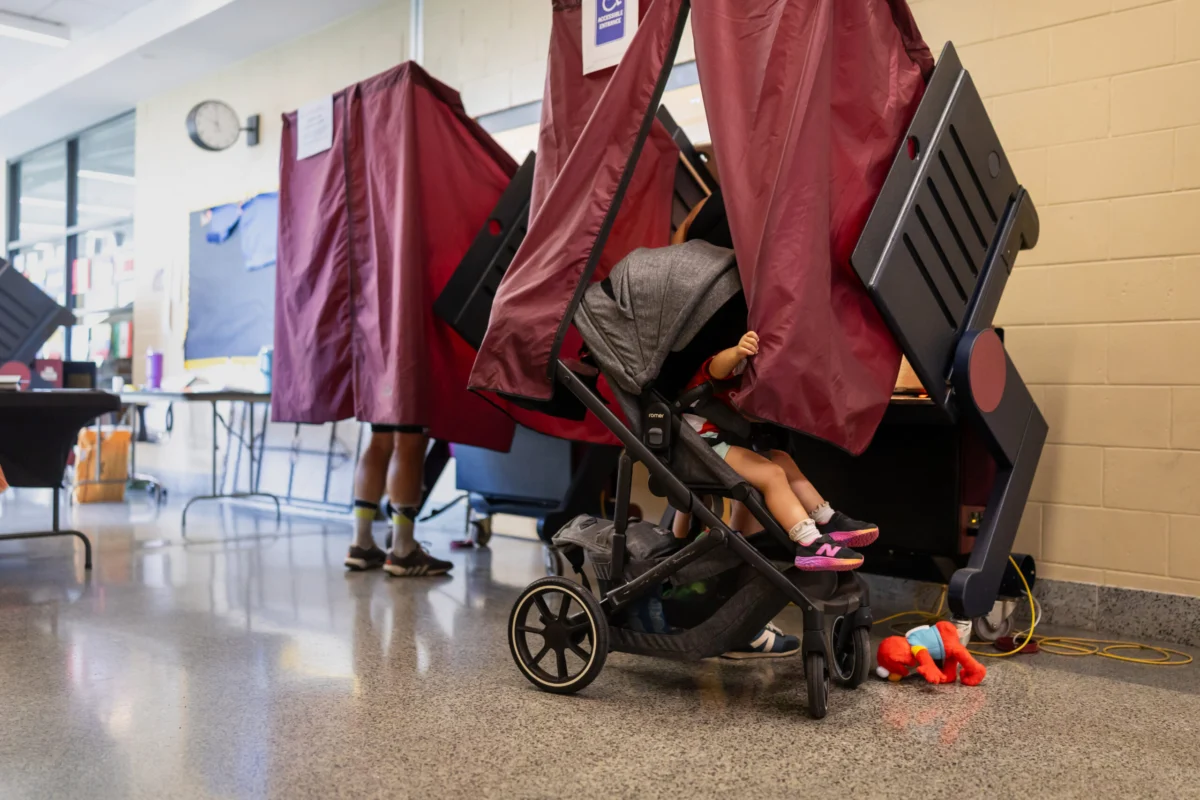
As Election Day draws closer, the hope is that children will witness much more than the endless stream of campaign text messages constantly lighting up mobile phones. When parents take their children to the local polling places, the vision is for youngsters to see neighbors treating one another with fundamental respect, standing together in shared support of a healthier, more resilient civic culture.
Our children are always watching how we navigate the world around us. It is up to the current generation of adults to give them an example truly worth following.
For the vast majority of human history, a child’s primary classroom was the natural world. Long before the advent of television screens, illuminated video game consoles, and mass-manufactured plastic toys, generations of children spent their free hours exploring forests, fields, and streams. Nature was not merely a weekend destination or a seasonal vacation spot; it was home, a dynamic landscape where imagination and innate curiosity were the primary tools for development.
Today, however, children navigate a vastly different reality defined by digital distractions and indoor lifestyles. Yet, tucked away in the natural environment, specialized programs are striving to reconnect youth with their historical roots. At first glance, the daily routine at the Wilderness Awareness School looks much like any traditional summer camp. The curriculum is delightfully familiar, filled with bug-catching, mud, songs, hands-on activities near water and trees, and the simple joy of roasting food over an open campfire.
However, beneath the surface of these classic camp traditions lies an intentional, sophisticated educational philosophy that fundamentally alters how children interact with the outdoors. Rather than relying on rigid lesson plans or top-down instruction, the educators at the school operate under a unique framework designed to awaken deep, self-directed learning.
Piquing Curiosity Is Key
At the heart of this unconventional approach is curiosity, which instructors ignite through a signature teaching technique known as Coyote Mentoring. Throughout folklore and natural history, the coyote has long appeared as a master of cleverness—a cunning creature that often relies on adaptability and keen perception to navigate its surroundings. Coyotes live comfortably on the edge of wild landscapes, able to move with ease through both developed areas and dense wilderness. More importantly, the coyote serves as a living embodiment of awareness, entirely tuned into its senses.
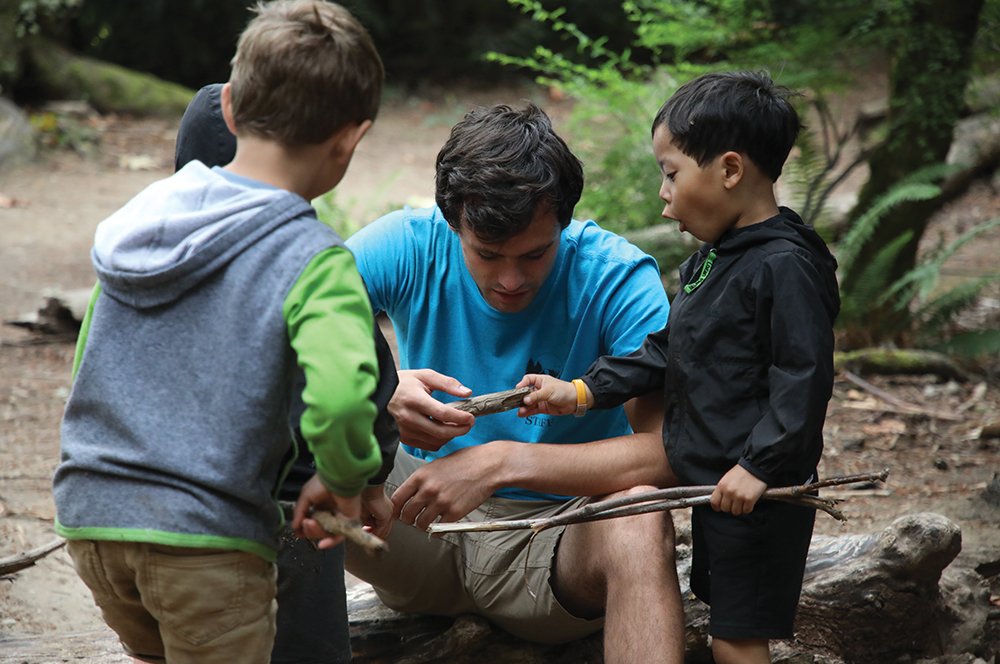
Coyote Mentoring flips traditional education on its head by drawing learning out of children rather than forcing it into them. This philosophy requires instructors to maintain a watchful eye, constantly scanning the group for moments when a specific discovery captures a camper’s attention. These fleeting instances create ideal, organic learning opportunities. A trained Coyote Mentor notices what is sparking a child’s natural curiosity and uses that specific point of interest as a catalyst to engage campers in active, self-driven learning. Through this subtle process, mentors create a space where knowledge is seamlessly passed on, often without the campers even realizing that an educational lesson is taking place.
Teetering On The Edge
Enlisting the art of questioning is another primary method Coyote Mentors use to stir up organic wonder. Instead of simply delivering facts—such as casually announcing that a feather found on the forest floor belongs to a Barred Owl—a Coyote Mentor responds with a cascade of targeted questions. They might ask the children what colors they notice in the plumage, what size bird they think the feather belonged to, how long it appears to have rested on the ground, or how it might have fallen from the canopy. Mentors deliberately begin with basic questions that campers likely already know how to answer, then progressively build toward more challenging levels of inquiry until the children reach what instructors call an "edge."
An awareness of a child’s individual edge is an essential component of the Coyote Mentoring model. When a camper reaches the edge of their engagement, they might temporarily appear distracted, hesitant, or stuck. Mentors pay exceptionally close attention to the group dynamic, skillfully guiding a member up to their personal edge while remaining acutely aware of when to pause, take a break, or move on to a different activity. They also continuously seek out prime opportunities for re-engagement.
To achieve this, mentors evaluate a multitude of factors, including the time of day, communication styles, distinct learning styles, and individual personality traits. Rather than forcing a rigid, one-size-fits-all teaching style onto every participant, a Coyote Mentor constantly adapts, catering directly to a camper’s preferred way of processing information based on continuous, careful observation.
Planting Seeds Engages An Audience
To maintain this fluid, responsive environment, instructors at the Wilderness Awareness School avoid strict, minute-by-minute agendas. While they may outline activities for the early part of the day, the schedule is purposefully left flexible, allowing the remainder of the itinerary to be determined by the natural flow, energy, and interests of the students.
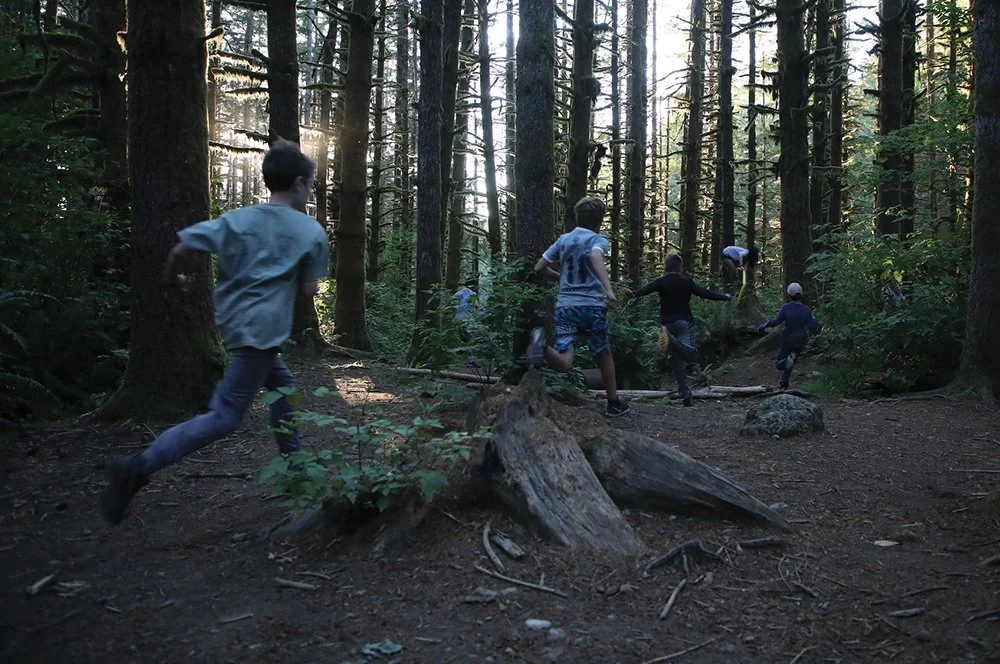
Typically, Coyote Mentors kick off each morning with an energetic game designed to break the ice, foster camaraderie, and help children burn off excess energy. During these activities, instructors subtly "plant seeds." For instance, a game might involve one camper playing an eagle chasing several designated sparrows, or children darting around an imaginary mud pit. The mentors closely monitor the group’s collective stamina, watching for the exact moment when a few campers begin to tire of the game, intervening just before the entire group loses interest. Capitalizing on this natural dip in energy, the mentors gather the children for a storytelling break.
Storytelling serves as yet another powerful vehicle for planting educational seeds. Compelling stories provide a relatable, engaging framework to draw out excitement and curiosity. A mentor might tell a narrative about a young girl who develops a special relationship with spiders, learning the art of web-weaving simply by observing the eight-legged creatures in her garden. Suitably inspired, the group of campers will often set off on a trek through the surrounding woods specifically to search for spiders, eager to witness firsthand how the creatures construct their webs.
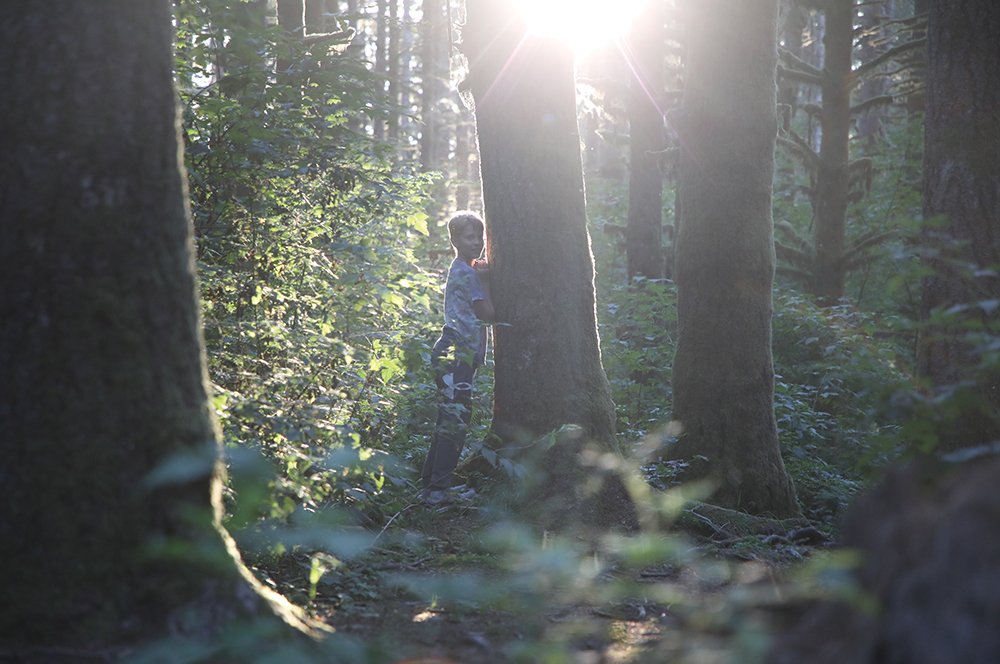
As they adventure through the landscape, campers step directly into their own awareness of the natural world, retaining the autonomy to decide which components of the ecosystem capture their imagination. The Coyote Mentor observes quietly, choosing either to ask relevant questions in the moment or to weave these specific curiosities back into the formal curriculum later in the day.
Later, mentors can recall the seeds planted earlier in the morning by directly referencing the day’s opening activities. Children who participated in the morning game involving an imaginary mud pit, for example, are often delighted when an afternoon adventure leads them to an actual, physical mud pit. Here, they have the freedom to reenact the morning’s game or simply dive in and get their hands dirty, transforming a standard day of summer camp into an unfolding, memorable narrative of their own.
Opportunities To Explore
By mastering the tools of questioning, storytelling, flow learning, and keen observation, mentors at the Wilderness Awareness School help young people forge lasting relationships with the natural world and with one another. By fostering these deep connections over the course of decades, the institution has consistently watched its students grow into resilient, compassionate, self-aware, and resourceful individuals.
While the Wilderness Awareness School might outwardly resemble a traditional nature camp—providing a space for children to breathe fresh air and make new friends during the summer months—the underlying experience is carefully curated by educators who understand the psychology of youth engagement. They provide children with the physical and mental space to explore, orchestrate intentional opportunities for discovery, and gently push them toward their personal learning edges. Ultimately, when a camper returns home at the end of the day, leaves their digital tablet on the coffee table, and spontaneously asks the family to go for a hike, the quiet work of the coyote mentor is complete.
In the contemporary digital landscape, navigating daily life without relying on technology and the internet has become virtually impossible. As children and adolescents increasingly seek—and often require—greater digital access for education, socialization, and everyday functioning, parents and caregivers frequently find themselves weighing the benefits against significant hesitation. This apprehension is particularly acute among families formed through adoption and foster care, where children may have already encountered early adversity, trauma, loss, or broken trust. Within these households, the online world can present unique risks and emotional challenges that hit vulnerable youth much harder.
Child welfare advocates and family support organizations emphasize that the primary responsibility for parents is not merely restricting access, but rather establishing healthy boundaries and walking alongside young people as they learn to navigate technology safely while remaining closely connected to their caregivers. Experts point to several core strategies that families can utilize to build sustainable, healthy tech habits, tailoring their approaches to meet the individual developmental needs of children rather than relying on rigid age-based rules.
Choose devices and access based on your child’s needs, not just their age
A foundational principle in managing youth technology use is that a one-size-fits-all approach rarely succeeds. When establishing household policies, parents are encouraged to look beyond chronological age to consider a child’s overall maturity level, specific functional needs, and developmental history. While a young child has no need for unmonitored smartphone access, an older teenager who drives independently may require reliable communication tools for safety and coordination.
For children impacted by trauma and early loss, developmental age often diverges significantly from chronological age. A teenager who is fourteen years old on paper may still struggle considerably with self-regulation, impulse control, and critical decision-making. Child development specialists note that this discrepancy is a natural reflection of a young person’s unique history, serving as a reminder that heightened guidance and structural support are necessary, particularly during the initial stages of introducing new technology.
To address these varying needs, many families begin with restricted devices designed specifically for younger users or adolescents taking their first steps into digital communication. These alternatives often include basic mobile devices lacking internet capabilities, restricting communication strictly to pre-approved contacts. Alternatively, parents frequently implement comprehensive parental control applications that allow them to monitor online activity, limit specific application usage, and adjust security settings remotely.
Create screen-free zones and times—and provide needed support during transitions
Establishing physical and temporal boundaries is widely regarded as an effective method for maintaining a healthy balance between online engagement and offline family life. Many households designate specific areas—such as bedrooms, bathrooms, and dining spaces—as strictly screen-free zones. To reinforce this boundary, families often set up a designated charging station in a common area, sometimes referred to as a household "phone home," where devices must be placed at specific times of the day. This physical arrangement creates a centralized communication hub while preventing nighttime device usage.
Ensuring adequate rest is another critical factor in youth development, particularly for children whose developing brains and nervous systems are continuously working to build a sense of safety and regulation. Consequently, many parents establish definitive offline hours extending from bedtime through breakfast, utilizing shared charging locations or parental oversight tools to enforce the routine.
Because abruptly turning off a screen represents a significant disruption, navigating digital transitions can prove challenging, especially for children with trauma histories who may experience heightened anxiety during shifts in activity. Child and family advocates suggest that providing proactive warnings—such as giving a five-minute notice before a device must be plugged in—or offering structured choices regarding where a device is stored can prevent emotional dysregulation and help young people feel empowered rather than controlled.
Normalize monitoring and rules
Transparency plays a vital role in establishing household digital policies. Experts advise parents to clearly communicate to children and teens that their online activity, including text messages, contact lists, social media interactions, and downloaded applications, will be subject to regular monitoring. Framing these measures not as a punishment, but as a shared commitment to personal safety and trust-building, helps children view oversight as a form of protection rather than an invasion of privacy.
For adolescents engaging with social media platforms, common practices include requiring accounts to be maintained with private settings while keeping open awareness of their digital networks and connections. By communicating these expectations openly and consistently from the outset, families can foster an environment of shared safety. Furthermore, professionals note that parents set the most powerful precedent through their own modeling of healthy digital boundaries and device usage in daily life.
Keep discussions open around tech use
Maintaining ongoing, open dialogue regarding technology is essential for long-term digital literacy and safety. Rather than treating online safety as a one-time conversation, families benefit from making technology a regular topic of discussion. Encouraging children and teens to report any uncomfortable, strange, or unsafe online encounters without fear of punitive consequences helps ensure that parental connection remains a young person’s strongest safeguard.
Regularly checking in on emerging digital trends, popular applications, and online culture allows families to evaluate potential risks collaboratively. When children approach caregivers with reasonable compromises or alternative suggestions regarding household tech guidelines, experts suggest that listening and working through solutions together reinforces valuable communication and negotiation skills. Remaining receptive to these discussions ultimately demonstrates to children and teens that their voices are heard and valued within the family dynamic, fostering mutual respect as they navigate the modern digital world.
For many parents navigating the daily challenges of educating their children at home, the eternal struggle against screen time remains a constant source of friction. The scene is familiar to countless households: a parent striving to implement a structured, enriching curriculum, while a preteen or teenager resists traditional instruction with every fiber of their being. Last week, during a routine phone call with a fellow homeschooling mother, education writer and advocate Shawna Wingert encountered this exact scenario once again.
The mother was grappling with how best to educate her twelve-year-old son without suffering through the daily bouts of resistance that had derailed their academic schedule the previous year. Wingert gently suggested implementing an interest-led approach to learning, a method that aligns academic concepts with a child’s natural curiosities. Frustrated and visibly discouraged, the mother offered a reply that many modern educators and parents frequently echo: "How can I take an interest-led approach when his only interest is video games?"
It is a concern that Wingert, a veteran homeschooling parent and author who runs the resource platform Different by Design Learning, understands intimately. For years, the prevailing sentiment within many educational and homeschooling communities has positioned video games as a primary adversary of academic achievement and cognitive development. Wingert admits she once shared that exact perspective, viewing digital screens as a distraction at best and a detriment at worst.
However, over the course of several years, as her own sons matured into teenagers and she sought new, effective ways to bridge the communication gap, her perspective shifted dramatically. Rather than viewing video games as a threat to traditional education, Wingert began to recognize them as a sophisticated, versatile tool capable of unlocking engagement and fostering deep learning. The more she observed her sons’ deep-seated passion for gaming, the more convinced she became that the broader educational community was overlooking substantial opportunities to connect with children on their own terms.
Not All Games Are Created Equal
A central anxiety among parents is the persistent fear that children will spend countless hours isolated in dark rooms immersed in violent or degrading content. While such titles undeniably exist within the vast landscape of the gaming industry, industry observers and educators point out that a massive spectrum of games exists that offer genuine, high-value educational opportunities.
Wingert points to practical examples from her own household to illustrate this point. The sandbox building phenomenon Minecraft has remained a cornerstone of their educational routine ever since she discovered that in-game signs could be strategically placed throughout virtual landscapes. By utilizing these text features, she was able to help one of her sons practice sight words and improve his reading skills in a low-pressure, highly motivating environment.
Similarly, historical strategy and war simulations have proven to be surprisingly potent pedagogical resources. Wingert notes that through playing the historical shooter Battlefield One, another of her sons absorbed a depth of knowledge regarding the realities, geography, and historical context of World War I that far surpassed anything presented in a standard textbook. By engaging with complex historical simulations, students often transition from passive recipients of historical dates to active participants who seek out additional context and research independently.
Building Bridges: Connecting with Children Through Their Passions
The integration of video games into an educational framework extends far beyond simple knowledge acquisition; it fundamentally transforms the relational dynamic between parent and child. Just as children eagerly share their latest physical artwork, sculptural creations, or athletic tricks on a skateboard, they derive immense pride from demonstrating their virtual mastery and problem-solving skills within a digital environment.
By familiarizing themselves with the games their children enjoy, asking thoughtful questions about game mechanics, and offering genuine positive reinforcement, parents can cultivate an environment rooted in mutual respect. Wingert emphasizes that this foundational respect serves as the bedrock for any successful interest-led educational model. Just as a parent might enthusiastically support a child’s fascination with zoology or fine arts, video game interests can be leveraged with equal validity, provided the adult is willing to take the time to learn about the medium with the child acting as the guide.
This collaborative approach naturally paves the way for strength-based learning models. Wingert, a passionate advocate for centering a child’s education around their innate capabilities rather than their academic deficits, has frequently highlighted how unexpected avenues can reveal a child’s true cognitive gifts. For instance, her youngest son demonstrated an extraordinary aptitude for three-dimensional spatial reasoning and architectural building within virtual spaces. Recognizing this strength in a gaming context allowed her to intentionally incorporate spatial thinking and structural design into offline learning activities, creating a holistic educational plan that bridges the digital and physical worlds.
Practical Applications for the Modern Homeschool
Translating the concept of gaming-integrated education into daily practice does not require parents to become expert gamers themselves. Educators who successfully utilize this approach generally rely on a few consistent strategies to maintain a healthy balance between screen engagement and academic rigor.
The primary recommendation centers on active involvement and dialogue. While a parent does not necessarily need to hold a controller, sitting alongside children while they play, inquiring about their strategic choices, and inviting them to explain their in-game accomplishments fosters critical thinking and verbal communication skills. When children articulate their goals, challenges, and problem-solving strategies, they are actively practicing narration, logic, and persuasion.
Furthermore, virtual environments frequently serve as natural springboards for broader academic inquiries. When a child encounters a specific geographic location, historical event, or scientific phenomenon within a game, that moment offers an immediate catalyst for real-world research. Consulting physical maps, conducting online database searches, and comparing historical accuracy against digital depictions transforms idle entertainment into rigorous, inquiry-based study. In Wingert’s experience, a passing mention of Russia in a game’s setting successfully led to collaborative geography research, map analysis, and critical discussions regarding how media portrays global regions.
Beyond geography and history, interactive digital platforms frequently function as modern equivalents of traditional educational projects. Creative building games like Minecraft allow students to construct elaborate historical reconstructions, such as medieval villages, serving as an interactive alternative to traditional paper-and-pencil reports or shoebox dioramas. These virtual projects offer educators a clear, tangible method to check for understanding and assess how effectively a student has retained information from a broader unit study.
As homeschooling communities continue to adapt to the diverse learning needs of modern students, the rigid boundaries separating entertainment from education are slowly beginning to dissolve. By approaching video games with curiosity rather than skepticism, educators and parents alike are discovering that children’s digital passions can become powerful catalysts for lifelong learning, strengthening both academic comprehension and familial connection along the way.
In the quiet, often isolating aftermath of profound loss, individuals frequently encounter a complex and perplexing emotional landscape. This reality is at the heart of a recent reflection published by The Compassionate Friends (TCF), a national non-profit organization dedicated to supporting families after the death of a child. Authored by TCF Chief Executive Officer Andy McNiel, the piece explores the enduring human paradox that joy and sorrow can—and often do—coexist within the same heart, challenging the notion that grief must completely eclipse every other human emotion.
The publication draws upon a timeless literary source to frame this emotional experience: Kahlil Gibran’s renowned 1923 poetic work, The Prophet. Specifically referencing the passage On Joy and Sorrow, the text highlights Gibran’s observation that the capacity for joy is often forged in the very depths of sorrow. “When you are joyous, look deep into your heart and you shall find it is only that which has given you sorrow that is giving you joy,” Gibran wrote. “When you are sorrowful look again in your heart, and you shall see that in truth you are weeping for that which has been your delight.”
For many people navigating the early stages of bereavement, however, these words can initially feel abstract or even unreachable. McNiel notes in the article that when individuals experience this emotional paradox in real life, it frequently triggers feelings of guilt or unease. Experiencing a momentary lift, sharing a laugh, or finding a brief connection to daily life or other people can feel like a direct contradiction to the immense pain of their grief.
In the immediate wake of a profound loss, the world often appears entirely altered. McNiel illustrates this sentiment through the words of a nine-year-old boy who, speaking with a counselor a couple of years after the death of his brother, described his altered reality simply: “Since my brother died, my life lacks luster.” This sentiment, expressed across various ages and circumstances by those experiencing deep loss, captures a common hurdle in bereavement: the feeling that finding purpose, enjoying a simple moment, or forming meaningful connections is no longer possible.
Yet, organizations like The Compassionate Friends emphasize that despair is not the final chapter of the grief journey. TCF serves as a living network of individuals who have faced what many consider an unimaginable nightmare and have ultimately discovered a path toward renewed meaning, community, and moments of joy. Crucially, this process does not imply a return to life as it was before the loss, nor does it mean that grief simply disappears with the passage of time.
Instead, healing involves a strenuous, often messy process of adaptation. McNiel points out that there is no secret pathway or shortcut around the pain. Rather, through persistence, handling life one moment at a time, and navigating the complexities of coping, many individuals gradually learn to carry both joy and sorrow simultaneously, mirroring the wisdom found in Gibran’s poetry.
This ongoing adaptation underscores a message of encouragement for the bereaved: finding personal agency and emotional footing is possible at any stage of the grief process. These developments do not replace the love or the memory of the person who died; instead, individuals learn how to integrate their grief into a transformed life. They build space for new experiences, meaning, and purpose alongside their sorrow.
This shared reality is precisely where the strength of community takes root. McNiel emphasizes that no one needs to walk the path of grief entirely alone. Through organizations like The Compassionate Friends, individuals find a network where others can extend a hand of support, and where they, in turn, can eventually reach out to support others who are hurting.
To help foster this community and provide ongoing education, TCF offers a variety of programs, resources, and outreach initiatives. Among these is a recent webinar titled Living, Coping, And Grieving After Profound Loss, which features personal stories and perspectives from a panel of experienced individuals navigating long-term bereavement. Additionally, the organization has recently launched a broader awareness campaign titled I Know Someone, designed to foster connection and understanding around the experience of profound loss.
Andy McNiel brings extensive professional background to his leadership role at The Compassionate Friends. Holding a Bachelor of Arts in Religion and a Master of Arts in Counseling, McNiel has spent three decades working as a bereavement support professional, trainer, author, and non-profit leader. Throughout his career, he has facilitated support groups and provided individual care to bereaved people across all age groups.
His professional background spans hospice care, regional and national grief organizations, and the development of safe spaces where grieving individuals can connect with peers who share similar experiences. Widely regarded as an educator and thought leader in the field of bereavement, McNiel lectures and presents keynotes extensively on topics related to grief, loss, and personal wellness. He is also the author of Understanding and Supporting Bereaved Children: A Practical Guide for Professionals, alongside numerous book chapters and articles focusing on grief and loss across the human lifespan.
Furthermore, McNiel’s expertise is recognized through his involvement with several prominent national and international organizations. He serves as a member of the Tragedy Assistance Program for Survivors (TAPS) Advisory Board, acts as a national trainer for the American Foundation for Suicide Prevention, and is an active member of the International Workgroup on Death, Dying, and Bereavement.
Through leadership, shared storytelling, and community-based resources, organizations like The Compassionate Friends continue to provide essential spaces for individuals learning to navigate the intricate, lifelong journey of living and grieving after profound loss.
For twelve years, the Read-Aloud Revival community has explored nearly every facet of children’s literature, from epic middle-grade fantasy series to lyrical picture books that capture the magic of childhood. Yet, a fundamental pillar of early reading development has remained largely unexamined in the podcast’s extensive catalog: the humble board book. Familiar to anyone who has spent time around infants and toddlers, board books occupy a unique space in the literary landscape. They are the initial gateway through which countless children encounter stories, serving as the first books that babies and very young children can physically manipulate, explore with their senses, and truly make their own.
In a recent deep dive into this essential format, host Sarah Mackenzie sat down with bestselling author, illustrator, and speech-language pathologist Tabitha Paige to discuss the profound impact board books have on early childhood development. As a professional who understands both the artistic and developmental needs of young children, Paige brought a wealth of insight to the discussion, shedding light on why these sturdy volumes are much more than mere entertainment and how parents can select the best options for their youngest readers.
The physical nature of board books is often taken for granted, but it is precisely what makes them such effective pedagogical tools. Unlike traditional paper-page books that require a delicate touch—something infants and toddlers simply do not possess—board books are engineered to withstand the rigors of early childhood. They are designed to be dropped, chewed, thrown, and aggressively handled. This durability allows young children to interact with books on their own terms. Babies can get their hands and mouths on the pages, experiencing the physical sensation of touching pictures and learning the mechanics of turning pages long before they can comprehend the narrative text. This tactile interaction fosters an early sense of ownership and familiarity with books, laying the groundwork for a lifelong relationship with reading.
During the conversation, Paige emphasized that the benefits of board books extend far beyond physical durability. Because of her background as a speech-language pathologist, she approaches children’s literature through the lens of communication and cognitive development. Board books offer a multisensory learning experience that stimulates language acquisition. When a caregiver reads a board book to an infant, the interaction engages multiple senses simultaneously. The child hears the rhythm and cadence of language, sees high-contrast or beautifully detailed illustrations, and feels the texture of the page. This holistic engagement is critical during the first few years of life, a window of extraordinary neurological growth during which the brain builds the foundational neural pathways for language, comprehension, and emotional regulation.
Choosing the right board book, however, requires a thoughtful approach. Not all board books are created equal, and understanding what to look for can significantly enhance the reading experience for both the child and the adult. Paige shared valuable guidance on selecting books that resonate with infants and toddlers, noting that the best choices often combine visual clarity, engaging text, and developmental appropriateness. High-contrast images are particularly effective for newborns and young infants whose visual systems are still developing. As children grow into toddlers, books that incorporate interactive elements—such as varying textures, simple narratives, or relatable everyday concepts—help maintain their attention and encourage active participation.
The discussion also highlighted the broader cultural and educational shift toward recognizing early childhood literacy as an active, relational experience rather than a passive one. Reading aloud to babies is not just about preparing them for school; it is about building connection, fostering emotional security, and introducing the structures of language in a warm, low-pressure environment. Board books act as the catalyst for these early bonding moments. When a parent sits with a baby to look at a sturdy book, the shared focus creates a secure attachment environment that supports emotional development while simultaneously building vocabulary and listening skills.
As the Read-Aloud Revival continues its long-standing mission of helping families fall in love with books, this exploration of board books serves as a timely reminder that literacy begins at the very beginning of life. By understanding the unique value of these durable little volumes, parents and caregivers can better appreciate the monumental role they play in shaping young minds. Through the expert insights of Tabitha Paige, listeners are equipped with a renewed appreciation for the books that often mark a child’s very first steps into the vast, imaginative world of literature.
For many expectant parents, the months leading up to birth are filled with planning, classes, and anticipation. While the primary focus is often on the labor experience itself, new research suggests that birth preparation may have far-reaching consequences that extend well into the postpartum period. A study involving 3,080 mothers has revealed a compelling correlation: women who described their birth experiences in positive terms were significantly more likely to initiate breastfeeding and maintain the practice for longer durations.
While the study does not establish a direct causal link—meaning a positive birth does not automatically guarantee breastfeeding success—it highlights a crucial, often overlooked connection between the transition into motherhood and the subsequent physiological journey of nursing. This evidence is prompting experts to advocate for a broader, more integrated view of birth preparation, one that encompasses not just the mechanics of labor, but also the emotional and physiological continuity of the postpartum experience.
A Wider Lens on Birth Preparation
Taking a holistic approach to childbirth education involves moving beyond the basics of labor and delivery. According to current perspectives in maternity care, effective preparation should include an exploration of physiology, common clinical decisions, postpartum recovery, and, perhaps most importantly, the cultivation of a deep, intuitive connection between the parent and their baby.
Antenatal education that emphasizes these elements has been shown to improve childbirth self-efficacy while simultaneously reducing fear. When parents enter the delivery room feeling informed, confident, and prepared for various possibilities, they are better equipped to navigate the intense physical and hormonal transition that follows birth. For those who prioritize breastfeeding, this means thinking ahead to the "golden hour"—the period immediately following delivery—and considering the importance of skin-to-skin contact, early feeding opportunities, and the specific lactation support they might require. By bridging the gap between pregnancy, birth, and the postpartum phase, parents can create a more cohesive and less overwhelming transition.
Defining the Positive Birth Experience
One of the most persistent misconceptions in maternity care is that a "positive" birth experience is defined by a single set of circumstances. In reality, as noted by the World Health Organization (WHO), a positive childbirth experience is centered on respectful, individualized care, clear communication, emotional support, and the parent’s meaningful involvement in decision-making.
A vaginal birth is not inherently positive, just as a surgical birth, an induction, or an epidural is not inherently negative. Regardless of the medical interventions required, the quality of the experience is often dictated by how much the parent felt respected, heard, and included in the process. Comprehensive birth preparation acts as a foundation for this involvement. By understanding the wide range of possibilities that can arise during labor, parents can nurture a sense of self-awareness that allows them to trust their intuition, ask informed questions, and remain engaged in their care, even when clinical circumstances shift unexpectedly.
Birth and Postpartum as a Continuous Narrative
It is common for families to spend months preparing for the labor process while giving relatively little thought to the immediate postpartum recovery. Amara Cashion, a Spinning Babies® Certified Parent Educator, birth doula, and breastfeeding counselor, notes that many parents find themselves caught off guard by the intensity of the days following birth. Learning about the realities of the early postpartum period and creating a mental framework for what that transition might look like can significantly reduce the sense of unfamiliarity that often accompanies those first few days at home.
Rhonda McGregor, a Registered Nurse and International Board Certified Lactation Consultant, views the journey from pregnancy to breastfeeding as a single, continuous physiological process. She suggests that physiology does not simply pause at the moment of birth; rather, it is a fluid story where birth is merely one chapter. For the breastfeeding parent, this transition involves a complex hormonal shift. After the baby is born, the body begins the work of establishing milk production, a process heavily supported by the infant’s suckling and the biological closeness fostered by skin-to-skin contact.
The Significance of Early Interaction
When it is medically safe and feasible, early skin-to-skin contact provides a vital period for both parent and baby to regulate and settle together. The WHO strongly recommends supporting uninterrupted skin-to-skin contact as soon as possible, citing evidence that this practice is a significant driver of breastfeeding initiation and longer duration.
These formative moments do more than just facilitate feeding; they serve as the bedrock for attachment and emotional regulation. While newborns possess innate instincts that drive them toward the breast, the manifestation of these behaviors can be influenced by the nature of the birth itself. Understanding these early cues and recognizing that every baby’s journey is unique helps parents feel more supported during the early days of parenthood.
Navigating Information Overload
In the digital age, expectant parents are often inundated with conflicting advice from social media, peer groups, and an endless array of online sources. Experts like Cashion and McGregor warn that not all information is created equal, and much of it may not be applicable to an individual’s specific pregnancy or health needs.
Instead of attempting to consume every piece of content available, parents are encouraged to curate a small circle of trusted resources. Engaging with midwives, physicians, doulas, and childbirth educators allows for personalized guidance that respects the individual’s goals. An understanding of the fundamentals of birth and breastfeeding is essential, but it is ultimately the parent’s prerogative to decide how that knowledge fits into their own life.
Preparing for the Unforeseen
Even the most thorough preparation cannot eliminate the possibility of the unexpected. A surgical birth, premature delivery, a stay in the NICU, or unforeseen medical challenges can separate a parent and baby, potentially complicating the initial feeding plan. When these situations arise, the focus must shift toward compassionate, practical support rather than judgment or rigid expectations of how things "should" have gone.
Missing immediate skin-to-skin contact does not mean the opportunity for bonding is lost; these moments can be reclaimed in the days and weeks that follow. If temporary separation occurs, lactation professionals can provide guidance on techniques like hand expression or pumping to maintain supply.
Furthermore, mental health plays a critical role in the breastfeeding journey. A 2025 systematic review highlighted that traumatic birth experiences and associated post-traumatic stress symptoms are consistently linked to poorer breastfeeding outcomes. For many, professional emotional support is just as vital as clinical breastfeeding guidance.
Crucially, it is important to remember that breastfeeding is not the sole metric of a parent-child bond. Families may find their path involves pumping, donor milk, combination feeding, or formula, and all these choices are part of a valid, loving story. The goal of birth and postpartum preparation is not to establish a new, unattainable standard of perfection, but to provide parents with a toolkit of options and the confidence to navigate whatever path unfolds. By fostering an environment of support, connection, and informed choice, families can enter the postpartum period with the resilience to adapt as their needs and their baby’s needs evolve.