New Peer-Reviewed Study Validates Spinning Babies® Approach to Fetal Rotation
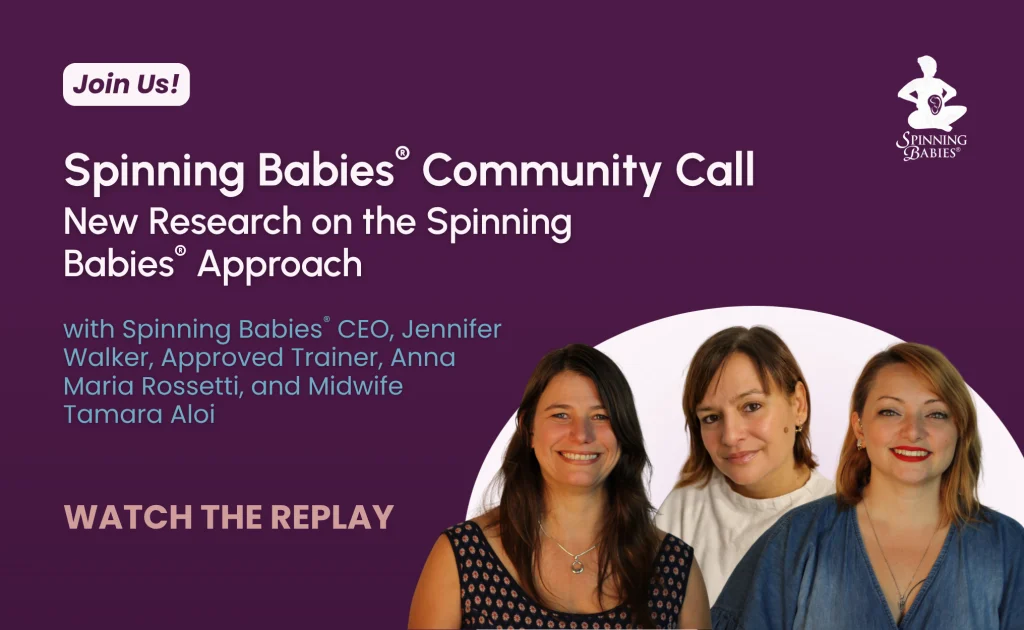
On November 5, 2025, the global birth community marked a significant milestone as Spinning Babies® hosted a virtual assembly that bridged the gap between intuitive clinical practice and empirical academic research. The event, held via Zoom, featured CEO Jennifer Walker, Approved Trainer Anna Maria Rossetti, and midwife Tamara Aloi. The primary focus of the gathering was a landmark article recently published in the European Journal of Midwifery, representing one of the first formal, peer-reviewed studies to specifically examine the efficacy of the Spinning Babies® framework in facilitating fetal rotation during labor.
For many birth professionals—including obstetricians, midwives, doulas, and childbirth educators—the study serves as a long-awaited bridge. It provides a formal, scientific language to describe the patterns and successful outcomes that practitioners have observed for years while utilizing the "Balance Before Force" and "Pelvic Levels Solutions™" frameworks. The virtual call served not only as a presentation of the findings but as a communal recognition that the practical wisdom honed in birthing rooms worldwide is increasingly being mirrored in the halls of clinical research.
A Collaboration Rooted in Real-World Practice
The genesis of the study lies in the professional partnership and shared history between Anna Maria Rossetti and Tamara Aloi. Rossetti, an Approved Trainer for Spinning Babies® and a pivotal figure at the Scuola Elementale di Arte Ostetrica (SEAO) in Italy, has spent years advocating for midwifery-led education and the preservation of physiological birth. Her work has been instrumental in shifting the conversation around labor management in Italy, emphasizing that birth is a dynamic, physiological event rather than a purely clinical problem to be solved with intervention.
Rossetti and Aloi are longtime contemporaries who completed their midwifery training together. This foundational bond, rooted in a mutual commitment to physiological birth, defined their respective career paths. The research project emerged organically after Aloi attended one of Rossetti’s Spinning Babies® workshops. Inspired by the principles of the framework, Aloi began integrating these techniques into her clinical practice within a hospital setting. The immediate, observable positive impact on labor outcomes became the catalyst for a formal investigation. The study is a testament to the power of frontline practitioners identifying a clinical improvement and seeking to document it through rigorous research methods.
During the virtual community call, Jennifer Walker provided a broader vision for the organization and the significance of this development. Walker emphasized that the research aligns perfectly with a global movement toward prioritizing physiology over force. This paradigm shift acknowledges that the baby is an active participant in the birthing process, capable of navigating the pelvic canal if given the correct environmental and physical conditions. The sentiment expressed by the practitioners in attendance—many of whom flooded the chat with messages of validation—was clear: the findings resonated deeply with their own lived experiences. The collective reaction was one of "we see this, too," underscoring that the research serves to confirm the efficacy of techniques that have been utilized successfully at the bedside for a significant period.
What the Study Shows
The publication in the European Journal of Midwifery offers a rigorous examination of fetal rotation from occiput-posterior (OP) and occiput-transverse (OT) positions. Historically, these positions have been associated with prolonged labor and higher rates of clinical intervention. By applying the Spinning Babies® approach—which focuses on the mobility and balance of the maternal pelvis and soft tissues—the study found a statistically significant increase in rotation to the anterior position among those who received the intervention compared to control groups.
The importance of this finding cannot be overstated. By demonstrating that targeted, physiological techniques can influence fetal positioning during the labor process, the study provides a vital piece of evidence for those who advocate for non-invasive approaches to managing labor dystocia. The Pelvic Levels Solutions™ framework, which posits that a baby must pass through distinct levels of the pelvis to descend and rotate, forms the backbone of this methodology. The research suggests that when providers focus on balancing the maternal anatomy before applying physical force or medical intervention, the baby is better positioned to navigate the pelvis autonomously.
This research does not exist in a vacuum; it is part of a growing body of evidence supporting the idea that birth outcomes are deeply influenced by the preparation and movement of the birthing person. By documenting these successes, the study invites further academic inquiry into how physiological, body-based techniques can be integrated into standard maternity care protocols, potentially reducing the need for more invasive procedures.
Engaging with the Research and Community
The virtual call was designed to be accessible to a diverse, international audience. Recognizing the global nature of the birth professional community, Spinning Babies® has made the full recording of the event available to the public. To ensure that the information is accessible across language barriers, the recording is provided in Italian, the native language of the primary researchers, and features English captions. Furthermore, the organization has released a highlights reel specifically for English-speaking audiences to distill the key takeaways from the discussion.
For those who wish to watch the full proceedings, the recording is hosted on the organization’s official YouTube channel. Similarly, the English-language highlights are available for those seeking a more concise summary of the presentation. In an effort to make this research truly global, the organization has provided clear instructions on how viewers can utilize the built-in translation features on video platforms. By clicking on the settings icon on the video player, viewers can access the subtitles/CC menu, select the "Auto-translate" option, and choose their preferred language. This commitment to accessibility reflects the organization’s broader mission to democratize knowledge about physiological birth.
The conversation held on November 5 was more than just a review of a study; it was an acknowledgment of the evolving relationship between professional intuition and peer-reviewed science. As more birth professionals adopt these methods, the role of research becomes increasingly important in standardizing care and advocating for the physiological safety of birthing people worldwide.
The Spinning Babies® leadership expressed their profound gratitude to the community for their ongoing participation in this journey. Whether a practitioner is just beginning their career or is a seasoned expert in the field, their role in these conversations is critical. By sharing real-world experiences, reporting outcomes, and engaging with new research, birth professionals are contributing to a global dialogue that is fundamentally reshaping the future of maternity care. As the community continues to explore the intersections of physiology, movement, and birth, the focus remains firmly on supporting the innate capacity of the baby to navigate the pelvis and the power of the birthing person to lead the process. The organization remains dedicated to fostering these connections and ensuring that evidence-based, physiological care remains at the heart of the birth experience for families everywhere.

Leave a Reply