Bridging the Divide: How Faith Communities Are Modeling Civic Grace and Peaceful Engagement During Election Season
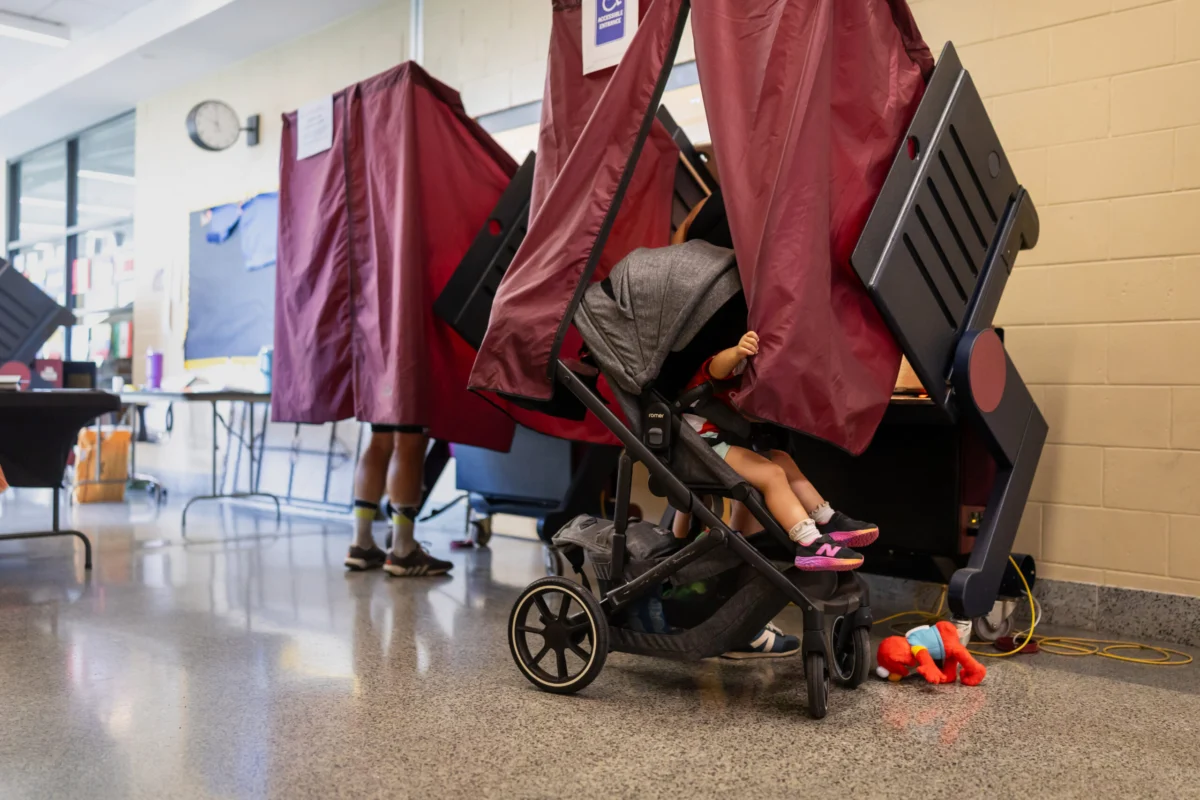
As a mother of three children, ages 14, 12, and 10, daily life is a continuous exercise in logistics and parental management. There is always a mental checklist running in the background: Who needs their violin today? Who forgot their lunch? Do we seriously need groceries again? These routine concerns fill the margins of everyday family life, anchoring parents to the immediate needs of their growing children.
Yet, somewhere between the endless school pickups, gymnastics practices, and towering piles of laundry, a much larger and more profound question frequently comes to mind. What future are we actually creating for our children? What kind of country will they inherit when they step into adulthood? These reflections are not abstract philosophy; they are the urgent, underlying concerns of parents navigating an increasingly polarized societal landscape.
Like most parents, I want my kids to grow up in an America where differences are not viewed as threats, but as opportunities to learn from each other.
Like most parents, I want my kids to grow up in an America where differences are not viewed as threats, but as opportunities to learn from each other. In an ideal civic environment, children would regularly see examples of mutual respect, peaceful engagement, and civic responsibility modeled by the adults around them. With major midterm and general elections consistently looming on the political horizon, the weeks leading up to Election Day offer a critical window to model those exact values directly in our homes, schools, and neighborhoods.
Election seasons have historically brought out the best in American democracy. Millions of citizens proudly wear their “I Voted” stickers, serving as a visible reminder that ordinary people have a direct voice in shaping their local communities and the broader nation. At the same time, however, modern election cycles can expose very real and persistent risks. These include widespread disinformation campaigns, deep and enduring political divisions, a measurable decline in public trust in electoral institutions, and the looming, unsettling threat of political violence.
These complex challenges extend far beyond the outcome of any single political race. They strike at the very heart of the democratic norms and civic trust that have sustained the United States for generations. Day after day, it can easily feel as though political differences are widening while the national ability to converse across those divides is shrinking. Too often, contemporary American culture encourages citizens to view one another with immediate suspicion rather than assuming the best intentions of our neighbors and fellow community members.
In truth, American democracy has never depended on universal agreement. In fact, disagreement is baked directly into the foundation of the republic. The founders anticipated ideological friction, and what truly matters is not the absence of conflict, but the collective willingness of the populace to engage constructively despite profound differences.
In moments of national uncertainty, faith communities have historically been uniquely positioned to model what constructive engagement looks like. They can demonstrate to the broader public that disagreement is fundamentally not the same as disrespect. They can show that people holding vastly different theological and political beliefs can still work together toward shared goals, and that core human values like dignity, humility, and compassion far transcend partisan political labels.
That vital mission is precisely at the heart of the ongoing work at Interfaith America. The organization actively works to cultivate leaders who know how to respect, relate, and cooperate across deep differences for the common good. At a time when partisan division frequently dominates daily news headlines and social media feeds, Interfaith America helps people develop the practical skills and interpersonal relationships urgently needed to strengthen modern civic life.
For members of various faith traditions looking for guidance on how to navigate this cultural moment, resources like the Faith in Elections Playbook offer practical, grounded support. Designed for faith leaders, congregations, and everyday community members, the playbook provides tools for encouraging respectful dialogue, identifying and responding to misinformation, and helping local communities navigate contentious election seasons with integrity, grace, and care.
The need for this type of intentional civic work has arguably never been greater. Democracy is not a self-sustaining institution; it relies heavily on citizens who are actively willing to invest in human relationships, uphold foundational democratic norms, and resist the easy, destructive temptation to demonize those with whom they disagree. Faith communities, with their deep roots in local neighborhoods and their emphasis on moral character, are uniquely positioned to model those essential civic habits.
As part of these ongoing efforts, organizations are gathering for events such as the upcoming "Praying for America" gathering, where people from many different faith traditions come together in a shared spirit of humility, hope, and mutual concern for the direction of the nation.
The goal is a commitment to the common good, peaceful participation in our democracy, and treating one another with dignity during a consequential election season.
The ultimate goal of these gatherings is not to forge artificial political agreement. It is something much deeper and more enduring: a steadfast commitment to the common good, peaceful participation in the democratic process, and treating one another with inherent dignity during consequential election seasons.
As Election Day draws closer, the hope is that children will witness much more than the endless stream of campaign text messages constantly lighting up mobile phones. When parents take their children to the local polling places, the vision is for youngsters to see neighbors treating one another with fundamental respect, standing together in shared support of a healthier, more resilient civic culture.
Our children are always watching how we navigate the world around us. It is up to the current generation of adults to give them an example truly worth following.
