Comprehensive Research Confirms Experiential Learning Outperforms Traditional Teaching Models Across All Age Groups
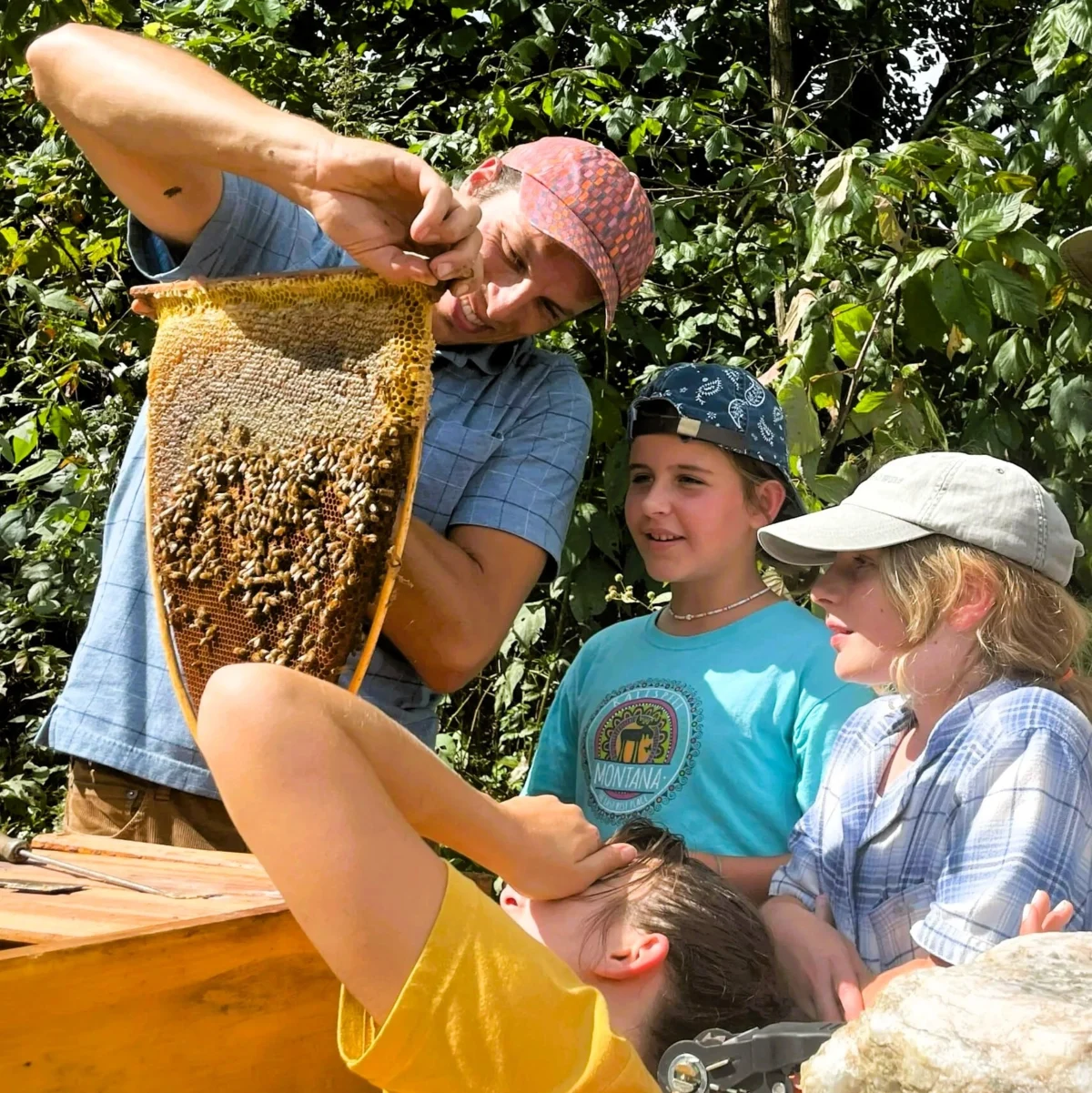
A growing body of large-scale, international research is fundamentally shifting how educational experts view effective instruction, affirming that experiential learning is the optimal way for students to acquire knowledge across all ages and subject areas. Defined broadly as an educational approach in which true understanding grows organically from lived experience, experiential learning moves away from passive listening and toward active engagement. Mastering fractions through the practical mechanics of baking, discovering physics by carefully observing the properties of light, exploring history through dramatic reenactment, or understanding biology through direct, outdoor observation are all classic examples of this hands-on paradigm in action.
When contemporary educational systems invite students into an active relationship with their daily work, learning ceases to be an abstract chore and instead becomes a natural extension of typical child development. Younger children learn primarily and most effectively through play, physical movement, storytelling, rich sensory experiences, and art. Meanwhile, as students transition into adolescence, their cognitive capacities deepen, allowing their education to expand through structured reflection, academic discourse, and meaningful experiences embedded within the broader community.
This comprehensive endorsement of hands-on methods is backed by decades of data. What follows is a detailed exploration of modern experiential learning research and the specific methodologies that most consistently support deep cognitive understanding, sustained student engagement, and lasting academic success.
Research Analysis
The empirical backing for hands-on education is anchored by extensive data compiled over the last thirty years. Two major umbrella meta-analyses, encompassing dozens of individual studies, clearly demonstrate the superior efficacy of experiential learning across a wide spectrum of academic subjects and diverse grade levels.
A landmark study published in 2023 evaluated traditional teaching models against project-based, inquiry-driven learning frameworks. The findings revealed that students exposed to experiential frameworks experienced significant improvements in core learning outcomes. These enhancements extended beyond simple test scores to encompass broader cognitive metrics, including higher academic achievement, the development of a growth mindset, and sharpened critical thinking skills.
Building directly upon those findings, a deeper-dive meta-analysis published in 2025 sought to deconstruct which specific subsets of experiential learning yielded the most pronounced positive outcomes. The researchers concluded that "fully embodied learning"—defined as educational activities that actively engage a student’s entire body and full suite of senses—exercised the single greatest positive effect on overall student success. Whether children were manipulating physical objects or moving through space to grasp an abstract concept, the physical anchoring of the lesson proved transformative.
Learning Across the Curriculum: Nature’s Role
It comes as little surprise that one of the most thoroughly documented and widely praised experiential learning methods involves taking the classroom outside the traditional four walls. A comprehensive systematic review spanning twenty years of research into nature-specific outdoor learning highlights the profound emotional, academic, and general wellbeing benefits associated with outdoor education.
The authors of this extensive review analyzed the results of various nature-based outdoor learning initiatives, which ranged from single curricular lessons held in schoolyards to dedicated fieldwork and multi-day residential programs conducted in rugged natural settings. The data consistently showed that sustained periods of time spent in nature—coupled with hands-on activities, peer collaboration, and guided reflection—were directly associated with overwhelmingly positive academic performance, heightened student engagement, and improved emotional health.
Deepening Language Comprehension: Movement and the Senses
The cognitive advantages of physical and sensory engagement extend deeply into language arts and literacy education. The authors of a study published in ScienceDirect reviewed three decades of research specifically examining embodied learning in language acquisition. They investigated how physical and sensory engagement supports the complex processes of learning a language, comprehending complex texts, and forming personal connections with the material.
The researchers discovered that whole-body, sensory-rich, experiential approaches consistently increased student participation. Furthermore, these methods allowed for deeper cognitive processing and reading comprehension across all grade levels. In particular, the data showed that physical gestures and purposeful physical activity were frequently linked to significantly improved vocabulary acquisition and a much deeper, more authentic engagement with everyday language tasks.
Arts-based activities—including drama, music, and the visual arts—contributed heavily not only to traditional language learning outcomes but also to noticeable emotional and motivational gains for the learners. Drama and role-play, in particular, created authentic, meaningful language-learning environments. By placing vocabulary and grammar within a narrative context, these methods successfully supported students’ practical language use in real-world scenarios.
Mastering Mathematics: Collaboration and Manipulatives
Mathematics education has traditionally relied heavily on abstract symbols and rote memorization, but recent data suggests that a hands-on approach yields far superior cognitive results. A meta-analysis focusing specifically on primary school mathematics learning outcomes determined that project-based learning vastly improved students’ collaborative abilities, problem-solving capacities, and critical thinking skills.
The strategy that proved most effective in this mathematical context was sustained, collaborative project work. In these settings, students engaged in multi-week projects where they worked collectively to explore, troubleshoot, and solve meaningful real-world problems using mathematical principles. By working through challenges in this collaborative fashion, students actively advanced their interpersonal skills. They learned how to promote one another’s viewpoints, speak out when necessary, listen attentively to divergent perspectives, and participate thoughtfully in complex mathematical discussions.
In tandem with collaborative projects, the use of physical manipulatives emerged as a universally beneficial experiential approach across all grade levels, extending all the way up to college-level instruction. However, the data highlighted that careful pedagogical guidance was the key to success in this realm. Students benefited most when manipulatives were explicitly and intentionally integrated into the core instruction, with teachers acting as facilitators by scaffolding the connection between the concrete physical tools and the underlying abstract mathematical concepts. Utilizing manipulatives ensured that students retained concepts over the long term, far outperforming peers who learned mathematics strictly through abstract symbols alone.
Strengthening Science: Inquiry and Project Learning
In the realm of science education, comparing traditional instructional approaches with modern inquiry-based methods reveals a stark contrast in student outcomes. A rigorous meta-analysis comparing inquiry-based models against conventional educational approaches demonstrated that inquiry-driven methods have a significantly large and positive impact on the development of students’ higher-order thinking skills.
Upon breaking down the data, the study’s authors compared various forms of inquiry and determined that guided inquiry, research-based inquiry, and argument-driven inquiry produced the largest positive effects. These frameworks were especially potent when students were required to actively investigate complex questions, rigorously analyze physical evidence, and independently justify their scientific conclusions based on data.
Furthermore, inquiry approaches that were deeply embedded in authentic, real-world problems yielded exceptionally strong outcomes. These real-world stakes naturally demanded deeper reasoning, careful self-reflection, and collaborative consideration of multiple viewpoints, ultimately driving a more profound application of scientific knowledge.
Lived Experiences: Learning in Waldorf Education
Viewed as a unified body of evidence, this extensive collection of modern educational research strongly affirms what alternative educational models, such as Waldorf education, have maintained at their core for generations: learning unfolds most fully when children encounter the world—both indoors and outdoors—through rich sensory experiences, hands-on, purposeful projects, and inquiry-based problem-solving.
In an era defined by an increasingly abstract and digital landscape, experiential education offers something that is simultaneously timeless and essential. It provides a form of learning that engages the entire child, fostering an understanding of the world that is lasting, deeply human, and vibrantly alive. Ultimately, true experiential learning invites students into a profound process of transformation, shaping both their sense of self and their comprehension of the world around them.

Leave a Reply