Transforming a house into a warm and welcoming home often comes down to the personal touches that reflect the lives and stories of the people living inside. While digital devices and cloud storage have made capturing daily moments easier than ever, thousands of treasured family photographs frequently remain trapped behind glass screens. Printing and displaying these memories offers a tangible way to celebrate personal history, yet traditional framing methods can sometimes feel static or uninspired. To help homeowners breathe new life into their living spaces, interior design and photography experts are highlighting a series of innovative display techniques that move far beyond the standard single frame on a mantelpiece.
Displaying family photos creatively does not require a complete interior overhaul or professional design experience. Rather, it involves looking at living areas, hallways, and communal spaces through a fresh lens, turning everyday snapshots into dynamic works of art. Whether dealing with expansive blank walls or cozy, intimate corners, various methods allow residents to curate their visual histories in ways that complement their personal interior aesthetic. Industry professionals have identified five standout approaches that range from structured wall displays to immersive three-dimensional keepsakes, offering endless inspiration for households looking to celebrate their favorite moments.
1 Create a photo gallery wall
A gallery wall remains one of the most effective and visually striking ways to curate a collection of family photographs within a shared living space. Rather than scattering individual frames haphazardly across different rooms, grouping images together creates a powerful focal point that tells a cohesive visual story. Homeowners can approach this concept through several distinct design strategies depending on their architectural layout and personal taste.
Creating a grid arrangement offers a classic, highly structured approach to featuring family portraits. This method relies on geometric precision, where images are spaced evenly to produce a clean, uniform aesthetic. To maintain this polished look, decorators often utilize identical frames across the entire display. Alternatively, mixing various frame styles within a strict grid can introduce a subtle layer of unique character without disrupting the overall sense of order.
For those who prefer flexibility and enjoy updating their home decor frequently, a picture ledge provides an ideal alternative. Installing a slim wooden or metal shelf allows photographs to be leaned against the wall rather than permanently hung. This configuration eliminates the need for repeated drilling and patching, enabling residents to swap out old prints for new memories as often as they wish. Furthermore, overlapping different frame sizes on a ledge creates natural depth and casual elegance.
When dealing with a particularly beloved portrait or a standout landscape shot from a memorable holiday, making a statement with an oversized print can anchor an entire room. Enlarging a single favorite photograph transforms it into the primary focal point of the wall, around which smaller complementary images can later be grouped. For a more eclectic aesthetic, mixing and matching diverse frame sizes and styles allows households to express their individuality. Sticking to a unified color palette or a specific thematic thread ensures that the diverse mix of frames still reads as a single, cohesive design choice.
2 Hang your photos with pegs
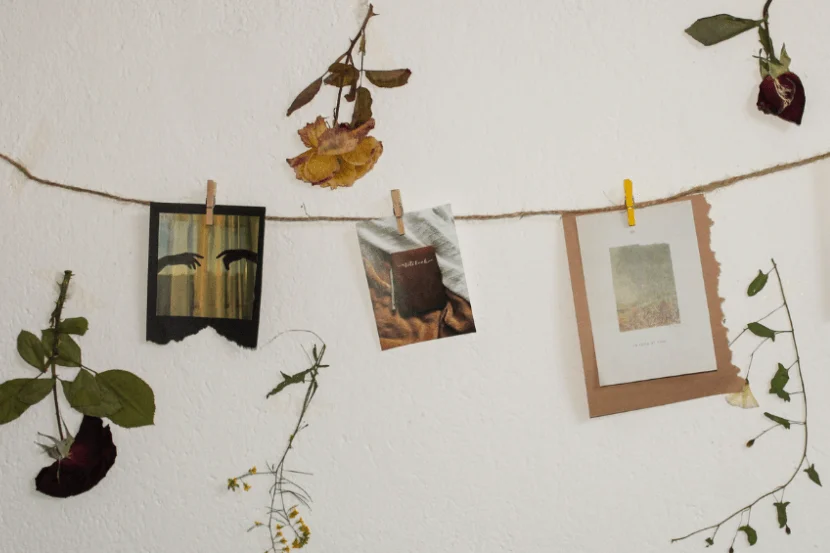
For a casual, warm, and highly customizable display, hanging photographs using traditional pegs offers a relaxed alternative to heavy wooden or metal frames. This approach typically involves stringing a length of wire, rustic twine, or a sleek metal grid across a blank wall, then attaching prints using miniature wooden or decorative clips.
This method excels in its adaptability and playfulness. Households can easily embrace color by selecting pegs and strings in vibrant hues that complement a child’s bedroom, a lively kitchen, or a creative home office. The display does not need to be restricted solely to photographs; incorporating other personal elements such as children’s artwork, vintage postcards, or handwritten notes creates a dynamic, evolving collage of daily life.
Establishing a clear theme can also elevate a pegged photo display from a casual craft project into a purposeful design feature. For instance, families often curate a travel-themed exhibit featuring candid shots, tickets, and landscapes from their favorite family road trips and overseas adventures. Alternatively, seasonal collections featuring highlights from annual holiday traditions can be easily rotated throughout the year, keeping the home’s decor fresh and responsive to the changing calendar.
3 Make a photo book
While wall displays and hanging exhibits allow families to share their favorite moments with visitors, compiling memories into a dedicated photo book offers an intimate, tactile experience suited for the coffee table or living room bookshelf. A well-designed photo album brings together months or years of digital snapshots into a single, cohesive volume that can be easily browsed and cherished over time.
Modern printing services provide extensive customization options, allowing users to select tailored layouts, write descriptive captions, and integrate physical mementos like concert tickets, plane passes, or pressed flowers directly into the pages. The process begins with selecting an appropriate layout. Many platforms offer pre-designed templates that balance text and imagery, while others allow complete creative freedom over how many photos appear on each spread.
The cover design serves as the introduction to the book, making it essential to choose a style that reflects the narrative contained inside. Whether opting for a sleek linen cover, a minimalist typographic title, or a bold full-bleed photograph, the exterior sets the tone for the memories within. Furthermore, modern editing tools integrated into digital printing platforms enable users to enhance their images before production. Adjusting brightness, experimenting with monochrome filters, and careful cropping ensure that every printed page meets professional visual standards.
4 Use shadow boxes
For families looking to preserve more than just flat paper prints, shadow boxes offer a three-dimensional canvas to display photographs alongside tangible keepsakes and souvenirs. These deep-framed display cases are particularly popular for commemorating significant milestones, such as destination weddings, milestone birthdays, or unforgettable family vacations.
Creating a layered look inside a shadow box adds immediate depth and visual interest. By arranging photographs alongside tactile items like seashells, dried flowers, ticket stubs, or small trinkets, decorators can build a multi-dimensional narrative. Maintaining a theme-based approach is crucial for preventing the display from appearing cluttered; grouping items that share a common event or location ensures the shadow box tells a unified story.
Color contrast plays a significant role in making shadow box displays pop. If the featured photographs are primarily black-and-white, setting them against a brightly colored or textured background can draw the eye and highlight subtle details. Additionally, incorporating subtle lighting elements, such as miniature LED strips or delicate string lights, can transform a standard shadow box into an eye-catching illuminated feature that adds warmth to a room during evening hours.
5 Create a photo mural
When standard frames and photo books are not enough to capture the scale of a family’s history, a photo mural provides a dramatic and permanent artistic statement. By transforming a collection of favorite images into a wall-sized installation, homeowners can turn an ordinary partition into an immersive gallery piece.
Monochrome imagery remains a timeless choice for large-scale murals. Selecting a mixture of candid snapshots and formal portraits in classic black-and-white creates a sense of intimacy, nostalgia, and artistic gravity that transcends passing interior design trends. Alternatively, a carefully composed collage mural allows families to showcase a broader range of personalities, hobbies, and spontaneous moments in a vibrant format.
For multi-generational households or families eager to preserve their ancestral roots, a generations mural serves as a powerful tribute to family history. By weaving together photographs of grandparents, parents, and children, these displays establish a visual continuity and deep sense of connection that bridges the past and the present.
Bringing these diverse vision-board concepts to life has been made increasingly accessible through professional photography partnerships. Collaborations with established printing specialists, such as the comprehensive printing services offered by Ted’s Cameras, provide households with high-quality and affordable output options. Utilizing professional finishes—including vibrant canvas prints, sleek metal prints, and classic framed options—ensures that digital memories are translated into durable, premium keepsakes designed to endure for generations. By moving images out of digital storage and into physical living spaces, families can create environments that continuously celebrate their shared history and inspire them daily.
Catholic Icing has officially introduced its newest resource designed to help families incorporate the liturgical year into their homes: the printable 2027 Catholic Liturgical Calendar. Featuring watercolor floral accents, elegant lettering, and structured layouts aligned with the United States Conference of Catholic Bishops (USCCB) calendar, the resource aims to provide Catholic mothers and households with a functional and visually appealing tool for tracking seasons, solemnities, and feast days.
The newly released calendar arrives as part of a broader ongoing effort by the platform to supply Catholic parents with accessible, home-based educational and devotional materials. Developed from over a decade of professional experience working with the liturgical year, the calendar strikes a balance between providing necessary guidance for holy days and leaving ample space for families to record their own personal schedules and domestic plans.
Design and Layout Features
Aesthetic elements play a central role in the 2027 calendar. Each monthly page incorporates colorful watercolor flowers that serve a functional purpose, indicating the specific liturgical colors assigned to Sundays throughout the year. In addition to weekly markers, various feast days and solemnities are highlighted using corresponding color codes. Longer liturgical seasons—including Lent, Advent, Christmas, and Easter—are tracked across multiple days using coordinating colored bars running through the grid, offering a clear visual representation of the Church’s seasons at a glance.
The layout utilizes a standard vertical monthly format, making the pages suitable for hanging on a wall or three-hole punching for insertion into personal binders, such as the Weaving the Faith binder system. Because the dimensions and stylistic choices match other established Catholic Icing resources, the calendar integrates smoothly with materials distributed through the Catholic Icing Monthly Membership program.
The calendar is intentionally designed to avoid clutter. Rather than packing every available square with dense text or an overwhelming number of minor memorials, the creator curated a selection of feast days deemed most practical and enriching for family life and domestic church practices within the dioceses of the United States.
Accessibility and Distribution Options
Families interested in obtaining the 2027 calendar can access it through several different pathways, ranging from a subscription-based distribution model to an instant digital download.
For those looking for a complimentary option, Catholic Icing is offering the calendar pages for free through its weekly liturgical newsletter. Subscribers who sign up for the newsletter receive each monthly page delivered directly to their email inbox approximately one week before the beginning of the respective month. Alongside the calendar pages, the weekly dispatch provides readers with relevant liturgical resources, weekly readings, and supplementary materials designed to complement the calendar. Subscribers also gain access to a collection of subscriber-exclusive digital freebies prior to the arrival of the next scheduled weekly newsletter, which typically goes out on Wednesdays.
Current participants in the Catholic Icing Monthly Membership program receive the calendar pages as part of their ongoing subscription benefits. Members obtain the pages two months at a time, integrated alongside the membership’s monthly printable activity packs, crafts, and home altar pieces. Members are advised that purchasing the complete calendar separately is unnecessary unless they prefer to acquire the entire year’s worth of pages immediately rather than receiving them incrementally through their membership materials.
For individuals who prefer immediate access to the complete set without waiting for weekly email releases, a purchasing option is available. For a flat fee of six dollars, buyers receive an instant digital download containing all fourteen calendar months formatted into a single, print-ready PDF file, alongside three bonus liturgical planning pages tailored for seasonal reflection.
Bonus Planning Pages for Seasonal Living
To assist families in preparing for major liturgical milestones, the calendar pack includes dedicated bonus planning pages focused on the seasons of Lent and Advent. These pages are updated specifically for the 2027 calendar cycle, replacing previous iterations from earlier years. The planning pages are structured to help households organize spiritual goals, seasonal activities, and family traditions during two of the most spiritually intensive periods of the liturgical year.
The release of the 2027 calendar underscores a growing demand among Catholic families for well-designed, practical tools that bridge the gap between parish life and the domestic church. By combining aesthetic charm with liturgical accuracy based on the USCCB calendar, the new resource provides a flexible framework for households seeking to live out the rhythms of the Catholic faith throughout the year.
Every holiday season, Jewish parents around the world engage in the familiar, joyous ritual of shopping for gifts. They hunt for the items their children have specifically asked for, the toys guaranteed to elicit squeals of delight upon unwrapping, and perhaps at least one novelty item that will command intense fascination for precisely three days before disappearing into the recesses of a toy chest. Karen Cinnamon, a London-born writer, community creator, and mother, knows this routine intimately. Like countless others, she loves the thrill of watching her children unwrap those physical tokens of affection. However, as her children grow older, her perspective on gift-giving has subtly shifted.
More and more, Cinnamon finds herself reflecting on the intangible things she truly wishes to pass down—elements that defy wrapping paper yet hold far greater value than anything found on a store shelf. She thinks about the profound desire for children to feel genuinely seen, safe, loved, and completely at ease in their own skin. Cultivating confidence, building resilience, and fostering a deep, unshakeable pride in one’s heritage stand out as the ultimate gifts. Above all, she envisions a future where children can walk into any room without carrying the burdensome mental arithmetic of whether they need to shrink themselves to belong. These, she reflects, are the gifts she wishes she had received a little earlier in her own life.
Cinnamon spends a considerable portion of her professional life speaking with Jewish women about the importance of owning their identity. Her work consistently centers on the premise that individuals should never have to diminish themselves to accommodate the expectations or comfort levels of others, arguing that Jewish women deserve to live fully, boldly, and joyfully. Following these speaking engagements, a familiar pattern often emerges. Audience members frequently approach her to share a common sentiment: wishing they had received such empowering advice during their formative childhood years. It is a feeling Cinnamon understands implicitly, as it mirrors her own childhood trajectory.
Growing up in London, Cinnamon experienced life as part of a distinct minority. While her household maintained a connection to Jewish traditions through holiday celebrations, Friday night Shabbat dinners, and synagogue attendance, Judaism often felt like a series of compartmentalized events rather than an organic, everyday reality woven into the fabric of her life. Her experience shifted dramatically during childhood summers spent in Israel, where she was surrounded by her mother’s large, warm extended family. In that environment, Jewishness was an effortless, ubiquitous presence, seamlessly integrated into the rhythm of daily life in a way that simply did not exist for her back in the United Kingdom.
Back in London, the acute awareness of being a minority led a young Cinnamon to place a heavy burden upon her own shoulders. She harbored the distinct impression that she needed to serve as a flawless representative of the Jewish people at all times. Looking back, the notion that anyone might form a sweeping opinion about an entire demographic based on the behavior of a single preteen sounds absurd. Yet, at the time, she took that responsibility with utmost seriousness. Her primary motivation was to do the right thing and please the people surrounding her. While she acknowledges that this intense desire to accommodate others stemmed partly from her natural personality rather than solely from her religious background, the toll it took on her ability to express her authentic self remains vivid. She spent an inordinate amount of time monitoring how she came across to others, wishing she had felt the liberty to simply exist without self-censorship.
This personal history resurfaced when a non-Jewish friend shared an observation about Cinnamon’s older daughter, Sacha. The friend, who routinely drove Sacha to her weekly drama classes, remarked that those regular car rides had unexpectedly become the highlight of his Mondays. Without any prompting or parental coaching, Sacha would chat effortlessly about Jewish holidays, traditional stories, and cultural practices. The friend noted that it was abundantly clear how proud the young girl was of her family and her heritage.
Hearing this account brought Cinnamon a mixture of delight and profound surprise. Unlike Cinnamon’s own childhood experience, Sacha did not overthink her Jewish identity, nor did she harbor reservations about discussing her culture outside the safety of her home. She was not attempting to make a deliberate political statement or serve as an ambassador; rather, her Jewishness was simply a natural part of the conversation because it was an organic component of her daily life.
That specific anecdote resonated deeply, especially as Cinnamon recalled the adults who approached her after lectures expressing regret that they had not learned to embrace their identity at a young age. The recurring thought kept pressing forward: why should individuals have to wait until adulthood to master the art of owning who they are?
Having previously launched the Jewish Joy Journal—a guided resource designed for Jewish women to cultivate gratitude, resilience, and self-belief—Cinnamon realized that these foundational messages carried equal weight for children. However, she was determined to avoid a patronizing approach. She had no interest in simply shrinking adult concepts down into a superficial format for kids, nor did she want to deliver lectures on confidence, resilience, and pride. Instead, her goal was to create a dedicated space where children could independently discover those qualities for themselves. That vision culminated in the development of the Jewish Joy Journal for Kids.
Designing the new journal involved a collaborative and rigorous creative process, heavily influenced by Cinnamon’s younger daughter, Zara. Far from being a passive observer, Zara offered unvarnished opinions on every aspect of the project, providing crucial feedback on what genuinely excited her, what felt tedious, and what elements a child would realistically engage with. The prototype was subsequently tested among a diverse group of children to ensure its effectiveness.
The resulting publication features specialized pages such as one titled "What Makes Me, ME!", where children are encouraged to explore the specific people, places, and traditions that shape their individual identities. Other writing prompts invite participants to recall a moment when they displayed bravery despite feeling frightened, to acknowledge personal achievements, or to identify sources of daily joy. While these questions appear deceptively simple, that intentional design choice drives the entire methodology. Over time, consistent reflection through these micro-exercises transforms how children perceive their own capabilities. While parents frequently reassure their children of their strength and resilience, youngsters ultimately need to discover those attributes independently, recognize the sound of their own inner voice, and gradually learn to trust it.
Cinnamon hopes that the impact of the journal endures long after children close its pages. Above all, her aspiration for Jewish children is that they grow up embracing every facet of their identity. She envisions a generation equipped with the ease to converse with individuals they might perceive as older, cooler, or more intellectual without automatically assigning themselves an inferior status, understanding inherently that they are neither superior nor subordinate to anyone else.
Ultimately, the goal is to empower children to walk into any room entirely as themselves, free from the exhausting mental calculations regarding what aspects of their identity to share, how to modify their behavior, and how their presence might be interpreted by others. While acknowledging that a guided notebook cannot completely eradicate the normal insecurities of growing up, Cinnamon views the project as a vital head start—a tool to help children know themselves, trust their instincts, and feel an enduring sense of pride in their heritage.
As the holiday season arrives, the traditional purchasing of gifts will continue, but the underlying motivation remains anchored in a deeper aspiration. The ultimate goal is to offer the next generation a profound sense of self-awareness and the steadfast confidence to live without editing a single part of who they are for anyone else.
The concept of divine omnipresence—the awareness that a higher power is all-hearing, all-seeing, and all-knowing—often serves as a foundational pillar for moral development across various faith traditions. For many individuals raised with a deep-seated consciousness of a watchful Creator, that early understanding naturally deters wrongdoing and guides ethical behavior. When transitioning into adulthood or embracing a new spiritual path, these foundational principles frequently carry forward, shaping a person’s worldview and daily practices.
In Islamic spirituality, this enduring awareness is encapsulated within a comprehensive framework comprising three interconnected levels of faith: Islam, iman, and ihsan. While religious educators traditionally focus heavily on the foundational external practices of Islam and the articles of faith associated with iman, a growing number of parents and educators are exploring ways to introduce the more advanced concept of ihsan—excellence in worship—to young children. By nurturing this God-consciousness, known as taqwa, from an early age, families can help children develop a sincere, heartfelt connection to their faith that extends far beyond rote memorization or mechanical observance.
Within traditional Islamic school curricula, the educational trajectory for young learners typically begins with the five pillars of Islam, followed by the six pillars of iman, or faith. Ihsan, however, frequently receives less attention in early childhood education, often categorized as a more advanced topic meant for older students or adults. Yet, educational advocates suggest that even if children cannot yet grasp the full theological and spiritual depth of ihsan, they are fully capable of understanding what it means to worship with love, sincerity, and an internal awareness of the Divine.
Simple, age-appropriate reminders that the Creator observes their efforts, recognizes their hidden struggles, and witnesses acts of kindness performed out of sight can make this profound spiritual concept accessible. These early, gentle lessons lay a vital foundation, ensuring that as children mature, their understanding of ihsan evolves from a simple abstract idea into a lived reality that informs their character and daily choices.
The Hadith of Jibril as Storytime
A primary vehicle for teaching these foundational concepts is the well-documented narration known as the Hadith of Jibril, or Angel Gabriel. Widely regarded as a masterpiece of prophetic literature, the narration captures a dramatic and pivotal moment in Islamic history. It details the sudden appearance of a mysterious traveler who approaches the Prophet Muhammad in the presence of his companions, sitting closely before him and engaging in a structured dialogue regarding the fundamental dimensions of the religion before departing just as mysteriously.
Because of its extraordinary comprehensiveness, the Hadith of Jibril is frequently utilized as an introductory text for students of Islamic studies across all age groups. For young children, parents and educators often focus specifically on the core exchange concerning Islam, iman, and ihsan, deferring the narrative’s closing discussion regarding the signs of the Day of Judgment until the learners are older and better equipped to process complex theological themes.
The narrative itself, preserved in authentic collections such as Sahih Muslim, provides a vivid window into how religious knowledge is structured. Umar ibn al-Khattab, one of the primary companions of the Prophet, recalled the day vividly:
"We were sitting with Allah’s Messenger one day, when a man appeared wearing very white clothes and with very black hair. There were no signs of travel on him, and we did not recognize him. He sat in front of the Prophet, rested his knees by his knees, and placed his hands on his thighs. The man said, ‘O Muhammad, tell me about Islam.’
The Prophet said, ‘Islam is to testify there is no God but Allah and Muhammad is the Messenger of Allah; to establish prayer; to give Zakat; to fast the month of Ramadan; and to perform pilgrimage to the House if a way is possible.’
The man said, ‘You have spoken truthfully.’ It surprised us that he asked him, and said he was truthful. He said, ‘Tell me about faith.’
He said, ‘Faith is to believe in Allah, His angels, His Books, His Messengers, the Last Day, and to believe in providence, its good and its harm.’
The man said, ‘You have spoken truthfully. Tell me about excellence [Ihsan].’
He said, ‘Excellence is to worship Allah as if you see Him, for if you do not see Him, He surely sees you…’
Then he set off, and I remained awhile. Then he said to me, ‘O Umar, do you know who he was?’
I said, ‘Allah and His Messenger know best.’
He said, ‘Verily, he was Gabriel who came to teach you your religion.’" (Sahih Muslim 8)
This profound exchange illustrates that religious knowledge is inherently multidimensional, demonstrating that faith and spiritual maturity deepen progressively over time. For children, understanding that spiritual excellence requires patience, practice, and persistence can be immensely encouraging. It reframes religious education as a holistic process engaging the intellect, the heart, and the spirit, helping learners cultivate an enduring awareness of the Divine in their everyday surroundings.
How to Reach the Level of Ihsan
Translating these theological concepts into practical daily habits requires creativity and consistency from parents and educators. Rather than relying on rigid lectures, experts emphasize the effectiveness of gentle, contextual reminders integrated naturally into everyday life. Explaining that the Creator serves as a constant protector and is intimately aware of human experiences helps normalize the presence of the Divine in a child’s daily consciousness.
Conversational guidance can also prompt children to reflect independently on their moral choices. By posing thoughtful scenarios—such as questioning why someone would refrain from taking an item from a store without paying—educators can steer children toward recognizing accountability beyond physical surveillance cameras or human authorities. These discussions naturally lead to the realization that integrity matters even when no one else is watching, because the Divine presence is constant.
Ultimately, achieving ihsan is an active pursuit rooted in sincere practice. Parents can encourage children to channel this pursuit through traditional acts of worship, such as supplication, remembrance, Quranic recitation, and attentive prayer. By helping youngsters minimize distractions and focus deeply on their devotional acts, families can foster an environment where spiritual growth feels rewarding. Viewing spiritual development as a lifelong journey toward excellence helps children appreciate every step of their growth, from practicing the basics of Islam to striving for the ultimate spiritual state of a muhsin—one who seeks excellence in all aspects of life and worship.
When a young child erupts into a full-blown tantrum, parents often find themselves searching for the right words, the right strategy, or a magic solution to make the storm stop. Emmy-winning author, artist, and illustrator Loryn Brantz refers to these intense moments as a child becoming a "spicy nugget." In a recent episode of the Unruffled podcast, Brantz joined parenting expert and author Janet Lansbury to discuss her new children’s book, I Am a Spicy Nugget, exploring the complex emotional reality behind childhood outbursts and why the most effective parental response is often to do less, not more.
Brantz, whose previous works include the bestselling series Feminist Baby, It Had To Be You, and the New York Times bestseller Poems of Parenting, drew inspiration for her latest book directly from her own experiences raising young children. During their conversation, Lansbury praised Brantz’s ability to encapsulate a universal parenting challenge within the pages of a picture book. Lansbury noted that after spending hundreds of podcast episodes and blog posts trying to help parents navigate intense emotional expressions, she was deeply impressed by Brantz’s mastery of the subject.
The discussion quickly turned to the mechanics of childhood anger and the difficulty adults face when accepting and responding to it. Brantz shared that her journey as a parent has been an intense experience, marked by extreme emotional dysregulation from her daughter. Seeking guidance, Brantz and her husband read extensively, consulted psychologists, and sought out specialists, but ultimately realized that standard advice did not fit their child’s specific needs. A particularly painful piece of advice regarding bedtime routines served as a breaking point, teaching the couple that they needed to trust their instincts and tailor their parenting to their children’s unique personalities.
This realization led Brantz to explore concepts such as pathological demand avoidance, commonly known as PDA. Brantz explained that PDA occurs when a simple request, such as asking a child to put on their shoes, triggers a nervous system short circuit due to underlying anxiety or a feeling of inability. Rather than viewing these moments through the lens of traditional power struggles, Brantz learned to recognize that young children do not want to be explosive. Outbursts are frequently driven by unmet basic needs like hunger or exhaustion, or by an inability to cope with the demands of their environment.
By meeting her children where they were—such as substituting hand wipes for hand-washing when sensory issues arose—Brantz observed significant improvements in their calmness and overall development. She emphasized that children desperately want to please their parents and often experience deep shame and embarrassment when they feel they are failing, which can subsequently manifest as rage. Lansbury expanded on this perspective, pointing out that rapidly developing brains and bodies leave young children in a state of constant imbalance, lacking the self-regulation abilities of adults.
Reflecting on the core message of her new book, Brantz highlighted a fundamental truth about parent-child dynamics: children are not on equal footing with adults. They are navigating the world for the first time with underdeveloped prefrontal cortexes. Brantz stressed that before becoming frustrated, parents should strive to see their children clearly as little beings who are still learning and growing.
To manage the high-stress environment of raising intense children, Brantz turned inward, utilizing meditation and mindfulness practices. Influenced by Michael Singer’s book The Untethered Soul, Brantz learned to become an observer of her own thoughts and feelings rather than getting swept up in them. She noted that practicing radical acceptance—acknowledging that she cannot control her daughter’s feelings or tantrums, but can only ensure her safety and love—fundamentally changed how she handles difficult moments.
Maintaining this internal calm requires intentionality. Brantz carves out dedicated time for meditation in the morning after her children leave for school or late at night before falling asleep. This preventative emotional work allows her to remain grounded when a meltdown occurs.
Throughout the conversation, both Brantz and Lansbury emphasized the importance of stepping back during a tantrum. Brantz noted that adult intervention during the peak of an explosion often escalates the situation rather than helping. By doing less and allowing the emotional storm to pass naturally, children are eventually able to calm down on their own. Once the dysregulation subsides, parents can address the situation and reconnect. Brantz shared a recent example where her daughter utilized a classroom emotion graph during a quiet moment to communicate that she felt sad rather than malicious after an incident with her brother, demonstrating the effectiveness of patience and open communication.
In addition to waiting out tantrums, Brantz discussed the role of humor and imaginative play in preventing meltdowns, particularly during transitions like leaving the house or getting ready for bed. Transforming everyday routines into games, such as racing invisible animals out the door or forming a conga line, helps lower the temperature and defuses potential power struggles. The concept for I Am a Spicy Nugget itself emerged from a playful moment when Brantz lightened the mood by pretending to gently dunk her daughter in cold milk to cool her off.
As the conversation concluded, Lansbury highlighted the poignant ending of Brantz’s book, where the young protagonist looks back after her emotional storm and asks, "Wait, what was I mad about again?" This moment serves as a powerful reminder to parents that children in the grip of a tantrum are operating in an entirely different emotional state, disconnected from logic and unable to fully comprehend what happened. Recognizing this reality helps parents let go of the urge to punish or reason with a dysregulated child.
Brantz’s book, I Am a Spicy Nugget, offers a comforting and validating resource for children and parents alike, normalizing the full spectrum of emotions. Lansbury similarly encouraged listeners to explore her own upcoming book, Baby Person, which focuses on cultivating ease, joy, and a lifelong bond of mutual respect between caregivers and children from infancy onward. Both authors underscored that while navigating childhood emotions is never easy, approaching the process with empathy, practice, and realistic expectations can transform the parenting experience.
In the fast-paced rhythm of modern daily life, finding a meal that bridges the gap between effortless preparation, nutritional value, and vibrant flavor can often feel like a challenge. For home cooks and busy families alike, the pursuit of simple, make-ahead dishes is a constant endeavor. Enter the Mediterranean bean salad—a versatile, vegetable-dense dish that is quickly gaining traction as a reliable solution for quick lunches, light dinners, and effortless meal prep.
Designed to be prepared ahead of time, this hearty salad offers a practical approach to nutrition without sacrificing culinary appeal. Unlike traditional green salads that quickly wilt and turn soggy under the weight of dressings, this robust dish actually improves with time as the flavors meld together in the refrigerator.
At the heart of the salad’s appeal is its impressive nutritional profile. The combination of chickpeas and cannellini beans provides a satisfying texture while delivering a substantial amount of plant-based protein and complex carbohydrates. Combined, these ingredients help keep hunger at bay, making the dish an ideal option for a midday meal or a wholesome side dish. Furthermore, the inclusion of beans ensures a high fiber content, supporting digestive health and offering sustained energy throughout a busy schedule.
Surrounding the protein base is a colorful array of fresh vegetables, including crisp cucumbers, juicy tomatoes, and vibrant bell peppers. These ingredients not only contribute a satisfying crunch and visual appeal but also deliver essential vitamins and minerals. To round out the flavor profile, briny olives and crumbled feta cheese introduce a savory, salty bite that anchors the dish firmly in Mediterranean culinary traditions.
The Versatility of a Make-Ahead Meal
One of the defining characteristics of the Mediterranean bean salad is its remarkable adaptability. Whether served as a straightforward side dish alongside grilled meats, enjoyed as a light lunch on its own, or utilized as a dependable make-ahead dinner for hectic evenings, the dish fits seamlessly into various mealtime routines.
Because it lacks leafy greens, the salad maintains its structural integrity for three to four days when stored properly in the refrigerator. This longevity makes it a prime candidate for batch cooking and weekly meal preparation. Culinary enthusiasts note that allowing the salad to rest—even for just fifteen minutes before serving—allows the dressing to thoroughly penetrate the beans and vegetables, ensuring that every bite is well-seasoned and flavorful. For those preparing the dish days in advance, a quick toss before serving and an optional squeeze of fresh lemon juice can instantly revive its bright, fresh taste.
The flexibility of the recipe extends beyond its shelf life. Cooks looking to utilize pantry staples can easily adapt the ingredients based on what is currently available in their kitchens. Cannellini beans can be readily swapped for Great Northern beans or butter beans, while Kalamata olives can be introduced for a bolder flavor profile. For those seeking an extra touch of richness, diced avocado makes a creamy addition just before the dish is brought to the table.
Crafting the Signature Dressing
Central to the success of the Mediterranean bean salad is its homemade dressing, which relies on simplicity and quality ingredients rather than heavily processed store-bought alternatives. Preparing dressings at home is often championed by home cooks for being significantly fresher, more economical, and straightforward.
The foundation of the dressing is built on real, authentic olive oil, chosen for its rich flavor, nutritional qualities, and presence of beneficial fatty acids. Freshly squeezed lemon juice is whisked in to cut through the richness of the oil, adding a bright tang that balances the savory elements of the dish.
Rather than requiring complex culinary tools, the dressing can be mixed quickly in a standard bowl or combined in a pint-sized Mason jar. By securing the lid tightly and giving the jar a vigorous shake, the oil, lemon juice, and traditional herbs—including mint, oregano, garlic, and parsley—emulsify into a cohesive, aromatic liquid that coats the salad evenly.
A Practical Solution for Busy Schedules
As individuals and families continue to seek out streamlined ways to maintain healthy eating habits amidst demanding timetables, dishes that minimize kitchen time while maximizing flavor are increasingly valued. The Mediterranean bean salad meets these demands by coming together in just minutes, requiring minimal equipment, and scaling easily for larger gatherings such as potlucks, picnics, and barbecues.
Whether served chilled straight from the refrigerator or allowed to come to room temperature, the dish offers a harmonious blend of complex flavors and simple components. Its balance of protein, healthy fats, fiber, and fresh produce underscores a growing movement toward practical, nourishing food that adapts to the realities of everyday life.
For more than a century, modern society has operated under a rigid and narrow assumption: that human intelligence is something that can—and should—be neatly ranked, graded, and quantified. This traditional paradigm has long shaped school curricula, high-stakes assessment systems, and even our everyday language regarding what it means to be deemed "smart." In this conventional framework, academic achievement, standardized test scores, and narrow subject mastery have stood as the primary proxies for human capability and future potential.
And yet, the complex, rapidly shifting world that students and professionals now inhabit is steadily revealing the profound limits of that old assumption.
Across education, business, and public life, there is a growing, palpable recognition that the defining challenges of our time are rarely problems of information scarcity. Instead, they are challenges of integration. Contemporary crises—ranging from climate instability and technological acceleration to deep social fragmentation—do not yield to isolated expertise or siloed academic disciplines. Rather, they demand the sophisticated capacity to hold complexity, to collaborate effectively across profound differences, and to act with sound discernment in situations where a neat, predetermined "right answer" is not readily apparent.
Highlighting this shifting landscape, a 2025 report from the World Economic Forum underscores how rapid technological, economic, and climate shifts will transform roughly 22 percent of jobs by the year 2030. This transformation brings with it a surging, unprecedented demand for a blend of technical skills and uniquely human capacities, such as resilience, visionary leadership, and creative thinking. In this evolving context, educators, economists, and leaders are increasingly invited to consider a broader, fundamentally more human understanding of intelligence—what experts term integrated intelligence. This encompasses the holistic ability to think clearly, feel deeply and with acute awareness, act with genuine intention, and live a life anchored in a clear sense of purpose.
The urgency of this deeper integration has been drastically heightened by the rapid, unprecedented advancement of artificial intelligence. As machines and automated systems assume an ever-increasing share of routine cognitive tasks, the comparative advantage of human beings inevitably shifts. Skills that can be easily automated become less defining for future success. In their place, capacities such as nuanced judgment, ethical reasoning, cross-disciplinary creativity, and relational intelligence grow steadily in importance, demanding a reevaluation of what we teach and how we evaluate learning.
This broader interpretation of intelligence, while newly necessary for the demands of the twenty-first century, is far from unprecedented in its essence. Over the past several decades, rigorous research spanning psychology, neuroscience, and education has gradually articulated a much more expansive understanding of human capability, chipping away at the fortress of traditional IQ-centric models.
More than forty years ago, psychologist Howard Gardner developed his groundbreaking theory of multiple intelligences, directly challenging narrow, standardized views of both academic achievement and intellectual assessment. Shortly thereafter, Daniel Goleman’s pioneering work on emotional intelligence further expanded the academic and professional field, demonstrating through extensive observation that the ability to understand, navigate, and manage emotions is a critical determinant of effective leadership and robust relational success across all sectors of society.
These theoretical expansions have since been backed by empirical data. The influential research paper Hard Evidence on Soft Skills reinforces the foundational insights of Daniel Goleman by demonstrating how traditional, narrow measures of intelligence—such as traditional achievement tests and standard IQ scores—consistently fail to capture many of the dynamic skills that truly shape long-term human success. The study highlights how "non-cognitive" skills and intrinsic traits, including internal motivation, personal persistence, personality configurations, and goal-setting capabilities, play a remarkably significant role not only in individual personal development, but also in sustained educational attainment and favorable labor-market outcomes.
Recognizing the stark limitations of legacy assessment frameworks, international education frameworks have increasingly shifted toward a much broader understanding of human capability. The Organisation for Economic Co-operation and Development (OECD), through its ongoing Future of Education and Skills 2030 initiative, articulates a forward-looking vision of education that stretches far beyond simple knowledge acquisition. The initiative suggests that thriving in contemporary society requires the intentional integration of the cognitive, social, and emotional dimensions of learning, positioning these interconnected capacities not as supplementary add-ons, but as entirely foundational to healthy human development.
Extensive longitudinal research strongly supports this expanded view. Evidence synthesized through the OECD’s dedicated research on social and emotional skills demonstrates that core competencies—such as self-regulation, empathy, perseverance, and collaborative problem-solving—are robustly associated with higher academic achievement, better long-employment outcomes, and overall life well-being. These compelling findings suggest that educational success can no longer be understood solely through the narrow lens of accumulated academic knowledge. Instead, systems must actively account for the development of the interpersonal and intrapersonal capacities that fundamentally shape how that knowledge is processed, interpreted, and applied in the real world.
Modern cognitive science further deepens this multifaceted picture. The comprehensive meta-analysis How People Learn II: Learners, Contexts, and Cultures highlights how effective learning and meaningful action invariably depend on the seamless integration of multiple forms of understanding. For instance, the human capacity for genuine empathy is severely limited without the cognitive clarity required to discern truth, just as the capacity to act effectively in the world is weakened when disconnected from both foundational knowledge and an underlying sense of purpose.
Additional research in cognitive science and human motivation similarly shows that critical thinking is deeply dependent on contextual background knowledge and the ability to accurately anticipate downstream consequences. As profound technological and cultural shifts reshape both personal and professional spheres of existence, long-term success increasingly depends not only on raw analytical ability, but equally on the psychological capacity to sustain internal motivation, cultivate a deep sense of belonging, and maintain holistic well-being. In this light, sustained, meaningful human action is significantly strengthened when individuals fully comprehend the nature of their work and experience a profound, resonant connection to purpose.
Parallel research into effective educational practice offers vital guidance for institutions seeking to adapt to these realities. Studies consistently show that learning is exponentially strengthened when students are actively engaged not merely on a cognitive level, but emotionally and socially as well. Modern classrooms characterized by strong, trusting relationships, ample opportunities for collaborative teamwork, and meaningful, experiential learning environments consistently produce outcomes that extend far beyond traditional academic performance metrics, fostering well-rounded individuals capable of navigating complexity.
What ultimately unites this growing body of research and practice is not the adherence to a particular pedagogical methodology, but a shared, undeniable recognition: human development is fundamentally holistic. When educational and professional environments engage the whole person, learning invariably becomes deeper, far more transferable across disparate domains, and remarkably more enduring over the course of a lifetime.
What remains undeniably clear is that intelligence, when understood through a narrow and outdated lens, obscures vastly more than it reveals about human potential.
To meet the demands of an increasingly complex century, society must fundamentally expand its view of intellectual pursuits. This requires reorienting both the core purpose and the structural design of education itself by intentionally crafting learning experiences that connect distinct disciplines rather than isolate them, invite deep personal reflection alongside decisive action, and fully recognize the formative, irreplaceable role of human relationships and community.
The Centers for Spiritual Living and its flagship publication, the Guide for Spiritual Living: Science of Mind magazine, have formally articulated their editorial stance regarding the preservation of human-created content. In an era marked by the rapid proliferation of artificial intelligence across all sectors of media, the publication has reaffirmed its dedication to upholding a century-old legacy that values human consciousness, lived experience, and genuine creative expression above automated generation.
For nearly one hundred years, the editorial team behind Science of Mind magazine has actively welcomed and published diverse perspectives designed to enrich the spiritual lives of its readership. Rooted in the foundational teachings of Ernest Holmes and his contemporaries, the publication seeks to preserve historical wisdom while simultaneously expanding its scope to embrace cutting-edge spiritual insights for the twenty-first century.
The core tenet guiding the publication continues to be a universal sense of oneness, deeply rooted in the eternal truth of love. According to the editorial team, this spiritual movement is perceived as more vital and necessary today than ever before, offering a steady foundation in a rapidly changing technological and cultural landscape. The content featured within the pages of the magazine addresses the multifaceted, deeply personal human approach to spirituality. Originally conceived by Holmes, these concepts are continually brought into the modern era by contemporary writers who approach complex philosophical, psychological, and spiritual issues with grace, humanity, and specialized skill.
Unlike rigid theological frameworks, Religious Science is characterized as a fluid and inclusive approach to spirituality rather than a one-size-fits-all doctrine. In alignment with this philosophy, the magazine consistently honors and highlights the latest developments in whole-human growth, science, neuroscience, and psychology, demonstrating a continuous commitment to intellectual and spiritual integration.
Central to the publication’s ongoing mission is the unique role played by its contributing authors. The editorial team emphasizes that the writers bring their distinct consciousness, vulnerability, and raw talent to the magazine’s pages, carefully crafting content that possesses a depth of thoughtfulness, truth, and spiritual resonance that artificial intelligence simply cannot replicate.
While acknowledging the technological advancements of the modern age, the publication maintains a firm distinction between automated text generation and true artistic creation. The brilliance and authenticity of human writers and creative teams are viewed as essential elements required to support readers with genuine care and the deliberate articulation of complex, abstract concepts. The editorial staff notes that while artificial intelligence may eventually attempt to recreate or refashion the functional mechanics of writing, it will never be able to replicate the profound beauty, empathy, and love that human contributors infuse into their work.
In light of these values, the magazine has issued a clear reassurance to its readership: the publication exclusively publishes works created by human beings. Furthermore, the editorial team has communicated a strict policy to its network of writers and contributors, stating that the organization will accept nothing less than original work composed in the authors’ authentic, personal voices.
Through this definitive policy, the publication pays direct homage to the original intent established by Ernest Holmes and the foundational vision of Science of Mind magazine. It serves as a tribute to every author who has contributed to its pages throughout the decades and to every individual reader who continues to benefit from the profound spiritual insights shared within its community.
As the holiday season approaches, families engaged in home education often look for ways to blend seasonal giving with their daily learning rhythms. According to a recently released resource guide from Classical Conversations, the most enduring holiday presents are those that invite a household to continue exploring together. From beautifully crafted read-aloud books and simple musical instruments to strategic games and thoughtful reminders of faith and community, the focus remains on items that keep on teaching long after the wrapping paper is cleared away.
Compiled by Kyleen Bontrager, Lead Sales and Marketing Writer for Classical Conversations and a veteran homeschool director of thirteen years, the comprehensive holiday catalog organizes suggestions by educational program, clothing, literature, daily study supplies, and specific items chosen for homeschooling mothers. The guidance aims to provide parents, grandparents, and community friends with practical choices that align with the classical Christian education model.
Tailoring Gifts by Educational Program
Every developmental stage of a child’s education calls for a distinct approach to learning and, by extension, gifting. Younger children in the Foundations program, spanning ages four to twelve, naturally engage with the world through touch, song, and repetition. Following the Five Core Habits of Grammar—Naming, Attending, Memorizing, Expressing, and Storytelling—these students thrive on items that inspire wonder at creation. Favored items for this age group include introductory musical instruments like the key of D tin whistle, alongside engaging read-aloud collections.
As students progress into the Essentials program, they begin refining their command of English grammar, writing, and mathematics. This phase cultivates habits of careful analysis that strengthen the art of dialectic. Consequently, gifts that encourage personal organization, structured study, and neatness match the academic demands of middle school learners.
In the Challenge programs, students transition from questioning to persuading. Through seminars, debates, and the study of great books, they practice the arts of dialectic and rhetoric. Gift selections for these older teens are designed to honor their growing independence and deepening personal convictions, ranging from apparel that reflects their academic community to advanced literary classics.
Apparel and Community Spirit
New clothing items under the Christmas tree remain a cherished holiday tradition for many households. The seasonal release highlights a variety of officially licensed apparel that lets families wear their dedication to learning and faith. Among the cozy layers are classic caps suitable for nature walks and field trips, alongside specialized ponytail baseball caps designed for moms and female students. For those who enjoy musical memory work, timeline socks featuring historical cards offer a playful nod to chronological history studies.
Sweatshirts and t-shirts also feature prominently in the collection. The "Keepers of the Books" sweatshirt draws inspiration from the foundational charge given to homeschool parents by co-founder Leigh Bortins, celebrating families dedicated to the written word. Other options include durable pullover hoodies with roomy front pockets for chilly Community Day mornings, Comfort Colors long-sleeve tees displaying the organization’s core mission, and youth and adult t-shirts featuring Scripture printed in Latin, the language of the early church.
Accessories further bridge the gap between community spirit and daily wear. Options range from stretchy friendship bracelets and silver-tone dangling earrings with navy blue hearts for students, moms, and tutors, to collectible enamel pins and flexible footwear charms designed for personalization.
Literature and Family Library Building
Books form the cornerstone of any classical education environment, serving as a bridge to the greatest minds and ideas in history. For younger learners, the Copper Lodge Library series offers retellings such as Nathaniel Hawthorne’s Tanglewood Tales, introducing children to Greek mythology, and The American Experience Storybook, which brings historical events closer to home. Guides such as Gladys Hunt’s Honey for a Child’s Heart provide parents with valuable reading lists and encouragement for building a family culture centered around stories.
For home libraries and coffee tables, larger visual resources like Marvelous to Behold, a full-color art book featuring masterworks, and Exploring the World Through Cartography offer museum-quality exploration of mapmaking and human creativity. Meanwhile, classic family collections like the Echoes trilogy and the multi-volume Roman history series—spanning the kings, senators, and emperors of Rome—provide structured, thirty-minute weekly readings suitable for cozy winter evenings by the tree.
Older tweens and teens find intellectual and moral challenges in timeless literature selections. Titles such as The Secret Garden, Jane Austen’s Pride and Prejudice, C.S. Lewis’s The Lion, the Witch, and the Wardrobe, J.R.R. Tolkien’s The Hobbit, and Jack London’s Call of the Wild address themes of virtue, perseverance, and human nature.
Practical Supplies and Daily Gear
Practical learning tools support the daily administrative rhythms of homeschooling families. Stocking stuffers include Latin John 1:1 pencils in dark and light finishes, vinyl sticker multi-packs for laptops and water bottles, and wooden bookmarks. For educators and students alike, the Lead Learner Supply Kit provides a zippered pouch filled with writing instruments in a calming blue palette, serving as a gesture of appreciation for tutors and directors.
Everyday gear features embossed journals for note-taking, stainless steel insulated tumblers in various sizes for long study sessions, and packs of full-color notecards featuring institutional quotes and foundational statements. For transporting materials to and from weekly gatherings, rugged backpacks and utility totes provide functional durability. Gift certificates are also available for those who prefer to let classical educators select their own resources.
Resources for Homeschooling Mothers
Recognizing the immense dedication required of teaching parents, the guide highlights items specifically intended to refresh homeschool mothers. Books such as The Habits of a Classical Education: Practicing the Art of Grammar, which serves as a successor to The Core, offer practical ways to integrate core learning habits into family life. Other supportive reads include Classical Christian Education Made Approachable, Stratford Caldecott’s Beauty for Truth’s Sake, and Neil Postman’s Amusing Ourselves to Death.
Beyond literature, the recommendations emphasize physical comforts and relief from daily domestic routines. Warm pajamas, slippers, and rituals surrounding coffee or tea provide moments of pause, while meal delivery services, food baskets, and restaurant gift cards offer the gift of time and energy to investing parents.
Spiritual Growth, Toys, and Experiences
Rooting education in Christian worship remains central to the mission of Classical Conversations. To support this objective, gift guides suggest study Bibles, Donald Whitney’s Praying the Bible, and John Bunyan’s classic allegory, The Pilgrim’s Progress.
In keeping with a simplified approach to play, traditional toys and games are championed for developing strategic thinking, patience, and memory. Branded playing cards, chess sets, backgammon boards, dominoes, and memory-matching games foster face-to-face interaction. Similarly, building toys like blocks, Lincoln Logs, and Tektones encourage spatial reasoning and engineering principles, while jigsaw puzzles cultivate attention to detail.
Shared experiences and memberships provide alternative avenues for growth. Tickets to theatrical performances, local concerts, or classes in arts and crafts help students encounter beauty in person. Annual passes to zoos, aquariums, museums, and state parks turn occasional educational outings into reliable family rhythms, reinforcing academic concepts through direct observation of the natural world and human history.
When a wave of anxiety hits unexpectedly, the physical manifestations can feel overwhelming. The chest tightens, thoughts begin to spiral out of control, and the heart races at an alarming pace. In these moments of acute distress, having a reliable toolkit of calming practices that can be deployed at a moment’s notice—regardless of location or circumstance—can make all the difference. Fortunately, a growing body of mindfulness and physiological tools remains accessible to anyone navigating a high-stress situation, offering a bridge back to equilibrium when the nervous system goes into overdrive.
Understanding how to intervene when the body experiences this sudden surge is essential for long-term emotional and physical well-being. Whether sitting at an office desk, navigating a crowded social gathering, or commuting through heavy traffic, specific techniques can gently signal to the brain and body that the immediate crisis has passed.
The Power of Regulated Breathwork
One of the most immediate ways to influence the cardiovascular system through conscious effort is by altering breathing patterns. When anxiety peaks, breathing naturally becomes shallow and rapid, which in turn reinforces the body’s fight-or-flight response.
One prominent method for breaking this cycle is box breathing. This technique helps regulate both respiration and heart rate simultaneously through a structured cadence. To practice it, individuals inhale for four counts, hold the breath for four counts, exhale for four counts, and hold again for four counts, repeating the cycle for one to three minutes. Because it requires no physical movement or special environment, it can be performed entirely in silence wherever anxiety strikes—whether at a workstation, in a restroom during a social event, or while waiting in transit.
Beyond box breathing, extending the duration of the exhale offers another direct route to physiological calm. Longer exhales help activate the parasympathetic nervous system, which acts as the body’s natural brake pedal against stress. A simple pattern involves inhaling for four seconds followed by an exhale lasting six seconds or more. Engaging in this pattern for three to five rounds can help the body feel significantly safer and more grounded, slowing the momentum of a racing heart.
Grounding the Mind Through the Senses
When thoughts become chaotic and detach from the immediate surroundings, cognitive grounding exercises can successfully pull the mind back into the present moment. One widely recognized sensory awareness method is the five-four-three-two-one technique.
This exercise encourages individuals to systematically identify and name five things they can see, four things they can touch, three things they can hear, two things they can smell, and one thing they can taste. By shifting focus away from internal rumination and toward external sensory details, this simple practice anchors consciousness firmly in the here and now, requiring no special tools or preparation.
Physical Anchoring and Somatic Awareness
Physical touch can also provide profound self-soothing benefits during moments of heightened physiological arousal. Placing a hand directly over the heart or the stomach creates a tangible point of contact that can interrupt a panic response.
While the initial sensation may highlight a rapid heartbeat, maintaining the physical contact allows the body to gradually adjust. As awareness settles into the steady warmth of the hand, the initial panic typically fades, allowing the physical body to settle into a state of acceptance.
Taking a mindful pause can complement physical touch. Granting oneself permission to completely halt activity for a full minute, remaining still and simply breathing, creates an essential buffer against overwhelm. Whispering a quiet internal anchor phrase, such as "I am here" or "This moment is enough," helps to tether wandering, anxious thoughts.
Shifting Posture and Releasing Tension
Physical tension often accumulates unnoticed during stressful episodes, mirroring the internal state of the mind. Engaging in light movement can help discharge trapped anxious energy before it deepens into panic. Simple actions, such as taking a short walk, stretching the arms overhead, rolling the shoulders slowly, or shaking out the hands, signal to the muscles that they are free to release their grip.
Even subtle adjustments to posture can trigger a reset in the nervous system. Uncrossing the legs and consciously dropping the shoulders relieves unnecessary physical strain. For those who have been sitting or lying down for an extended period, standing up and stretching can alter the physical baseline. Conversely, individuals who have been standing can benefit from sitting down with their feet planted firmly on the floor.
Visualization and Physiological Reset Strategies
When immediate physical shifts are insufficient, engaging the imagination can provide a powerful internal sanctuary. Calming visualizations invite individuals to picture a safe or peaceful environment, engaging all five senses in the mental landscape. Imagining the scent of the air, the ambient sounds, and the solid ground beneath imaginary feet helps regulate an overactive nervous system by creating a vivid alternative reality for the brain to process.
Temperature manipulation offers another physiological shortcut to a slower heart rate. When anxiety brings on a feeling of being hot or flushed, interacting with cold elements can prompt an immediate physical reaction known as the mammalian dive reflex. Holding a cold beverage, grasping a frozen pack, or splashing cool water directly onto the face helps naturally decelerate the cardiovascular system.
Cultivating Self-Compassion
Finally, the internal dialogue that accompanies anxiety plays a critical role in how long the physical symptoms persist. Shifting away from a harsh inner critic toward a mindset of self-compassion helps defuse the emotional intensity of the moment.
Treating oneself with the same kindness one would offer a distressed friend changes the trajectory of the experience. Acknowledging the physical sensation without judgment—by noting internally that the heart is beating fast and that the feeling is temporary—reminds the individual that the wave will eventually pass, just as it has before.