The Centers for Spiritual Living and its flagship publication, the Guide for Spiritual Living: Science of Mind magazine, have officially reaffirmed their longstanding commitment to human-authored content, standing firmly by the belief that genuine spiritual writing requires the lived consciousness, emotion, and authenticity that only human creators can provide.
For nearly a century, the editorial team behind Science of Mind magazine has worked diligently to preserve and expand the intellectual and spiritual legacy left behind by founder Ernest Holmes and his contemporaries. While maintaining a deep reverence for these historical foundations, the organization simultaneously keeps its sights set firmly on the future, blending perennial spiritual wisdom with cutting-edge insights to meet the evolving needs of its readership.
Throughout its nearly 100-year history, the publication has consistently welcomed diverse perspectives designed to enhance and elevate the daily lives of its readers. At the very heart of this enduring tradition is a core tenet rooted in the eternal truth of love and spiritual oneness. Today, editors and organizational leaders view this movement as not only relevant, but more urgently needed now than perhaps at any other time in modern history.
The material featured across the magazine’s pages directly addresses the multifaceted, deeply human approach to spirituality that Holmes originally envisioned. This vision has been continuously brought into the twenty-first century by a dedicated community of writers who approach complex philosophical, psychological, and spiritual issues with remarkable grace, profound humanity, and exceptional literary skill.
Religious Science, as championed by the publication and its parent organization, is explicitly recognized as a dynamic, evolving framework rather than a rigid, one-size-fits-all approach to spirituality. In alignment with this expansive worldview, the magazine actively honors and highlights the latest developments in whole-human growth, modern science, neuroscience, and contemporary psychology, weaving these discoveries together with timeless spiritual principles.
In an era defined by the rapid proliferation of artificial intelligence and automated content generation, the editorial team at Science of Mind is drawing a clear, uncompromising line regarding the origin of its published material. The writers who contribute to the magazine bring their distinct consciousness, personal journeys, and unique talents to its pages, carefully crafting prose that is inherently more thoughtful, more truthful, and more genuinely spiritual than anything artificial intelligence could ever hope to produce.
Editors firmly believe that the brilliance, vulnerability, and authenticity embedded within the work of their writers and creative teams are essential for supporting readers with genuine care and the deliberate articulation of complex metaphysical concepts. While proponents of technology often speculate about the future capabilities of artificial intelligence, the magazine’s leadership maintains that even if machines eventually manage to replicate or refashion the structural mechanics of writing, they will never be able to do so with the unique beauty, empathy, and love that human contributors extend to their audience.
As part of this foundational stance, the editorial team is offering a clear reassurance to its loyal readership: the publication will exclusively feature works created by human beings. Simultaneously, the organization is sending a clear message to its valued community of writers and contributors, assuring them that nothing less than their original work, expressed purely in their own authentic voices, will be accepted or published.
By upholding this rigorous standard, the magazine pays profound homage to the original intent established by Ernest Holmes and the founders of Science of Mind, honors every single author who has ever graced its pages, and respects every individual reader who turns to the publication for insight, comfort, and spiritual growth.
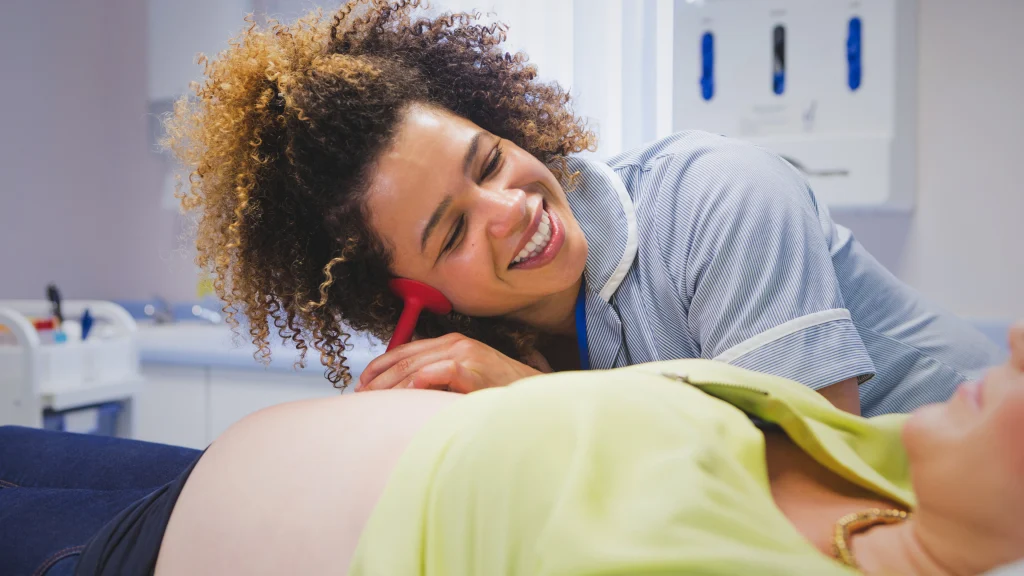
There is a singular, profound moment during the process of childbirth that Kara, a midwife and Continuing Education Manager at Spinning Babies®, says never loses its intensity, no matter how many times she witnesses it. “Just before a newborn’s first cry, everyone in the room seems to hold their breath,” she reflects. After years of navigating the high-stakes environments of nursing and midwifery, she continues to feel the weight and the sanctity of that transition. It is this unique intersection of clinical precision and deeply human connection that leads her to describe the profession of midwifery as “the perfect mix of science and art.”
Midwives have served as the bedrock of family support through pregnancy and birth for generations, offering a blend of clinical expertise and communal care. Yet, in the contemporary healthcare landscape, the practice of midwifery is increasingly diverse, shaped heavily by geography, institutional policies, and cultural history. By examining the experiences of three distinct practitioners—Venus, a hospital-based nurse-midwife in the United States; Kara, whose career spans the United States and the Netherlands; and Claire, a homebirth midwife based in New Zealand with a teaching footprint across Europe—we can better understand how this ancient profession is evolving, the systemic challenges it faces, and the ways midwives are actively shaping the future of maternity care.
Midwifery’s Roots: Skilled Care Across Generations
The history of midwifery predates modern medical infrastructure by thousands of years. Long before the advent of hospitals, formal university-based medical education, or state-sanctioned licensing, birth knowledge was an oral and practical tradition passed down through families, communities, and rigorous hands-on observation. Traditional and Indigenous midwives were the primary architects of maternity care, developing practices that were deeply attuned to the specific needs, cultural beliefs, and environmental realities of their communities.
The International Confederation of Midwives (ICM) emphasizes this vast heritage, recognizing traditions that have persisted for millennia across Africa, Asia, Europe, and Indigenous communities worldwide. However, as the medical model of care expanded during the 19th and 20th centuries, the status of the midwife underwent a radical transformation. In some regions, midwifery was successfully integrated into formal healthcare systems, gaining professional autonomy and standardized education. In others, midwives faced severe professional marginalization, legal restrictions, or outright exclusion from hospital settings, leading to the displacement of community-based birth practices.
In the United States, this history is inextricably linked to the legacy of Black midwives. Venus highlights the critical role played by community matriarchs—often referred to as “granny” midwives—who provided essential care in regions where segregation and systemic discrimination barred families from hospital access. The contributions of these women, particularly in the rural South, are now being formally recognized and documented by institutions like the Smithsonian National Museum of African American History and Culture. They were the frontline providers of their time, ensuring that maternal and infant health was prioritized despite a lack of institutional support.
Today, while modern education and rigorous professional standards define the current landscape, it is a mistake to view the history of the profession as a linear progression from "primitive" to "advanced." The question of whose expertise is deemed valid remains a flashpoint. At the ICM’s June 2026 Congress in Lisbon, tensions surfaced when Indigenous midwives and their advocates protested a decision to suspend a position statement regarding partnerships between Indigenous and non-Indigenous practitioners. The controversy underscored a fundamental conflict: how do global organizations balance formal, state-recognized credentials with the ancestral, lived expertise of traditional practitioners? The ICM has committed to reviewing this position, with a revised statement expected in 2027, acknowledging that for many, the issue is not merely about professional titles, but about the preservation of knowledge and the respect due to communities that have carried birth traditions through centuries of change.
What Does It Mean to Be a Midwife Today?
To ask three different midwives to describe a "typical" workday is to receive three vastly different narratives. Venus, practicing as a nurse-midwife within a hospital in North Carolina, operates in a world of clinical appointments and high-acuity overnight shifts. Her autonomy is negotiated within the complex layers of hospital administration and state regulations. Conversely, Claire’s practice in New Zealand operates on a continuity-of-care model, where she may walk alongside a family from the earliest weeks of pregnancy, through labor and birth, and well into the postpartum period.
Kara, having trained in the U.S. and practiced in the Netherlands, notes the stark contrast in public perception. In the Netherlands, midwifery is the default, primary mode of care for uncomplicated pregnancies, with obstetricians brought in only when medical necessity dictates. In the U.S., however, Kara often finds herself acting as an educator, explaining to patients and colleagues alike that midwives are qualified to attend hospital births, work in collaborative teams with physicians, and manage medical interventions.
Despite these disparate settings, the core definition of the midwife—as provided by the ICM—remains consistent: a responsible, accountable professional who provides comprehensive care throughout pregnancy, labor, birth, and the postpartum period, including newborn care and the identification of complications. For families, this implies that choosing midwifery is not a singular choice to "avoid" hospitals or medicine. Instead, it is a choice to work with a practitioner whose primary focus is the holistic support of the family throughout the entire childbearing journey, regardless of the physical location of the birth.
Beyond Birth: Caring for the Whole Person
For the modern midwife, the responsibilities extend far beyond the physiological safety of the baby. Venus is a vocal proponent of redefining what constitutes a "successful" birth. She argues that the standard metric of a healthy parent and a healthy infant is insufficient if the patient felt disempowered or invisible during the process. Families, she asserts, deserve to be heard and respected.
This philosophy manifests in a simple but profound question Venus poses to her peers: “Who’s holding the mom?” Too often, the medical spotlight shifts immediately to the newborn, leaving the person who just gave birth to navigate the physical and emotional recovery in the shadows. Midwifery care, at its best, holds space for both, acknowledging that birth is a transformative event for the entire family unit.
This focus on the "whole person" is what drew Kara to the field, and it is what Claire observes in her own practice in New Zealand. Claire’s work often involves the entire extended family; she recalls prenatal visits where siblings, partners, and grandparents participate, turning the appointment into an opportunity for collective learning. These moments reinforce the reality that pregnancy and birth do not happen in a vacuum—they are events woven into the fabric of a person’s life, relationships, and circumstances.
The Challenges Behind the Calling
The profession is not without its heavy burdens. Long shifts, emotional exhaustion, and the pressure of navigating rigid healthcare systems can make the work difficult to sustain. Venus points out that professional recognition is a persistent hurdle. Even as her state recently expanded the scope of practice for certified nurse-midwives, she acknowledges that many colleagues still labor under outdated supervision requirements.
Furthermore, systemic bias remains a reality. Venus recalls a defining moment in nursing school when a Black professor, holding a PhD, told her she would need to be “twice as good to be considered half as good” as her white peers. It was a stark lesson on the double burden that Black professionals often carry—the necessity of over-performing just to have their competence recognized. For Venus, this highlights that the future of midwifery is not just a clinical issue; it is a matter of equity and professional respect.
Kara, meanwhile, notes that a lack of public understanding regarding what midwives actually do can create barriers for aspiring professionals. When the path is not clear or the role is misrepresented, the pipeline of new midwives suffers. Claire, observing the global landscape, notes that even the most dedicated birth professionals—doulas, nurses, and doctors alike—often find themselves in environments that prioritize speed and intervention over the attentive, individualized care they strive to provide.
Protecting Physiology Through Knowledge and Collaboration
A recurring theme among these midwives is the importance of physiological birth. Supporting this process requires deep clinical judgment: knowing when to intervene and, just as importantly, knowing when to step back. As Claire asks, “When do I need to step in and when do I need to step away?”
This is where the Spinning Babies® approach finds its utility. By emphasizing anatomy, body balance, and fetal positioning, it provides midwives with a common language. Kara explains that when labor stalls, her first instinct is no longer to reach for a medical intervention, but to ask, “Where is baby?” This shift in focus encourages the use of movement and positioning to facilitate birth. This is not an "all-or-nothing" philosophy; these techniques can be used alongside medical interventions like epidurals or induction when those measures are deemed necessary.
Venus, who teaches these workshops, views this as an exercise in shared learning. By encouraging nurses and doctors to reconsider the mechanics of birth, midwives are fostering a more collaborative, evidence-informed environment. It is about equipping the entire birth team with a deeper understanding of the body, ultimately leading to more thoughtful care.
The Future of Midwifery Is Already Taking Shape
The future of the profession is being actively built by midwives like Venus, Kara, and Claire. The World Health Organization has long advocated for a shift toward midwifery-led models of care, citing better outcomes and increased satisfaction for families. Venus hopes for a future defined by mutual respect and systemic equity; Kara looks toward a future where access to midwifery care is expanded and the barriers to entry are dismantled; and Claire remains committed to the simple, radical act of being fully present for the person in her care.
Whether they are in a bustling hospital, a small birth center, or a family home, the core of the midwife’s mission remains unchanged. Through continuing education, advocacy, and an unwavering commitment to the families they serve, midwives continue to influence the trajectory of global maternity care, ensuring that the art and science of birth remain in expert, compassionate hands.