How a Latina Rabbi Learned to Stop Worrying and Love Netflix’s ‘Nobody Wants This’
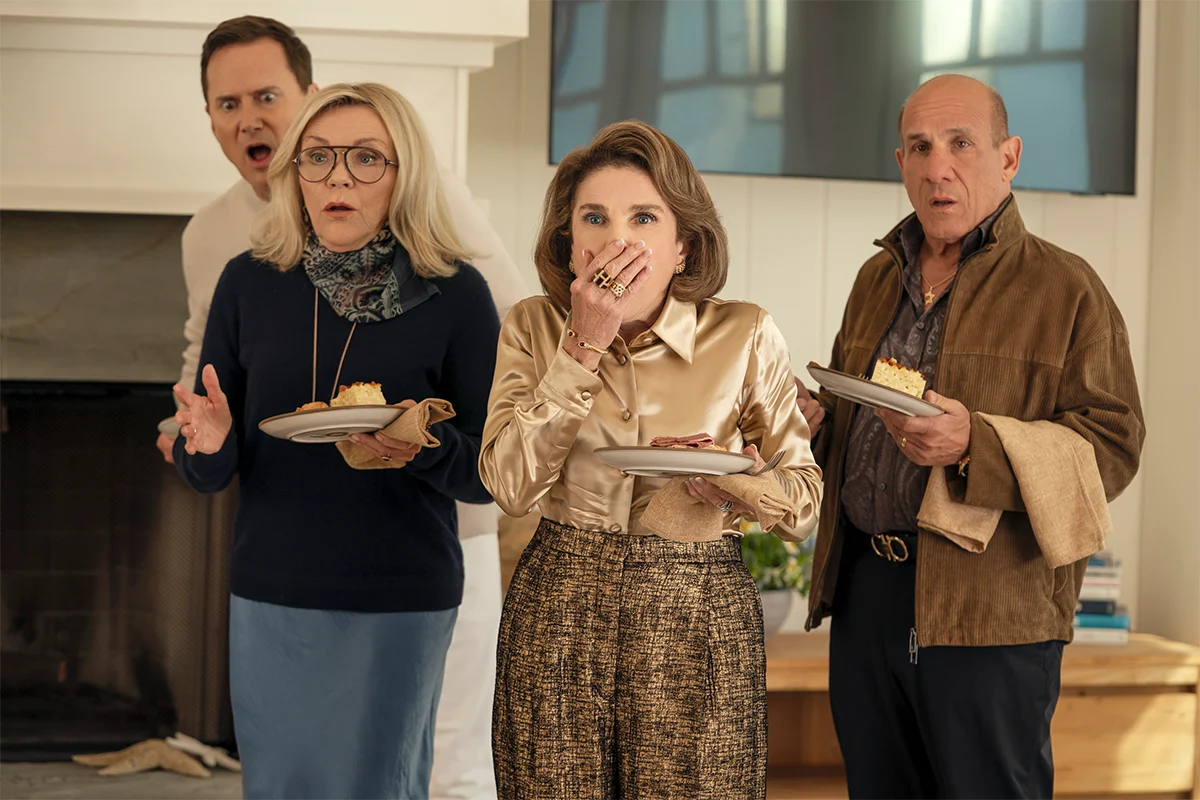
It is a typical Friday afternoon, and I am sitting in a hair salon chair. As the scissors snip around me, my stylist pauses, looks up through the mirror, and asks the familiar weekend question: “Do you have any plans tonight?”
Without hesitation, I reply, “Yeah, I’m Jewish.”
With eager excitement that immediately cuts through the hum of the salon, she beams and says, “So you have Shabbat?!”
I feel an instant wave of delight, grateful that I do not need to launch into a foundational explanation of weekly Jewish rituals. She continues, eager to share her connection: “My best friend growing up was Jewish and I always went to her house for Shabbat.”
A few minutes later, as we chat further, I mention that I am a rabbi. Her eyes light up again. “You know, I have to ask… there’s this show I was watching on Netflix…”
Before she can even finish the premise, I jump in. “‘Nobody Wants This’?”
She bursts out laughing. “I guess a lot of people ask you about it.”
I smile and nod. My response used to be cynical, almost defensive: “Yeah, and just like the title… I don’t want it.” But recently, I have started wondering if what the romantic comedy series actually offers is far more valuable than my initial nitpicky frustrations and professional grievances allowed me to see.
When the first season of the Netflix series premiered, I was still deep in my studies at rabbinical school. I watched it with a heavily critical, protective eye, deeply curious about how mainstream media would portray the sacred role I cared so profoundly about and the traditional world I was dedicating my entire life to. Naturally, I found myself rolling my eyes at all the exact same tropes and technical inaccuracies that cultural critics and commentators have already written about ad nauseam.
Then, during my final year of rabbinical training, I enrolled in a specialized course called Rabbis in the Media. The class forced me to dust off the film analysis skills I had largely abandoned since earning an undergraduate minor in media studies. It challenged me to do something I hadn’t really done when I first watched “Nobody Wants This”: stop viewing the show purely as a working rabbi looking for everything it got wrong, and start thinking about it as a narrative construct and a piece of storytelling.
So many people within our communities had expressed deep contempt for the unflattering portrayal of Jewish women in the show, and honestly, I was right there with them. But beginning to analyze how these characters function structurally to serve the larger plot was my first major shift in understanding the series. Many viewers have argued that the Jewish female characters are depicted as mean, demanding, and judgmental, while the protagonist, Joanne, and her sister, Morgan, serve as their carefree, free-willed foils. And I completely understand where that interpretation comes from. But looking back, I now think we might be viewing those dynamics through far too narrow a lens.
I am no longer convinced that the moral divide is actually as simplistic as the Jewish women being uniformly unlikeable while Joanne and Morgan are universally likable. In fact, if we look closely at prestige television as a whole, most of the compelling characters on successful shows are deeply flawed and unlikeable at times. Take Eleanor Shellstrop in the first season of “The Good Place,” for example. She starts out selfish, morally bankrupt, and unkind. Yet by the series finale, she transforms into an empathetic, fiercely loyal person deeply invested in the success of others. Fictional characters need narrative room—and valid reasons—to grow.
I wonder if, in our completely understandable cultural sensitivity to how Jewish women are represented on screen, we have occasionally fallen into the trap of treating these specific characters as universal representatives of all Jewish women, rather than simply allowing them to be flawed characters in a fictional story. The second season already provides those characters with significantly more dimension and depth, and I find myself genuinely curious about where a third season might allow them to go.
The second major revelation that changed my mind about the show was the realization—and the vital reminder—that it is fundamentally a conversion story, rather than a standard interfaith romance. And look, I am very much the product of an interfaith family myself; my mother is Ashkenazi, while my father is a non-religious Dominican. This perspective is not coming from a place of criticizing interfaith relationships. Instead, recognizing the narrative arc fundamentally shifts how a viewer experiences the emotional journey of the show.
Joanne is loosely based on Erin Foster, a podcaster who fell in love with a Jewish music industry executive and ultimately chose to convert to Judaism before their marriage. Naturally, the writers of a television comedy cannot possibly have the protagonist convert in the very first few seasons. Imagine if she converts in season one—where does the show structurally go from there? We need dramatic tension. We need plot progression. We need character growth.
So, if that is the trajectory of the series, and if a hypothetical third season centers heavily on Joanne’s formal conversion, we are looking at Kristen Bell—one of the coolest, funniest, and most recognizable actresses of our generation—portraying a spiritual journey to become a member of the Jewish people. She is actively entering the homes, the television screens, and the hearts of millions of non-Jewish viewers, showing them firsthand how meaningful and incredible it is to be part of our peoplehood. As she falls deeply in love with Noah, the rabbi character, she simultaneously falls in love with Judaism, and perhaps the audience watching at home does, too.
What a remarkably beautiful way to showcase the unique beauty, warmth, and depth of Judaism during a historical moment when global antisemitism feels completely out of control and overwhelming.
That does not mean the show suddenly gets every cultural nuance right. I firmly believe it could and should do a much better job reflecting the diverse, multicultural faces of contemporary Los Angeles Jewry, for instance. The Jewish spaces of Los Angeles are vibrant, beautiful mosaics full of Jewish Latinos, Persian Jews, Asian Jews, white Jews, Black Jews, and so much more. The show, at least thus far, has largely omitted that rich diversity.
And yet, I do not believe that the fact the show sometimes falls short means we need to completely abandon or discount the genuinely positive cultural impact it is having. I certainly have my ongoing criticisms, but I am deliberately allowing myself a wider, more generous lens. This show makes Jewish life, community, and tradition look desirable and compelling, and I am genuinely glad that wider audiences are being exposed to something I already know to be profoundly true: being Jewish is amazing.
My hair stylist was genuinely excited to meet an actual rabbi and have an open, enthusiastic conversation about Judaism and tradition. She is far from the first non-Jewish person who has eagerly wanted to talk to me about the show and what it represents.
We eventually parted ways that Friday afternoon—me with my freshly styled hair, and her eager for our next encounter in the salon chair, when we can finally catch up and talk about season three. And for the first time, I am genuinely looking forward to that conversation, too.
