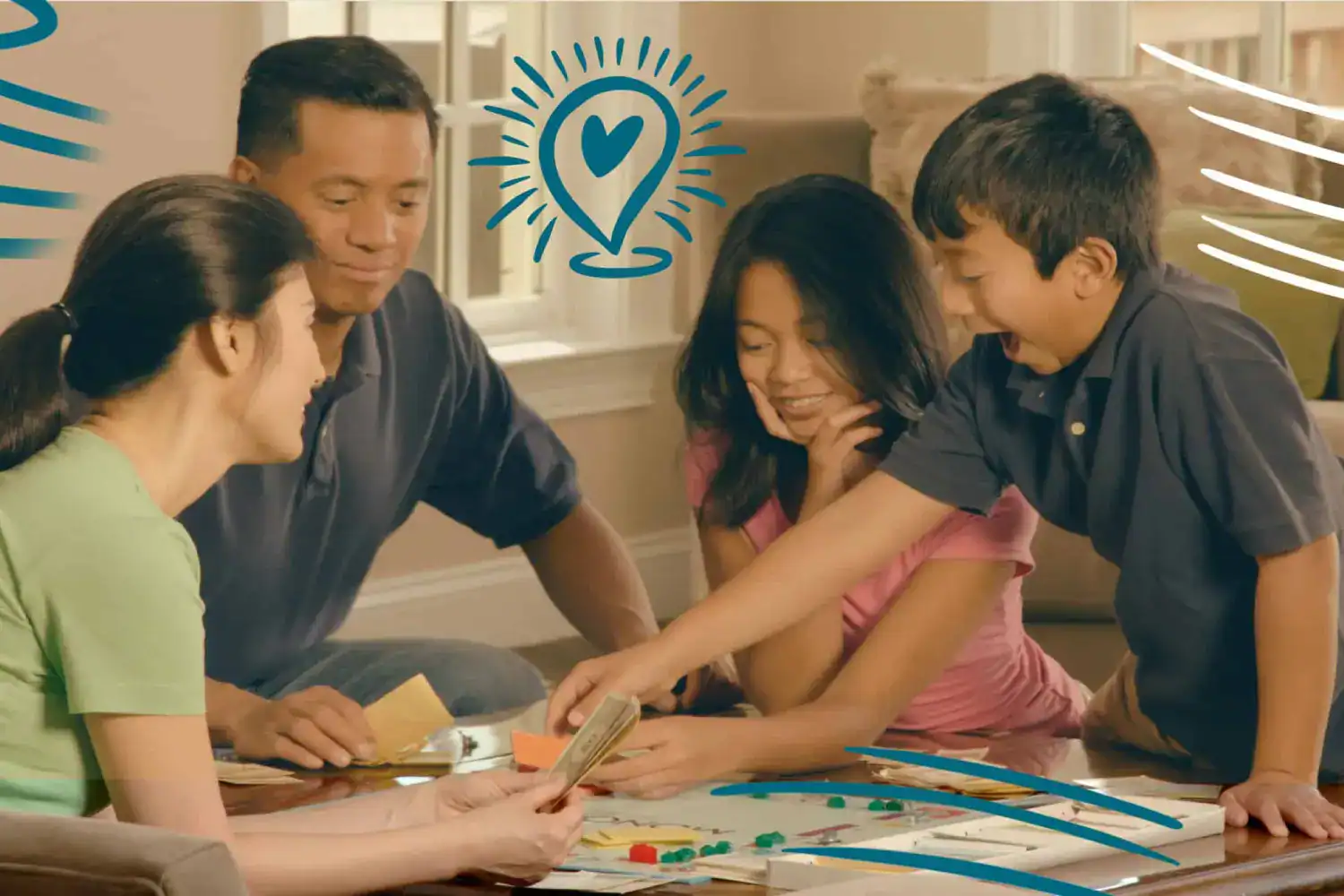
Whether it is a rainy afternoon that stretches endlessly or an extended break from the school routine, children invariably look for ways to occupy their time. For many parents, hearing the phrase "I’m bored" can trigger a familiar scramble to find structured entertainment or manage mounting household chores. Yet, child development specialists and parenting advocates continually emphasize that unstructured play and shared activities offer a powerful, often overlooked opportunity for deep connection. Beyond simply keeping boredom at bay, playing games together provides children with a vital outlet to learn new skills, explore imaginative concepts, and burn off physical energy while experiencing steadfast parental attention and love.
The dynamic of everyday family life often revolves around schedules, maintenance, and responsibilities. However, stepping away from the daily checklist to engage in a spontaneous activity can fundamentally shift the atmosphere of a household. Consider a typical afternoon during a prolonged stretch of poor weather. Rain might streak down the windows while a child announces boredom repeatedly, and a parent weighs a growing pile of unfinished laundry and kitchen tasks against the desire for rest. Deciding to set those obligations aside—perhaps pulling a basic deck of cards from a drawer and clearing off the kitchen table for a quick game—can instantly transform the mood of the home.
Moments that begin with simple gestures often evolve into memorable experiences. A casual card game can quickly turn into an impromptu tournament complete with laughter and lighthearted competition. While such activities require no elaborate planning, expensive outings, or advanced preparation, they carry lasting significance. These ordinary afternoons become the core memories that children carry into adulthood. Engaging in play requires little more than time, imagination, and a willingness for adults to meet children on their own level, demonstrating a genuine interest in who they are.
Why Finding Games and Activities Matters for Family Connection
The psychological and emotional benefits of shared play extend far beyond immediate entertainment. When parents actively participate in games, puzzles, or creative exercises, they communicate a powerful message of validation and affection. Children perceive participation not merely as a cure for a sluggish afternoon, but as proof that their interests and company are valued. This bonding process helps build emotional resilience, fosters trust, and opens communication channels between parents and children.
Furthermore, the scope of available activities is virtually limitless. While modern entertainment often leans heavily toward digital screens and pre-packaged toys, even the most basic household items can spark creativity. A simple cardboard box, for instance, can easily serve as a vehicle for a wild, imaginative adventure. Recognizing this potential is the first step toward integrating more interactive play into family routines, moving away from passive consumption and toward active engagement.
Exploring Diverse Avenues of Play and Creativity
To foster a balanced and stimulating environment, families often draw from a wide variety of play categories, ranging from theatrical performances to quiet strategic thinking. Each category offers distinct developmental benefits, helping children grow in confidence, physical coordination, and cognitive capability.
Bringing Out the Spotlight with Performance and Drama
Providing opportunities for children to express themselves through performance can significantly boost their self-confidence. When kids step into the spotlight, they learn to articulate ideas clearly and project their voices. Making up original stories, taking on the roles of different characters, and staging impromptu theatrical productions allow children to experiment with self-expression in a safe, supportive environment. This form of creative play encourages empathy as youngsters imagine the perspectives and emotions of the characters they portray.
Channeling Energy Through Physical Movement
Children naturally possess an abundance of physical energy that requires healthy outlets. Games and activities that encourage physical movement benefit both the developing bodies of children and the health of adults. Active play helps improve motor skills, coordination, and stamina. When families engage in movement-based games together, the shared physical exertion creates a joyful atmosphere where exercise feels like pure recreation rather than a chore.
Bringing the Excitement of a Game Show Home
Breaking up routine afternoons can be successfully achieved by introducing playful competitions modeled after television game shows. Adapting familiar formats into living room versions encourages quick thinking, teamwork, and healthy sportsmanship. These games often involve trivia, physical challenges, or creative guessing rounds that engage the entire family and generate considerable laughter.
Traditional Board and Card Games
Classic board games and card games remain staples of family interaction across generations. With thousands of options available for various ages and developmental stages, board games teach valuable lessons about patience, strategic planning, rule-following, and gracious winning and losing. Similarly, traditional card games offer accessible, portable entertainment that can be enjoyed almost anywhere, requiring minimal setup while providing hours of strategic engagement.
Engaging the Mind with Pen, Paper, and Puzzles
Not all engaging activities require extensive equipment or physical exertion. Simple pen and paper games rely entirely on imagination, spelling, drawing, and logic. These classic pastimes stimulate mental agility and creativity without relying on external stimuli. In a similar manner, puzzles of various shapes, sizes, and dimensions challenge spatial reasoning and problem-solving skills. Whether completed individually or collaboratively as a family, puzzles require sustained concentration and offer a profound sense of accomplishment upon completion.
Building, Creating, and Hands-On Crafting
Constructing objects using blocks, building materials, or everyday household items introduces children to three-dimensional concepts and basic engineering principles. Beyond the creative process of building, the eventual cleanup phase teaches essential lessons in responsibility and teamwork. Similarly, engaging in arts and crafts projects allows children to explore tactile creativity. Establishing regular crafting sessions or adopting a shared family hobby encourages long-term creative expression and provides tangible reminders of family collaboration when completed projects are displayed around the home.
Ultimately, integrating games and activities into family life serves as a foundational tool for connection and development. While the available options are diverse and adaptable to any schedule or setting, the core objective remains consistent: fostering meaningful relationships through shared experiences, imagination, and play.
As families and educators prepare to transition into a new academic and seasonal year, the popular Catholic resource platform Catholic Icing has announced the release of a complimentary August Saint of the Day calendar. Designed to help bring the liturgical year to life both inside the home and across classrooms, the resource offers a daily guide to honoring the saints during the final weeks of summer.
Created in collaboration with Angie from Real Life at Home, the newly featured calendar is part of a broader ongoing initiative by Catholic Icing founders who specialize in designing both beautiful and functional printables. Each month, the platform develops themed sets tailored for home altars, prayer tables, or general display spaces. Recognizing that families often seek accessible ways to incorporate faith into their daily routines, the creators decided to single out one decorative printable Saint of the Day calendar each month to distribute to the public free of charge.
The August printable calendar was originally featured as part of the August 2024 Catholic Icing Monthly Membership package. Subscribers who participated during that period may already have the files in their archives, but the current initiative brings the popular design back into the spotlight for a wider audience. August is noted within the Catholic tradition as a month rich with vibrant feast days, offering numerous opportunities for parents and teachers to engage children through creative crafts, specialized foods, and interactive activities.
Beyond standard feast day celebrations, the month of August holds a special place in the liturgical calendar as a period dedicated to the Immaculate Heart of Mary. To support this devotion, the platform has compiled a comprehensive suite of related activities, ranging from themed end-of-summer craft projects like tie-dyed shirts to simplified rosary and chaplet creation workshops designed specifically for younger children. These resources aim to bridge the gap between traditional devotions and hands-on learning experiences that resonate with kids.
The free August calendar download includes a two-page set formatted for standard U.S. Letter-sized paper (8.5 x 11 inches). Designed to mirror the visual aesthetic of the August 2024 membership theme, the document features a comprehensive Litany of Saints for August, listing a specific saint or blessed for every single day of the month. To accommodate different preferences, the download provides two distinct font choices, allowing users to select the style that best fits their home environment or classroom setting.
Educators and parents looking to utilize the calendar can display the pages in standard frames, pin them to refrigerator doors, or attach them to clipboards to keep the lives of the saints visible throughout the day. Extended activity suggestions encourage families to look up additional biographical details for each daily saint, thereby deepening their engagement with liturgical traditions as the summer concludes.
While the Saint of the Day calendar is currently available as a complimentary download for newsletter subscribers, the release also highlights the broader scope of the Catholic Icing Monthly Membership. The membership model was established to alleviate the common hurdles faced by families who want to honor liturgical seasons but often feel overwhelmed by preparation time, shifting schedules, or a lack of centralized resources.
Members receive a curated packet of digital materials prior to the start of each month. These bundles typically encompass home altar decorations, liturgical recipe cards with matching printables, children’s activity sheets, coloring pages, and specialized saint crafts. The initiative is structured to make liturgical living both accessible and financially sustainable for households seeking consistency in their faith formation practices.
In addition to monthly digital subscriptions, the platform maintains broader structural supports for Catholic home educators and parents, including the Weaving the Faith ebook and binder system. This comprehensive resource is designed to help families organize liturgical planning across the entire year, archiving resources, sacrament anniversaries, and prayer table materials in a durable format that can be referenced annually.
The free August Saint of the Day calendar is available directly through the Catholic Icing website for individuals who sign up for the platform’s weekly newsletter. The distribution system requires a specific download request to ensure proper delivery, and subscribers retain the option to manage their newsletter preferences at any time. Through these ongoing digital offerings, the platform continues to provide practical pathways for integrating Catholic traditions into modern family life.
Just in time for a cozy fall binge-watch, the third season of Netflix’s hit romantic comedy series “Nobody Wants This” has officially dropped, bringing viewers right back into the wonderfully messy world of agnostic dating podcaster Joanne, played by Kristen Bell, and the exceedingly charming Rabbi Noah, played by Adam Brody. Over the course of the first two seasons, audiences watched this unlikely pair fall deeply in love while navigating their contrasting lifestyles, early relationship hurdles, Noah’s skeptical and chilly family and community, and Joanne’s initial lack of clarity regarding whether she wanted to convert to Judaism.
The end of season two left fans with plenty of narrative hooks: Joanne had finally decided she was ready to make the plunge and convert, while Noah’s brother Sasha, played by Timothy Simons, and Esther, played by Jackie Tohn, saw their relationship tragically fall apart. Simultaneously, Noah embarked on a new professional chapter at the less-than-stellar Temple Ahava. Season three wastes no time jumping into these lingering questions, exploring whether Joanne will actually complete her conversion, if that means Noah and Joanne are officially endgame, how Noah plans to survive his tenure at Ahava, whether Sasha and Esther can patch things up, and if Sasha and Joanne’s sister Morgan, played by Justine Lupe, will finally act on their undeniable chemistry.
Episode 1: It’s Perfect
Season three begins with Joanne and Morgan moving in together, and the domestic arrangement is blissfully perfect until the couple’s minor quirks start driving each other crazy. Joanne leaves every cabinet open—prompting Noah to later confide in Esther, “I love closing every cabinet. It’s my passion”—while Noah looks over Joanne’s shoulder at her screen while she reads celebrity gossip, asking, “Do we know her?”
This invasion of privacy frustrates Joanne to the point where she starts having her morning coffee at Morgan’s house under the flimsy guise of recording podcast ads. Once Noah catches on, he confronts Joanne, asks why she didn’t just tell him to get lost, critiques her dishwasher-loading technique, and playfully carries her back home so she can try her morning routine in subpar conditions in the backyard under an orange tree.
When the couple lists their mutual bad habits, Joanne demands that Noah deal with his stray mail, specifically telling him to make a decision about Brian’s upcoming wedding in Napa. Noah reveals that Brian’s wedding isn’t just a social event; he is officiating it, and he urgently wants Joanne to accompany him. Meanwhile, Sasha and Esther officially separate, briefly introducing their elusive daughter Miriam when breaking the news, and Sasha moves in platonically with Morgan and Lynn because his height is useful for reaching high shelves.
Episode 2: Daddy’s Home
Episode two opens at Joanne’s conversion class at Temple Chai, where she encounters her catty nemesis, Sebastien, for no apparent reason. The class is taught by Rabbi Eden, played by Sarah Silverman, who greets the prospective converts with classic dark humor: “Don’t worry — the guilt doesn’t happen all at once, it just happens gradually. You barely feel it until one day you’re strangled and dead.”
While Joanne is busy in class, Noah explores the halls of Temple Chai and discovers widespread resentment toward Big Noah, the rabbi who secured the senior rabbi position Noah had wanted. Vowing to win his career trajectory back, Noah schedules a meeting with the board, who offer him an audition sermon during the upcoming Rosh Hashanah services.
Feeling insecure about whether she has what it takes to be a rabbi’s wife, Joanne seeks advice from Bina, who eagerly seizes the opportunity to mold Joanne into her ideal image of a rebbetzin. This results in Joanne walking into Rosh Hashanah services dressed entirely like Bina. Noah takes one look at her and delivers a genuinely appreciative critique: “Oh, babe, you look awful,” setting a humorous and honest tone for the holiday.
Morgan also flirts with disaster by wearing a slinky, sparkly dress to the Jewish New Year service, while Sasha and Esther whisper-argue about dating apps during the prayers. Noah ultimately delivers a stellar sermon, incorporating a clever line written by Joanne: “I know what you’re thinking: How did I get even cuter?” Returning home, the couple finds their trash cans blocking the driveway, courtesy of their new neighbor Travis—who happens to be Joanne’s ex-boyfriend.
Episode 3: Housewarming
Joanne and Noah throw a housewarming party that doubles as a traditional hanukkat habayit, a house blessing that Noah wryly notes is too traditional even for his tastes. Conversion classmates initially show reluctance to attend, and Rabbi Eden remains pointedly distant.
On the night of the event, chaos reigns. Joanne has subtly tipped off her ex, Travis, hoping he will show up and make him jealous, while Noah anxiously awaits Rabbi Eden’s arrival. Sasha struggles to hide his separation from Esther from his overprotective parents, and Morgan aggressively promotes her newly viral self-help philosophy, "Make Them," which she formulated as a counterpoint to Sasha’s mentions of the "Let Them" theory.
Miraculously, some conversion classmates arrive, including Sebastien—who surveys the house and quips, "Uh, on a rabbi’s salary?"—and ends up connecting Morgan with his literary agent aunt. Rabbi Eden eventually arrives to clear the air, revealing that her coldness stems from jealousy over being passed over for the head rabbi position, not from Noah drinking coffee on Yom Kippur as he had suspected.
During the central ritual of hanging the mezuzah, Joanne spots Travis and goes completely overboard trying to make him jealous. Bina is so devastated by the revelation of Sasha and Esther’s separation that she takes to her bed, wailing, "You have ruined my last years on Earth. Oy." As Travis leaves, he warns Noah that Joanne is volatile, prompting Noah to proudly defend her honor by telling him never to speak of her that way again.
Episode 4: Brian’s Wedding
Tensions flare at the nail salon when Morgan refuses to stop talking about her impending book proposal meeting, causing Joanne to storm out with only three fingers polished. Morgan’s pitch meeting with Sebastien’s aunt ultimately proves disastrous as Morgan is completely unprepared despite wearing her most literary-looking glasses.
Preparation for Brian’s wedding in Napa leads to a classic, relatable travel dispute between Joanne and Noah over airport timing. Noah wants to arrive four hours early, while Joanne protests the excessive wait time. The airport journey features a whirlwind of minor crises, including Joanne temporarily giving away her ticket to an overzealous fan and Noah taking a Bloody Mary spill directly to the chest.
Despite the turbulence, they make it to the Napa rehearsal dinner just in time. The venue is meticulously decorated with Joanne’s favorite flowers, playing her favorite Taylor Swift music and serving her favorite wine. To her complete shock, Noah drops to one knee and reveals the truth: there is no wedding, and there is no Brian; it is an elaborate proposal.
Episode 5: The Love Card
Following the engagement, Bina immediately attempts to take over planning a massive backyard wedding, while Joanne dreams of a low-key ceremony and Noah tries to keep everyone happy. Meanwhile, Esther secures her real estate license and lands her first major showing with Julian, a wealthy older man with a private chef, igniting instant chemistry between them.
Morgan and Sasha continue their close platonic hangouts across Los Angeles. Sasha encourages Morgan to attend a local writer’s group, but she gets cold feet and visits a psychic tarot reader instead. She manipulates the reader into validating her ambitions as a writer. As a souvenir for Sasha, she pulls a random tarot card that Lynn later identifies as the most powerful love card in the deck.
Episode 6: Heatwave
During a punishing heatwave, Joanne and Noah visit a wedding venue while Bina tags along in a long-sleeved button-down, complaining that the space is too small to accommodate distant relatives like Cousin Irv. They are given 24 hours to drastically cut their guest list if they want to secure the venue.
Morgan submits her revised book proposal to Sebastien’s aunt Eleanor with Sasha’s encouragement, only for Sebastien to later break the news that his aunt has passed on the project. However, her despair is short-lived when she receives a direct message from Andy Cohen inviting her to appear as a guest on Watch What Happens Live.
Later, Joanne and Noah struggle to get a table at a perpetually packed restaurant until Esther arrives with the well-connected Julian, who easily gets them inside. Out of loyalty to his brother, Noah refuses to dine with his brother’s ex-wife’s new boyfriend. The next morning, the couple tries to tackle their guest list while lounging in their pool, but the gathering quickly devolves into an impromptu pool party as Morgan, Sasha, Travis, and Cousin Irv wander in. Ultimately, Joanne concedes that it is impossible to trim their guest list down to size.
Episode 7: Watch What Happens
Morgan travels to New York for her Watch What Happens Live appearance, dragging a supportive Sasha along. Stating the classic television trope, they arrive at their hotel to discover there is only one bed, though the lanky Sasha immediately claims the couch.
When Morgan discovers that Lisa Rinna has already worn her planned television outfit, Sasha treats her to a high-end shopping trip, purchasing a $15,000 Valentino dress. Morgan shines during her appearance alongside Andy Cohen and Ciara Miller, and she and Sasha celebrate afterward with dinner, drinks, and rare emotional vulnerability. Back at the hotel, the tension peaks; after an exchange of text advice with their unreachable siblings, they nearly kiss, pull back to protect their friendship, and head to their respective sleeping areas. However, moments later, Morgan opens her door to find Sasha about to knock, and they share a passionate kiss as the scene fades to black.
Episode 8: One in a Million
Sasha wakes up alone in the New York hotel room to find Morgan gone and ignoring his texts. Back in Los Angeles, Noah and Joanne check their phones after a technology-free Shabbat, finding the late-night messages from Morgan and Sasha, alongside a firm text from Bina declaring that the wedding will take place in her backyard.
Esther struggles with her emotions upon learning Julian has a date elsewhere, but after staking out his home, she discovers he canceled the date to pursue her exclusively. In conversion class, Sebastien warns Joanne that Bina’s house resembles a Cheesecake Factory and urges her to stand her ground.
When Joanne tries to confront Bina, she loses her nerve and gives in, horrified to learn that the mother-son dance will be set to LeAnn Rimes’s "How Do I Live." The wedding watch party for Morgan’s television appearance becomes a disaster when Joanne realizes Morgan has deep feelings for Sasha. When Morgan rushes to find Sasha at his workplace, he rejects her sudden grand gesture, saying he cannot move forward because she abandoned him.
Back at home, Joanne and Noah’s argument over boundaries escalates until Joanne makes a severely ill-advised joke about Noah’s relationship with his mother. They clear the air before sleep, but Joanne drops a final bombshell: Sasha and Morgan slept together in New York.
Episode 9: Last Christmas
Opting for a holiday pivot from previous seasons, the narrative tackles a Christmas episode to celebrate Joanne’s final holiday before completing her conversion. Noah is determined to give her an epic send-off, though the rest of her family is distracted by personal turmoil, including Morgan’s heartbreak and Lynn’s sudden preoccupation with a mattress store.
Flashbacks reveal past Christmases, detailing Joanne’s history with Travis, her first accidental crossing of paths with Noah, and the origins of the sisters’ podcast. Joanne explains her deep attachment to Christmas: despite family dysfunction, the holiday always provided a fleeting sense of a normal, cozy family life. By the end of the episode, Noah helps pull the family together, but Joanne realizes she no longer needs the holiday because Noah makes her feel that same warmth every single day. The episode concludes with quirky developments, including Noah agreeing to let Lynn be their flower girl and Morgan declaring she will not attend the wedding if Sasha is present.
Episode 10: The Plunge
As the season reaches its climax, Bina ramps up her aggressive wedding planning, pushing unwanted floral arrangements and dove releases. Morgan officially bows out of attending Joanne’s mikveh ceremony to avoid running into Sasha. Meanwhile, Sasha continues his romance with Esther after showing off a newly decorated room for Miriam.
Sebastien encourages Joanne to use the "Make Them" philosophy to force Morgan to attend her immersion ceremony. Joanne and Noah attempt to trick Sasha and Morgan into driving to the beach together, but Morgan bolts, forcing Joanne into a frantic footrace along the shoreline.
When the group finally arrives at the rented beach house, they find a full family confrontation underway, compounded by Lynn casually dropping the news that Sasha and Morgan slept together. Amidst the shouting match between both families, Rabbi Eden discreetly whisks Noah and Joanne away to complete the conversion ritual in the ocean. The ceremony goes off without a hitch, and standing by the water with Rabbi Eden and a randomly encountered Jewish passerby, Joanne and Noah decide not to return to the chaos, choosing instead to marry right there on the spot.
As political rhetoric increasingly spills over into everyday public life, Muslim families across the United States are facing a sobering reality. For many parents, the warning sign does not arrive as a formal notice or a broad societal debate, but rather in quiet moments at the dinner table. A child comes home from school unusually quiet, pushes their food around the plate, and finally reveals a painful truth about what happened on the playground.
This scenario, experts warn, is becoming an increasingly common experience for families navigating a climate of heightened, politically motivated Islamophobia. When public figures make dismissive or derogatory remarks about Middle Eastern names or cultural identities, those jokes rarely stay on a debate stage or a campaign rally platform. They travel swiftly, finding new life on school playgrounds and in hallways, where children bear the brunt of the fallout.
According to child advocates, school counselors, and anti-bullying organizations, the challenge requires proactive preparation. Children handle hurtful words, discrimination, and microaggressions much better when a calm, loving adult has prepared them ahead of time, providing both emotional grounding and a clear understanding of their own identity.
The scale of the issue underscores the urgent need for parental awareness. Bullying based on religion and background is far more prevalent than many adults realize. Data from the 2022 American Muslim Poll, conducted by the Institute for Social Policy and Understanding, revealed that 48 percent of Muslim families with school-age children reported experiencing a religion-based bullying incident within the preceding year. Even more alarming, about one in five families reported that such incidents occurred nearly every school day. Notably, the data shows that this hostility does not always originate exclusively from peers; in some instances, children have reported facing inappropriate remarks or differential treatment from adults within the school environment itself.
Given these statistics, child welfare advocates stress that parents should not wait for their children to bring up the subject on their own. Many children, particularly younger ones or those who internalize their stress, never mention the mistreatment they face at school.
For young children, typically between the ages of four and seven, the approach centers on building basic emotional resilience and helping them understand the value of their identity before external pressures take root. At this developmental stage, children absorb social cues rapidly, making it vital to establish a foundation of pride in their heritage and faith within the safety of the home.
As children grow into the eight-to-twelve age bracket, the nature of peer interactions shifts. This is precisely the developmental window when targeted teasing regarding names, religious practices, and cultural markers frequently begins. Educators note that children in this age group are navigating complex social hierarchies, making them particularly vulnerable to peer pressure and conformity. Equipping children in this age group involves open dialogues about peer dynamics, practicing calm and assertive responses, and reinforcing the idea that unkind words reflect the character of the speaker, not the worth of the target.
For teenagers, the dynamics shift once again. Teens possess the cognitive capacity to view these incidents within a broader societal and political picture, and they require spaces to discuss these complex realities openly. Adolescents face not only direct peer interactions but also digital environments where discrimination and hateful rhetoric circulate widely. Providing a supportive environment for teenagers to process these realities without fear of judgment is essential for maintaining their mental health and sense of self-worth.
A central component of building this resilience, according to community educators, involves cultivating a deep and positive connection to Islamic heritage at home. A child who knows, understands, and loves the Prophet Muhammad will not be easily shaken by a passing derogatory joke or a playground taunt. Educational resources, such as programs developed by organizations like Sound Vision, emphasize simple, engaging ways to bring the character, compassion, and historical significance of the Prophet alive for children.
Furthermore, child development experts emphasize that children learn far more from daily family examples than from formal instruction alone. When parents model gentleness, patience, and kindness in their daily interactions at home, children internalize those values, seeing the character of the Prophet reflected in their immediate environment.
For children who bear the name Muhammad—one of the most common and revered names in the Muslim world—namesake discussions carry profound emotional weight. Authors and commentators who have explored this topic emphasize the importance of sharing the personal story behind a child’s name. When parents explain why they chose the name and recount the joy of the day the child was born, it transforms the name from a potential target for teasing into a source of personal pride. Experts advise that children should know their name is a gift, and families are generally encouraged to support the child in keeping their name proudly rather than shortening or altering it to appease bullies, unless the child expresses a genuine personal desire to do so.
When bullying crosses the line from casual teasing into persistent harassment, targeted discrimination, or physical intimidation, parents must know when and how to intervene with school administrators. Establishing a clear paper trail, documenting specific incidents with dates and details, and communicating constructively with teachers, counselors, or principals are vital steps in holding educational institutions accountable for providing a safe learning environment.
At the same time, educators stress that the instruction in empathy must go both ways. Muslim children should be guided never to engage in mocking others. Drawing from foundational teachings, such as the Quranic injunction instructing believers not to defame one another or call each other by offensive nicknames, parents have an opportunity to teach children to stand up for any classmate who faces mistreatment. Whether a peer is targeted for their name, skin color, disability, or religious background, a child who defends others is actively practicing the principles of compassion and justice.
Ultimately, the rapid transmission of rhetoric from public stages to schoolyards highlights the vital role of the home front. When a child returns home carrying the heavy burden of a hurtful encounter, the most powerful antidote is not necessarily a complex strategy, but rather a calm, safe space where they can share their experiences, ask difficult questions, and find unconditional support.
Parenting and early childhood educator Janet Lansbury recently addressed a common yet widely misunderstood challenge in child development: the often difficult and emotional transition young children experience when entering a new childcare setting. In a recent episode of her popular parenting podcast, Unruffled, Lansbury responded to a detailed inquiry from a stay-at-home mother who recently launched a small in-home learning group. While the mother’s venture has generally been a success, she found herself drained, overwhelmed, and baffled by the behavior of a two-and-a-half-year-old girl attending the group twice a week.
According to the letter, the young girl cries for much of her time in the program, flits rapidly from one activity to another without settling, and repeatedly seeks reassurance by asking the caregiver, "Do you like me?" The caregiver, who has no formal early childhood education background outside of applying Lansbury’s philosophies to raise her own two toddlers, reported that the constant emotional distress was taking a heavy toll on her own nervous system. Feeling like she needed to fix the situation, the caregiver even considered suggesting to the child’s parents that the girl might be happier elsewhere or in a larger preschool environment.
However, Lansbury offered a different perspective on the situation. Rather than viewing the girl’s tears and questions as a sign of failure or an immediate cue to remove her from the program, Lansbury explained that the child is simply doing her job—working through a natural, healthy, and necessary adjustment period.
Understanding the Real Meaning Behind the Tears
Lansbury noted that while the caregiver’s instinct to fix the child’s feelings is entirely natural and driven by empathy, attempting to eradicate the discomfort can inadvertently signal to the child that her normal emotional processing is unacceptable or unsafe. Separation from parents and home, coupled with the introduction of a novel environment, represents a massive adjustment for any toddler. Because young children lack the developmental capacity to fully understand or articulate their complex needs, this stress frequently manifests as crying, restlessness, and behavioral volatility.
Addressing the girl’s frequent shifting between activities, Lansbury compared the behavior to a natural settling process. Just as an animal might pace or circle before finding a comfortable place to rest, toddlers often need to flit around a room, release tension through crying, and experience physical and emotional discomfort on their own timeline before they can truly settle into a new environment.
Furthermore, Lansbury offered a counterintuitive recommendation regarding the frequency of attendance. While many adults naturally assume that reducing a child’s time in a stressful environment will ease their burden, attending a program only two days a week can actually prolong the transition. With several days off in between, the environment can feel entirely brand-new to a two-and-a-half-year-old every time she arrives, making it exceedingly difficult to build genuine comfort, predict routines, and establish a secondary attachment figure. Increasing consistency, provided everyone is comfortable with the arrangement, often helps children feel more securely rooted in the setting much faster.
Decoding Requests for Validation
A particularly puzzling element of the letter was the toddler’s persistent questioning: "Do you like me?" The caregiver expressed surprise that a child of only two-and-a-half would even possess the conceptual framework to worry about whether someone likes her, especially since she has consistently treated the girl with warmth and affection.
Lansbury suggested that this behavior is likely not indicative of a deep-seated, adult-like insecurity or a genuine lack of validation. Instead, young children are remarkably perceptive when it comes to sensing adult vulnerabilities and areas of emotional sensitivity. If a statement or a particular type of interaction causes an adult to pause, feel taken aback, or experience a ripple of discomfort, children frequently latch onto that specific interaction. They may repeatedly probe at that button—not out of a conscious desire to test or manipulate, but as a way to explore and make sense of the emotional dynamic they have detected.
To handle this, Lansbury advised the caregiver to respond not with worry or annoyance, but with calm, open-ended reassurance. A simple, consistent acknowledgment—such as confirming that she is indeed loved and valued, no matter how many times the question is repeated—helps defuse the tension. By meeting the question with emotional steadiness rather than intimidation or frustration, the caregiver transforms the interaction into a safe space for the child to explore.
Assessing the Options for Childcare and Caregiver Well-Being
While Lansbury strongly encouraged the caregiver to consider adopting a mindset of non-intervention and trust toward the child’s adjustment process, she also emphasized that the adult’s comfort and emotional well-being matter significantly. Operating an in-home learning group with up to five toddlers is a demanding endeavor, and if the situation ultimately proves too draining, the caregiver has every right to step back and reevaluate.
However, Lansbury cautioned against the assumption that the child would automatically thrive in a larger preschool environment. For a two-and-a-half-year-old struggling with transitions, a large preschool setting can often feel far more overwhelming, leaving the child with fewer opportunities to safely express vulnerability and vent her frustrations. A small, intimate environment where a child feels secure enough to fall apart is often the healthiest place for emotional processing to occur.
Ultimately, Lansbury praised the dedication, kindness, and thoughtful approach of the in-home caregiver, noting that navigating the initial rockiness of childhood transitions is a fundamental part of the caregiving journey. By shifting the perspective to view a child’s emotional turbulence as a healthy part of adaptation—and by maintaining personal emotional boundaries—adults can successfully guide young children through their earliest developmental milestones.
For many home cooks, the journey toward whole-food eating often begins with a moment of culinary nostalgia. Long before the era of wellness blogs and organic meal prepping, processed, Americanized Asian cuisine—frequently associated with fast-casual chains like Panda Express—serves as a comforting staple for countless households. However, as dietary awareness shifts toward nutrient-dense, real-food ingredients, home cooks are increasingly finding innovative ways to recreate those familiar, beloved flavor profiles without the heavy use of ultraprocessed sauces, excessive sodium, or MSG.
Among the latest culinary trends gaining traction in home kitchens is a creative alternative to traditional dumplings and potstickers: sesame ginger cabbage rolls. Designed to capture the vibrant, aromatic essence of classic Asian-inspired appetizers and main courses, this dish bridges the gap between deep-seated comfort food cravings and modern nutritional standards. Packed with lean protein, fresh vegetables, and bold aromatics like toasted sesame oil, ginger, and coconut aminos, these rolls offer a satisfying dining experience that requires minimal hands-on kitchen labor.
The appeal of the recipe lies largely in its ability to replicate the complex flavors of popular takeout dishes while swapping out refined ingredients for cleaner alternatives. Traditional potstickers, while undeniably delicious, often involve the time-consuming process of rolling and sealing individual wonton wrappers. Furthermore, commercially available wrappers do not always align with clean-eating philosophies. By utilizing Napa cabbage as a substitute, home cooks can bypass the labor-intensive wrapping process while introducing an additional serving of nutrient-rich vegetables to the meal.
When subjected to a quick blanching process, Napa cabbage undergoes a remarkable transformation, shedding its raw rigidity to become surprisingly tender, light, and remarkably easy to manipulate. This pliable leaf serves as a sturdy yet delicate envelope for a savory chicken and mushroom filling. Unlike beef or pork, which can sometimes dominate a dish, ground chicken provides a clean, neutral protein base that allows delicate flavor profiles like fresh ginger and garlic to shine through. To ensure the lean poultry remains succulent throughout the cooking process, finely diced shiitake mushrooms are blended directly into the filling, imparting an earthy depth and natural moisture.
Beyond the filling and the wrap, the defining characteristic of this culinary creation is its accompanying dipping sauce. Designed to pull the entire dish together, the sauce relies on coconut aminos to mimic the salty, savory notes of traditional soy sauce while offering a slightly sweeter profile completely free of soy. Enhanced by earthy ginger, toasted sesame, and chili crisp for a touch of heat, the sauce delivers a complex flavor profile that rivals any restaurant-style condiment without relying on chemical flavor enhancers.
Achieving success with these cabbage rolls requires careful attention to preparation techniques, beginning with the selection of the produce. Napa cabbage remains the preferred choice due to its soft, flexible leaves, which roll smoothly once blanched. Home cooks are advised to trim away stiff, thick white stems prior to filling and rolling to prevent tearing. Portion control is equally vital; restricting the filling to approximately one-third of a cup per leaf ensures structural integrity and simplifies the rolling process. In the event that a leaf splits during handling, a simple fix involves overlapping a secondary cabbage leaf around the tear, a flaw that becomes entirely unnoticeable once the rolls are steamed.
The cooking method itself combines pan-searing with steam-cooking to achieve a balanced texture. After briefly browning the bottoms of the rolls in a skillet for a couple of minutes, a small amount of liquid is introduced to the pan, which is then covered to allow the cabbage and the interior filling to cook through simultaneously. Removing the lid during the final moments of cooking permits any remaining moisture to evaporate, crisping the bottoms of the rolls for an added textural contrast.
Flexibility remains a major advantage of the recipe, making it an adaptable option for weeknight dinners and meal preparation alike. Ground turkey or pork serve as seamless substitutes for chicken, while shredded carrots can be incorporated into the filling for added natural sweetness and color. For those seeking extra texture, finely chopped water chestnuts offer a satisfying crunch.
Because these rolls reheat exceptionally well in a covered skillet with a splash of water, they have become a favored option for efficient meal planning. Stored in an airtight container in the refrigerator, leftovers maintain their flavor and texture for up to three days, offering a convenient solution for lunches or rapid weeknight meals. As more home cooks seek out wholesome, flavorful alternatives to fast-food favorites, inventive recipes like sesame ginger cabbage rolls demonstrate that eating well does not require sacrificing the bold, comforting tastes people have loved for generations.
In an era when the vast majority of students can type significantly faster than they can physically write, it is remarkably easy to question whether traditional handwriting and cursive instruction still hold any practical relevance in the modern classroom. Yet, a rapidly growing body of neuroscience suggests that these seemingly old-fashioned skills are anything but obsolete. Far from being a mere relic of the past, writing by hand activates unique neurons and varying physiological areas of the human brain in ways that digital typing simply cannot replicate, offering critical cognitive advantages for learners of all ages.
What Handwriting Does in the Brain
When a student picks up a pen or pencil to write by hand, sensory, motor, and cognitive regions of the brain work together in close coordination. This physical act activates far more neural pathways than typing on a keyboard, ultimately leading to deeper learning and much stronger memory formation.
A notable 2024 study published in Frontiers in Psychology utilized high-density electroencephalography (EEG) to carefully compare real-time brain activity during handwriting versus typing tasks. The results were striking: handwriting produced far more elaborate and widespread neural connectivity, engaging complex networks associated with attention, language, and memory. Existing scientific literature clearly indicates that connectivity patterns in these specific brain areas are crucial for proper memory formation and for encoding new information, making the practice exceptionally beneficial for academic learning. The study’s authors ultimately concluded that handwriting actively supports the very neural foundations of human learning and should therefore remain central in contemporary education.
This deeper cognitive processing is consistently echoed across numerous other academic investigations. For instance, a Japanese study that examined adult foreign language learning and the semantic encoding of new words explored the tangible cognitive differences between digital and traditional methods. The 2021 study, published on PubMed Central, confirmed that handwriting—whether performed with a traditional ink pen or a digital stylus on a touchscreen tablet—consistently builds stronger memory traces and fosters more robust language comprehension than standard keyboarding.
Perhaps the most widely cited body of research on the subject focuses not on high-density EEG results or direct neural activity, but on how student brains actively engage with source material when taking notes by hand. In a landmark series of experiments conducted by Mueller and Oppenheimer in 2014, researchers discovered that college students who took notes longhand consistently outperformed their laptop-using peers on conceptual questions related to lecture materials. While digital typing allowed students to transcribe lectures much faster and in greater volume, it frequently led to shallow cognitive processing because students could simply type words verbatim without deeply digesting them. Writing by hand, however, naturally required students to engage the material much more deeply as they actively digested, rephrased, and summarized complex ideas on the fly.
Whether examining young children taking their very first literacy steps or mature adults acquiring complex foreign languages, the scientific evidence consistently points to the exact same conclusion: handwriting fundamentally improves how the human mind thinks and processes information.
Handwriting Builds Literacy
When children are first learning how to write, the physical act of forming individual letters—rather than merely recognizing them visually or typing them on a keyboard—helps the developing brain construct the complex neural circuitry required for fluent reading. Handwriting is fundamentally a complex visual-motor skill supported by a widespread neural system comprising ventral-temporal, parietal, and frontal motor regions. As young children learn to read and write, they are actively developing these critical neural pathways.
Two distinct studies have directly linked early literacy development to the specialized neural systems forged through handwriting experience. Both Wiley and Rapp in 2021, and Vinci-Booher and James in the same year, found that regular handwriting experience measurably accelerates literacy learning and intensely engages the visual-motor areas that are absolutely critical for reading proficiency.
Students who engaged in literacy learning methods that explicitly incorporated handwriting, compared to those learning exclusively through non-motor visual practices, demonstrated significantly faster learning rates and greater generalization capabilities. Researchers believe this occurs because handwriting practice leads to the simultaneous acquisition of both motor and amodal symbolic letter representations. In simpler terms, writing by hand—and crucially, only writing by hand—helps the brain connect physical letter formations directly with underlying word meanings.
Earlier foundational work by James and Engelhardt in 2012 also revealed that when young children practiced writing letters by hand, their brains subsequently activated the primary reading network automatically whenever those same letters were viewed later. Standard keyboard typing or passive tracing exercises did not produce this transformative neurological effect.
In a similar vein of deciphering complex visual symbols and abstract forms, a 2014 study led by Pegado and colleagues demonstrated that active handwriting experience significantly helps the brain distinguish between tricky mirror-image letters like lowercase b and d. Each of these compelling scientific findings reinforces the core concept that forming letters by hand literally shapes the physical architecture of the brain to read them more effectively.
Ultimately, all of these neurological studies strongly indicate that handwriting helps create the foundational brain architecture necessary for more efficient, comprehensive reading comprehension and lifelong literacy.
Cursive Writing: Flow, Focus, and Fluency
Cursive writing, once considered a strict standard part of primary school education, has been quietly disappearing from many contemporary school curricula in recent decades. Yet, ongoing research and practical classroom experience strongly suggest that this flowing script offers unique cognitive and developmental advantages that print-writing and typing do not.
Because cursive writing involves a continuous, fluid motion, it requires sustained attention, physical pacing, and careful hand-eye coordination, which naturally reinforces fine-motor control and rhythmic stability. Advanced neuroimaging studies have demonstrated that writing by hand using continuous motion fosters a unique synchronization across multiple brain regions responsible for motor planning and language expression.
According to notable research out of Norway that analyzed the EEGs of 12-year-old students, conducted by Ose Askvik, van der Weel, and van der Meer in 2020, the strengthened connections forged between the hand and the brain directly improve letter recognition, spelling accuracy, and even overall reading fluency.
Beyond its immediate cognitive benefits, cursive writing also serves an essential cultural and historical function in society. As Smithsonian Magazine highlighted in 2023, the ability to effortlessly read and write in cursive directly connects modern students to centuries of handwritten history—ranging from personal family letters to foundational national documents. Allowing cursive literacy to fade away risks cutting future generations off from their own historical past.
Handwriting in the Future
Handwriting and cursive deeply and uniquely connect vital areas of the human brain tied to motor skills, memory consolidation, cognitive processing, and comprehension. Relegating these foundational skills to a nostalgic practice is short-sighted at best and actively detrimental at worst. In a modern world saturated with endless keyboard typing and digital screens, handwriting remains an essential, irreplaceable tool for building thoughtful, connected, and capable learners. Waldorf education’s longstanding philosophical commitment to educating the whole child and maintaining daily lessons utilizing traditional handwriting and cursive aligns seamlessly with current cognitive research.
For generations, readers seeking deeper spiritual insight, personal reflection, and daily grounding have turned to a cherished staple of modern metaphysical literature: the Daily Guides featured within the pages of Guide for Spiritual Living: Science of Mind magazine. As the community looks ahead to the October 2026 edition, readers are once again invited to engage with a transformative blend of lifelong wisdom, contemporary commentary, and timeless teachings curated by prominent thought leaders within the Centers for Spiritual Living movement.
The Daily Guides have long served as a cornerstone of the publication, offering a unique spiritual resource that cannot be found anywhere else. Each month, new spiritual guidance is thoughtfully prepared and imparted by members and leaders of the Centers for Spiritual Living communities. This ongoing tradition bridges the gap between classical metaphysical philosophy and the everyday experiences of modern seekers. By providing structured yet deeply personal daily reflections, the publication has successfully impacted generations of readers who rely on its pages to navigate the complexities of daily life with grace, intention, and an expanded sense of purpose.
The Anatomy of Daily Inspiration and Generational Impact
What makes the Daily Guides an enduring feature of the magazine is their carefully crafted daily format. Each day brings a rich combination of spiritual elements designed to engage both the intellect and the heart. Readers are greeted with dual quotes drawn from various wisdom teachers spanning diverse philosophical and spiritual traditions, offering a broad canvas of human understanding. Following these foundational quotes, the guides feature a personal reflection drawn directly from the author’s own life experiences, grounding abstract metaphysical concepts in tangible, relatable human moments.
To conclude each daily entry, readers are provided with a powerful, active affirmation designed to reframe thought patterns and center the mind. This daily rhythm of reflection and affirmation has resonated with countless individuals over the decades, fostering a continuous lineage of spiritual growth. For those who may not currently subscribe to the publication, the magazine occasionally offers a glimpse into this rich tradition, allowing prospective readers to experience firsthand the depth of insight embedded in every daily entry.
The Seed of Freedom: A Timeless Text on Human Potential
A prime example of this profound editorial content is found in the recurring exploration of foundational texts, such as the excerpt from the foreword to The Science of Mind. This particular passage confronts one of the most fundamental questions of human existence: the nature of freedom, individuality, and humanity’s relationship with the creative intelligence of the universe.
The text opens with a striking affirmation: "Only those thoughts that are helpful and life-giving can find entrance to my house." This statement serves as an active boundary for the mind, establishing the practice of conscious thought selection as a primary tool for spiritual liberation.
Building upon this premise, the text challenges conventional theological assumptions regarding human bondage and divine will. To suppose that the creative intelligence of the world would create humanity in bondage and intentionally leave individuals bound would be to fundamentally dishonor the creative power universally recognized as God. Conversely, to suppose that a higher power could make each human being as an individual without leaving them the space and agency to discover themselves would be to suppose an impossibility. True individuality must be spontaneous and can never be automatic or predetermined. Therefore, the seed of freedom must be inherently hidden within the shell of the self.
Much like the biblical figure of the prodigal son, individuals must make this great discovery for themselves through personal experience and conscious realization. Although the journey of self-discovery may at times seem arduous and the burdens of life too great to bear, individuals continue to feel within themselves a subtle sense, a mystical presence, and a divine reality. Through these inner sensations, human nature forever seeks to express itself in terms of ultimate freedom. The text urges readers to listen closely to this inner voice, noting that it speaks of a life remarkably vast in its scope, a love that extends beyond our fondest dreams, and a freedom that the human soul deeply craves.
Jesse Jennings on the Paradox of Individuality and Source
Accompanying this foundational text in the upcoming October 2026 guides is insightful commentary provided by Rev. Dr. Jesse Jennings. Jennings offers a critical perspective on how the foreword’s themes apply to daily spiritual practice and broader existential inquiry.
Jennings notes that this particular passage appears prominently at the start of both major textbook editions and in many other writings by Ernest Holmes. This frequent repetition indicates its intense gravity as a central question for human reflection: Why are things as they are, and how best do we go about changing them? According to Jennings, while we readily recognize and experience our own distinct individuality, that state of being does not entail a permanent or absolute separateness from the ultimate source of all life.
Instead of viewing the divine as something entirely external, Jennings suggests that it is the very creative power of God that we look both at and with as we navigate our lives. Something deep and transcendent calls humanity forward into the absolute fullness of selfhood, urging individuals to become all that they are truly capable of becoming. This perspective bridges the apparent gap between personal agency and universal presence, framing spiritual evolution as a continuous unfolding rather than a destination to be achieved.
Awakening to the Eternal Now
Complementing the deep prose and commentary of the daily entries are standalone quotes from influential voices in the broader New Thought and metaphysical movements. These selected passages are chosen to encapsulate the overarching theme of awakening and spiritual renewal that defines the October 2026 guides.
Reflecting the transformative spirit of the daily readings, a featured quote by Ursula Gestefeld captures the essence of this transition from limitation to liberation. Gestefeld writes: "The night of sense consciousness is past, and I wake to the spiritual day — the eternal now." This declaration emphasizes the shedding of material illusions and the conscious awakening into a permanent state of spiritual awareness, anchoring the reader firmly in the present moment as the theater of divine expression. Through these curated reflections, commentaries, and affirmations, the upcoming October 2026 Daily Guides continue a long-standing tradition of offering readers the tools necessary for profound inner transformation.
In the evolving landscape of modern education, educators and parents are increasingly looking back to time-tested methodologies to foster deeper understanding and natural curiosity in students. Among these traditional frameworks, classical education has long championed the concept of the Trivium—a three-part model consisting of grammar, dialectic, and rhetoric. Within this classical structure, the art of grammar serves as the vital foundation, focusing on gathering the basic vocabulary, facts, and patterns of a subject.
To make this classical approach accessible across all areas of learning, educators utilize a practical framework known as the Five Core Habits of Grammar. Rooted in the foundational principles often integrated into elementary and middle school programs such as Classical Conversations’ Foundations and Essentials, these habits can be applied by learners of any age to better discuss, analyze, and comprehend virtually any subject. Conveniently forming the acronym NAMES, the five practices consist of naming, attending, memorizing, expressing, and storytelling.
By approaching new topics through this structured yet flexible lens, students and educators alike can break down complex ideas into manageable, digestible components, transforming intimidating subjects into engaging explorations.
Naming: The Foundation of Vocabulary
The journey of understanding any new subject invariably begins with the first core habit: Naming. In classical education, naming is the essential process of developing vocabulary through active interactions. Before a student can hope to grasp the intricate complexities of a broader concept, they must first master the basic terminology associated with that field of study.
This principle applies across disciplines, whether a student is diving into the sciences or exploring the humanities. For example, when introducing a child to astronomy, educators emphasize the importance of learning key terms such as planet, star, orbit, solar system, galaxy, and constellation. Without this foundational knowledge—what classical educators refer to as the grammar of a subject—future comprehension of the universe’s mechanics remains out of reach.
When educators or parents encounter difficulties teaching an unfamiliar subject, the recommended remedy is to return to the basics of naming. The process typically begins with broad definitions before narrowing down into specific categories. For instance, a student might define the general term planet before moving on to specific celestial bodies like Mercury, Mars, Earth, and Venus. By carefully laying this linguistic groundwork, both the instructor and the student establish a shared vocabulary that enables more detailed and sophisticated conversations moving forward.
Attending: Differentiating Through Sensory Focus
Once the basic vocabulary of a subject has been established through naming, learners progress to the second core habit: Attending. Defined as the practice of differentiating details through sensory focus, attending is essentially a structured compare-and-contrast exercise designed to help students discern what a particular concept is and what it is not.
To illustrate this habit, educators often look to botany. After students have learned basic botanical terms such as plant, tree, trunk, leaf, bark, pine, maple, and oak, they can apply the habit of attending to analyze these concepts further. Students are encouraged to examine how terms are organized hierarchically, moving from general categories to specific classifications. For example, a student might explore the relationship between a plant and a tree: while every tree is a plant, not all plants are trees.
Furthermore, attending invites students to examine the similarities and differences among the specific terms they defined during the naming phase. By comparing pines, maples, and oaks, learners sharpen their powers of observation. This simple yet effective exercise hones critical observation skills that prove essential for rigorous academic study across all disciplines.
Memorizing: Retaining Knowledge Through Repetition
Building directly upon the vocabulary and concepts gathered during the naming and attending phases, the third core habit focuses on retention. Memorizing is the deliberate practice of retaining foundational knowledge through regular repetition, transforming short-term familiarity into long-term mastery.
This habit plays a particularly crucial role in language acquisition. Educators often advocate for starting with classical languages like Latin, suggesting that regular practice with basic vocabulary and grammatical endings provides a robust framework. Over time, this memorized foundation equips students not only to tackle more advanced Latin but also to transition smoothly into studying related modern foreign languages such as Spanish or French.
To facilitate this retention, classical education employs a variety of traditional tools, including songs, chants, and mnemonics. In structured environments like the Foundations program, dedicated resources and online platforms help students systematically master essential vocabulary, historical events, geographical locations, and core ideas, ensuring that their foundational knowledge remains readily accessible for future analytical work.
Expressing: Demonstrating Ideas Through Activity
As students transition from gathering facts to actively engaging with them, the educational process incorporates the fourth core habit: Expressing. Particularly appealing to those inclined toward the humanities, expressing involves demonstrating abstract ideas through tangible, hands-on activities and creative construction.
Revisiting the study of astronomy, a student might engage in expressing by building a physical model of the solar system, utilizing painted foam spheres to represent the relative positions and characteristics of the planets. Similarly, geography students might challenge themselves to draw detailed maps of the world entirely from memory.
Expressing through models is widely regarded as one of the most effective pedagogical tools because it requires prior observation and comprehension; a student must carefully understand a subject before they can accurately represent it. Once a model is completed, it serves as a springboard for deeper discussion. Instructors can prompt students to evaluate their creations: Why did they choose that particular method of representation? What aspects of the model are scientifically accurate, and where do discrepancies lie?
Storytelling: Recounting Events Through Narration
The final practice in the framework is Storytelling, a habit that brings learning full circle. Particularly effective with younger students, storytelling not only aids in the comprehension of complex subjects but also infuses the educational process with creativity and engagement.
Storytelling is defined as the recounting of events through narration. In the context of astronomy, a student might weave their previously learned vocabulary into a short science fiction story featuring the various planets. When studying history, students and instructors can take turns narrating the chronological sequence of historical events, effectively teaching the narrative back to one another.
Because humans are naturally inclined to learn and retain information through narratives, storytelling reinforces earlier foundational knowledge in a memorable and enjoyable format. Alongside expressing, it ensures that abstract data is anchored in meaningful context.
The Broader Context of the Trivium
The Five Core Habits of Grammar do not exist in a vacuum; rather, they are deeply integrated into the broader philosophy of classical education. Within the classical Trivium, the art of grammar represents the initial stage of learning, where students gather the raw materials of knowledge. This stage precedes dialectic, where facts are analyzed and debated, and rhetoric, where ideas are expressed persuasively.
By emphasizing memory work, songs, and narratives in the early years, classical education honors the natural inclinations of young children, who often delight in repetition and rhythm. This accumulated storehouse of knowledge—traditionally referred to as memoria—serves as a lasting intellectual treasure. Students carry this treasury with them as they advance, drawing upon it to support critical thinking, advanced analysis, and articulate expression in their later academic pursuits.
Ultimately, whether utilized by young children in structured community programs, homeschooled students guided by their parents, or older learners encountering an unfamiliar discipline for the first time, the Five Core Habits of Grammar provide a dependable roadmap. By systematically naming, attending, memorizing, expressing, and storytelling, learners of any age can approach new subjects with confidence and maintain a lifelong joy of learning.
In the modern landscape of remote work, hybrid schedules, and endless digital distractions, finding the motivation to complete mundane or overwhelming tasks has become a universal challenge. Whether staring down a looming professional deadline or attempting to organize a chaotic household, many individuals find themselves paralyzed by procrastination, decision fatigue, and perfectionism. Amid a growing search for effective productivity tools, attention has increasingly turned toward a surprisingly simple psychological phenomenon known as body doubling.
Long utilized within neurodivergent communities, particularly among individuals managing Attention-Deficit/Hyperactivity Disorder (ADHD), body doubling is stepping into the broader cultural and professional mainstream. While the terminology may sound clinical or overly technical, the concept itself is remarkably straightforward, relying on the quiet, unobtrusive presence of another person to help unlock focus, build momentum, and alleviate the emotional weight of getting started.
Understanding the Mechanics: Is Body Doubling Possible for Anyone?
At its core, body doubling requires just one other person who is engaged in their own work at the same time as you. They do not need to share your specific task, nor do they need to provide feedback, supervision, or guidance. They can be physically present in the same room, or they can appear through a video call on a computer screen.
Despite its rising popularity, experts note that the effectiveness of body doubling varies significantly from person to person. Because formal, large-scale scientific research on the practice remains relatively limited, much of the existing documentation is built upon anecdotal reports from individuals who have integrated the method into their daily routines. Psychologists and wellness advocates often recommend starting with a single, short session to observe whether the presence of another person genuinely makes it easier to initiate and sustain focus.
The underlying mechanism of body doubling involves subtle social accountability and structural reinforcement. When another individual is present in your working environment, the human brain registers a shift in the immediate surroundings. This subtle shift can significantly lower the psychological barrier required to transition from avoidance into action. For individuals who tend to overthink, analyze every potential misstep, or actively avoid starting complex assignments, the gentle pressure of shared presence can provide just enough momentum to kickstart productivity.
Combatting Procrastination Through Shared Presence
Procrastination is rarely a simple failure of willpower. More often, it stems from deep-seated emotional and cognitive hurdles, including intense feelings of overwhelm, unrealistic standards of perfectionism, and severe decision fatigue. When a task appears too vast or intimidating, the brain frequently responds by seeking immediate relief through avoidance.
Body doubling offers a unique countermeasure by introducing a sense of time and external presence into an otherwise isolating experience. When an individual can physically or digitally see someone else quietly engaged in their own labor, the oppressive pressure surrounding the primary task begins to lift. Even though the work itself may remain objectively difficult, the psychological burden of facing it entirely alone is diminished. This subtle environmental cue makes it slightly easier for a person to anchor themselves in the present moment and begin taking steps toward completion.
Recognizing the Limitations: Are There Drawbacks to Body Doubling?
Despite its widespread appeal, body doubling is not a universal solution, and practitioners emphasize that the practice does have potential downsides. For some individuals, the presence of another person can act as a severe distraction rather than an anchor. This friction is particularly common when one participant desires conversation while the other desperately needs absolute silence to concentrate.
Furthermore, individuals navigating social anxiety or carrying a history of trauma may find that being observed—even in a completely neutral or supportive context—creates an emotionally charged environment. The feeling of being watched can sometimes trigger hypervigilance or discomfort rather than relaxation and focus. Because of these varied psychological responses, experts stress that body doubling is not suited for everyone. Those curious about the technique are encouraged to check in with themselves honestly, assessing whether shared presence feels genuinely supportive and safe before committing to the practice. If the format causes undue stress, stepping back and exploring alternative focus strategies remains a healthy and valid option.
Expanding Beyond ADHD: A Universal Tool for Focus
While the term "body doubling" gained prominence and widespread adoption within ADHD advocacy and support communities, the underlying technique can be applied universally. Anyone struggling with chronic focus issues, a lack of motivation, or general productivity slumps can benefit from the core principles of the practice.
In many ways, millions of people have already experienced a variation of body doubling without ever labeling it as such. Anyone who has ever found themselves remarkably productive while working quietly in a bustling coffee shop, or felt an unexpected surge of motivation simply by sitting next to a focused friend in a library, has engaged in organic body doubling. The phenomenon relies less on formal clinical interventions and more on the innate human response to community, shared effort, and quiet companionship.
Adapting the Practice for Remote Work and Solitary Lifestyles
For individuals who live alone or work remotely, implementing body doubling might initially seem challenging, but physical proximity to another person is entirely optional. Modern virtual options have proven to be just as effective for many practitioners. Individuals regularly utilize structured virtual coworking sessions on platforms like Zoom or stream ambient "study with me" videos featuring background footage of others working quietly.
For those who prefer a more low-contact approach, simpler methods are readily available. A common strategy involves sending a quick text message to a friend or colleague right before beginning a difficult task, followed by a brief update once the work is finished. Ultimately, the success of body doubling does not depend on a rigid format or specific technological tools; rather, it relies on cultivating the psychological feeling of shared effort and gentle accountability, allowing individuals to tailor the practice to whatever feels most authentic and supportive to their personal needs.