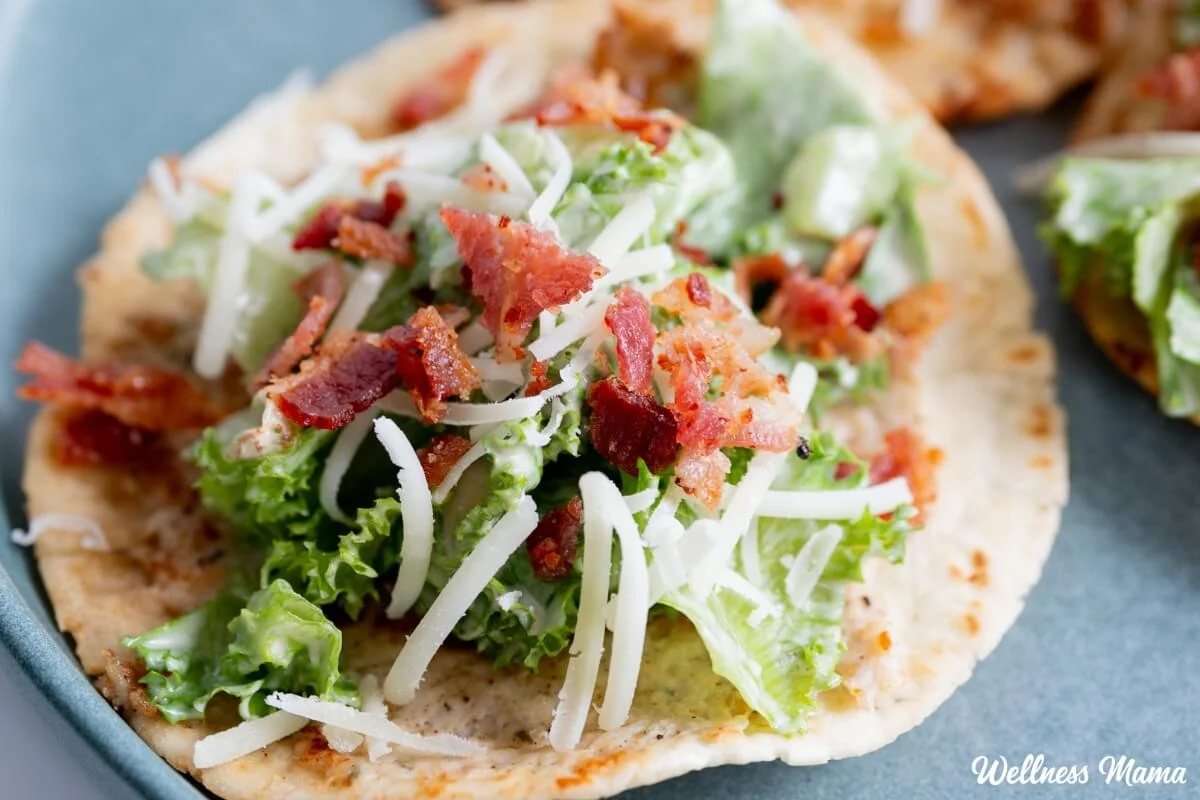
In the ever-evolving landscape of modern home cooking and viral food trends, culinary innovators are constantly searching for ways to reinvent classic comfort foods. The latest creation capturing the attention of busy parents and food enthusiasts alike is the "Smash Chicken Caesar Taco"—an unconventional yet surprisingly harmonious fusion that marries the distinct, punchy flavors of a traditional Caesar salad with the crispy, handheld convenience of a smashed taco.
While the concept of combining a salad with a tortilla might initially sound strange or unorthodox, proponents of the recipe report that it delivers exceptional results. Packed with high protein, nutrient-dense vegetables, and wholesome healthy fats, the dish has quickly proven to be a hit among families, with home cooks noting that children eagerly consume the protein-rich meals without hesitation.
Smash Chicken Caesar Tacos
The foundation of a traditional Caesar salad is steeped in culinary history, traditionally featuring a rich, creamy emulsion crafted from anchovies, fresh garlic, sharp mustard, and other savory components. Tossed alongside crisp romaine lettuce leaves and substantial croutons, the classic salad has undergone numerous adaptations over the decades while preserving its core flavor profile.
This new culinary spin maintains those beloved foundational elements while introducing a modern cooking technique popularized by the viral "smash burger" trend. Rather than simply rolling shredded or grilled chicken into a tortilla, this recipe applies a seasoned minced or blended chicken mixture directly onto the surface of a tortilla shell. As it cooks in the pan, the meat becomes deeply golden and delightfully crispy, locking in moisture while adding a robust, savory depth.
The chicken component is heavily seasoned with an aromatic blend of Italian herbs, pungent garlic, onion powder, and a bright kick of lemon pepper. For the base, home cooks generally prefer using organic flour tortillas, though alternative options such as almond flour or cassava flour shells work equally well. Culinary experts suggest selecting tortillas that are relatively modest in size to ensure they remain manageable and easy to flip during the high-heat cooking process.
The Caesar Dressing Foundation
No Caesar-inspired dish is complete without a proper dressing, and this recipe offers versatility by accommodating both quick variations and more traditional preparations. The dressing relies on a balanced base of mayonnaise and yogurt, which introduces a tangy creaminess without overpowering the palate. Traditional earthy notes are brought forward through the inclusion of Worcestershire sauce and anchovy paste, while fresh lemon juice delivers brightness and acidity. Finished with a layer of herbs and grated Parmesan cheese, the sauce ties the entire dish together.
While culinary purists often advocate for scratch-made mayonnaise, contemporary home kitchens frequently rely on quality store-bought alternatives to save time during busy weeknights. Options utilizing avocado oil, such as those produced by brands like Primal Kitchen, provide a health-conscious shortcut for households managing multiple children and demanding schedules. Bulk pantry stocking through services like Thrive Market further assists busy families in maintaining access to wholesome ingredients.
Preparation and Meal-Planning Strategies
For optimal texture and taste, the completed tacos are best served fresh immediately after assembly, allowing the diner to experience the striking contrast between the warm, crispy meat-topped shell and the cool, crunchy salad ingredients. However, the recipe lends itself well to advance meal preparation.
Home cooks frequently double the recipe to yield enough portions for multiple meals, mixing the seasoned chicken blend and whipping up the Caesar dressing well ahead of time. Culinary notes suggest that the dressing actually improves in flavor after spending extended time resting in the refrigerator, as the robust ingredients are given the opportunity to thoroughly meld. Delivering a balanced nutritional profile rich in vitamins, minerals, and macronutrients, the smash chicken Caesar taco continues to redefine how traditional flavors can be reimagined for modern family dining.
In an era defined by polarized social media feeds and increasingly fractured civic relationships, finding common ground with neighbors who hold opposing political views can feel like an insurmountable challenge. Across the United States, kitchen tables and family gatherings are frequently sidelined by ideological clashes, leaving communities more isolated and distrustful than in decades past.
Yet, for one Arizona community leader, a routine Sunday afternoon argument on Facebook served as the catalyst for a much-needed reminder about the enduring power of human connection, local relationships, and the simple act of sharing food.
The experience dates back to the height of the 2000 presidential election cycle. Like millions of Americans, she spent her time scrolling through social media, observing the political commentary posted by family members, neighbors, and fellow churchgoers. Coming home from Sunday services, she noticed a post published by a fellow member of her congregation regarding the upcoming election.
Opting to engage rather than scroll past, she weighed in with a different perspective. What followed was an hour-long volley of replies, with other church members tracking the online debate and clicking "like" on responses from both sides. In real-time, the interaction transformed into a digital arena for choosing sides and deepening ideological divisions. Finally, feeling drained by the hostility, she stepped back, recognizing that the online persona she was adopting did not reflect who she truly wanted to be.
We don’t grow connectedness by cutting off ties.
The realization hit home because the man on the other side of the screen was far more than an abstract political opponent. His family had previously watched her children when she and her husband traveled out of town, and she had spent countless hours serving alongside his wife in their church’s youth ministry. She faced a pivotal question: Would their relationship be permanently defined by their intended votes, and would her political identity become the primary lens through which she viewed her community?
Opting for offline reality over online friction, she instructed her husband to load the family into the minivan while she prepared a batch of freshly baked chocolate chip banana bread. Grabbing a makeshift sign bearing a spontaneous, lighthearted phrase—"Make America Bake Again"—she headed to her fellow congregant’s home.
When the church friend opened his front door to find her family standing on his porch, he was visibly surprised. Her message was direct and disarming: "You are my friend. We have so much more in common than that Facebook exchange suggests. I don’t want to forget that."
Reflecting on the encounter, she acknowledges that she does not always respond thoughtfully to politically charged situations. Nevertheless, she expresses a sincere desire to do so, particularly as families, cities, and states navigate a civic culture marked by deep division. Her approach is rooted in an effort to push back against the daily currency of polarization and instead invest in the power of pluralism.
This perspective aligns closely with the central concerns raised by sociologist Robert Putnam in his seminal book, "Bowling Alone," where he argued that the decline of social capital represents one of the most pressing threats to modern society. Social capital—the networks of relationships among people who live and work in a particular society—does not expand when individuals conform to the norms of polarization. Instead, it erodes when people opt out of neighborhood gatherings, civic organizations, and family events simply because political differences feel too difficult to navigate.
Cutting off ties does not foster community resilience. Rather, encountering disagreements serves as an opportunity to listen, grow, and connect, rather than a reason to walk away from vital relationships.
We need more shared experiences.
Translating this philosophy into action, she has taken her commitment back to the kitchen. Looking ahead, she is organizing her inaugural annual Make America Bake Again Voter Prep Party. By casting a wide net, she is inviting community members of all backgrounds to join her for an evening centered around baked goods and open dialogue regarding upcoming ballot measures. The goal is to provide a fun, informative, nonpartisan, and welcoming environment to prepare for civic participation.
Participants are encouraged to bring homemade treats to share, drawing inspiration from historical recipes, including traditional cookies associated with various First Ladies and a centuries-old recipe for Election Cake. Among the offerings will be Pat Nixon’s Lemon Sugar Cookies.
The initiative draws inspiration from the observations of the famed American chef and author James Beard, who once wrote that "food is our common ground, a universal experience." Society, she suggests, is in urgent need of more shared experiences—specifically those characterized by low-stakes, high-calorie interactions. Sharing a cookie or sitting down for a meal can act as a catalyst for community-building, allowing individuals with diverse lived experiences and perspectives to bridge gaps that might otherwise remain wide.
In her professional role in Arizona, where she leads the Civic Engagement Impact Team for the local nonprofit Valley Leadership, she sees firsthand the impact of structured communal gatherings. Part of her responsibilities includes organizing the organization’s Dinners & Dialogues Program. Through this initiative, participants gather for a shared meal before engaging in moderated, small-group conversations focused on critical issues facing Arizonans, ranging from public education to declining trust in civic institutions. These dinners lay the groundwork for constructive dialogue centered on collaborative, shared solutions.
The broader application of this approach requires little more than a recipe book and a willingness to reach out. Whether it means delivering a batch of chewy gingersnaps to a neighbor with differing views and asking about their family, thanking local election workers with a delivery of Abigail Adams’ Molasses Raisin Cookies, or organizing a neighborhood dinner to discuss local community-building efforts, deliberate actions can leave a lasting, positive impact.
Political differences do not inherently require division, and civic conflict does not need to result in ongoing contention. As Yuval Levin, author of "American Covenant," observed, "Unity doesn’t mean thinking alike. Unity means acting together."
For communities seeking a path forward through political turbulence, unity may also begin at the kitchen table, proving that breaking bread can be a powerful antidote to a divided nation.