For years, Jamie C. Martin maintained a public-facing life that many might envy. As a co-founder of the popular online resource Simple Homeschool, the creator of the Introverted Moms community, an author, and a dedicated mother of three—including two children with special needs—she managed a bustling digital and domestic life. To the outside world, she appeared to be a steady hand navigating the complexities of education, writing, and family.
However, beneath the surface of daily routines and carefully curated blog posts, a deeply personal struggle was reaching a critical turning point. Five years ago, as the global disruptions of the COVID-19 pandemic rippled through households worldwide, Martin’s inner world began to unravel. What followed was a profound, painful, and ultimately transformative five-year journey through unrecognized trauma, high-functioning depression, and profound personal reinvention.
Reflecting on the timeline of her recovery, Martin recently shared her story with her community, marking the approach of her 50th birthday and the completion of a long, arduous healing process. Her experience offers a raw look at what it means to educate children while silently carrying the weight of unhealed emotional wounds.
The catalyst for her transformation began unexpectedly during the pandemic. In keeping with her husband’s British cultural background of keeping calm and carrying on, therapy was never part of their family lexicon. When her husband announced that he had decided to start attending therapy sessions, Martin recalls being as surprised as if he had declared he was getting plastic surgery.
After observing his positive process for six months, Martin decided to give therapy a try herself. Her initial goal was modest: she simply hoped it would help her navigate the everyday stresses of homeschooling three teenagers and managing a busy household. Instead, the decision opened a door that would shatter and subsequently rebuild her entire worldview.
Early in her sessions, her therapist asked her to share one of her earliest childhood memories. Martin recounted a story that she had always viewed as typical and mildly humorous. Her therapist, however, listened closely and offered a different perspective, noting that the thought process and behavior described were unusual for a typical preschooler and pointed toward deeper emotional dynamics worthy of exploration with a trauma specialist.
Around the same time, while selecting reading material for her online book club community focused on introverted mothers, Martin chose The Powerful Purpose of Introverts by Holley Gerth. Within its pages, she encountered a concept she had never heard of before: high-functioning depression. As she read through the list of characteristics, she was floored to find that she resonated with the majority of them.
Yet, cognitive dissonance clouded her initial acceptance. How could she possibly be depressed? Every morning, she got out of bed, homeschooled three children, wrote books and blogs, and led a thriving online platform for women. Even though she frequently experienced deep physical lows—moments when her entire body ached, sleep evaded her, and she felt a profound sense of inner emptiness and unworthiness—she always managed to hold everything together.
Looking back, Martin views that realization not as a breakdown, but as a moment of grace where long-buried truths finally demanded attention. The ensuing five-year period became a grief-filled arc characterized by what she describes as a process of death and resurrection.
During this extensive phase of healing, the internal defensive mechanisms that had protected her for decades finally demanded to be heard. The process was exhausting and relentless. While navigating these deep internal shifts, Martin continued to manage the final years of her homeschooling responsibilities, write content, and lead her team at Simple Homeschool.
The toll, however, was significant. The emotional weight of the internal work frequently bled into her professional life. At the end of one particularly difficult year, she admitted to a friend that everything she created seemed to wound her. The pressure eventually forced her to pause a major book project, a decision that led to a painful conversation with her literary agent and a profound sense that everything she thought she knew was falling apart.
Deprived of an immediate public outlet for the intensity of her experience, Martin turned to her journals. For the first time in years, she wrote exclusively for herself, effectively rewriting her own life story. Slowly, as she processed and released decades of repressed negative emotions, the internal landscape began to shift.
The transformation eventually manifested outwardly. People who had known her for years began to comment on her appearance, noting a distinct difference in her presence. Martin describes the change as an inner confidence and a steady radiance that she had previously believed was only accessible to others.
While her pain has not vanished entirely, her relationship to it has completely changed. Armed with self-awareness and healing, she understands the origins of her burdens and recognizes that she is finally safe. She can now experience sadness without being consumed by it, allowing her to guide her own children through big emotions because she has learned to navigate them herself.
The tangible markers of her recovery are equally striking. Five years after first reading Holley Gerth’s checklist for high-functioning depression, Martin recently returned to the characteristics and found she resonated with zero of them. To honor this milestone on the eve of her 50th birthday, she commemorated her transformation with a permanent tribute, choosing a tattoo to mark the conclusion of a chapter defined by survival and renewal.
By sharing her story, Martin hopes to extend a lifeline to other parents who find themselves in the difficult position of educating and caring for children while treading water through their own silent struggles. She emphasizes that when surviving from day to day is all a person can manage, it is not a failure—it is profound courage.
For those currently in the thick of grief or difficult circumstances without an immediate promise of resolution, her message is one of solidarity and quiet recognition. Through her vulnerability, Martin continues to offer a comforting presence to an online community of mothers, proving that even the most complex inner struggles can eventually lead toward light, healing, and self-discovery.
For families navigating the profound loss of a child, the journey through grief is rarely linear, predictable, or easily understood by the outside world. There are days when the absence of a loved one feels like a quiet, manageable companion, and other days when it settles in like a heavy fog, completely obscuring the path forward. For Kay Barclay, a Texas mother and grandmother, the most unexpected realization of her healing process was not that the sorrow would eventually fade away entirely, but that grief and joy would one day learn to live side by side, occupying the exact same space in her heart.
Barclay began writing about her experiences to honor her daughter, Jennifer, who passed away in 2019. In reflections shared through The Compassionate Friends, an organization dedicated to supporting families after the death of a child, Barclay opened up about the complex, often misunderstood reality of long-term bereavement. Her words offer a deeply personal look into a landscape that millions of grieving parents recognize, yet struggle to put into words.
In the months immediately following Jennifer’s passing, Barclay experienced what so many bereaved parents describe as simply going through the motions of daily survival. She fulfilled obligations, spoke when necessary, and showed up wherever life demanded her presence. However, the internal landscape of her existence had fundamentally and permanently shifted. Every breath required a conscious reminder, and placing one foot in front of the other was the extent of what she could manage on any given day.
For a long time, survival was the only goal. But eventually, a shift occurred. Though she cannot pinpoint the exact day or moment it happened, Barclay eventually realized she was experiencing something other than sheer numbness. A quiet, unexpected sense of peace began to take root, resembling the physical sensation of a body finally exhaling after holding its breath for several years. She felt okay—not necessarily happy, and certainly not "healed" in the traditional sense, but simply okay.
Within that space of okay-ness, Barclay discovered a profound emotional duality. She found that she could feel the painful absence of her daughter while simultaneously feeling a deep sense of gratitude for Jennifer’s life and the beautiful children she left behind. Both emotions arrived and settled in at the exact same time.
This realization challenged her prior assumptions about how grief operates. For a long period, Barclay had believed that sadness and joy took turns, or that experiencing joy would somehow serve as a betrayal of Jennifer’s memory. However, that moment of unexpected peace taught her that sadness and joy do not cancel each other out. Joy did not replace grief, and grief did not take away joy. Instead, she understood that experiencing joy is not a form of moving on, but rather a way of moving forward. It represents a continuation of love inside the human heart, even when that heart is permanently fractured.
Even now, the fog still rolls in. Barclay acknowledges that there are days when the absence of her daughter is felt as an unbearable, sharp ache. Yet, those moments now share space with others where Jennifer’s presence is felt just as vividly—whether in the beauty of a sunrise or in the sound of her grandchildren’s laughter. In those instances, she is reminded of the profound gift of Jennifer’s life, a gift that quietly invites her to continue living her own.
Reflecting on the evolution of her mindset, Barclay noted how her understanding of healing has transformed over the years. She once believed that healing meant "getting over" a loss, reaching a destination where the pain had vanished and life returned to its previous state. Now, she views healing as the art of learning how to carry the loss. It involves embracing both the enduring love and the persistent sorrow, and allowing joy to enter without demanding that the pain pretend to disappear.
By sharing her journey, Barclay hopes to offer reassurance to others who find themselves wandering through the same dense fog. She is still figuring it out one day at a time, acknowledging that some days are manageable while others are exceptionally difficult. Ultimately, she is learning that allowing herself to feel joy—even in the smallest, most fleeting moments—is not an act of forgetting Jennifer, but rather a way of honoring her memory and carrying her forward into each new day.
Books have long served as more than mere collections of printed words bound between covers; they act as lanterns that illuminate human lives in extraordinary and unexpected ways. Exploring this profound impact, a recent installment of the Read-Aloud Revival podcast, Episode 285 titled "Becoming a Book Woman with Caroline Starr Rose," dives deeply into the transformative power of literature and the remarkable history of individuals who dedicated their lives to sharing it.
Hosted by literature advocates, the episode features a compelling conversation with author and editor Caroline Starr Rose. During the discussion, Rose introduces listeners to her newest Waxwing Books release, titled "Books Upthe Mountain: A Packhorse Librarian Story." The conversation centers on the extraordinary real-life historical program that inspired her latest work, detailing a time in American history when getting literature into the hands of isolated citizens required immense physical endurance, resilience, and unwavering dedication.
The historical backdrop of the episode revolves around a unique American initiative during the Great Depression. In an era marked by profound economic hardship and geographic isolation, a dedicated group of women stepped forward to ensure that literature remained accessible to remote communities. These packhorse librarians traversed difficult, often treacherous mountain terrain on horseback, carrying saddlebags packed with books, magazines, and educational materials to families who otherwise would have had no access to reading resources. Their efforts not only provided a lifeline of learning and imagination during a dark period of national history, but they also cemented a legacy of literacy and community service that continues to inspire modern readers and writers alike.
During her appearance on the podcast, Rose elaborates on the rich history behind her book, offering listeners a behind-the-scenes look at the creative process required to bring historical fiction to life. She describes the meticulous research involved in uncovering the stories of the packhorse librarians, comparing the investigative journey to a complex scavenger hunt. Piecing together historical documents, archival photographs, and first-hand accounts allowed her to construct an authentic narrative that honors the realities of the period while remaining engaging for young readers.
As an established author and editor specializing in middle-grade literature and picture books, Rose places a strong emphasis on writing stories that genuinely respect children and validate their lived experiences. In her conversation with the podcast host, she reflects on the importance of creating characters who face authentic challenges with courage and empathy. By introducing young audiences to historical figures like the packhorse librarians, Rose aims to bridge the gap between past and present, demonstrating how ordinary people can accomplish extraordinary things through community-focused service and a love for reading.
The episode also highlights the broader philosophical perspective that books are essential tools for human connection and personal growth. The discussion emphasizes that the physical distribution of literature during the Depression era was not merely about delivering educational content, but about offering hope, dignity, and a window to the wider world during times of extreme deprivation. Through her new book, Rose seeks to capture this spirit, ensuring that the legacy of these intrepid women endures for a new generation of readers, educators, and families.
As with many episodes in the series, the conversation serves as a celebration of storytelling in all its forms. Listeners tuning into the broadcast are invited to explore the rich resources associated with the episode, including background materials on the historical packhorse library initiative and information regarding Caroline Starr Rose’s literary contributions. Through thoughtful dialogue and historical exploration, the episode reinforces the enduring truth that literature possesses the unique capacity to cross difficult terrain—both literal and figurative—to reach those who need it most.
Raising children is widely recognized as one of life’s most demanding endeavors, yet the profound impact that parenting has on a romantic relationship is a subject that frequently catches couples off guard. As families grow, the foundational dynamics of a partnership often undergo a seismic shift, leaving many wondering how to navigate the complex waters when a long-term relationship begins to falter under the daily weight of domestic life.
When entering into a lifelong partnership, couples are often greeted by varying cultural statistics regarding the longevity of marriage. For many, the early days of a union are marked by optimism, quickly tested by the realities of modern life. After children enter the picture, relationships frequently suffer under a severe scarcity of sleep, disposable income, and personal time—pressures that place an immense strain on the partnership.
For some couples, despite exhaustive efforts to bridge the growing divide, separation becomes a necessary path. However, arriving at the decision to leave a relationship is rarely straightforward, particularly when that choice inherently means dismantling and separating a family unit. The emotional calculus involved in weighing the stability of the home against the personal toll of remaining in an unhappy partnership is one of the most difficult challenges adults can face.
Why Couples Become Unhappy
While a multitude of complex factors can contribute to a couple’s growing dissatisfaction over time, experts suggest that the roots of marital unhappiness frequently trace back to fundamental breakdowns in communication. Elisabeth Shaw, Chief Executive Officer of Relationships Australia NSW, notes that these communication barriers manifest in various destructive ways within a household.
"This means many things from too much, too little, too repetitive without action, too inflammatory, or too risky," Shaw explains, detailing how conversational patterns deteriorate over the course of a family’s lifespan. "Repetitive negative experiences with communication in themselves erode confidence in the couple relationship, as they start to see themselves as lacking skills and start to go quiet when things get difficult. There can be big silences when they need to be talking."
As these conversational walls build up, further difficulties inevitably stem from the initial disconnect. Couples may begin actively avoiding shared time, halting physical and sexual intimacy, and turning instead to outside distractions such as friends, demanding work schedules, or even other romantic partners to fulfill their emotional needs.
Shaw points out that this drift can be especially problematic for parents who find themselves consumed by the daily mechanics of work and child-rearing. During these years, it can easily feel as though partners are successfully operating as a cohesive team managing a household. Yet, once the children grow older and require less constant supervision, partners may suddenly discover that they have spent years operating in parallel, leaving them with very little in common once the parenting buffer is removed.
A Line in the Sand
For those who find themselves deeply unhappy—watching friends embark on new chapters while quietly questioning whether staying in a stagnant partnership is truly worth the emotional cost—experts often recommend a deliberate pause before making a final decision. At this critical juncture, Shaw suggests drawing a clear line in the sand to test the viability of the relationship.
"Embarking on a clear period of ‘working on the relationship’ is valuable, as it is like a new start gun going off," Shaw says. "Sometimes this is best framed by seeing a couple therapist, creating momentum that ‘we are really doing something different’."
This intentional approach involves a mutual recommitment to the partnership, carving out dedicated time to share experiences as a couple independent of parental duties, as well as engaging socially with friends. This structured effort is designed to strip away the accumulated resentment of daily life and provide clarity.
"These sorts of opportunities give you new information about whether you are losing feelings for each other, or you just got out of touch and it can be rekindled," Shaw explains. "When not talking well, we can invent stories in our own mind about what is going on in the relationship, which may or may not be correct."
If You Do Decide to Go
When deliberate efforts fail to bridge the gap and a partnership reaches a point where staying is no longer tenable, the process of leaving brings its own formidable set of emotional and logistical hurdles. Jacinta Tynan, a journalist and author of The Single Mother’s Social Club, faced this exact reality when her marriage reached a breaking point.
Choosing to leave a marriage is rarely instantaneous, and Tynan recalls the intense internal conflict that preceded her departure, noting that she felt a deep sense of personal responsibility for the separation of her family.
"Making the decision is the hardest part," Tynan reflects. "You go back and forth making deals with yourself and trying to find another way. Any other way. But once I had actually made that decision, it got easier. I then started focusing on the logistics of getting us out of that situation and monitoring the fallout on my two boys. When you’re clear that it’s the right move—for all concerned—then it’s all systems go."
Tynan’s subsequent work and writing focus largely on transforming that painful, disruptive life transition into an unexpected period of personal self-discovery and growth. She acknowledges that the prospect of navigating single parenthood and breaking up a household is profoundly intimidating, but urges individuals not to let fear dictate their life’s trajectory.
"Leaving a relationship with kids is scary and disconcerting—but don’t let fear be the thing that stops you," she says. "It’s a reckoning. When we go through the fire and surrender to suffering, it’s an opportunity to see what you’re capable of, to find strength you never knew you had and to draw on resources deep within us. It’s a catalyst for transformation and for deciding how to do life differently. You get to be the woman and mother you desire to be. With no other adult to defer to, it’s on us, and that is a gift."
If You’re Still Not Sure
For many individuals standing at this crossroads, the path forward is rarely crystal clear. The psychological weight of indecision can be nearly as exhausting as the marital discord itself. However, John Armstrong, a philosopher with The School of Life, offers a reassuring perspective for those caught in a state of prolonged uncertainty, suggesting that people should not internalize guilt over their inability to reach a definitive verdict.
"We live in a world that wants us to be decisive," Armstrong observes. "Go or stay, which is it? Make up your mind! But perhaps the intelligent, sensible position is to say ‘I can’t decide.’ The pros and cons, the unknowns and the very likely complications, the fears and the hopes don’t stack up neatly on one side or the other."
Acknowledging the heavy emotional toll of this limbo, Armstrong emphasizes that hesitating in the face of such life-altering consequences is a profoundly human response.
"I’m not saying it’s comfortable to be indecisive, I’m not saying it’s good," he notes. "But it is very natural and understandable—and very normal."
Ultimately, experts agree that outside of exceptional circumstances involving severe issues such as domestic abuse or destructive addictions, the choice of whether to mend a relationship or walk away is one that must emerge from within. It requires looking inward to a vulnerable, honest place that belongs solely to the individual, free from external pressure. Whatever path is ultimately chosen, the fundamental resilience required to navigate the aftermath remains a shared human capacity, pointing toward a future where stability and personal well-being can once again become a reality.
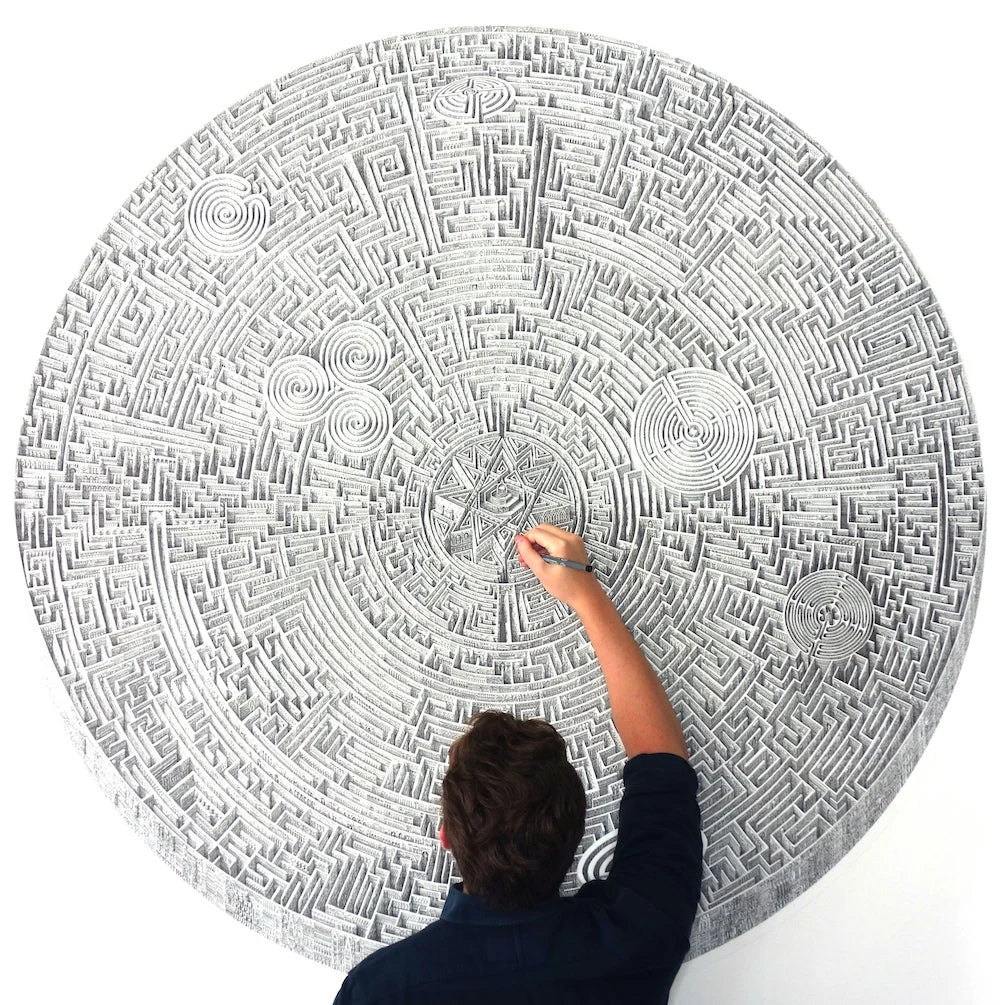
For centuries, Jewish history has been defined by movement, displacement, and the relentless pursuit of new horizons across an unfamiliar earth. It is a legacy that resonates deeply with contemporary artist Benjamin Sack, who has spent much of the past decade transforming that ancestral motif of the wanderer into an astonishing visual practice. Specializing in intricate, meticulously detailed drawings of imagined cities, cosmic labyrinths, and sprawling cartographic projections, Sack has effectively mapped his own nomadic existence onto paper.
"We’ve been a wandering people, generally, for most of our history. And that’s what I’ve become: the proverbial wandering Jew," Sack reflects.
Sack’s distinctive artistic vision is heavily influenced by a confluence of historical cartography, symphonic orchestration, architectural drawing, and an extraordinary level of personal travel. Over the course of his career, he has circumnavigated the globe eight times, serving as an artist-in-residence aboard cruise ships embarking on epic, around-the-world voyages. For an artist whose childhood was spent sketching maps inspired by classic fantasy literature like The Lord of the Rings and The Chronicles of Narnia, finding himself sketching the actual contours of the planet from the deck of a ship feels like a surreal alignment of destiny.
"As a child, I drew maps — I loved and drew Lord of the Rings and The Chronicles of Narnia, and maps are a major part of those stories — and then I ended up circling the world eight times on a ship, creating my own large works and maps, or projections, of the world," Sack notes, describing the full-circle nature of his passions as both beautiful and uncanny.
Yet, these transformative sea voyages were not simply handed to the artist; they are the direct result of sheer ambition and proactive outreach. After graduating with a Bachelor of Fine Arts from Virginia Commonwealth University in 2011, Sack found himself yearning for a broader perspective on the world he loved to recreate on paper. While books and the internet offered a wealth of visual information, he recognized that true artistic growth required firsthand experience. Eager to travel but lacking the financial means to fund a global excursion independently, he set out to forge his own path.
Inspiration struck when he encountered an advertisement for a "Grand World Voyage" offered by the Holland America cruise line aboard a vessel named the Amsterdam. The ship’s onboard aesthetic drew heavily from the Dutch Golden Age, a historical period celebrated for producing some of the world’s most accomplished mapmakers. Growing up studying and drawing from those very same Dutch masters, Sack felt an immediate spiritual connection to the venture.
Demonstrating notable initiative despite having zero prior experience as an artist-in-residence, Sack reached out directly to the cruise line. He pitched a simple yet mutually beneficial arrangement: in exchange for a dedicated cabin to live and work in, he would offer drawing classes to passengers and create a monumental, original artwork to commemorate the voyage. Within weeks, Holland America responded with enthusiasm, setting the stage for a life-altering chapter.
In 2014, Sack boarded the ship for his inaugural Grand World Voyage. The 114-day itinerary spanned five continents and brought the vessel to 38 distinct ports, including such remote and diverse destinations as Easter Island, Papua New Guinea, Hong Kong, Sri Lanka, and Cape Town. When asked if the experience was eye-opening, Sack’s response is immediate and emphatic: "Third, fourth, and fifth-eye opening."
Since that initial journey, Sack has participated in a world voyage nearly every year, pausing only during the disruptions of the COVID-19 pandemic, alongside shorter artistic stints on other vessels. This nomadic rhythm has profoundly shaped the evolution of his style. While his early works sought to echo the precise projections of Dutch masters overlaid with modest details from visited ports, his aesthetic has steadily matured into something entirely distinct. Today, his pieces invite the viewer’s eye to wander through an immersive, labyrinthine journey where structure and imagination seamlessly merge.
Balancing his time between New York and Virginia when on land, Sack is represented commercially by the Robert Fontaine Gallery in Miami and Galeria Ethra in Mexico City. Despite the international acclaim and gallery representation, the fundamental mechanics of his creative process remain remarkably portable. When asked how one manages to produce large-scale drawings while residing in a compact ship cabin, Sack explains that the living quarters temporarily double as a functioning studio.
"They give me a studio — it’s my cabin as well. I ask them to take down the hooks, hangers, and artwork on the wall, and then it’s a big wall where I hang my work-in-progress," Sack explains. "That’s what I love about my art: I can take it anywhere. That’s the point. Pen, paper. The infrastructure of my cities — ink on a two-dimensional plane — is very simple, but you can take it anywhere."
This portability mirrors his broader artistic philosophy, which draws deep inspiration not only from his physical travels but also from literary and musical giants. Among his enduring inspirations is the 18th-century mystic poet William Blake, whose renowned poem Auguries of Innocence famously begins with the lines: "To see a World in a Grain of Sand / And a Heaven in a Wild Flower / Hold Infinity in the palm of your hand / And Eternity in an hour."
Sack finds a similar boundless scope in the work of Jewish composer Gustav Mahler, whose famous assertion that "a symphony should be like the world; it should contain everything" resonates deeply with the artist’s own visual ambitions. For Sack, these artistic touchstones reinforce the idea that miniature details can reveal vast universes, evoking a profound sense of wonder.
That sense of wonder and expansive exploration is inextricably linked to Sack’s Jewish identity, which informs his relationship with the world around him. Drawing a parallel to the foundational biblical narrative of Abraham answering a divine call to venture outward into the unknown, Sack views his creative output as an act of engagement and stewardship.
"You know, Abraham, before the whole story began, he heard God — or, you know, the voice, the spirit, the compulsion — to ‘go out.’ That’s my answer in its simplest form. With my work, there’s this sense of not just going into the world, but capturing the world," Sack reflects.
Viewing drawing as a philosophical dialogue with existence, Sack sees the artistic process as a direct contribution to creation itself. In a universe perceived as a mere speck of dust, the act of bringing intricate worlds to life on a blank page serves as an ongoing meditation.
"Fundamentally, drawing anything is Genesis. You know, ‘In the beginning,’" he notes.
Benjamin Sack’s work continues to be showcased to audiences through exhibitions and public programming, including virtual artist spotlight events exploring the realities of working as a Jewish artist today. Through every stroke of ink and every imagined skyline, Sack carries forward a timeless tradition of mapping the infinite.
In a recent installment of her parenting podcast Unruffled, renowned infant and toddler specialist Janet Lansbury tackled a deeply relatable dilemma for modern parents: how to remain authentic with young children when that authenticity feels harsh, rejecting, or downright mean. Responding to an email from a mother struggling with her own emotional triggers, Lansbury explored the delicate balance between honoring a parent’s genuine feelings of annoyance and respecting a young child’s emotional vulnerability.
The discussion centers around a common scenario familiar to many households with toddlers. A mother of two—a three-year-old boy and a nine-month-old infant—wrote to Lansbury seeking guidance after working extensively with a therapist to identify and process her own emotions rather than suppressing them. Having grown up in an environment where expressing feelings was discouraged, this parent has made a conscious effort to acknowledge her internal states. However, she expressed deep concern that displaying strong emotions, particularly anger and annoyance, might be damaging to her children.
In her letter, the mother described a typical household friction point. Her three-year-old son frequently engages in impulsive behaviors, such as throwing items around a room she has just meticulously tidied, not out of malice, but seemingly for stimulation or amusement. When this happens, the mother finds herself reacting with standard boundary-setting language, explaining why the behavior is unacceptable and removing the items.
The true conflict arises shortly afterward. The toddler, having seemingly moved past the incident without lingering distress, often approaches his mother asking for a physical connection, such as a hug on the couch. Yet, the mother frequently finds herself still harboring residual annoyance from the disruption, making the prospect of offering physical affection feel deeply inauthentic. She grappled with whether it is appropriate to decline the hug and explain that she is still grumpy, or if forcing the physical contact violates the principles of bodily autonomy and emotional honesty.
Lansbury acknowledged the profound complexity of the mother’s dilemma, noting that the desire to maintain congruence between internal feelings and external actions is a cornerstone of building a healthy, authentic relationship with a child. However, Lansbury offered a multi-layered perspective designed to help parents reframe both their own reactions and the root causes behind a toddler’s disruptive behavior.
Addressing the mother’s perception that her son acts out "just for fun," Lansbury suggested a shift in perspective. Young children, she emphasized, possess a high degree of emotional awareness and are acutely sensitive to parental moods, often picking up on tension even before verbal communication occurs. According to Lansbury, a child does not purposefully set out to make a parent’s day harder for pure entertainment. Instead, actions like throwing recently tidied objects are often impulsive expressions of underlying stress, vulnerability, or a deeper need for connection.
This underlying stress, Lansbury noted, is frequently tied to major life transitions, such as the arrival and developmental milestones of a younger sibling. As a nine-month-old infant becomes increasingly mobile and demanding of parental time and energy, an older sibling often experiences unconscious anxiety and a sense of displacement. When toddlers feel unsettled or overwhelmed, they may inadvertently resort to behaviors that trigger a reaction, effectively signaling a need for reassurance and a more secure emotional environment.
Rather than viewing the child’s behavior as an intentional provocation or seeing her own annoyance as an irreparable failure, Lansbury encouraged parents to recognize these moments as opportunities for self-reflection and grounded leadership. She pointed out that while parents certainly have the right to decline physical affection when they are feeling frustrated or emotionally unavailable, they do not necessarily need to burden a young child with an elaborate explanation of their adult emotional state.
Unloading adult emotional baggage onto a three-year-old, Lansbury explained, can inadvertently heighten the child’s anxiety. When a toddler senses that a parent is deeply grumpy or resentful because of their actions, it triggers a primal fear of rejection and loss of parental regard. To a young child, the parent is the center of their world, and perceived disapproval can feel terrifying. Therefore, offering an overly detailed explanation of why a hug is being withheld can exacerbate the child’s insecurity, potentially leading to a repeating cycle of impulsive behavior.
Instead, Lansbury recommended a simpler, more measured approach to boundary-setting. If a parent truly does not feel like offering a hug in a given moment, they can establish a clear and loving boundary without heavy emotional justification. A simple statement—such as letting the child know that they are loved, that a hug isn’t available right at that moment, but that affection will happen later—maintains honesty while providing the emotional safety the child needs. This approach preserves the parent’s authenticity without crossing into punitive over-explaining.
Furthermore, Lansbury emphasized that emotional authenticity does not require parents to broadcast every fleeting feeling of annoyance. True authenticity in parenting means ensuring that outsides match insides—avoiding fake, theatrical enthusiasm when one is genuinely frustrated—while still exercising the emotional maturity to rise above minor daily irritations. By understanding the vulnerability driving a child’s actions, parents can often dissolve their own annoyance, replacing irritation with empathy and a calmer, more confident demeanor.
The discussion highlights the ongoing challenges faced by caregivers striving to break generational cycles of emotional suppression while navigating the rigorous demands of early childhood development. By validating the mother’s self-awareness and her commitment to personal growth, Lansbury underscored the profound value of therapeutic work and introspection in modern parenting.
Ultimately, Lansbury’s guidance offers a reassuring message to parents grappling with the intersection of boundaries and affection: it is entirely acceptable to prioritize emotional honesty and decline physical contact when feeling depleted, provided it is done with gentle clarity rather than blame. Through increased understanding of a child’s perspective and a commitment to personal grace, parents can cultivate relationships rooted in genuine connection, mutual respect, and emotional safety.
There is a distinct, universal magic that accompanies the dawn of Christmas morning, captivating both the young and the young at heart. Whether waking up to find a sprawling arrangement of wrapped boxes under the tree or rushing downstairs to inspect a stocking lumpy with unexpected little surprises, the holiday season holds a unique brand of joy. Unearthing hidden items from the depths of a fabric boot—ranging from a practical pair of cozy socks to a simple pack of gum—remains one of the most enduring and cherished rituals of the festive period.
While the modern holiday rush often involves navigating frantic shopping periods and missing out on seasonal discounts like Black Friday deals, curating thoughtful, health-conscious stocking stuffers can streamline the process. Compiling a comprehensive array of ideas into a single master list aims to ease the holiday shopping burden, offering inspiration for every member of the household.
The Tradition of Christmas Stockings
Thanks to the famous 1823 poem traditionally titled "A Visit from St. Nicholas"—more widely recognized by its opening line, "The Night Before Christmas"—generations of families have known that Christmas stockings have been hung by the chimney with care for more than two centuries. Yet, despite the ubiquity of this festive fixture, the exact origins of how the tradition began and why it attained such widespread popularity remain less widely understood by the general public.
Historians and holiday folklorists generally agree that the modern Christmas stocking tradition pays direct tribute to St. Nicholas, the historical figure who ultimately inspired contemporary representations of Santa Claus. According to enduring legend, St. Nicholas learned of a destitute, widowed man who was unable to afford the necessary marriage dowries for his three daughters—a particularly desperate economic and social predicament during that historical era.
Wishing to assist the family anonymously and prevent further hardship, St. Nicholas reportedly traveled to the man’s home by night and dropped bags of gold coins down the chimney. As fortune would have it, one of the gold coins fell directly into a stocking that the daughters had hung near the fireplace to dry. When the widower and his daughters awoke the following morning, they were overwhelmed with joy to discover the unexpected wealth, their immediate financial worries entirely resolved.
This foundational example of anonymous charity and generosity continues to shape the cultural perception of the true spirit of Christmas today. For many families, these historical roots extend beyond Christmas morning itself. Similar customs are observed on St. Nicholas Day every December sixth, when children traditionally leave a boot out in hopes of receiving small treats, sweets, and tokens from St. Nick.
Best Stocking Stuffer Ideas for the Whole Family
Finding items that fit neatly into a traditional fabric stocking while aligning with health-conscious lifestyle choices can occasionally present a challenge. Over the years, parents and gift-givers have curated various recommendations designed to avoid the overly processed sweets and plastic trinkets that frequently clutter holiday aisles. These concepts often complement broader holiday planning, drawing from comprehensive seasonal gift guides tailored separately for children, women, and men, while categorizing smaller items by interest, age, and utility.
Among the most popular categories for holiday stockings are edible gifts, which appeal directly to the food enthusiasts in the family. Thoughtful culinary additions can range from artisanal pantry staples to organic snacks that offer a departure from standard commercial candy canes and mass-produced chocolates.
For those inclined toward personal care, DIY and beauty items present an opportunity to introduce natural self-care products into daily routines. Many commercially available skincare gift sets feature complex chemical ingredients that health-conscious consumers prefer to avoid. Consequently, creating customized beauty items or sourcing clean-label alternatives allows gift-givers to prioritize wellness without sacrificing the luxury of a spa-like experience at home.
Health Nut Stocking Stuffers
The modern wellness movement has also influenced holiday gift-giving, leading to a rise in what many describe as health nut stocking stuffers. These specialized items focus on daily vitality, ranging from targeted immune-boosting supplements to cognitive and brain-support products. Recognizing the diverse needs of an entire household, manufacturers and wellness advocates have increasingly introduced kid-friendly formulations, making it easier to incorporate nutritional support into the daily routines of younger family members.
Experiences and Sentimental Gifts
In an era dominated by material consumption, a growing number of families are shifting focus toward experiences and sentimental offerings. Giving loved ones the precious gift of time, attention, and shared memories serves as a meaningful alternative to traditional physical goods. These experiential tokens are particularly well-suited for children, spouses, and grandparents, fostering connection long after the holiday decorations have been packed away.
Perfectly Practical Stocking Stuffers
While holiday humor often targets the quintessential gift of a pair of socks, practical items continue to hold a valued place inside the traditional Christmas stocking. Even for individuals who do not typically prioritize utilitarian items, thoughtfully chosen practical gifts can bridge the gap between utility and enjoyment, offering daily usefulness throughout the upcoming year.
Games, Fun, and Crafty Pursuits
Encouraging cognitive development, creativity, and interactive play remains a priority for many gift-givers, making compact games and brain-teaser puzzles ideal candidates for holiday stockings. These items not only provide immediate entertainment on Christmas morning but also lay the groundwork for future family game nights, appealing to fun-loving adults and children alike. Similarly, for households with dedicated artists and crafters, slipping small arts and crafts supplies into a stocking provides fresh materials for collaborative family creative sessions around the kitchen table.
Themed Stocking Stuffer Ideas
Rather than filling stockings with a collection of entirely random items, an emerging trend involves adopting a cohesive stocking stuffer theme. Whether centered around a specific color, hobby, or practical category, themed stockings offer a structured approach that resonates with both children and adults.
Extending the Holiday Season
Beyond the traditional selection of items, some households have adopted alternative twists on the holiday ritual to prolong the festive atmosphere. Instead of presenting all stocking contents at once on Christmas morning, participants slip one new, small gift into the stockings across the twelve days of the Christmas season. Traditionally running from December 25 through the feast of the Epiphany on January 6, this practice allows children and families to look forward to a daily surprise, helping to maintain a prolonged focus on the broader celebration of the holiday season.
For more than a century, a quiet consensus has existed among leading educators, cognitive scientists, and academic researchers: the arts are far more than extracurricular enrichment; they are foundational to the very architecture of learning. From the melodic structures of music and the collaborative tension of drama to the fine motor mechanics of drawing and the cognitive scaffolding of storytelling, artistic expression does heavy lifting in the human brain. It consistently strengthens academic achievement, sparks creative problem-solving, enhances long-term memory retention, and builds critical social-emotional skills.
Yet, across school districts nationwide, budgetary pressures frequently place the arts on the chopping block, treating them as optional frills rather than core components of a robust curriculum. This persistent debate overlooks a mountain of empirical evidence. Year after year, rigorous educational research demonstrates that the arts are not peripheral luxuries, but central drivers of student growth, cognitive resilience, and holistic lifelong success.
Education as an Art
The foundational premise that teaching itself is an art form has deep, historically grounded roots in pedagogy. Truly effective educators are rarely mere conduits for transferring static information from a textbook to a student’s
notebook. Instead, they function as creative guides who intentionally awaken natural curiosity, invite rigorous exploration, and help students perceive the familiar world through entirely fresh lenses.
When classroom lessons are deliberately infused with rhythm, imagination, and narrative structure, children find it vastly easier to connect abstract knowledge directly to lived experience. A prominent, large-scale randomized trial conducted in Houston, titled Investigating Causal Effects of Arts Education Experiences, provided compelling empirical backing for this dynamic. The research revealed that students enrolled in schools featuring enhanced, systematic arts programming not only demonstrated measurable improvements in writing proficiency but also displayed significantly fewer disciplinary infractions alongside notably higher levels of empathy.
When instruction is consciously approached as a refined art form, the ultimate impact of learning expands far beyond the narrow confines of standardized test scores. It reaches deeply into the realms of character development, community cohesion, and shared humanity.
Academic Achievement and the Arts
For decades, learning environments richly saturated in the arts have maintained a clear statistical link to superior academic performance across diverse student populations. The landmark federal report Arts and Achievement in At-Risk Youth revealed that students who maintain deep, consistent involvement in the arts consistently earn higher grade point averages, achieve higher high school graduation rates, and demonstrate a substantially greater propensity to aspire toward higher education.
More recently, reports published by the National Endowment for the Arts (NEA), including Snapshots of Arts Education in Childhood and Adolescence, have reaffirmed these findings. The data documents consistent, reliable gains in foundational reading, mathematics, and language arts skills when students experience sustained, robust arts participation.
A targeted 2019 study led by researchers Hardiman and colleagues, titled The Effects of Arts-Integrated Instruction on Memory for Science Content, uncovered specific cognitive mechanisms at play. The researchers found that students who acquired complex science concepts through arts-integrated instructional methods retained that knowledge far more effectively than control groups taught through traditional, lecture-based instruction.
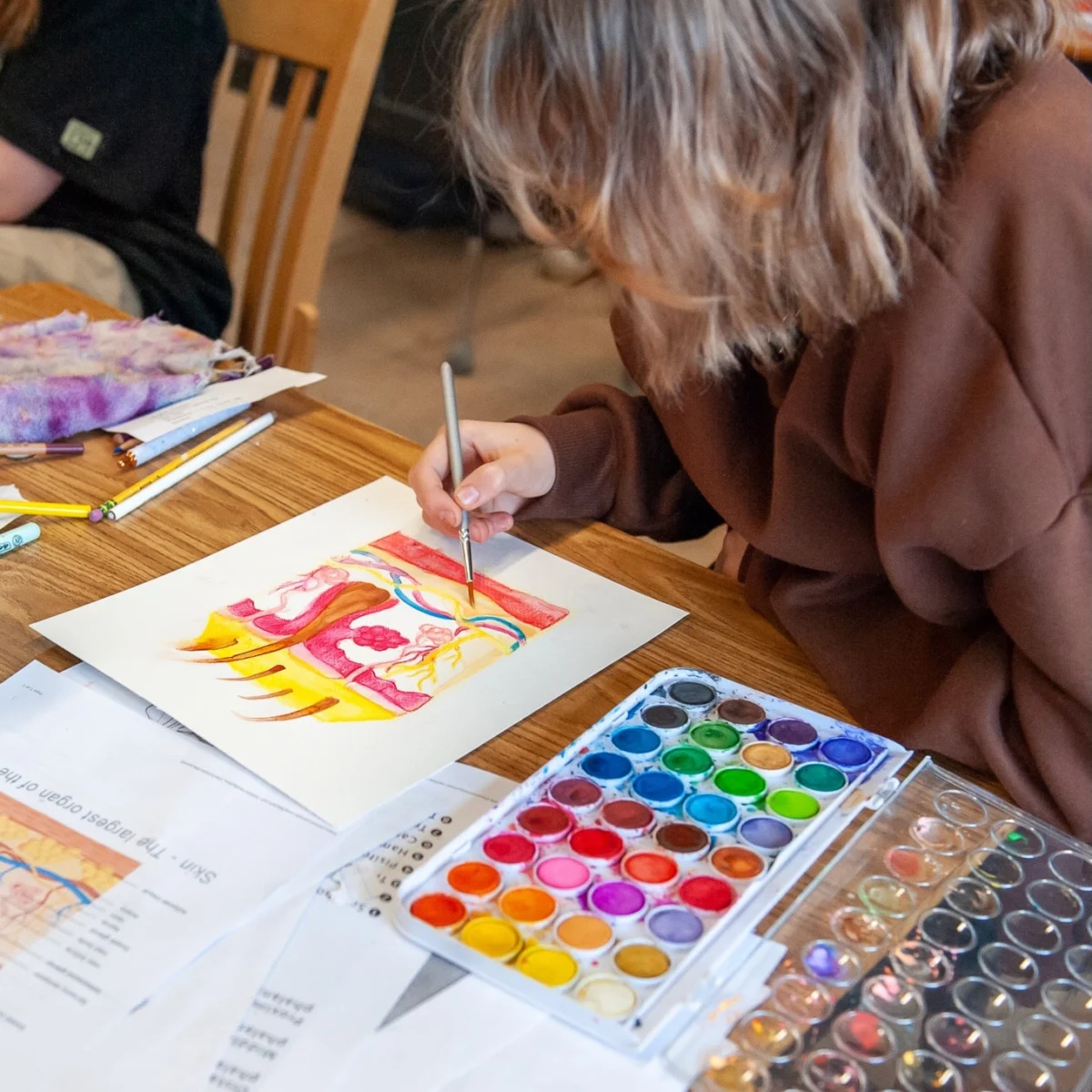
This empirical insight validates a pedagogical practice long embraced by master teachers: intellectual abstraction becomes vastly more accessible when introduced via tangible artistic exploration. Whether students sketch geometric forms prior to tackling complex geometry proofs or illustrate the step-by-step mechanics of a physical science experiment as an integral part of the curriculum, the artistic medium serves as a bridge to deep comprehension.
Creativity and Critical Thinking
In the fast-evolving landscape of the modern global economy, creativity is no longer viewed as an elite luxury or a pleasant hobby; it has become an absolute economic and social necessity. A comprehensive report from the Organisation for Economic Co-operation and Development (OECD), titled Art for Art’s Sake?, highlights the profound ways in which structured arts education deliberately fosters flexible, innovative thinking patterns.
Empirical studies consistently confirm that students who regularly engage in rigorous artistic activities develop significantly stronger divergent thinking skills. This cognitive agility equips them to generate original ideas, synthesize disparate concepts, and adapt fluidly to novel, unforeseen situations. Whether a student is composing an original musical score, interpreting a complex character in a theatrical drama, or painting a detailed landscape, the active practice of art cultivates persistence, originality, and sophisticated problem-solving capacities. Crucially, these mental habits do not remain siloed in the studio; they readily translate across academic disciplines and professional fields.
Memory, Engagement, and Multisensory Learning
Beyond cultivating divergent thinking, artistic practice exerts a powerful influence on memory consolidation and active student engagement. The research conducted by Hardiman and her colleagues demonstrates that arts-integrated instruction leads to notably deeper, more durable long-term recall of curriculum content.
This heightened retention occurs primarily because the arts naturally activate multiple sensory pathways simultaneously—engaging visual, auditory, and kinesthetic systems. By anchoring new knowledge in embodied physical and creative experience, the brain builds more robust neural networks. Whether a child is reciting historical poetry with cadence, singing a complex mathematical formula, or physically illustrating historical events through movement and tableau, these multisensory methods embed learning far more permanently than traditional rote memorization alone.
Social-Emotional Growth
The transformative benefits of comprehensive arts education extend far beyond traditional cognitive metrics, making profound inroads into the social-emotional domain. The Houston-based study by researchers Kisida and Bowen noted measurable increases in compassion and improved peer engagement among students who enjoyed heightened exposure to the arts.
Similarly, an NEA publication titled Arts in Early Childhood: Social and Emotional Benefits of Arts Participation documented that collaborative activities involving storytelling, group music-making, and participatory drama build essential social capacities such as cooperation, empathy, and emotional resilience in young learners.
Participating in a collaborative theatrical production, singing in a synchronized choir, or contributing to a large-scale group visual art project demands high levels of active collaboration, patience, and shared responsibility. These shared creative endeavors foster an environment where students must navigate interpersonal dynamics constructively, cultivating vital life skills that endure well beyond their school years.
Equity and Access
Despite the overwhelming body of research validating its indispensable value, arts education remains perpetually vulnerable, frequently serving as the very first budget item targeted for reduction when school districts face financial tightening. Yet, extensive data demonstrates that consistent arts engagement functions as one of the most powerful educational equalizers available to policymakers and school administrators.
Landmark studies by Catterall and colleagues, published through the NEA, reveal that socioeconomically disadvantaged students who maintain deep involvement in the arts regularly outperform their disengaged peers academically. Furthermore, these students exhibit higher rates of college attendance and demonstrate significantly greater civic engagement in their communities.
Initiatives such as the Kennedy Center’s Turnaround Arts program have provided real-world operational proof of these principles. Schools that intentionally embrace comprehensive arts integration consistently report measurable, positive improvements in daily student attendance, disciplinary behavior, and overall campus climate.
A Universal Call
The accumulated body of evidence spanning more than a century is unequivocal: the arts are not peripheral electives, but essential components of a complete, high-quality education. They fundamentally elevate academic performance, spark vital creativity, deepen memory retention, and nurture profound human empathy.
Educational institutions that fully and fearlessly integrate the arts—whether manifested through music, visual expression, physical movement, drama, or narrative storytelling—align themselves directly with what contemporary cognitive research affirms as best practice for human learning. For generations, alternative educational models, such as Waldorf schools, have demonstrated the practical feasibility of this approach by weaving the arts into every academic subject as a matter of foundational principle. Within these successful frameworks, the arts are recognized not as optional add-ons, but as the vibrant medium through which traditional academics are brought fully to life.
As the crisp autumn air settles in and communities find their steady rhythm for the academic year, homeschooling families often reach a familiar milestone. Somewhere around Week 7 of the fall semester, parents across the country pause to reflect on the daily routine and ask a fundamental question: What is all this memory work really for?
To address this inquiry head-on, the Classical Conversations October 2026 Parent Connections newsletter has arrived, offering families a robust collection of resources, video series, recommended reading, and upcoming events designed to renew their passion for classical education. Rather than viewing recitation as an isolated academic chore, the latest community updates emphasize how foundational memory work builds lasting habits of thought that serve students well beyond their early school years.
What’s the Point? Seeing the Connections in Foundations Memory Work
To understand the deeper purpose of classical education, one only needs to examine a typical week in the curriculum, such as Week 7 of Foundations Cycle 3. During this period, families might find themselves tackling the 13s multiplication facts, Latin noun vocabulary, the human excretory system, the conjugation of the verb "to rise," the historical significance of the Monroe Doctrine, and an extensive mapping of states and capitals.
On paper or at first glance, these subjects can appear entirely disconnected—a random assortment of facts across math, science, language, and history. However, the philosophy of classical learning is rooted in recognizing patterns and connections. A student who learns to perceive order in mathematics is actively exercising the very same cognitive muscle required to trace cause and effect across historical epochs or accurately map a nation’s geography.
Recognizing that parents often look for guidance when connecting these dots, Classical Conversations has launched a new video series titled "What’s the Point?" Consisting of short, accessible episodes released weekly, the series walks viewers through specific weekly memory work and illustrates how these building blocks foster comprehensive habits of thought rather than mere rote memorization. Designed for busy families, each video offers parents practical insights and talking points to discuss with their children, ensuring students understand not only what they are learning, but why it truly matters.
The series kicked off with a dedicated look at Foundations Cycle 3, Week 7, and the complete catalog is now available for families to integrate directly into their weekly homeschool routine.
Memorization Is Beyond Just Rote Learning
A persistent challenge for families new to the classical model is overcoming the common misconception that classical education is "just memorization." Throughout the fall term, the Classical Conversations blog and the Everyday Educator podcast have focused heavily on dismantling this and other widespread myths about the methodology.
Far from being the ultimate destination, memorization in the classical tradition serves as a foundational tool. Young children possess a natural capacity to absorb and store information effortlessly. By utilizing this developmental window, educators allow students to amass a treasury of facts that they can later analyze, connect, and articulate with precision as they grow into higher levels of critical thinking.
Families seeking deeper encouragement can explore the ongoing series of articles on the official Classical Conversations blog or tune into the Everyday Educator podcast, where veteran educators share practical advice on integrating a lifestyle of learning into the home environment.
Books to Grow Your Own Classical Education
Classical education is not strictly reserved for children; rather, the model encourages lifelong learning for parents as well. One of the most effective ways for adults to reignite their enthusiasm for the approach is to continue their own educational journey alongside their students.
To support this ongoing personal growth, the Classical Conversations Bookstore features several recommended titles, including "The Habits of a Classical Education: Practicing the Art of Grammar." This comprehensive companion volume offers guidance across multiple academic disciplines, including reading, writing, mathematics, geography, history, science, and the fine arts. Each chapter provides actionable ways for parents to actively practice the Five Core Habits of classical learning with their children at home.
Additionally, families can download "Echo in Celebration: A Call to Home-Centered Education," a complimentary ebook detailing the personal homeschool journey of Leigh Bortins, the founder of Classical Conversations. The text offers historical context on how the organization began and explores the enduring fruits of educating children at home through time-tested classical Christian methods. Additional reading materials are also accessible via the Cultivating Christian Leaders collection.
Putting Knowledge into Practice with National Number Knockout
For students looking to put their mathematical habits of thought into active practice, the upcoming National Number Knockout competition offers an engaging platform. Often referred to as N2K, this mental math competition challenges students to roll three dice and use their arithmetic skills within a strict 60-second window to build as many equations as possible matching numbers on a game board.
Designed to foster a love for mathematics, build academic confidence, and encourage the pursuit of excellence, the competition is open to students ages 11 to 14 participating in Essentials, Challenge A, or Challenge B programs. The 2027 tournament cycle is already generating excitement, culminating in a highly anticipated championship event hosted aboard the 2027 CC Family Cruise. Interested participants can subscribe to the dedicated N2K newsletter to stay informed about preparation timelines and rules.
Taking Learning on the Road: Museum of the Bible Homeschool Days
As part of the October member benefits, Classical Conversations is highlighting unique educational travel opportunities, such as Homeschool Days at the Museum of the Bible. With the United States approaching its 250th anniversary, the museum features immersive, hands-on exhibits designed for all grade levels that explore the profound influence of the Bible on the nation’s founding principles, cultural ideals, and historical development.
Families planning a trip to Washington, D.C., can also utilize specialized homeschool travel guides provided by the organization to turn a single museum visit into a comprehensive day of experiential learning.
Stay Connected with Classical Conversations
The Parent Connections newsletter continues to serve as a primary communication channel for member families throughout the academic year. Alongside monthly newsletter updates, the community remains active across digital platforms including Facebook, Instagram, YouTube, and BAND.
The current issue also highlights seasonal promotions such as the CC Bookstore’s Fall into Savings Sale, alongside external partner resources and career opportunities for individuals interested in joining the Classical Conversations home office team.
Frequently Asked Questions
Q: What is the What’s the Point? video series from Classical Conversations?
A: What’s the Point? is a weekly Classical Conversations video series for Foundations parents. Each short video walks through that week’s memory work and shows how the subjects connect. The goal is to help parents talk with their children about why their learning matters, not just what they are learning.
Q: Is classical education just rote memorization?
A: No. In classical education, memorization is a tool, not the goal. Young children store facts while memorizing comes easily. Over time, they learn to connect those facts, reason about them, and express ideas clearly. Classical Conversations designs Foundations memory work to build lasting habits of thought, not isolated facts.
Q: What is The Habits of a Classical Education: Practicing the Art of Grammar?
A: The Habits of a Classical Education: Practicing the Art of Grammar is a Classical Conversations book for parents and students. It covers reading, writing, math, geography, history, science, and the fine arts, with practical ways to practice the Five Core Habits at home. It is sold in the CC Bookstore and recommended for Foundations, Scribblers, Essentials, and Challenge A families.
Q: Is Echo in Celebration by Leigh Bortins free?
A: Yes. Echo in Celebration: A Call to Home-Centered Education is a free PDF ebook in the Classical Conversations Bookstore. It tells the homeschool story of Leigh Bortins, founder of Classical Conversations, and shows the fruit of educating children at home with the classical Christian method.
Q: What is National Number Knockout (N2K)?
A: National Number Knockout (N2K) is a mental math competition from Classical Conversations. Players roll three dice and have 60 seconds to create equations that match numbers on a game board. The 2027 competition is open to students ages 11 to 14 in Essentials, Challenge A, or Challenge B, and the championship takes place on the 2027 CC Family Cruise.
Q: What are Museum of the Bible Homeschool Days?
A: Museum of the Bible Homeschool Days give homeschool families a hands-on visit to the museum in Washington, D.C. For America’s 250th anniversary, the exhibits explore how the Bible shaped the nation’s founding, ideals, and history. The programming is made for every grade level.
Q: When is the Classical Conversations October 2026 parent survey due?
A: The Classical Conversations Parent Survey must be completed before October 23, 2026. It takes about five minutes. Parents who complete it by the deadline are entered to win $50 of CC merch.
As individuals increasingly seek out intentional ways to manage daily stress and cultivate mental well-being, the mindfulness platform Calm has introduced a comprehensive new physical product line designed to support mindful living throughout the year. The newly released collection centers around two core offerings: the Calm 365 Journal and the Calm Calendar. Both products are now available for purchase individually, accompanied by a series of introductory promotional discounts and integrated digital content collections within the popular Calm mobile application.
The rollout of these physical mindfulness tools comes as part of a broader effort to bridge the gap between digital wellness resources and tangible, everyday habits. Designed around a structured framework of twelve distinct monthly themes, the products aim to provide users with steady guidance, reflection space, and daily prompts to encourage moments of calm, clarity, and intentional living.
Exploring the Core Offerings: Journal Versus Calendar
For individuals looking to incorporate mindfulness into their daily routines, the new collection offers two distinct formats tailored to different lifestyles and preferences. The Calm Calendar serves as a quick, at-a-glance daily companion. Featuring one daily prompt per page, the calendar is engineered to be displayed in a prominent home or office space where users can easily view it as part of their environment. Measuring 11 by 8.5 inches, the calendar is specifically structured to hang or stand on display, offering a concise daily touchpoint for reflection.
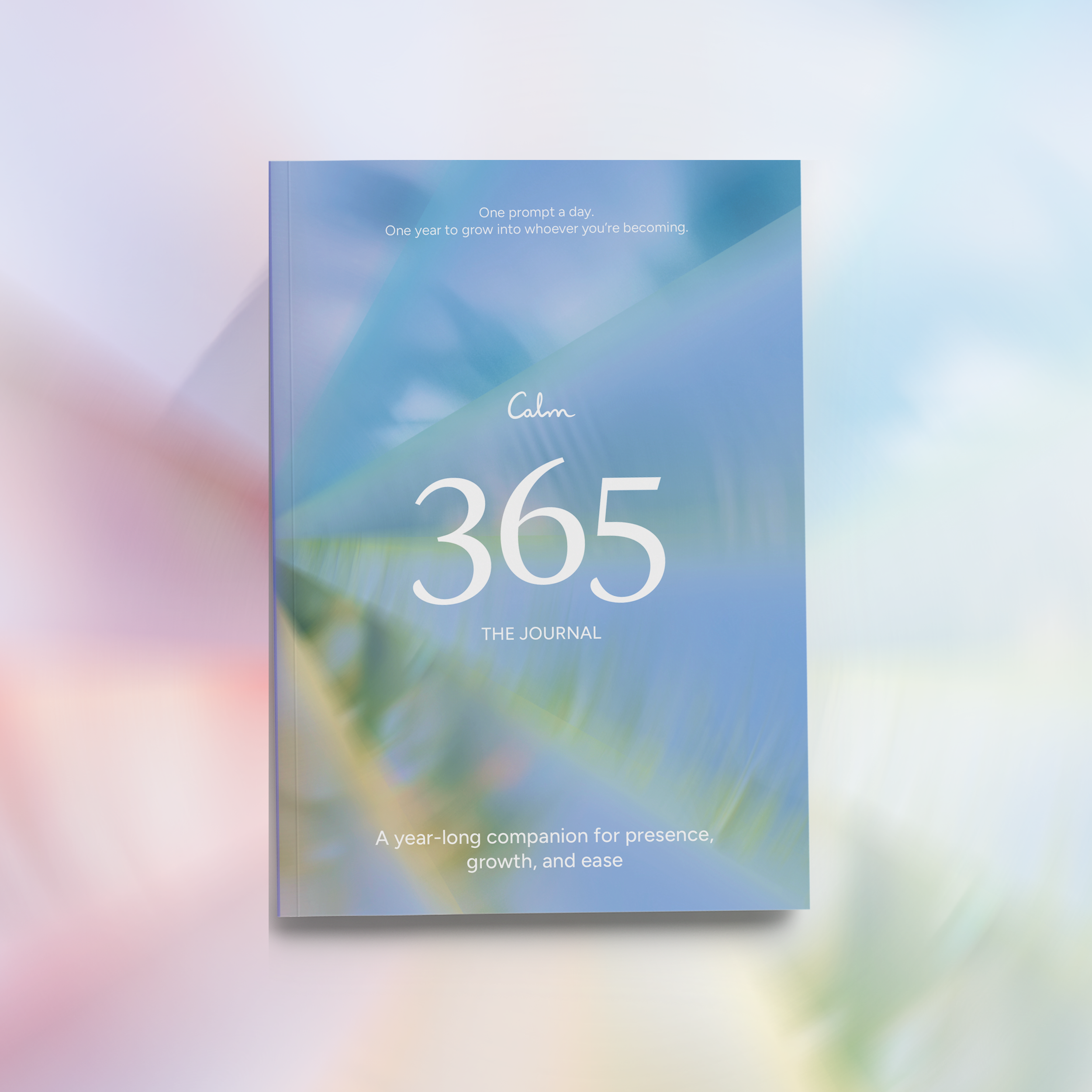
In contrast, the Calm 365 Journal takes a deeper approach, providing dedicated physical space for daily writing, processing, and self-reflection. Built in a portable A5 format measuring 5.8 by 8.3 inches and spanning roughly 300 pages, the journal goes far beyond simple daily prompts. It incorporates comprehensive "Look Back and Look Ahead" chapters, guided rituals, letter-writing exercises, and vision boarding sections. These additional features are specifically designed to help users process the experiences of the preceding year while intentionally setting a direction for the months ahead.
Despite their differences in depth and format, both products share a unified thematic backbone. The year is divided into twelve specific monthly themes: Clarity, Connection, Nourishment, Growth, Kindness, Flow, Presence, Ease, Balance, Release, Gratitude, and Stillness. These themes run consecutively from January through December, creating a cohesive journey of self-discovery and mental wellness for those who follow the full annual cycle.
Digital Integration and Accessibility
A key feature of the new physical product line is its seamless integration with the existing digital ecosystem of the Calm app. Every monthly theme featured in the journal and calendar corresponds to a dedicated content collection within the mobile application. Platform representatives have clarified that users do not need a paid Calm subscription to access these accompanying digital collections. While certain expanded resources within the app require a subscription—or the initiation of a free trial for those wishing to explore deeper—the foundational content tied to the monthly themes remains accessible to a broad audience.
Furthermore, platform developers note that the physical products are designed to accommodate users at any stage of their mindfulness journey. Whether an individual is entirely new to the concept of meditation and intentional journaling or has maintained a long-standing digital subscription to the Calm app, the journal and calendar function identically, offering an accessible bridge between screen-free reflection and digital guided mindfulness practices.
Flexibility is also a defining characteristic of the journal itself. Unlike traditional date-bound planners, the Calm 365 Journal is not tied to a specific calendar year. This design choice allows users to begin their journaling practice at any point during the year whenever it feels appropriate, removing the pressure of starting strictly on the first of January. The calendar, however, is explicitly dated for the upcoming 2027 year, making an acquisition close to the new year the most practical starting point for that particular item.
Promotional Discounts and Purchasing Options
To celebrate the launch of the new physical products, the platform has rolled out introductory pricing incentives. Customers can take advantage of three separate discount codes currently available at checkout, each offering 30 percent off a specific product in the cart. Because the discount codes correspond directly to the items selected, buyers must ensure they apply the code matching the contents of their shopping cart during the final payment process.
Both the Calm 365 Journal and the Calm Calendar are sold as standalone items, giving consumers the freedom to purchase only the product that best fits their daily habits, or to acquire both for a more immersive experience. The products have also been positioned as popular gifting choices for birthdays, holidays, or seasonal milestones, with self-gifting recognized as a common use case among consumers prioritizing their own mental health.
Shipping, Production, and Order Timelines
Because each physical copy of the journal and calendar is printed on demand specifically for the individual purchaser, fulfillment logistics involve specialized production windows. Standard production typically requires between three and five business days, though this timeframe extends to seven to ten business days during peak holiday periods. Following production, standard shipping adds an additional fourteen to eighteen business days to the delivery timeline.
For shoppers planning to give the items as holiday gifts, platform guidelines recommend placing orders by early-to-mid December to ensure timely arrival under standard shipping conditions. Faster shipping options are made available at checkout for customers purchasing closer to major gift-giving deadlines.
At present, fulfillment is restricted to addresses within the United States, the United Kingdom, and Canada, though organizers have expressed an intention to expand shipping availability to additional international regions in the future.
Regarding customer service policies, the made-to-order nature of the printing process means that returns or exchanges based on a change of mind cannot be accommodated. However, in instances where an item arrives damaged or containing misprints, customers are advised to contact support within fourteen days of receipt so that replacements can be arranged. Because printing operations commence rapidly after an order is successfully submitted, buyers are strongly encouraged to carefully review their cart details, shipping addresses, and applicable discount codes before finalizing their purchases, as modifications cannot be made once the printing phase has begun.