For the vast majority of human history, children developed, learned, and played relying primarily on their own boundless imagination and natural curiosity. Throughout millennia—long before the advent of television, immersive video games, or mass-manufactured plastic toys—children spent the majority of their free time exploring the surrounding woods, fields, and streams. For generations, the great outdoors was quite literally home.
In the modern era, recreating that historical connection to the environment is the driving mission behind specialized educational programs like the Wilderness Awareness School. At a glance, a visitor watching the camp might mistake it for any other traditional summer camp. The curriculum involves a familiar mix of active play, bug-hunting, camp songs, and getting wonderfully muddy. Campers participate in hands-on activities, spend long hours near moving water and towering trees, and gather around crackling fires to roast food. However, upon closer examination, educators and parents discover that something fundamentally different is happening beneath the surface.
Piquing Curiosity Is Key
Instead of relying on rigid lesson plans or traditional classroom instruction, the educational approach at the school revolves around an ancient archetype: the coyote. Curiosity is treated as the primary element of learning, and it is systematically ignited by utilizing a signature teaching technique known as Coyote Mentoring.
Throughout human history, the coyote has appeared in folklore and cultural stories as a master of cleverness—a cunning creature that frequently uses wit and trickery to achieve a desired outcome. In the wild, coyotes live deftly on the edge of the landscape, demonstrating an uncanny ability to navigate both developed areas and deep wilderness habitats with equal ease. Furthermore, the coyote serves as a living embodiment of hyper-awareness, remaining fully tuned into its environment through sharp, acute senses.
Rather than forcing information into the minds of passive students, Coyote Mentoring draws learning directly out of children. This philosophy requires instructors to keep a keen, observant eye on the campers, constantly watching for fleeting moments when something in the environment genuinely catches their attention. These specific instances create the ideal organic learning opportunities. A trained Coyote Mentor notices precisely what is sparking a camper’s natural curiosity and uses that specific observation as a catalyst to engage the children in active learning. This subtle process creates an educational space where mentors can seamlessly pass on profound knowledge without the campers even realizing that instruction is taking place.
Teetering On The Edge
Enlisting the art of skillful questioning is another primary method Coyote Mentors use to stir up organic curiosity in the field. For example, rather than simply lecturing a group of children by stating that a feather discovered on the forest floor belongs to a Barred Owl, a Coyote Mentor engages the group through a thoughtful series of open-ended questions.
The instructor might ask what colors the children are seeing on the quill, what size bird they believe the feather belonged to, how long it appears the feather has been resting on the ground, or how they think the object arrived there in the first place. Mentors intentionally begin with foundational questions that the campers likely already have the answers to, gradually building up to more challenging intellectual levels until an educational edge has been reached.
Developing an acute awareness of an individual child’s edge is an essential component of the Coyote Mentoring framework. A camper who reaches the edge of their current engagement or emotional capacity may momentarily appear frightened, distracted, or creatively stuck. Instructors pay meticulous attention to the dynamics of the group and masterfully guide a member toward their personal edge, knowing precisely when to pause, take a break, and move on, while simultaneously identifying prime moments for future re-engagement.
Factors such as the time of day, communication styles, individual learning styles, and distinct personality traits are all treated as critical variables when gaining a comprehensive awareness of a student. Rather than forcing a mentor to adopt a rigid, one-size-fits-all teaching style, instructors dynamically cater to each camper’s preferred learning style through careful observation.
Plantings Seeds Engages An Audience
Instructors at the Wilderness Awareness School intentionally avoid operating with a rigid, minute-by-minute agenda for each day. Instead, they may only loosely plan activities for the first portion of the morning, allowing the remainder of the schedule to be organically determined by the natural flow, energy, and interests of the students.
Coyote Mentors typically begin each day with an energetic game designed to break the ice, encourage teamwork, and allow children to burn off excess morning energy. During these games, instructors subtly plant intellectual and imaginative seeds—perhaps casting one camper in the role of an eagle chasing several sparrows, or having children dash around the perimeter of an imaginary mud pit. The mentors watch closely for the exact moment when a few campers begin to tire of the game, acting just before the entire group loses engagement. During this natural lull, when the group’s collective energy dips, the instructors gather the children to rest and listen to a captivating story.
Storytelling serves as yet another powerful opportunity to plant educational seeds. Stories provide a relatable, narrative-driven way to draw out genuine excitement and curiosity. For instance, a mentor might gather the children to tell a tale about a young girl who develops a special relationship with spiders, ultimately learning the art of weaving simply by patiently observing eight-legged creatures in the wild. Inspired by the narrative, the group might then set off on an impromptu trek through the woods specifically to look for spiders, deeply curious to discover firsthand how a spider constructs its web.
As the group adventures through the landscape, campers step fully into their own personal awareness of the natural world, deciding independently which components of the ecosystem speak to them. The Coyote Mentor observes the entire process, choosing either to ask relevant guiding questions on the spot or to weave these budding curiosities back into the formal curriculum later in the day.
Later, recalling the intellectual seeds planted during the morning hours, mentors can further re-engage the campers by referencing the opening games. Remembering that imaginary mud pit from the morning’s activities, the children are often delighted when their afternoon adventure serendipitously leads them to an actual, physical mud pit. Here, they are free to reenact the morning’s game or simply dive in and get their hands dirty. Through this fluid process, a standard day of summer camp blossoms into a meaningful narrative of its own.
Opportunities To Explore
By skillfully utilizing targeted questioning, immersive storytelling, flow learning, and constant observation, mentors utilize a diverse toolkit designed to foster deep, lasting relationships with the natural world and with one another. By facilitating these foundational connections, the Wilderness Awareness School has observed over decades of operation that its students consistently grow into individuals who are remarkably resilient, compassionate, self-aware, and resourceful.
Although a program like the Wilderness Awareness School might outwardly resemble a simple, traditional nature camp—offering a convenient way for children to get some fresh air and meet new peers during the summer months—the underlying experience is carefully and intentionally curated by skilled educators. These instructors understand their campers, provide them with the physical and mental space to explore independently, orchestrate ongoing opportunities for genuine curiosity, and gently push them toward their personal learning edges. When a camper eventually returns home from camp and surprises their parents by voluntarily leaving a tablet on the coffee table to ask if the family can go for a hike, the work of the mentor is complete.
For those interested in exploring these educational philosophies further, the organization offers various professional training opportunities focused on the art of Coyote Mentoring. Comprehensive manuals and instructional materials are made available for educators and parents, while specialized programs like the annual spring Coyote Mentoring Weekend and the intensive Nature Instructor Training course provide deep dives into the methodology for adults dedicated to transforming how children connect with the outdoors.
Understanding what warning signs to avoid can significantly clarify this monumental decision, helping families steer clear of potential pitfalls and predatory practices. Industry experts and child welfare advocates point to several critical adoption agency red flags that prospective parents must watch for during the research phase. Alongside these warning signs, experts emphasize the importance of recognizing what a trustworthy, ethical agency looks like, as well as knowing the precise questions to ask staff members along the way to ensure total transparency and safety.
Chief among the primary concerns for any prospective adoptive parent is the legal authorization of the organization they choose to work with. An agency that is unable or unwilling to show you a current state license to place children for adoption represents a serious warning sign. Child welfare advocates, including representatives at the National Council for Adoption, strongly recommend verifying an agency’s active licensure directly with your state’s department of health and human services. During this verification process, parents should also review any formal complaints or disciplinary actions on file against the organization. Furthermore, researchers must be specific when asking questions, as some organizations hold licenses exclusively for foster care placements rather than domestic or international infant adoption.
Licensure and nonprofit status carry immense weight, particularly for families who intend to apply for financial assistance programs such as the Show Hope Adoption Aid grant. To remain eligible for such vital financial support, applicants must work directly with a licensed, child-placing agency that maintains an active 501(c)(3) nonprofit status. A home study provider alone does not fulfill this specific organizational requirement. Moreover, families who choose to work with an independent adoption consultant or those currently waiting for a match through multiple agencies are advised to wait until they are officially matched through a licensed placing agency before submitting their grant applications.
For families pursuing international adoption, checking for specific federal credentials is non-negotiable. An international adoption agency must be fully accredited under the rigorous standards established by the Hague Adoption Convention. This accreditation serves as an essential guarantee that the agency adheres strictly to both international and federal standards for ethical, legal, and compassionate practice. Engaging with an international adoption program that lacks this accreditation constitutes a major red flag for prospective parents. While domestic-only agencies are not legally required to hold Hague accreditation, some organizations choose to pursue it voluntarily to demonstrate their commitment to the highest operational standards. Prospective parents can easily browse established directories that allow them to filter agencies by their specific accreditation status, such as the comprehensive directories provided by the National Council for Adoption or the Christian Alliance for Orphans.
Beyond official credentials, the day-to-day operational style of an agency speaks volumes about its reliability and professionalism. Every adoption journey is entirely unique, yet a reputable agency should be capable of clearly and comprehensively explaining each step of the adoption process before any contracts are signed or money changes hands. Prospective parents should exercise extreme caution if staff members provide vague answers, if timelines and policies shift unpredictably from one conversation to the next, or if agency personnel are consistently difficult to reach, slow to return emails, and unresponsive to phone calls. A transparent agency will always provide a detailed, step-by-step roadmap outlining what families can expect at every phase of the journey.
Financial transparency is another critical battleground in the adoption world, and unclear or front-loaded costs should immediately raise alarm bells. A trustworthy agency provides a complete, written breakdown of all anticipated costs right at the beginning of the relationship. This comprehensive breakdown should clearly detail home study fees, agency administrative fees, and anticipated in-country or domestic travel expenses. Families must remain vigilant regarding fees that are explained only verbally, unexpected costs that continually appear after contracts have been signed, or agencies that demand the vast majority of their total payment before any substantial services have actually been rendered. Financial transactions should logically follow the actual progress of the adoption journey. Additionally, an agency that displays hesitation or defensiveness when asked to share its financial statements deserves much closer scrutiny from prospective clients.
The emotional vulnerability of prospective adoptive parents can sometimes be exploited by unscrupulous organizations, making pressure tactics and unrealistic promises a dangerous red flag. Experts advise families to be deeply mindful of agencies that push for immediate decisions, offer to temporarily "hold" a specific child while paperwork is being completed, or guarantee unusually short wait times or exceptionally low costs that no other reputable agency can possibly match. Adoption professionals frequently remind families that they are pursuing the placement of a human child, not purchasing a commodity. Because adoption timelines inherently depend on a multitude of unpredictable factors and vary wildly from case to case, a reputable agency will always remain honest, grounded, and realistic about the timeline ahead.
Another vital area of evaluation involves how an agency handles and communicates a child’s known history, background, and medical needs. A credible, ethical agency will transparently share all available information regarding a child’s personal history and health status, actively encouraging prospective parents to have those medical and developmental files reviewed by an independent medical professional. If an agency actively discourages independent medical reviews or attempts to brush off legitimate health and developmental concerns, families should treat this behavior as a significant red flag. Gaining a thorough and realistic understanding of a child’s unique needs well in advance empowers families to prepare properly and build an appropriate support network.
Comprehensive education and robust post-adoption support form the final pillars of a healthy agency-parent relationship. Education is an integral, non-negotiable component of the adoption process, particularly during the months leading up to a child’s arrival home. An agency that offers little to no pre-adoption educational opportunities, or one that abruptly terminates its involvement the moment a child crosses the threshold of the home, may ultimately leave a family without the critical resources and guidance they need. Healthy agencies consistently offer specialized training and continuous support tailored not just to the adoptive parents, but to the adopted child and the child’s birth parents as well, ensuring long-term stability and healing for everyone involved.
Finally, families must remain vigilant against unsolicited outreach, which industry watchdogs identify as a common vector for adoption-related scams. Organizations like the National Council for Adoption frequently issue warnings to hopeful parents regarding unexpected and unsolicited calls, emails, or direct messages from entities claiming to facilitate placements. In standard practice, prospective adoptive parents initiate contact with licensed agencies, rather than the other way around. If an individual makes unsolicited contact claiming to represent an agency or offering a direct placement opportunity, families are strongly advised to independently call the verified agency office to confirm the individual’s employment before sharing any sensitive personal or financial information.
By rigorously verifying state licensure, confirming international accreditations, demanding written fee schedules, attending informational sessions, evaluating educational offerings, and consulting with experienced adoptive parents, families can significantly mitigate their risks. Organizations like Show Hope continue to walk alongside prospective parents during these early stages, offering free online educational resources such as HowToAdopt.org and dedicated financial assistance through Adoption Aid grants to help navigate the complexities of building a family through adoption.
The modern educational landscape is undergoing a quiet revolution, forcing parents and educators to rethink long-held assumptions about screen time, digital engagement, and effective teaching methodologies. For generations, traditional education relied heavily on textbooks, lectures, and rigid lesson plans. However, as alternative education models like homeschooling continue to grow in popularity, educators are finding innovative ways to engage students who resist conventional instruction. At the center of this pedagogical shift is an unlikely candidate: the video game.
The conversation around video games and education often carries a stigma. Many parents view virtual entertainment as an adversary to academic progress—a sedentary distraction that encourages isolation and offers little intellectual value. This perspective is particularly prevalent within the homeschooling community, where families often strive to cultivate enriching, hands-on, and nature-connected learning environments.
Yet, educators and parents who take a closer look are discovering that dismissing video games entirely may mean missing out on profound educational opportunities. By embracing interest-led learning—an educational philosophy that allows a child’s natural passions to dictate their curriculum—some homeschooling families are discovering that video games can bridge the gap between reluctant learners and academic success.
The debate came into sharp focus recently during a conversation between veteran homeschooling educator Shawna Wingert and a fellow mother. The parent was struggling to navigate a daily battle of wills with her twelve-year-old son, facing intense resistance to last year’s academic routine. When Wingert suggested adopting an interest-led approach to learning, the mother expressed immediate frustration and discouragement, asking a question that resonates with countless households across the country: how can a parent take an interest-led approach when their child’s only apparent interest is playing video games?
Wingert, who writes extensively about alternative education and learning differences through Different by Design Learning, admits she once shared those exact concerns. Over the years, however, as her own sons matured into teenagers and she sought new avenues to maintain meaningful connections with them, her perspective shifted dramatically. She no longer views video games as a threat to academic development, but rather as a versatile educational tool waiting to be utilized.
Not All Games Are Created Equal
The prevailing parental fear is often that children will spend entire days sequestered in dark rooms, immersed in violent or degrading digital content. While such games certainly exist within the vast entertainment market, they represent only a fraction of the medium. A significant portion of modern gaming offers sophisticated simulations, historical reenactments, and interactive puzzles that provide legitimate, real-world educational value.
In Wingert’s household, virtual worlds have become integrated into daily learning routines in unexpected ways. For instance, Minecraft—a sandbox game centered around building and exploration—has served as an effective reading tool. By utilizing the game’s in-game signs, Wingert was able to help her struggling reader practice essential sight words in a context the child genuinely enjoyed.
Similarly, historical strategy and combat games can offer deep dives into social studies and global history. Wingert notes that one of her sons has absorbed more comprehensive knowledge about the events, geography, and socio-political context of the First World War through playing a historical war game like Battlefield One than any traditional textbook managed to convey.
These digital experiences often require critical thinking, resource management, spatial reasoning, and complex problem-solving. When evaluated objectively, many modern games function closer to interactive literature or historical simulations than mindless entertainment.
Bridging the Generational Gap and Building Respect
Beyond the acquisition of academic facts, video games offer a unique bridge for communication between parents and children. In traditional school environments, children frequently share their latest art projects, science experiments, or physical achievements with their parents, inviting praise and mutual engagement. Virtual spaces can serve the exact same function.
When parents take the time to understand what their children are playing, ask questions about their motivations, and offer genuine positive reinforcement, they establish an environment built on mutual respect. This mutual respect forms the absolute bedrock of interest-led learning. Just as a parent might enthusiastically support a child’s fascination with paleontology, marine biology, or competitive sports, engaging with a child’s passion for gaming shows that their interests are valid and worthy of attention.
Wingert emphasizes that video games can be just as valuable in an interest-led curriculum as any traditional hobby, provided adults are willing to step into their child’s world and allow the child to act as the guide.
Unlocking Strength-Based Learning Through Play
One of the most compelling arguments for incorporating video games into education is their ability to reveal a child’s inherent strengths. Proponents of strength-based learning advocate for designing educational plans around what children naturally do best, rather than obsessing endlessly over their academic weaknesses.
Interestingly, video games frequently bring hidden cognitive strengths to the surface. Wingert observed that one of her sons demonstrated a remarkable proficiency for three-dimensional thinking and structural design while playing virtual building games. Recognizing this natural gift allowed her to find creative ways to translate that same spatial reasoning strength into non-screen academic projects.
The intersection of a child’s deep personal interests and their innate cognitive strengths creates a powerful foundation for customized learning plans. To help families navigate this approach, educational advocates have developed resources, such as introductory worksheets designed to help parents identify and build upon these unique capabilities.
Practical Applications in the Homeschool Environment
Integrating video games into a daily curriculum does not require parents to become hardcore gamers themselves. Instead, educators suggest a few practical ways to blend virtual interests with traditional academic subjects.
The first step is active involvement through conversation and observation. Parents do not necessarily need to master the controller, but sitting alongside their children, asking about game mechanics, and expressing genuine curiosity creates an open dialogue.
From there, gameplay can serve as a natural springboard for broader academic lessons. For example, if a child encounters a specific geographic location, historical event, or cultural reference within a game, parents can pivot that moment into a research opportunity. Pulling out physical maps, conducting online searches, and comparing real-world history or geography against its digital depiction encourages critical media literacy.
Mobile augmented-reality games can also encourage physical activity and outdoor exploration, transitioning smoothly into related reading or writing exercises based on shared literary universes. Furthermore, creative games can act as modern-day project assessments. Just as previous generations of students constructed shoe-box dioramas to illustrate historical eras or literary settings, contemporary students can build virtual historical villages or architectural models within sandbox games to demonstrate their comprehension of a unit study.
Ultimately, the evolving conversation around video games in education points toward a broader acceptance of diverse learning pathways. As parents continue to explore interest-led and strength-based educational models, tools that were once dismissed as mere distractions are increasingly being recognized for their capacity to inspire curiosity, foster connection, and enrich the modern learning experience.
When individuals experience profound loss, the emotional landscape that follows is frequently defined by an overwhelming sense of darkness, where the concept of happiness feels entirely foreign or even forbidden. However, according to bereavement experts and organizations dedicated to supporting families through tragedy, the reality of grief is far more complex. Acknowledging this intricate emotional duality, the national non-profit organization The Compassionate Friends (TCF) has recently highlighted the timeless coexistence of joy and sorrow, offering guidance, community resources, and perspective for individuals striving to rebuild their lives after the death of a child or sibling.
The exploration of this emotional paradox often begins with an understanding of human experience that transcends generations. In his renowned 1923 poetic masterpiece, The Prophet, philosopher and writer Kahlil Gibran addressed this very phenomenon in his section titled On Joy and Sorrow. Gibran wrote, “When you are joyous, look deep into your heart and you shall find it is only that which has given you sorrow that is giving you joy. When you are sorrowful look again in your heart, and you shall see that in truth you are weeping for that which has been your delight.”
For those navigating the aftermath of a devastating loss, Gibran’s words give language to a profound and often confusing paradox: the realization that joy and sorrow can, and frequently do, co-exist. Yet, when this enigma is experienced amid acute grief, it regularly triggers feelings of guilt and unease. Grieving individuals often struggle to find a balance between these competing emotional states. Engaging in a moment of levity, laughing at a casual joke, or experiencing a fleeting connection with life and other people can frequently feel like a direct contradiction to the immense sorrow rooted in their loss.
During the initial years following a profound tragedy, everything is frequently shrouded by an all-encompassing pain. This sentiment is universal, transcending age, background, and circumstance. Illustrating this enduring emotional truth, a nine-year-old boy captured the heavy atmosphere of familial loss when speaking to his counselor a couple of years after the death of his brother. He remarked simply, “Since my brother died, my life lacks luster.”
This exact sentiment has been articulated in countless ways by people of all ages who are grappling with the death of a loved one. For many, the very notions of life, daily living, finding a renewed sense of purpose, enjoying a spontaneous moment, or forging meaningful connections with others can appear completely unattainable—something that might never be possible again. The weight of absence casts a long shadow over daily existence, making the prospect of happiness feel distant and out of reach.
Despite these immense hurdles, organizations like The Compassionate Friends offer living, tangible examples of individuals who have confronted their absolute worst nightmare and ultimately discovered a pathway toward meaning, purpose, community, and, eventually, moments of genuine joy. Crucially, these journeys do not imply that life simply returned to the way it was before the loss, nor do they suggest that grief eventually dissipates with the passage of time. There are no secret pathways designed to bypass or outrun emotional pain.
Instead, through immense struggle, heartbreaking moments, hard-fought persistence, and the arduous process of moving from one breath and one moment to the next, many people manage to carry both joy and sorrow simultaneously. They navigate the inherent messiness of grieving and coping, ultimately finding a way to balance these complex emotional realities, precisely as Gibran described in his enduring literary work.
Addressing these realities, Andy McNiel, MA, Chief Executive Officer of The Compassionate Friends, emphasizes that finding footing and personal agency remains entirely possible, regardless of where an individual currently finds themselves in their grief journey. McNiel, an author, trainer, and bereavement support professional with three decades of experience facilitating support groups and providing individual care to bereaved people of all ages, notes that these newfound strengths do not replace a person’s grief.
Rather, through time and adaptation, individuals learn how to carry their grief differently. They adapt to the stark newness of life after loss, discovering active ways to build their lives amidst ongoing sorrow, while simultaneously carving out intentional space for joy, meaning, and purpose. McNiel points out that grieving individuals are surrounded by peers who can personally testify to this reality, forming the foundational strength of The Compassionate Friends network. Within this community, individuals take one another’s hands, offering mutual support and care when strength falters.
The core philosophy of The Compassionate Friends is rooted in the belief that no one should have to walk the difficult road of bereavement entirely alone. By walking alongside one another, members offer patience, deep understanding, and steady support through every single step of the journey. To foster this continuous connection, TCF encourages individuals to stay engaged, offer support to peers, and share available resources with others in their circles who may benefit from a compassionate community of support.
To assist families and professionals, the organization continues to expand its digital outreach and educational programming. Individuals seeking further insight into the organization’s comprehensive offerings can visit the official TCF website to explore various support programs and specialized resources. Additionally, those looking to gain deeper perspectives on living after a profound loss can access educational materials such as the recent TCF webinar titled Living, Coping, And Grieving After Profound Loss. This digital presentation features a panel of experienced grief support advocates sharing personal stories, coping strategies, and lived experiences. Furthermore, the organization has rolled out a new public awareness initiative entitled I Know Someone, designed to foster broader community understanding and connection for grieving families.
The ongoing work of The Compassionate Friends is guided by executive leadership and a deep organizational history rooted in compassionate care. Andy McNiel, who leads the national non-profit, brings extensive executive and clinical experience spanning hospice care, regional and national grief organizations, and academic settings. McNiel’s professional background includes authoring Understanding and Supporting Bereaved Children: A Practical Guide for Professionals, alongside numerous book chapters and articles addressing grief and loss across the human lifespan.
His leadership footprint also extends to active service within prominent national organizations. McNiel serves on the Tragedy Assistance Program for Survivors (TAPS) Advisory Board, acts as a national trainer for the American Foundation for Suicide Prevention, and maintains membership in the International Workgroup on Death, Dying, and Bereavement. Holding a Bachelor of Arts in Religion and a Master of Arts in Counseling, McNiel continues to lecture and keynote extensively on topics related to bereavement, personal wellness, and grief education.
As communities continue to grapple with the complexities of loss, the message from organizations like The Compassionate Friends remains clear: while grief changes the architecture of a person’s life permanently, it does not preclude the possibility of finding moments of light, connection, and enduring purpose. Through shared understanding and mutual support, individuals navigating the darkest days of sorrow continue to find ways forward, carrying their love and their memories into an uncertain but shared future.
There is no single correct or incorrect way to establish a family book club, yet educational advocates and literacy experts increasingly recommend focusing on three core pillars: reading aloud, relating to the material, and creating lasting memories. By integrating these elements into a household routine, families can transform reading from a routine chore into a shared, memorable experience that resonates across generations.
Want Kids Who Read on Their Own? Read Together
No child is born an automatic reader. While it might sometimes seem as though certain children enter the world destined to hold a book, the reality is that any child can develop into a lifelong reader through formative experiences with stories, characters, and knowledge discovered in literature. Reading is far more than just another task to complete on a daily checklist; rather, it functions as an entire way of life, sitting squarely at the heart of insatiable curiosity and boundless creativity.
Observational insights and educational research consistently show that children who actively desire to read independently are frequently those whose families read together. According to literacy researchers William Dee Nichols and Michelle Kearney from the University of Maine, older children and teenagers who describe themselves as committed, enthusiastic readers typically belong to families who read to them from a very young age, kept books readily accessible as their children’s interests shifted over time, and treated shared reading as a genuine family priority.
Yet, nurturing this love of literature and embedding reading into the daily fabric of family life can prove challenging, particularly in an era crowded with competing digital distractions and busy schedules. To combat these modern pressures, a growing number of households are turning to a straightforward yet powerful tradition: the family book club.
What Is a Family Book Club?
The concept of a family book club shares close DNA with the traditional family movie night. In the exact same manner that a household might select a film, pop some popcorn, and settle onto the living room couch together, a family book club involves choosing a title, preparing some simple snacks, and reading aloud collectively. Depending entirely on the selected text, a book club session can often take considerably less time than a feature-length movie night, offering a streamlined avenue for shared entertainment.
At its most fundamental level, a family book club simply provides an intentional opportunity to share a story with the people closest to you. Anything beyond that core act of shared reading is entirely optional and adaptable to each household’s unique preferences and schedule.
Reflecting on her own family’s experiences, parent Leilani Curtis recalls a particularly impactful book club session centered around The Man with the Violin, a picture book inspired by the real-life free public concert performed by violin virtuoso Joshua Bell inside a Washington, D.C. subway station. After reading the book alongside her husband and children, the family sat down to a spaghetti dinner—replicating a key culinary detail found at the conclusion of the story—while listening to a curated playlist of Joshua Bell’s music.
Recalling the experience, Curtis noted its simplicity and enduring impact, expressing deep fondness for the memory. She shared that while she grew up in a household where reading was certainly present and valued, books were generally treated as solitary, individual activities. She deeply appreciates how introducing family book clubs has allowed her to transform reading into an activity that the entire household can genuinely enjoy collectively.
Furthermore, engaging in a family book club actively strengthens a household’s shared culture. By reading the same stories together, family members establish valuable literary reference points. Over time, these shared reference points organically evolve into family inside jokes, a specialized vocabulary, and even common moral frameworks that guide everyday discussions.
Who Is a Family Book Club For?
The structural flexibility of a family book club makes it universally beneficial across a wide spectrum of households, regardless of whether the children involved are toddlers, elementary school students, tweens, teenagers, or a diverse mix of ages. One of the remarkable qualities of a well-chosen book is its inherent capacity to draw diverse age groups into a unified experience.
While a pre-teen and a teenager might occasionally struggle to see eye-to-eye over routine household chores or daily responsibilities, they can effortlessly find themselves on the exact same team while rooting for characters like Meg, Charles Wallace, and Calvin as they confront adversity in classic speculative fiction such as A Wrinkle in Time. Different elements of a narrative naturally resonate with individuals in unique ways, teaching family members to view the world not solely through the perspective of the literary characters, but through the eyes of one another.
Distinct age groups and developmental stages derive specialized benefits from the practice. Younger children thoroughly enjoy the comforting routine and warmth of shared reading, while older children receive a much-needed mental break from the social and academic pressures typical of adolescence. Simultaneously, parents are given a valuable opportunity to slow down and savor focused, undivided time with their growing children.
It is easy for adults to inadvertently over-complicate the enjoyment of literature. Much like classic animated films or universal cinematic stories that manage to captivate both young children and adults alike, countless picture books and middle-grade novels possess cross-generational appeal. Parents are frequently surprised by the level of genuine enjoyment children of virtually any age can experience when exploring a compelling story together.
Curtis also emphasized that reading aloud as a family has fundamentally enhanced her understanding of her children. Through the organic conversations sparked by book club selections, she has come to know her daughters on a deeper level, noting that they have similarly gained deeper insight into her perspective. She frequently finds herself asking her children questions under the assumption that she already knows their responses, only to be completely surprised by their thoughtful insights, highlighting how literature fosters meaningful and lasting human connections within the home.
What Should Your Family Book Club Read?
Virtually any published material that a family will genuinely enjoy reading aloud constitutes an appropriate choice for a book club selection. Picture books, in particular, serve as an exceptional cornerstone—even for households with older children—because they offer contained yet profoundly immersive experiences for all participants. Because picture books are intentionally crafted to be read aloud and shared among groups, they frequently incorporate more sophisticated vocabulary and complex language patterns than texts specifically written for developing independent readers.
Writing in a column for The British publication The Guardian, cultural commentator Joel Snape observed that picture books function as a remarkable social leveller where anyone can easily jump into the narrative at any point without needing to trudge through dense exposition to reach engaging content. Snape himself noted that he has deliberately begun swapping out time previously lost to scrolling social media for moments spent exploring picture books.
Beyond picture books, literacy advocates frequently champion middle-grade novels capable of being read aloud incrementally over the course of several days or weeks. Additionally, well-written history books and biographical literature can serve as exceptional options for expanding a family book club’s intellectual horizons.
How a Family Book Club Works
While there is no rigid formula governing how a family book club must be operated, establishing a consistent framework can assist households in getting started and discovering a rhythm that suits their unique dynamics.
The process typically begins with the intentional selection of a specific date and time. Proponents of family reading note that good intentions to spend quality time together often evaporate without concrete scheduling. Consequently, committing to a family book club requires defining the exact day and time an event will occur and recording it visibly on a household calendar. Establishing early consistency through regular meetings—such as a monthly gathering—helps cement the routine before any adjustments to frequency are made.
Once a schedule and a text are secured, families focus their sessions around three core principles: reading aloud, relating to the story, and remembering the experience.
The foundational step centers entirely on the act of reading aloud. Gathering the household to read and enjoy the narrative establishes the bedrock for everything that follows. Independent readers still derive significant academic, communicative, and psychological benefits from being read to, making the shared reading experience valuable entirely on its own merit.
The second principle involves relating to the material once a chapter or an entire picture book has been completed. For picture books, families can revisit the illustrations to discover hidden artistic details or visual clues initially overlooked. For longer novels, participants can share specific sentences or plot points that captured their attention and discuss the underlying reasons. Utilizing open-ended questions devoid of right or wrong answers transforms the discussion from a formal quiz into an engaging exploration of ideas, allowing children to feel genuinely heard and valued.
The third principle focuses on creating memorable experiences by incorporating multiple senses into the gathering. Sharing a themed treat around the dining table, listening to musical compositions that complement the narrative setting, or engaging in a lightweight craft project helps solidify the emotional resonance of the time spent together. By engaging various senses, families ensure that the shared literary experience lingers long after the final page is turned.
Ultimately, launching a family book club requires little more than placing an initial meeting on the calendar and selecting a title from a local library, bookstore, or home bookshelf. By providing gentle structure and dedicated time, shared reading offers families a reliable pathway to connect more deeply, understand one another more fully, and weave literature permanently into the fabric of daily life.
Transforming a house into a warm and welcoming home often comes down to the personal touches that reflect the lives and stories of the people living inside it. Among the most enduring ways to achieve this is through the display of family photographs. While standard framing and random placement have long been staples of interior decoration, contemporary design trends and modern printing technologies offer far more inventive methods to exhibit treasured memories. Experts in interior aesthetics and photography suggest that moving beyond the traditional single frame can dramatically elevate a living space, turning everyday snapshots into compelling works of art that capture the essence of family life.
For households looking to revitalize their interior spaces with personal history, industry professionals have highlighted five distinct approaches to showcasing photographic prints. These methods range from architectural gallery walls to tactile three-dimensional displays, offering homeowners versatile ways to celebrate their favourite moments.
1 Create a photo gallery wall
A gallery wall remains one of the most effective and visually striking methods for presenting a collection of family photographs. Rather than scattering individual frames haphazardly across various rooms, grouping images together creates a singular, cohesive focal point within a home.
Homeowners can approach a gallery wall through several distinct design strategies. A classic grid arrangement offers a clean, uniform aesthetic that brings a sense of order and modern elegance to a hallway or living room. This look can be achieved either by using identical frames for every photograph or by mixing various frame styles while maintaining a consistent image size.
Alternatively, utilizing picture ledges provides a flexible foundation for displaying photographs without the need for permanent wall fixtures. Ledges allow pictures to be easily rearranged, swapped, or updated as families capture new milestones and experiences, making it a dynamic option for households that prefer regular changes to their decor.
For those wishing to highlight a single, monumental memory, incorporating a large-scale statement print serves as an anchor for the entire display. Surrounding this central piece with smaller secondary images creates a balanced composition. Meanwhile, mixing and matching frame sizes, textures, and finishes can add remarkable visual depth, provided the overall collection remains tied together through a unified colour palette or thematic consistency.
2 Hang your photos with pegs
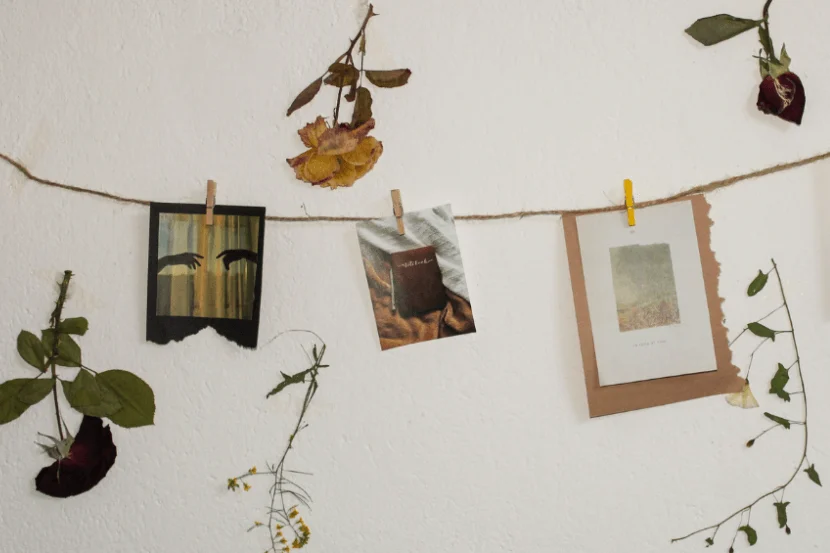
For a more relaxed, accessible, and casual aesthetic, suspending photographs using pegs offers a creative alternative to rigid framing. This method typically involves clipping prints onto wire, natural string, or metal grids, introducing an element of texture and casual charm to a room.
This approach lends itself well to personalization and experimentation. Homeowners can introduce vibrant colours by selecting pegs and hanging cords that complement the surrounding interior design. Furthermore, the display does not need to be limited strictly to photographs. Incorporating alternative elements such as children’s artwork, postcards collected during travels, or handwritten notes helps build a richer, more dynamic narrative of daily life.
The peg-and-string method also serves as an ideal medium for rotating seasonal or thematic collections. Families can curate specific exhibits dedicated entirely to recent travels, festive holiday traditions, or chronological milestones, allowing the display to evolve naturally throughout the year.
3 Make a photo book
While wall displays offer constant visual reminders of cherished times, physical photo books provide a tactile, intimate way to engage with family memories. Compiling digital snapshots into a cohesive, professionally bound album transforms casual digital files into a polished coffee table book that guests can easily browse.
Modern printing services offer extensive customization options, allowing individuals to design custom layouts, integrate meaningful captions, and preserve physical mementos such as event tickets, pressed flowers, or travel postcards directly alongside the imagery. Choosing an appropriate cover design establishes the tone for the book, acting as a preview of the stories contained within its pages.
Additionally, contemporary photo book platforms provide sophisticated editing tools that allow users to enhance image quality before printing. Adjusting lighting, correcting contrast, applying subtle filters, and cropping thoughtfully ensure that every family portrait and candid snapshot is presented in its finest possible clarity.
4 Use shadow boxes
When photographs are accompanied by physical keepsakes—such as seashells gathered from a seaside holiday, theatre ticket stubs, or baby memorabilia—traditional frames often fall short. Shadow boxes offer a three-dimensional solution that combines photographic prints with tangible objects to tell a more complete story.
By layering photographs and physical souvenirs within a deep frame, creators can achieve a striking sense of depth and tactile interest. These displays can be organized around specific themes, uniting a family vacation’s photographs and related tokens within a single, unified enclosure.
To maximize visual impact, designers recommend playing with contrasting colours. For instance, pairing monochrome black-and-white photography with a vibrant, brightly coloured background makes the images immediately draw the eye. Furthermore, integrating subtle lighting, such as miniature LED strings or internal illumination, can accentuate specific elements within the shadow box, creating a captivating focal point in dimly lit hallways or living spaces.
5 Create a photo mural
For a bold, immersive interior design statement, transforming family memories into a full-scale photo mural offers a dramatic artistic option. Whether executed as a single, expansive landscape image or a meticulously arranged collage of dozens of smaller moments, a mural redefines the atmosphere of an entire room.
Monochrome printing remains a timeless choice for murals, offering a classic aesthetic that bridges generations. A well-curated black-and-white wall blending candid snapshots with formal portraits fosters an immediate sense of intimacy, nostalgia, and emotional warmth.
Collage murals, meanwhile, offer a lively, eclectic way to showcase the distinct personalities and eclectic milestones of a growing household. Another popular variation is the generational mural, which traces family lineage by exhibiting photographs of grandparents, parents, and children side by side. This visual chronicle emphasizes continuity, connection, and shared history, grounding the modern home in its ancestral roots.
Bringing Memories to Life with Industry Partners
The realization of these creative interior design projects has been made increasingly accessible through modern printing technology. Industry providers, including Ted’s Cameras, offer specialized printing services designed to transition digital photographs into physical keepsakes.
With a diverse range of professional printing options available—including durable canvas prints, modern metal finishes, and classic framed presentations—homeowners have unprecedented flexibility in how they choose to exhibit their most cherished moments. By leveraging these high-quality, accessible printing services, families can bridge the gap between digital storage and tangible interior design, creating personalized living spaces that honour their shared history and inspire warmth on a daily basis.
No matter what time of year—whether it is the back-to-school rush, the bustling holiday season, or the slower pace of summer vacation—concern for family health remains a top priority for households everywhere. Parents continuously navigate the delicate balance of keeping their children well amidst shifting routines, seasonal changes, and the inevitable circulation of common illnesses. Public health data highlights the sheer scale of this challenge, with the Centers for Disease Control and Prevention estimating between 9.1 million and 51 million cases of the flu in the United States each year, while global estimates reach up to one billion cases. Add to these figures the constant vigilance required around everyday germs and emerging outbreaks, and it is easy to understand why maintaining wellness stays at the forefront of parental concerns.
Understanding the Impact of Daily Habits
The rhythm of household illness is a familiar narrative for many parents. For Jenna, a mother balancing family life and household routines, the reality of recurring sickness became all too clear during a particularly demanding month. Between missed school days, disrupted sleep schedules, and a refrigerator stocked with half-finished soups, she often wondered if more could be done to prevent illness from cycling relentlessly through her home. Standing by a hand sanitizer bottle that family members frequently walked past, and noticing vitamins gathering dust in a cabinet alongside late summer bedtimes, she recognized an opportunity for change.
Rather than searching for drastic fixes or complex medical interventions, Jenna and her husband sat down to discuss small, consistent adjustments. They focused on practical, everyday choices designed to help their household feel more resilient season after season. Their approach reflected a broader understanding shared by pediatricians and public health advocates: sometimes the simplest steps—such as thorough hand washing, consistent bedtimes, and balanced nutrition—provide the foundation families need to thrive.
Addressing these concerns often involves a blend of practical measures and personal reassurance. For many families, grounding daily routines in faith and community provides emotional steadiness amid the unpredictability of seasonal illnesses. Principles of mindfulness and peace offer a helpful framework for managing parental anxiety, allowing households to approach health challenges with practical wisdom rather than worry.
Essential Hygiene and Prevention Practices
At the core of any effective health strategy are fundamental hygiene habits that stop the spread of pathogens before they enter the home. Proper hand washing remains one of the most powerful tools available. Public health guidelines emphasize that effective hand hygiene requires using soap and warm water to vigorously lather for at least twenty seconds before rinsing. For children, timing this process can be aided by familiar tunes like "Happy Birthday" or "Twinkle, Twinkle, Little Star." Crucial moments for hand washing include before and after preparing or eating food, after using the restroom, following contact with animals, and after interacting with anyone who is unwell.
While hand sanitizers serve as a useful alternative when soap and water are unavailable, experts note they do not eliminate all types of germs and cannot replace traditional hand washing. Beyond personal hygiene, sanitizing high-touch surfaces throughout the living environment plays a significant role in reducing exposure. Frequently handled items such as mobile phones, kitchen appliances, bathroom fixtures, and door handles require regular cleaning. Maintaining a routine for laundering clothing, linens, and outerwear worn outside the home further minimizes the persistence of lingering pathogens.
Limiting the transmission of illness also involves modifying social interactions and practicing respiratory etiquette. Children benefit from clear guidance on keeping personal items, food, and drinks separate from peers to prevent the indirect transfer of saliva and germs. Furthermore, teaching children to direct coughs and sneezes into their elbows rather than their hands, immediately disposing of used tissues, and washing hands afterward helps contain respiratory droplets. When illness does strike within a household, minimizing contact, isolating affected individuals to specific areas, and promptly disinfecting shared surfaces help protect other family members.
Nutritional Foundations for Growing Children
Dietary habits play a profound role in supporting immune function and overall development, though nutritional needs vary significantly across different stages of childhood. Recent scientific research increasingly highlights the connection between a healthy digestive tract—often referred to as the gut microbiome—and a robust immune system. Maintaining a balanced diet rich in whole foods, alongside fermented options like yogurt containing probiotics, supports the beneficial bacteria living in the digestive system.
However, a dietary approach suitable for adults may not meet the distinct developmental requirements of infants and young children. A common pitfall occurs when parents generalize their own dietary changes to the entire household without considering the unique metabolic needs of growing bodies. For example, infants and toddlers require calorie-dense nutrition to support rapid physical and neurological growth. During the first year of life, infants typically triple their birth weight and experience significant height increases, necessitating the rich caloric and nutritional profile found in breast milk or appropriate formula.
Pediatric experts emphasize that healthy fats are particularly crucial for young children, serving as essential building blocks for brain development. Beginning around twelve months of age, a child’s nervous system undergoes rapid development marked by the formation of the myelin sheath protecting nerve fibers, a structure composed largely of fat. Consequently, medical organizations like the American Academy of Pediatrics recommend whole milk for toddlers aged twelve to twenty-four months, advising that healthy fats should constitute a substantial portion of their daily caloric intake. Restrictive diets, such as low-fat or plant-based milk alternatives that lack adequate nutrient fortification, can fall short of supplying these critical components unless carefully managed under pediatric supervision.
As children transition into preschool age, their nutritional needs begin to shift toward a more balanced intake of macronutrients, though monitoring ingredient quality remains vital. Nutritionists advise minimizing trans fats and heavily processed hydrogenated oils while ensuring that children receive adequate energy and nutrients from whole food sources. Families can engage children in this process by planning and preparing meals together, fostering a positive relationship with nutritious foods from an early age.
Supporting Immunity Through Lifestyle and Rest
Beyond hygiene and nutrition, daily lifestyle habits exert a powerful influence on a family’s resilience against illness. Staying adequately hydrated is fundamental to physiological health, as water constitutes a major portion of the human body and facilitates the distribution of nutrients while clearing out metabolic waste products. Recommended daily water intake varies by age, weight, and activity level, with growing children and teenagers generally benefiting from six to eight glasses daily, while adult requirements scale according to gender and physical exertion.
Physical activity is another key component of maintaining a healthy immune response. Regular exercise keeps the cardiovascular system active, supporting the body’s natural defense mechanisms against circulating pathogens. Families can incorporate physical activity into their daily routines through shared walks, bike rides, outdoor games, or seasonal sports, making wellness a collaborative and enjoyable experience.
Sufficient sleep is equally critical for both mental and physical well-being. During sleep, the body undergoes essential repair processes, including the production of white blood cells that target harmful bacteria and viruses. Chronic sleep deprivation can compromise immune function and prolong recovery times when illness does occur. Ensuring that children and adults maintain consistent, age-appropriate sleep schedules provides a vital defense against seasonal ailments and supports overall vitality.
By integrating these practical, everyday habits—ranging from diligent hygiene and balanced nutrition to adequate hydration, physical activity, and rest—families can navigate the challenges of seasonal illnesses with confidence. These consistent routines establish a solid foundation for health, allowing households to focus less on worry and more on growing, learning, and thriving together.
The release arrives as Catholic families increasingly seek creative ways to integrate their faith into daily domestic life. Drawing on more than a decade of professional experience working directly with the rhythms of the liturgical year, the creator behind Catholic Icing has curated a resource specifically tailored for home use. Rather than presenting an overwhelmingly dense schedule, the monthly vertical layout is purposefully designed with ample writing space, allowing parents to seamlessly blend church commemorations with their own family schedules and household plans.
One of the standout features of the new publication is its artistic design. Each month showcases hand-painted watercolor flowers that serve a practical function alongside their aesthetic appeal, using coordinating colors to indicate the proper liturgical color for every Sunday of the year. In addition, major feast days and solemnities are clearly marked, while longer liturgical seasons—such as Advent, Christmas, Lent, and Easter—are visually denoted by colored horizontal bars running across the relevant dates. This design choice provides an intuitive way for children and adults alike to track the progression of the Church’s seasons at a glance.
Accessibility and flexibility are central to the distribution of the 2027 calendar, with multiple acquisition options available to suit different preferences and budgets. Families interested in obtaining the calendar have several pathways, ranging from free weekly newsletter subscriptions to instant digital downloads and community memberships.
For those preferring a complimentary option, signing up for the weekly liturgical newsletter allows subscribers to receive the calendar pages on a monthly basis, with each installment arriving approximately one week prior to the start of the corresponding month. The weekly newsletter itself functions as a companion resource, offering contextually relevant materials for the liturgical year, weekly scriptural readings, and additional faith-formation content. Because the newsletter typically goes out on Wednesdays, new subscribers gain immediate access to subscriber-exclusive freebies while awaiting the upcoming weekly delivery to receive their monthly calendar page.
Alternatively, individuals seeking immediate, uninterrupted access to the complete resource can purchase the entire package for a flat fee of $6.00. This instant download provides a single, easy-to-print PDF file containing all fourteen months of the calendar year, alongside three specialized liturgical planning pages. This direct purchase option bypasses the wait for staggered monthly newsletter releases, making it ideal for those who prefer to print and organize their entire year in advance.
Existing members of the Catholic Icing Monthly Membership program receive the calendar pages as part of their ongoing subscription benefits, with monthly pages delivered two at a time alongside a broader suite of printable activity pages, crafts, and home altar materials designed to make liturgical living affordable and straightforward. Organizers note that current members do not need to purchase the standalone $6.00 package unless they specifically desire immediate access to the full year’s worth of pages at once.
The structural design of the calendar is intended to integrate smoothly with existing organizational systems used by Catholic households. Formatted vertically on standard monthly pages, the publication is well-suited for traditional wall mounting or for three-hole punching to be inserted into family binders, such as the "Weaving the Faith" system. Furthermore, its visual style deliberately mirrors the materials distributed through the Catholic Icing Monthly Membership, ensuring a cohesive look for families utilizing multiple resources from the platform.
Beyond the standard monthly layouts, the comprehensive calendar pack includes dedicated bonus planning pages specifically tailored for the seasons of Advent and Lent. These supplementary pages are designed to help parents anticipate and prepare for the unique spiritual demands and celebrations of the Church’s most penitential and joyful preparatory seasons, ensuring that domestic traditions can be planned well in advance.
Aligning strictly with the calendar standards set by the United States Conference of Catholic Bishops (USCCB), the publication ensures that families following the dioceses of the USA will find their celebrations perfectly synchronized with local parish calendars. By combining practical functionality, liturgical accuracy, and artistic charm, the new 2027 liturgical calendar seeks to bridge the gap between the parish liturgy and the domestic church, providing Catholic mothers with a reliable, beautiful companion for the years ahead.
The festive loungewear was mysteriously turning up exclusively in Canadian stores, and now they have been removed entirely, leaving holiday merchandise sleuths and shoppers alike with more questions than answers. Doves, challah bread, Torah scrolls, three-pronged menorahs, and dreidels featuring gibberish Hebrew text have long populated the eclectic marketplace of holiday goods. For Rabbi Yael Buechler, a lower school rabbi, outreach coordinator, and dedicated documentarian of the strange and wonderful world of seasonal Judaica, it felt like she had seen every conceivable design misstep the retail industry could offer.
Earlier this month, however, a new contender entered the arena. Photos began circulating across social media and messaging groups showcasing Old Navy’s newest line of Hanukkah pajamas. At first glance, the print featured the usual suspects traditionally associated with the Festival of Lights: hanukkiyot, dreidels, winter snowflakes, and, somewhat bewilderingly, hamantaschen. The inclusion of those iconic triangular, pastry-pocket cookies—treats traditionally reserved for the spring holiday of Purim—immediately caught the attention of sharp-eyed shoppers.
For Buechler, the discovery sparked an immediate desire to acquire a pair for her collection, noting a personal preference for apricot filling. However, an immediate logistical hurdle presented itself: for weeks, the peculiar sleepwear was mysteriously turning up exclusively on the racks of Canadian Old Navy locations, leaving U.S. shoppers and international collectors wondering how to bridge the geographical divide.
Just as the hunt for cross-border shipping solutions began, the retail plot thickened considerably. According to reports from the field, Canadian stores received urgent corporate directives, including a notice issued as recently as October 21, instructing employees to immediately scrub the pajamas from the sales floor and initiate a complete return shipment. Store personnel were not merely ordered to move the inventory to backroom stockrooms for temporary safekeeping; they were instructed to banish the items from the premises entirely.
Old Navy has not responded to multiple requests for comment regarding the sudden and thorough disappearance of the Hanukkah pajamas. While the retail giant has not officially slapped a formal "recall" label on the incident, retail industry insiders familiar with internal operations note that such dramatic, immediate removals typically stem from significant product defects, manufacturing errors, or unforeseen licensing complications.
Whether misplaced Purim pastries technically qualify as a manufacturing defect remains open to interpretation, though home bakers frequently grapple with their own structural baking defects when batches of hamantaschen burst open in the oven despite aggressive corner-pinching.
Of course, Old Navy is hardly alone in navigating the booming, yet frequently error-prone, industry of Jewish-themed holiday loungewear and apparel. Buechler’s ten-year-old son has even coined a specialized term for these recurring merchandising mishaps, dubbing them "Hanukkahtastrophe" events. The current holiday season has proven to be particularly rich in such design anomalies across multiple major brands.
Caden Lane recently released a line of infant and toddler Hanukkah pajamas sporting jumbled Hebrew lettering, random loaves of challah, and an inexplicable inclusion of a Christmas tree, despite the items not being marketed as multifaith or winter-solstice sleepwear. Meanwhile, Burt’s Bees Baby stamped their seasonal dreidels with a mysterious typographical symbol closely resembling the Hebrew letter chet, a character that famously does not belong on the four-sided spinning top, which traditionally features the letters nun, gimel, hay, and shin in the Diaspora.
Other brands have leaned even further into modern technology blunders. Pixie Lane went rogue with a collection featuring nonsensical, AI-generated characters that bore little resemblance to traditional holiday motifs. Old Navy itself is a repeat offender in the space, having included dreidels featuring backward Hebrew lettering in its 2024 holiday collection.
To be fair, crossover culinary motifs do occasionally appear intentionally in general Jewish kitchenware and lifestyle merchandise. West Elm’s popular line of decorative Jewish food appetizer plates, for instance, successfully combines a black-and-white cookie, pieces of rugelach, a jelly donut, and hamantaschen into a cohesive, artistic plate design celebrating Jewish bakeries. However, a broad, celebratory assortment of cultural baked goods on a serving platter is one thing. Printing traditional Purim pastries onto sleepwear specifically designated for the winter Festival of Lights represents a wholly different recipe for confusion.
Despite the comedic nature of the gaffe, observers have expressed appreciation for the decisive corporate action. As much as Buechler coveted those specific pajamas for her ever-growing archive of seasonal missteps, which currently occupies an entire plastic storage tub in her home, it remains refreshing to see a major retailer pull the plug on flawed merchandise rather than letting it sit indefinitely. Many shoppers have grown accustomed to watching major brands leave completely scrambled Hebrew and nonsensical symbols on retail shelves long after the internet points out their design blunders.
Whether the rogue hamantaschen served as the true catalyst for Old Navy’s swift inventory decision remains a corporate mystery, locked away behind customer service desks and internal memos. Whatever triggered the sudden removal, the prompt action stands out as a minor holiday miracle for observant consumers and design purists alike. Industry watchers remain hopeful that more clothing companies will begin catching these cultural and linguistic gaffes during the early design phases before the products ever hit the display racks.
For the time being, if any shoppers in Canada managed to successfully purchase a pair of the elusive pajamas before they vanished completely into the retail abyss, interest remains high from collectors eager to preserve a piece of modern retail history. As for Buechler, her plans for the unique loungewear remain steadfast: if a pair ever crosses her path, she intends to wear them proudly when the spring holiday of Purim rolls around.
The climate facing Muslim communities across the United States has grown increasingly tense, marked by a systematic rise in Islamophobic rhetoric and policy initiatives driven by politicians and bad-faith actors. For American masjids, this environment presents a profound leadership challenge. Religious institutions find themselves navigating a delicate balance between the understandable desire of some community members to adopt a defensive posture for safety and the call from others to issue strong condemnations against rising bigotry. However, community leaders and civil rights advocates argue that masjids can—and must—chart a third course: leading with calm, actively connecting with neighbors, and opening their doors to the broader public.
This hostile climate is not an isolated phenomenon; rather, it is reflected in institutional and political developments across multiple states. In Texas, the State Board of Education recently approved curriculum lessons that will falsely teach students that the Prophet Muhammad, may Allah send peace and blessings upon him, was "brutal." This educational shift coincides with high-profile political rhetoric, including instances where the name Muhammad has been turned into a rally joke by the nation’s highest office holder. Meanwhile, the vulnerability of even the most prominent Muslim Americans has been highlighted by recent federal actions, such as the reported raid on the home of Representative Ilhan Omar—one of the most visible Muslim women in the country—in what news reports describe as an effort to strip her citizenship and expel her from the United States.
These incidents fit into a broader, coordinated campaign designed to paint Muslims as perpetual foreigners who stand outside the American fabric. Legislative and executive actions across several states underscore this systematic pressure. In Florida, a law enacted in April bars state courts from utilizing "religious or foreign law" while specifically naming Sharia. Similarly, in Texas, Governor Greg Abbott vowed to fully ban Sharia law, while the state’s Attorney General initiated an investigation into a Dallas Islamic mediation group. On the federal level, a congressional bloc known as the Sharia-Free America Caucus has steadily expanded its ranks, now boasting more than 60 members in Congress.
For masjid leadership, this multifaceted pressure requires deep strategic reflection. Imams, board members, and community spokespersons are tasked with formulating responses that protect their congregants while actively countering misinformation. When public figures mock sacred names or policies target Islamic practices, the community looks to its spiritual and administrative centers for guidance. The central dilemma for these leaders is how to address systemic prejudice without playing into the hands of bad-faith actors who seek to provoke reactionary anger.
Effective communication in these moments is critical. Spokespersons and religious leaders are encouraged to ground their public statements in dignity, education, and community solidarity. Rather than responding to mockery with reactive anger, leadership can pivot the conversation toward the human reality of the Muslim community. By emphasizing shared values and the peaceful, everyday lives of ordinary citizens, masjids can reframe the narrative from one of division to one of shared civic life.
Actionable responses from local masjids have increasingly focused on radical hospitality and proactive engagement. Rather than retreating inward, many institutions are finding success by lowering their thresholds and inviting the wider public inside. Open houses, interfaith dialogues, and community service initiatives allow masjids to introduce themselves directly to their neighbors, demystifying Islamic traditions and personalizing a community that is frequently targeted by political caricature. Through these efforts, congregants and neighbors alike can find common ground, building local alliances that serve as a buffer against national hostility.
The sentiment behind this approach is captured in the standard responses being drafted and shared by community centers nationwide. A representative sample statement drafted for masjids facing local fallout from national rhetoric reads:
"[Masjid name] is saddened that the name Muhammad was made into a joke at a public rally. For nearly two billion people, it is the name of a beloved Prophet, may God’s blessings be upon him. Muslim parents in our town give it to their sons with love and hope. We do not answer mockery with anger. We answer it by serving our neighbors and opening our doors. We invite everyone in [city] to our open house on [date] at [time] to meet the people behind the name. We thank the faith leaders and neighbors who have already reached out to us."
As American Muslims continue to navigate these challenges, the local masjid remains a vital anchor. By choosing a path of measured resilience, community outreach, and transparent engagement, these institutions are demonstrating that the best response to division is a steadfast commitment to community.