How Coyote Mentoring is Revolutionizing Nature Camps by Sparking Children’s Curiosity
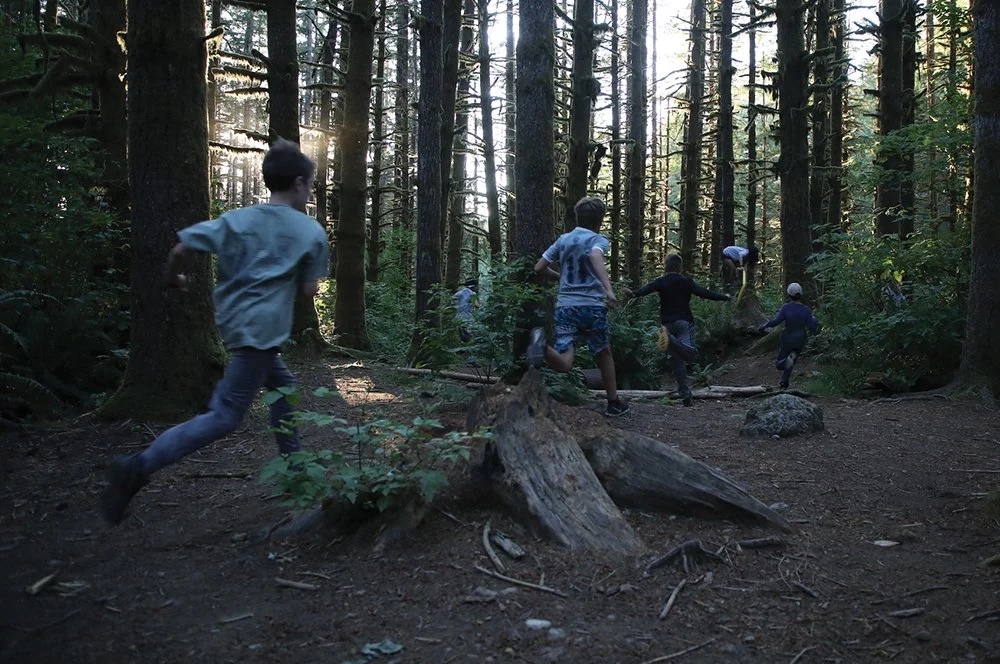
For the vast majority of human history, children developed, learned, and played relying primarily on their own boundless imagination and natural curiosity. Throughout millennia—long before the advent of television, immersive video games, or mass-manufactured plastic toys—children spent the majority of their free time exploring the surrounding woods, fields, and streams. For generations, the great outdoors was quite literally home.
In the modern era, recreating that historical connection to the environment is the driving mission behind specialized educational programs like the Wilderness Awareness School. At a glance, a visitor watching the camp might mistake it for any other traditional summer camp. The curriculum involves a familiar mix of active play, bug-hunting, camp songs, and getting wonderfully muddy. Campers participate in hands-on activities, spend long hours near moving water and towering trees, and gather around crackling fires to roast food. However, upon closer examination, educators and parents discover that something fundamentally different is happening beneath the surface.
Piquing Curiosity Is Key
Instead of relying on rigid lesson plans or traditional classroom instruction, the educational approach at the school revolves around an ancient archetype: the coyote. Curiosity is treated as the primary element of learning, and it is systematically ignited by utilizing a signature teaching technique known as Coyote Mentoring.
Throughout human history, the coyote has appeared in folklore and cultural stories as a master of cleverness—a cunning creature that frequently uses wit and trickery to achieve a desired outcome. In the wild, coyotes live deftly on the edge of the landscape, demonstrating an uncanny ability to navigate both developed areas and deep wilderness habitats with equal ease. Furthermore, the coyote serves as a living embodiment of hyper-awareness, remaining fully tuned into its environment through sharp, acute senses.
Rather than forcing information into the minds of passive students, Coyote Mentoring draws learning directly out of children. This philosophy requires instructors to keep a keen, observant eye on the campers, constantly watching for fleeting moments when something in the environment genuinely catches their attention. These specific instances create the ideal organic learning opportunities. A trained Coyote Mentor notices precisely what is sparking a camper’s natural curiosity and uses that specific observation as a catalyst to engage the children in active learning. This subtle process creates an educational space where mentors can seamlessly pass on profound knowledge without the campers even realizing that instruction is taking place.
Teetering On The Edge
Enlisting the art of skillful questioning is another primary method Coyote Mentors use to stir up organic curiosity in the field. For example, rather than simply lecturing a group of children by stating that a feather discovered on the forest floor belongs to a Barred Owl, a Coyote Mentor engages the group through a thoughtful series of open-ended questions.
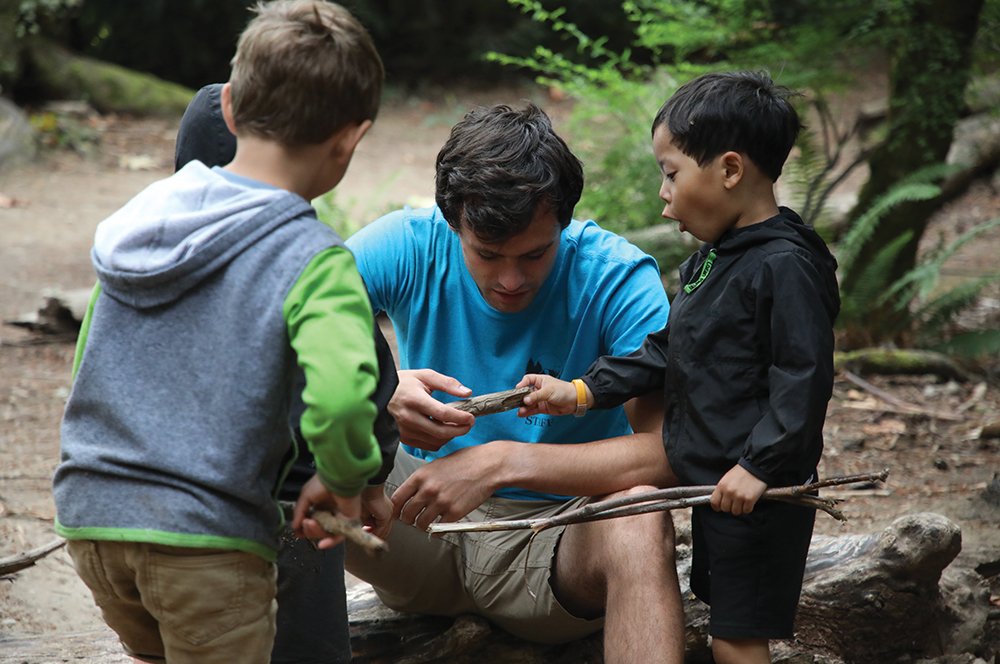
The instructor might ask what colors the children are seeing on the quill, what size bird they believe the feather belonged to, how long it appears the feather has been resting on the ground, or how they think the object arrived there in the first place. Mentors intentionally begin with foundational questions that the campers likely already have the answers to, gradually building up to more challenging intellectual levels until an educational edge has been reached.
Developing an acute awareness of an individual child’s edge is an essential component of the Coyote Mentoring framework. A camper who reaches the edge of their current engagement or emotional capacity may momentarily appear frightened, distracted, or creatively stuck. Instructors pay meticulous attention to the dynamics of the group and masterfully guide a member toward their personal edge, knowing precisely when to pause, take a break, and move on, while simultaneously identifying prime moments for future re-engagement.
Factors such as the time of day, communication styles, individual learning styles, and distinct personality traits are all treated as critical variables when gaining a comprehensive awareness of a student. Rather than forcing a mentor to adopt a rigid, one-size-fits-all teaching style, instructors dynamically cater to each camper’s preferred learning style through careful observation.
Plantings Seeds Engages An Audience
Instructors at the Wilderness Awareness School intentionally avoid operating with a rigid, minute-by-minute agenda for each day. Instead, they may only loosely plan activities for the first portion of the morning, allowing the remainder of the schedule to be organically determined by the natural flow, energy, and interests of the students.
Coyote Mentors typically begin each day with an energetic game designed to break the ice, encourage teamwork, and allow children to burn off excess morning energy. During these games, instructors subtly plant intellectual and imaginative seeds—perhaps casting one camper in the role of an eagle chasing several sparrows, or having children dash around the perimeter of an imaginary mud pit. The mentors watch closely for the exact moment when a few campers begin to tire of the game, acting just before the entire group loses engagement. During this natural lull, when the group’s collective energy dips, the instructors gather the children to rest and listen to a captivating story.
Storytelling serves as yet another powerful opportunity to plant educational seeds. Stories provide a relatable, narrative-driven way to draw out genuine excitement and curiosity. For instance, a mentor might gather the children to tell a tale about a young girl who develops a special relationship with spiders, ultimately learning the art of weaving simply by patiently observing eight-legged creatures in the wild. Inspired by the narrative, the group might then set off on an impromptu trek through the woods specifically to look for spiders, deeply curious to discover firsthand how a spider constructs its web.
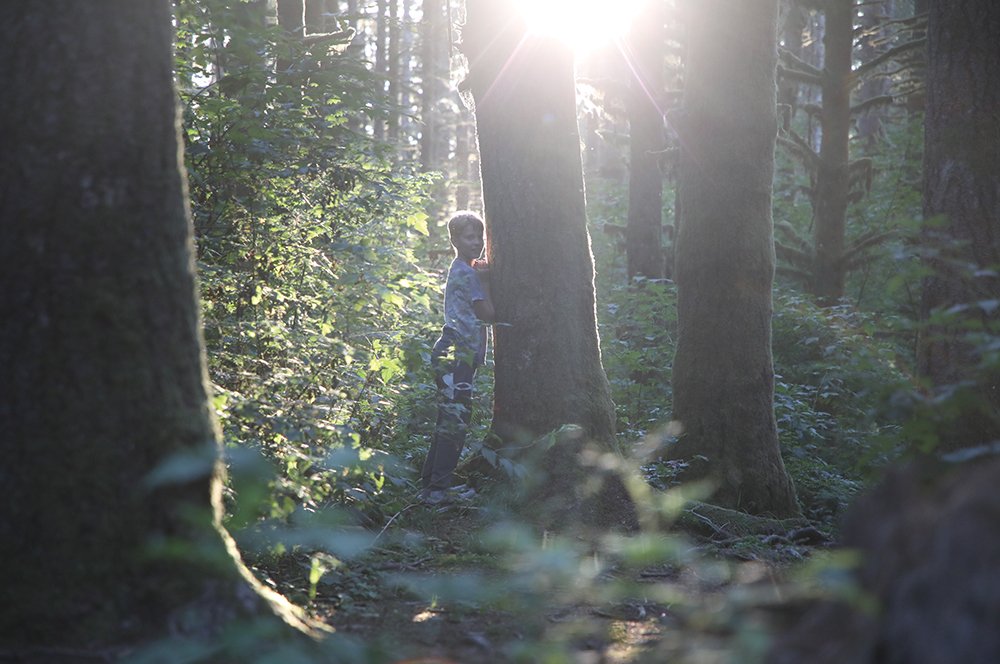
As the group adventures through the landscape, campers step fully into their own personal awareness of the natural world, deciding independently which components of the ecosystem speak to them. The Coyote Mentor observes the entire process, choosing either to ask relevant guiding questions on the spot or to weave these budding curiosities back into the formal curriculum later in the day.
Later, recalling the intellectual seeds planted during the morning hours, mentors can further re-engage the campers by referencing the opening games. Remembering that imaginary mud pit from the morning’s activities, the children are often delighted when their afternoon adventure serendipitously leads them to an actual, physical mud pit. Here, they are free to reenact the morning’s game or simply dive in and get their hands dirty. Through this fluid process, a standard day of summer camp blossoms into a meaningful narrative of its own.
Opportunities To Explore
By skillfully utilizing targeted questioning, immersive storytelling, flow learning, and constant observation, mentors utilize a diverse toolkit designed to foster deep, lasting relationships with the natural world and with one another. By facilitating these foundational connections, the Wilderness Awareness School has observed over decades of operation that its students consistently grow into individuals who are remarkably resilient, compassionate, self-aware, and resourceful.
Although a program like the Wilderness Awareness School might outwardly resemble a simple, traditional nature camp—offering a convenient way for children to get some fresh air and meet new peers during the summer months—the underlying experience is carefully and intentionally curated by skilled educators. These instructors understand their campers, provide them with the physical and mental space to explore independently, orchestrate ongoing opportunities for genuine curiosity, and gently push them toward their personal learning edges. When a camper eventually returns home from camp and surprises their parents by voluntarily leaving a tablet on the coffee table to ask if the family can go for a hike, the work of the mentor is complete.
For those interested in exploring these educational philosophies further, the organization offers various professional training opportunities focused on the art of Coyote Mentoring. Comprehensive manuals and instructional materials are made available for educators and parents, while specialized programs like the annual spring Coyote Mentoring Weekend and the intensive Nature Instructor Training course provide deep dives into the methodology for adults dedicated to transforming how children connect with the outdoors.
