The Quiet Revolution: How Fewer Toys are Transforming Childhood Development and Family Well-Being
By Staff Reporters
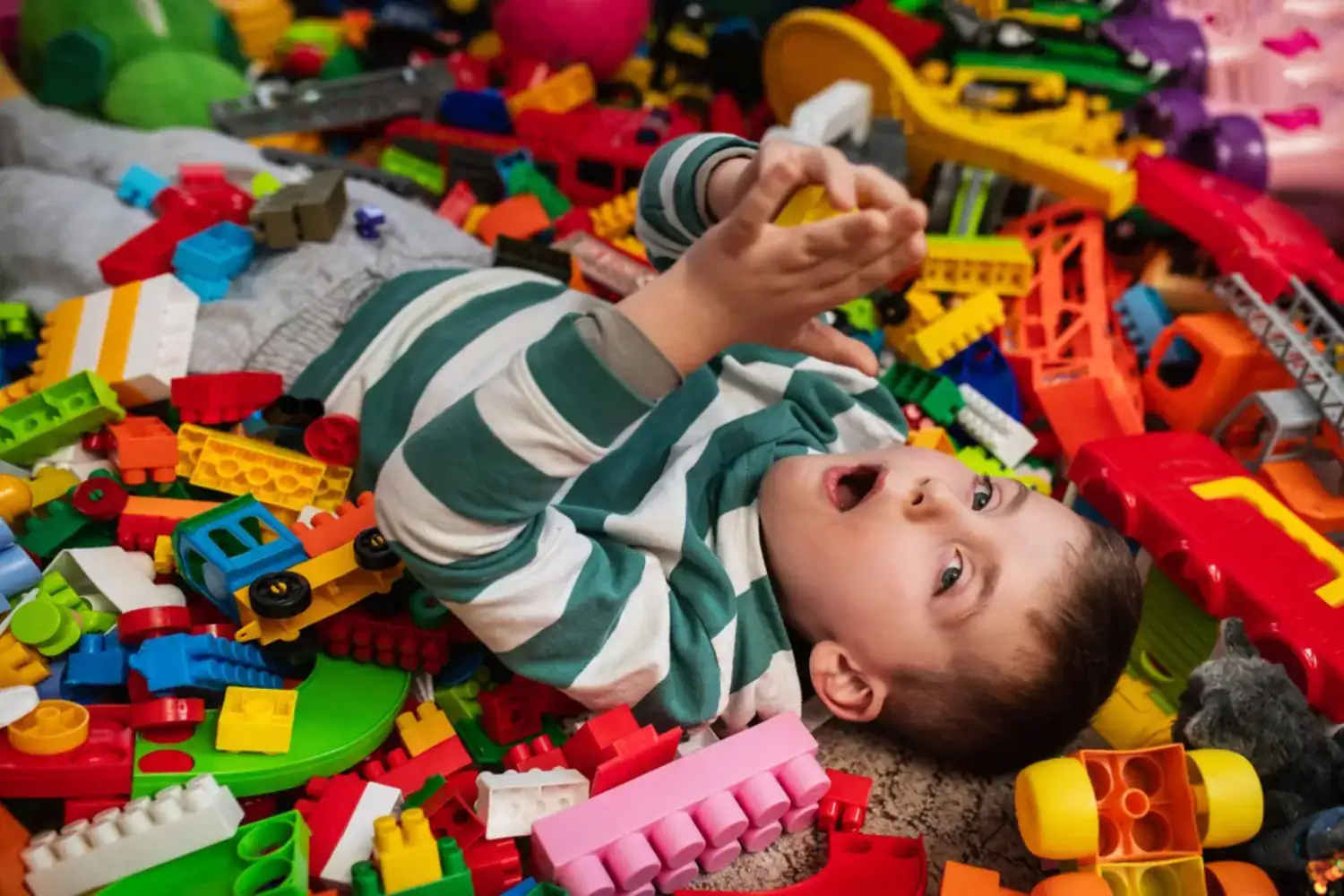
In contemporary households across the United States, a quiet crisis of clutter has taken root, bringing with it unexpected challenges for child development and parental mental health. Recent observations and psychological studies indicate that children’s toys, long considered a fundamental staple of a happy youth, are increasingly acting as a hidden contributor to sensory overload, domestic stress, and chronic distraction. While modern consumer culture continually pushes for more acquisitions, a growing number of families are finding that the most effective remedy to domestic chaos is not better organization or stricter discipline, but a radical reduction in the sheer volume of playthings.
The scale of toy consumption in the United States highlights a stark cultural anomaly. Although American children account for roughly three percent of the global population, they consume approximately 40 percent of the world’s entire toy production. This staggering disparity has normalized an environment of abundance that researchers and parents alike are beginning to question. For many primary caregivers, the daily reality involves navigating oceans of plastic, constantly picking up scattered items, mediating cleanup battles, and stepping over sprawling collections when energy reserves run dry.
This domestic fatigue is increasingly supported by academic research. Studies examining the home environment indicate that excessive belongings can overwhelm a child’s cognitive processing capacity. Rather than stimulating imagination, an overabundance of options frequently leads to fragmented attention spans, heightened stress levels, and a reliance on external stimuli rather than internal creativity. Furthermore, researchers in the field of family dynamics note that the constant state of clutter contributes significantly to the mental exhaustion of primary caregivers, creating an atmosphere of chronic low-grade tension within the home.
The cultural normalization of toy accumulation often leaves families feeling trapped in a cycle of consumerism. Many parents express a desire to scale back, yet struggle to find a reasonable path forward because the societal expectation of what constitutes a normal childhood has become heavily inflated. Requests directed at relatives and friends to limit gift-giving frequently go unheeded, leaving households to manage an unceasing influx of goods.
Examining Global Perspectives on Childhood and Play
Insights into alternative childhood experiences can be found in the documentation of global living standards. Between 2009 and 2010, Italian photographer Gabriele Galimberti traveled to more than 50 countries, capturing portraits of children alongside their most treasured possessions for his acclaimed book, Toy Stories. Expecting to encounter vast differences shaped by economic disparity and cultural background, observers instead noted a striking uniformity in one particular aspect: the modest number of items featured in each photograph. Regardless of socioeconomic status, children around the world frequently derived immense joy from a surprisingly small collection of favorites, demonstrating that a fulfilling childhood is not dependent on material abundance.
This global perspective aligns with historical educational models. In the 1980s, German researchers studying early childhood behavior began examining the link between chronic distraction in youth and the development of addictive patterns later in life. As part of their inquiry, they implemented experimental programs in kindergartens that involved removing standard toys entirely for specific periods. Known informally as anti-addiction curricula, these initiatives demonstrated that children compelled to invent their own activities through social interaction and environmental engagement developed stronger focus, better emotional regulation, and enhanced collaborative skills.
Contemporary researchers expanding on these findings have observed direct correlations between environmental simplicity and behavioral quality. Controlled studies assessing toddler development have noted that children given a smaller selection of items—such as four items rather than sixteen—exhibit longer periods of sustained attention, engage in more complex imaginative play, and demonstrate a greater capacity for independent problem-solving. A single, well-chosen item might offer specific educational benefits, but a room saturated with options consistently fosters distraction and a consumer-oriented mindset.
Implementing the Toy-Reduction Experiment
Motivated by these insights and personal fatigue, a growing number of parents have begun conducting informal experiments within their own households, yielding remarkable results. Families have reported packing away the vast majority of their children’s belongings into temporary storage spaces, such as garages or basements, while allowing youngsters to select a very small number of core favorites to keep in active rotation.
The immediate aftermath of these experiments has frequently been described as transformative. Parents note that children sleep better, engage in prolonged periods of independent play without constantly demanding attention, and display significantly calmer temperaments. Rather than mourning the loss of their possessions, children often exhibit a profound sense of relief, shedding the invisible burden of choice paralysis. Items that encourage open-ended engagement—such as basic building blocks, art supplies, bicycles, books, and simple crafting materials—tend to remain relevant, while heavily branded, single-use plastic novelties and noisy electronic gadgets are rarely missed.
Transitioning away from toy overload requires navigating both domestic habits and external pressures. Experts suggest that framing the reduction as a temporary storage experiment can ease the anxiety of parting with belongings, allowing children to test life with fewer items while retaining the security of knowing they can retrieve a misplaced favorite if necessary. As families continue to reassess the role of material goods in early development, the movement toward intentional simplicity offers a practical pathway to restoring peace, fostering genuine creativity, and supporting the mental well-being of both children and caregivers alike.
