Navigating Rising Islamophobia: How American Mosques Can Lead with Resilience, Openness, and Community Engagement
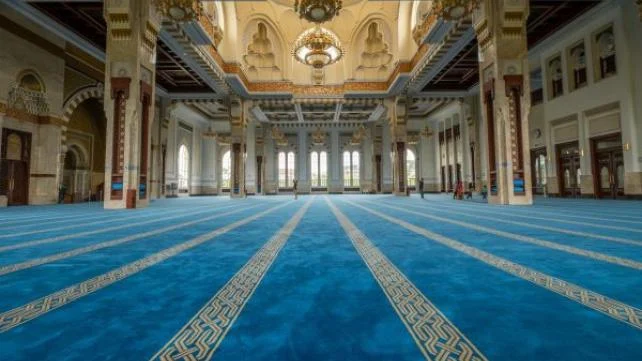
The climate facing Muslim communities across the United States has grown increasingly tense, marked by a systematic rise in Islamophobic rhetoric and policy initiatives driven by politicians and bad-faith actors. For American masjids, this environment presents a profound leadership challenge. Religious institutions find themselves navigating a delicate balance between the understandable desire of some community members to adopt a defensive posture for safety and the call from others to issue strong condemnations against rising bigotry. However, community leaders and civil rights advocates argue that masjids can—and must—chart a third course: leading with calm, actively connecting with neighbors, and opening their doors to the broader public.
This hostile climate is not an isolated phenomenon; rather, it is reflected in institutional and political developments across multiple states. In Texas, the State Board of Education recently approved curriculum lessons that will falsely teach students that the Prophet Muhammad, may Allah send peace and blessings upon him, was "brutal." This educational shift coincides with high-profile political rhetoric, including instances where the name Muhammad has been turned into a rally joke by the nation’s highest office holder. Meanwhile, the vulnerability of even the most prominent Muslim Americans has been highlighted by recent federal actions, such as the reported raid on the home of Representative Ilhan Omar—one of the most visible Muslim women in the country—in what news reports describe as an effort to strip her citizenship and expel her from the United States.
These incidents fit into a broader, coordinated campaign designed to paint Muslims as perpetual foreigners who stand outside the American fabric. Legislative and executive actions across several states underscore this systematic pressure. In Florida, a law enacted in April bars state courts from utilizing "religious or foreign law" while specifically naming Sharia. Similarly, in Texas, Governor Greg Abbott vowed to fully ban Sharia law, while the state’s Attorney General initiated an investigation into a Dallas Islamic mediation group. On the federal level, a congressional bloc known as the Sharia-Free America Caucus has steadily expanded its ranks, now boasting more than 60 members in Congress.
For masjid leadership, this multifaceted pressure requires deep strategic reflection. Imams, board members, and community spokespersons are tasked with formulating responses that protect their congregants while actively countering misinformation. When public figures mock sacred names or policies target Islamic practices, the community looks to its spiritual and administrative centers for guidance. The central dilemma for these leaders is how to address systemic prejudice without playing into the hands of bad-faith actors who seek to provoke reactionary anger.
Effective communication in these moments is critical. Spokespersons and religious leaders are encouraged to ground their public statements in dignity, education, and community solidarity. Rather than responding to mockery with reactive anger, leadership can pivot the conversation toward the human reality of the Muslim community. By emphasizing shared values and the peaceful, everyday lives of ordinary citizens, masjids can reframe the narrative from one of division to one of shared civic life.
Actionable responses from local masjids have increasingly focused on radical hospitality and proactive engagement. Rather than retreating inward, many institutions are finding success by lowering their thresholds and inviting the wider public inside. Open houses, interfaith dialogues, and community service initiatives allow masjids to introduce themselves directly to their neighbors, demystifying Islamic traditions and personalizing a community that is frequently targeted by political caricature. Through these efforts, congregants and neighbors alike can find common ground, building local alliances that serve as a buffer against national hostility.
The sentiment behind this approach is captured in the standard responses being drafted and shared by community centers nationwide. A representative sample statement drafted for masjids facing local fallout from national rhetoric reads:
"[Masjid name] is saddened that the name Muhammad was made into a joke at a public rally. For nearly two billion people, it is the name of a beloved Prophet, may God’s blessings be upon him. Muslim parents in our town give it to their sons with love and hope. We do not answer mockery with anger. We answer it by serving our neighbors and opening our doors. We invite everyone in [city] to our open house on [date] at [time] to meet the people behind the name. We thank the faith leaders and neighbors who have already reached out to us."
As American Muslims continue to navigate these challenges, the local masjid remains a vital anchor. By choosing a path of measured resilience, community outreach, and transparent engagement, these institutions are demonstrating that the best response to division is a steadfast commitment to community.
