Old Navy Pulls Festive Hanukkah Pajamas From Canadian Stores After Bizarre Purim Crossover Gaffe
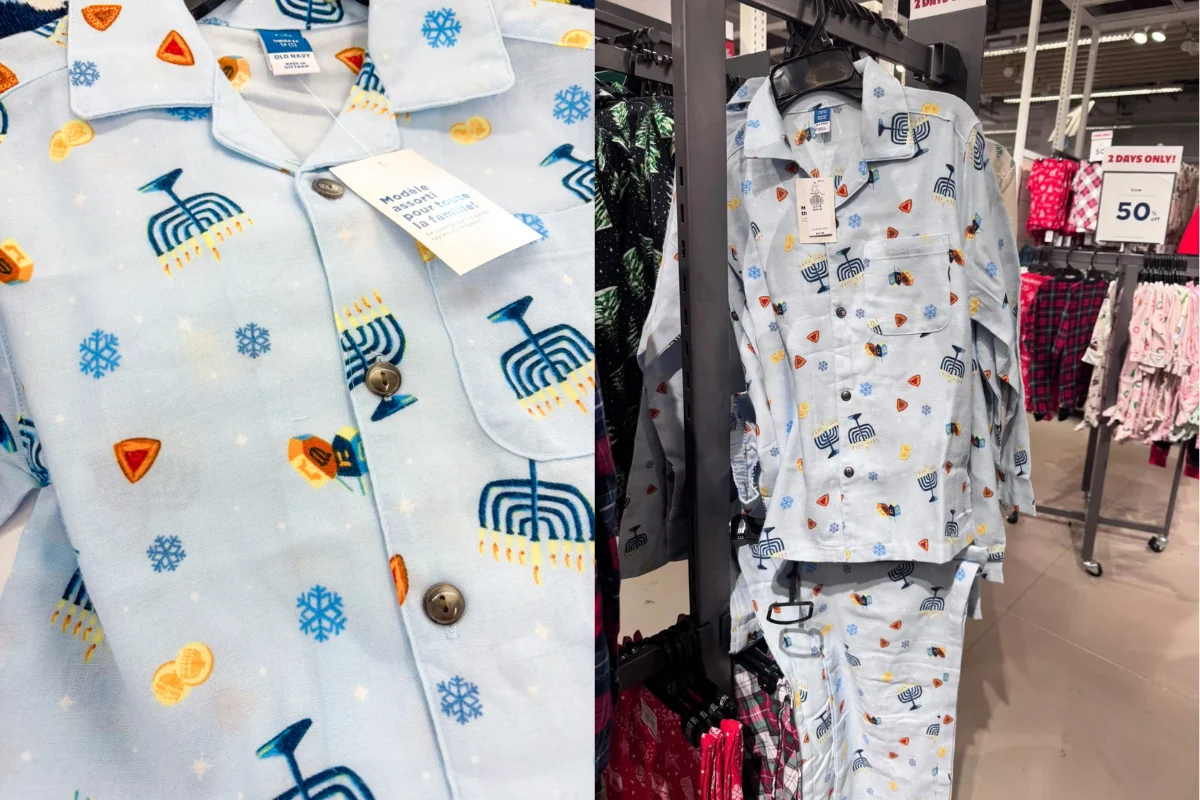
The festive loungewear was mysteriously turning up exclusively in Canadian stores, and now they have been removed entirely, leaving holiday merchandise sleuths and shoppers alike with more questions than answers. Doves, challah bread, Torah scrolls, three-pronged menorahs, and dreidels featuring gibberish Hebrew text have long populated the eclectic marketplace of holiday goods. For Rabbi Yael Buechler, a lower school rabbi, outreach coordinator, and dedicated documentarian of the strange and wonderful world of seasonal Judaica, it felt like she had seen every conceivable design misstep the retail industry could offer.
Earlier this month, however, a new contender entered the arena. Photos began circulating across social media and messaging groups showcasing Old Navy’s newest line of Hanukkah pajamas. At first glance, the print featured the usual suspects traditionally associated with the Festival of Lights: hanukkiyot, dreidels, winter snowflakes, and, somewhat bewilderingly, hamantaschen. The inclusion of those iconic triangular, pastry-pocket cookies—treats traditionally reserved for the spring holiday of Purim—immediately caught the attention of sharp-eyed shoppers.

For Buechler, the discovery sparked an immediate desire to acquire a pair for her collection, noting a personal preference for apricot filling. However, an immediate logistical hurdle presented itself: for weeks, the peculiar sleepwear was mysteriously turning up exclusively on the racks of Canadian Old Navy locations, leaving U.S. shoppers and international collectors wondering how to bridge the geographical divide.
Just as the hunt for cross-border shipping solutions began, the retail plot thickened considerably. According to reports from the field, Canadian stores received urgent corporate directives, including a notice issued as recently as October 21, instructing employees to immediately scrub the pajamas from the sales floor and initiate a complete return shipment. Store personnel were not merely ordered to move the inventory to backroom stockrooms for temporary safekeeping; they were instructed to banish the items from the premises entirely.
Old Navy has not responded to multiple requests for comment regarding the sudden and thorough disappearance of the Hanukkah pajamas. While the retail giant has not officially slapped a formal "recall" label on the incident, retail industry insiders familiar with internal operations note that such dramatic, immediate removals typically stem from significant product defects, manufacturing errors, or unforeseen licensing complications.

Whether misplaced Purim pastries technically qualify as a manufacturing defect remains open to interpretation, though home bakers frequently grapple with their own structural baking defects when batches of hamantaschen burst open in the oven despite aggressive corner-pinching.
Of course, Old Navy is hardly alone in navigating the booming, yet frequently error-prone, industry of Jewish-themed holiday loungewear and apparel. Buechler’s ten-year-old son has even coined a specialized term for these recurring merchandising mishaps, dubbing them "Hanukkahtastrophe" events. The current holiday season has proven to be particularly rich in such design anomalies across multiple major brands.
Caden Lane recently released a line of infant and toddler Hanukkah pajamas sporting jumbled Hebrew lettering, random loaves of challah, and an inexplicable inclusion of a Christmas tree, despite the items not being marketed as multifaith or winter-solstice sleepwear. Meanwhile, Burt’s Bees Baby stamped their seasonal dreidels with a mysterious typographical symbol closely resembling the Hebrew letter chet, a character that famously does not belong on the four-sided spinning top, which traditionally features the letters nun, gimel, hay, and shin in the Diaspora.

Other brands have leaned even further into modern technology blunders. Pixie Lane went rogue with a collection featuring nonsensical, AI-generated characters that bore little resemblance to traditional holiday motifs. Old Navy itself is a repeat offender in the space, having included dreidels featuring backward Hebrew lettering in its 2024 holiday collection.
To be fair, crossover culinary motifs do occasionally appear intentionally in general Jewish kitchenware and lifestyle merchandise. West Elm’s popular line of decorative Jewish food appetizer plates, for instance, successfully combines a black-and-white cookie, pieces of rugelach, a jelly donut, and hamantaschen into a cohesive, artistic plate design celebrating Jewish bakeries. However, a broad, celebratory assortment of cultural baked goods on a serving platter is one thing. Printing traditional Purim pastries onto sleepwear specifically designated for the winter Festival of Lights represents a wholly different recipe for confusion.
Despite the comedic nature of the gaffe, observers have expressed appreciation for the decisive corporate action. As much as Buechler coveted those specific pajamas for her ever-growing archive of seasonal missteps, which currently occupies an entire plastic storage tub in her home, it remains refreshing to see a major retailer pull the plug on flawed merchandise rather than letting it sit indefinitely. Many shoppers have grown accustomed to watching major brands leave completely scrambled Hebrew and nonsensical symbols on retail shelves long after the internet points out their design blunders.

Whether the rogue hamantaschen served as the true catalyst for Old Navy’s swift inventory decision remains a corporate mystery, locked away behind customer service desks and internal memos. Whatever triggered the sudden removal, the prompt action stands out as a minor holiday miracle for observant consumers and design purists alike. Industry watchers remain hopeful that more clothing companies will begin catching these cultural and linguistic gaffes during the early design phases before the products ever hit the display racks.
For the time being, if any shoppers in Canada managed to successfully purchase a pair of the elusive pajamas before they vanished completely into the retail abyss, interest remains high from collectors eager to preserve a piece of modern retail history. As for Buechler, her plans for the unique loungewear remain steadfast: if a pair ever crosses her path, she intends to wear them proudly when the spring holiday of Purim rolls around.
