In the demanding world of modern parenting, many adults find themselves confronting the ghosts of their own childhoods. For a mother writing to renowned parenting expert and author Janet Lansbury, the struggle to break negative generational patterns has become a daily emotional battle. Describing her own upbringing as marked by guilt trips, the silent treatment, physical punishment, and what she defines as psychological abuse, the mother expressed deep anxiety over whether she is inadvertently repeating these damaging cycles with her own young daughters, aged five-and-a-half and three-and-a-half.
Addressing this poignant dilemma on her podcast, Lansbury explored the complex layers of parental anxiety, the nature of boundary-setting, and why breaking free from the conditioning of an authoritarian upbringing is ultimately about cultivating internal confidence rather than achieving unattainable perfection.
The concerned mother reached out with a heavy heart, detailing her ongoing efforts to adopt gentle, respectful parenting techniques inspired by Lansbury’s book No Bad Kids and Adele Faber and Elaine Mazlish’s philosophies. Despite reading extensively and starting with strong intentions regarding screen time and nutrition, she confessed that her home life frequently descends into a cycle of frustration. She described how her quick, reactive responses of yelling, lecturing, and using harsh tones—behaviors she directly learned from her own mother—take over when her children test limits.
The situation was further compounded by early childcare arrangements. When she returned to work after having her children, her mother-in-law provided full-time, free childcare but routinely disregarded the parents’ wishes regarding television and digital devices. Her husband, while described as a fantastic father, frequently countered her efforts and criticized her tone and methods, mounting the daily tension upon his return home. Caught between her instinct to reason endlessly with her intelligent children and her internalized perfectionism, the mother questioned whether the damage was already done and whether it was simply too late to change.
Lansbury opened her response by offering immediate reassurance, emphasizing unequivocally that it is never too late to reshape a relationship with young children. Relationships, she noted, are perpetually in motion, and a parent’s dynamic with a five-year-old and a three-year-old can grow, change, and significantly improve over time. While acknowledging that the mother’s deep-seated trauma and marital friction warrant professional support from a qualified therapist, Lansbury stressed that overcoming these barriers is entirely within reach, provided the mother can first learn to extend kindness and patience toward herself.
At the core of the issue, according to Lansbury, is a fundamental discomfort with asserting boundaries—a discomfort that frequently stems from childhood conditioning. Individuals who grow up in high-control or emotionally abusive environments often internalize the message that their own needs do not matter, and that demanding respect or setting limits risks severe rejection. To cope with a lack of unconditional acceptance, many develop perfectionism and chronic anxiety, adhering to rigid internal checklists of duties and behaviors in a desperate bid to feel acceptable. However, this perfectionism never satisfies the underlying emotional deficit, leaving parents exhausted and perpetually on edge.
Lansbury explained that setting a boundary is not about negotiation, persuasion, or securing a child’s agreement. True boundary-setting requires a parent to stand firm in what they believe is best for the family, accepting that children have every right to feel upset, disappointed, or angry about those limits. When parents are stuck in a defensive posture—relying on endless reasoning, lecturing, or shouting—children pick up on the underlying insecurity. They sense that the parent is uncomfortable with their own authority and is secretly seeking validation or permission from the child.
This dynamic is particularly pronounced when dealing with addictive or high-impulse elements like screen time. Lansbury pointed out that attempting to manage devices through intermittent rules or constant negotiation creates a psychological burden for young children, who are never truly able to rest in the certainty of a boundary. Instead, she advocates for clear, decisive action: laying out a plan ahead of time, communicating the decision with absolute calm and confidence, and providing children with the space to vent their frustrations without the parent matching their anger or retreating into guilt. When parents hold the line with a calm, centered presence rather than defensiveness, children eventually experience a profound sense of relief, realizing they no longer have to carry the burden of controlling their environment.
Lansbury also addressed the broader contextual challenges mentioned in the mother’s letter, including past compromises with extended family and the ongoing friction with her partner. While noting that she does not offer marital counseling, Lansbury suggested that asserting healthy boundaries applies to adult relationships just as much as to parenting. Standing up to criticism with calm, respectful self-assurance not only protects one’s own emotional well-being but also serves as a powerful behavioral model for observing children, demonstrating that nobody has the right to speak to another person with disrespect.
Ultimately, Lansbury encouraged the mother to step away from the paralyzing trap of perfectionism. The journey toward becoming a more conscious, grounded parent does not require flawless execution or an absence of human emotion. Instead, it begins with the radical realization that every parent deserves to occupy space, assert their values, and lead with clarity. By recognizing that she is worthy of boundaries, this mother—and others facing similar upbringings—can begin to heal, transforming the emotional legacy they pass down to the next generation.
Long before the advent of silicon chips, digital screens, or generative algorithms, the ancient Greek philosopher Plato sounded an early warning about the unintended consequences of educational technology. In his work Phaedrus, Socrates cautioned that the invention of writing might weaken human memory and foster the illusion of wisdom without true understanding. Plato was not rejecting the written word outright; rather, he was interrogating how a revolutionary tool could fundamentally reshape human cognition when it begins to supplant dialogue, genuine relationships, and lived experience.
Today, artificial intelligence presents a strikingly similar flashpoint for modern educators, forcing a profound reckoning across global school systems. The technology compels society to ask not simply whether or how new digital instruments should be integrated into curricula, but whether the very purpose of education needs to change in an increasingly algorithmic world. As students grow up surrounded by automated systems, educational leaders, researchers, and child development experts are grappling with a critical challenge: how to reorient schooling toward a future where human beings can still create independently, think deeply, persist through difficulty, find enduring meaning, and thrive within a complex society.
The Impacts of AI on Critical Thinking, Engagement, and Motivation
As school districts race to adopt emerging technologies, the psychological and cognitive ramifications are coming under intense scrutiny. When MIT researchers recently surveyed school leaders regarding their perspectives on artificial intelligence in education, cognitive offloading emerged as the primary fear among educators. This apprehension is far from unfounded, as a growing body of research among adult populations already demonstrates a pronounced human propensity to surrender critical thinking tasks to algorithmic systems when given the opportunity.
A study presented at the ACM CHI Conference on Human Factors in Computing Systems explored this phenomenon directly, finding that while generative artificial intelligence significantly improved efficiency in knowledge-based work, it simultaneously reduced critical engagement and fostered long-term user dependence. As participant confidence in artificial intelligence performance rose, human effort shifted away from deep problem-solving toward superficial verification and integration, thereby weakening independent reasoning skills over time.
A separate study conducted at a prominent business school in Switzerland yielded similarly sobering results, though with an important caveat regarding human guidance. Researchers observed participants preparing to answer interview questions with the assistance of artificial intelligence, divided into groups with and without structured support. Unguided users engaged in heavy cognitive offloading without showing any improvement in the quality of their reasoning. Conversely, participants who received structured prompting assistance significantly enhanced both their critical reasoning and reflective engagement. For educators, these findings speak directly to ongoing concerns about artificial intelligence’s long-term impact on learning if students and teachers are left to navigate these tools without proper training, pedagogical guardrails, and intentional oversight.
Furthermore, artificial intelligence possesses the capacity to make tasks so frictionless for users that it triggers an almost immediate negative effect on internal drive and motivation. A study published in Nature found that collaboration with artificial intelligence enhanced immediate task performance, but directly precipitated a decline in intrinsic motivation and a marked increase in boredom. This dynamic underscores a difficult trade-off between short-term productivity gains and long-term human engagement, casting serious doubt on the wisdom of embedding these tools prematurely into the daily routines of young learners.
The Importance of Preserving Offline Learning
To better understand how technological assistance alters cognitive processing, MIT researchers conducted experiments where subjects were asked to write several SAT essays using either OpenAI’s ChatGPT, Google’s search engine, or no technological assistance at all. The resulting electroencephalogram (EEG) data reinforced the growing scientific consensus that students learn best without technological interference, and particularly without the crutch of artificial intelligence. Mastering foundational writing skills entirely offline increases neural connectivity and helps individuals internalize language, reading comprehension, and the structural nuances of written communication. In turn, this rigorous offline foundation helps preserve fluency and comprehension, ensuring that when students eventually interact with artificial intelligence tools later in life, they do so from a position of authority as editors and authors, rather than as passive prompt recipients.
Engaging learners in the offline world remains the cornerstone of preserving natural curiosity and self-sustaining internal motivation. Resilience and willpower are human traits best cultivated through what educators call productive struggle. For younger children, practical arts applications such as learning to play the violin, engaging in woodworking, or taking up knitting shine brightly as vital exercises in this endeavor. These moments of hands-on, tactile difficulty build perseverance, frustration tolerance, and an embodied understanding of the world in a way that is deeply engaging and fundamentally joyful. In an increasingly automated world where digital friction is systematically removed, the human capacity to stay with difficulty and work through a problem becomes an invaluable advantage.
A Sense of Identity and Human Relationships at the Heart of Schooling
Before children are ever granted access to sophisticated artificial intelligence platforms, discernment is a critical skill that must be carefully developed. A warning issued by UNICEF highlights the hidden psychological dangers of these interactions: the persuasiveness of modern artificial intelligence systems, combined with sophisticated personality engineering tailored to exploit the human desire for praise and validation, means that a child’s beliefs, behaviors, and even their foundational sense of identity risk being shaped by algorithms during a sensitive and formative developmental window. Malicious use or unmonitored exposure could render children uniquely vulnerable to manipulation, online exploitation, and abuse, ultimately undermining their personal agency, freedom of thought, and independent psychological development.
These concerns intensify exponentially when artificial intelligence is placed at the center of learning environments for young children. The American Academy of Child and Adolescent Psychiatry, in its comprehensive guide addressing whether artificial intelligence is dangerous for children, highlights a host of alarming risks. These include hazardous overattachment to conversational chatbots, a measurable reduction in real-world social relationships, data privacy vulnerabilities, exposure to convincing deepfakes, and the gradual erosion of hands-on, creative, and critical learning experiences.
At the core of this debate lies the irreplaceable value of genuine human relationships. Human connection must remain at the beating heart of formal education. Numerous academic studies consistently demonstrate that the relational bond between teacher and student, student and peer, and student and community acts as the prime vehicle for teaching empathy, social responsibility, and civic awareness, while simultaneously boosting overall academic outcomes. These are not merely human abilities that no machine can ever truly replicate; they are the fundamental capacities required for a grounded, meaningful, and emotionally healthy life.
Ultimately, if society wishes to properly prepare children for an increasingly AI-enhanced world, education’s most urgent and pressing task is not to accelerate cognition or outsource difficult thinking to servers, but to anchor children securely in deep contemplation, authentic relationships, and rich lived experiences. Only from this robust human foundation can artificial intelligence be made to serve human development, rather than quietly reshaping what it means to be human.
In communities across the country, outreach initiatives often seek to bridge divides and offer support to marginalized populations. Among the most impactful of these efforts is a specialized program managed by Guide for Spiritual Living: Science of Mind magazine, which provides complimentary subscriptions to incarcerated individuals and correctional facility study groups. This enduring ministry relies entirely on the generosity of donors to fulfill a mission centered on personal transformation, rehabilitation, and spiritual growth behind prison walls.
For $48.95, supporters can sponsor a full one-year subscription for an incarcerated person who has formally requested the publication. This modest financial contribution directly funds the delivery of content designed to encourage the practical application of spiritual principles and practices, serving as a resource for individuals seeking to alter the course of their lives during and after confinement.
Make a Difference in the Life of an Incarcerated Person
The philosophy driving this outreach effort is rooted in the belief that systemic change begins at the individual level. Organizers emphasize that true rehabilitation involves addressing the mental and spiritual dimensions of human behavior. By offering literature that promotes mindfulness, personal accountability, and emotional resilience, the publication aims to help disrupt the cyclical nature of crime and incarceration.
Correctional facilities often present environments of intense stress, isolation, and uncertainty. For individuals striving to better themselves despite these challenging conditions, access to consistent, positive reading material can serve as a vital anchor. The magazine’s teachings encourage readers to examine their thoughts, rebuild their self-worth, and adopt constructive approaches to conflict resolution and daily living. This principled and transformative process is designed to support not only individual readers but also collective study groups meeting within correctional centers, fostering environments of shared learning and mutual encouragement.
Donate here: Give a one-year subscription to Science of Mind magazine
Participating in this ministry is structured to be straightforward for contributors. When individuals make a donation through the designated campaign page, the organization coordinates the placement of the subscription, directing the material to an incarcerated person from a waiting list of individuals who have explicitly requested the publication.
To ensure that gifts can be personalized when desired, the organization accommodates direct requests from donors. Those who wish to share this subscription with a specific family member, friend, or acquaintance currently serving time in a correctional facility can do so by contacting [email protected] to coordinate the details of the delivery. This flexibility allows the outreach effort to serve both broader institutional needs and personal connections.
Your gift of $48.95 makes this powerful ministry possible. Thank you.
The impact of these donated subscriptions extends far beyond the printed page, resonating deeply within the daily realities of the individuals who receive them. Readers frequently share accounts of how the material arrives during critical moments of personal crisis, offering perspective and comfort when it is needed most.
Reflecting on the role the publication played during a particularly difficult period in his life, a reader named Jonathon shared his personal experience.
“Science of Mind magazine was ordered from a friend of my father’s for me after my father passed away,” Jonathon noted. “I’ve gone through so many battles while here in prison, but this little magazine has always shown up just in time and helped bring my spirits along with my focus back to where it should be. I want to say ‘thank you’ to all.”
Stories like Jonathon’s highlight the tangible human element behind the statistics and fundraising goals of the outreach program. As the magazine continues its long-standing tradition of prison ministry, organizers emphasize that every contribution helps maintain a lifeline of hope, education, and spiritual guidance for those navigating the complexities of the correctional system.
For many families educating their children at home, the high school years represent a deeply personal journey of shared essays, roundtable discussions, and rigorous academic milestones. Yet, as graduation approaches, this domestic scholarship must be translated into a format recognized by the wider world. A homeschool transcript serves as this vital bridge—a concise, one-page official record detailing a student’s high school courses, grades, credits, and grade point average (GPA).
Creating a document that colleges, trade schools, and employers will take seriously is a process that many homeschool parents approach with understandable anxiety. However, education advocates and organizations are increasingly providing specialized tools to streamline the task. Kyleen Bontrager, a homeschool parent and writer for Classical Conversations, notes that a student’s years of dedicated work deserve a faithful and professional record.
The primary challenge for educators working outside traditional brick-and-mortar institutions is transforming four years of individualized learning into a standardized profile. A well-built homeschool transcript must accurately portray the courses, achievements, and extracurricular activities a student has accomplished without losing the nuance of their unique educational background.
Fortunately, modern administrative resources have reduced the need to build such documents from scratch. Members of organizations like Classical Conversations, for example, have access to dedicated digital platforms such as the CC Connected Transcript tool. These systems are designed to organize coursework, record grades, and automatically calculate cumulative GPAs, mitigating much of the administrative burden traditionally associated with homeschooling through high school.
The foundation of an effective transcript begins long before graduation, ideally with a comprehensive high school plan established before the student enters their freshman year. Educational advisors recommend sitting down with incoming ninth graders to discuss long-term goals and post-graduation aspirations, whether those involve four-year universities, technical academies, the military, or direct entry into the workforce. Involving students in this visionary process allows families to align daily coursework and extracurricular commitments with future objectives while evaluating where time is spent.
As students progress through their secondary education, tracking academic performance requires a consistent grading methodology. Families generally choose between letter grades and numerical percentages. Some educators emphasize mastery-based learning, utilizing letter marks such as A, B, and C based on completed work and demonstrated understanding. Others prefer precise percentage breakdowns.
For advanced students participating in concurrent enrollment programs, academic records may also intersect with official college credit. Through partnerships with institutions like Southeastern University, high school students completing upper-level curricula can earn both high school credits and college transcript entries evaluated by university assessors.
Calculating the cumulative GPA requires a standard mathematical approach. Families typically rely on an unweighted 4.0 scale, multiplying each course’s assigned grade points by its credit value, summing the totals, and dividing by the aggregate number of credits earned. Standard grading scales generally equate an A with 90 to 100 percent (4.0 grade points), a B with 80 to 89 percent (3.0 points), a C with 70 to 79 percent (2.0 points), a D with 60 to 69 percent (1.0 point), and failing grades below 60 percent yielding no points.
Rather than attempting to compile four years of academic history at the last minute, education experts advise updating records at the conclusion of each semester or academic year. Utilizing standardized templates or automated transcript generators ensures that course titles, final grades, and credit hours are preserved accurately over time. Automated tools often feature drop-down menus for specific curricula, simplifying the inclusion of electives and extracurricular activities.
Once a student reaches the final semester of twelfth grade, these accumulated annual records are synthesized into a single master high school transcript. When official delivery is required for college admissions, digital partnership services—such as Parchment—allow families to securely transmit verified transcripts directly to higher education institutions.
Alongside the transcript, the homeschool diploma remains a traditional milestone. As the primary educational administrator, the parent or supervising educator formally issues the diploma once state graduation requirements have been fulfilled. Many families also choose to participate in collective commencement ceremonies, such as the national graduation events hosted annually for independent learners.
Questions regarding how higher education institutions evaluate homeschool documentation are common among parents. Admissions offices routinely review homeschool transcripts, frequently supplementing them with standardized test scores, detailed course descriptions, and reading lists to gain a comprehensive understanding of an applicant’s academic background. Furthermore, universities often actively seek out homeschool graduates, valuing their independent study skills and self-motivation.
Beyond university admissions, a professionally prepared transcript remains essential for young adults pursuing vocational training, military service, or entry-level employment. By condensing years of reading, writing, reasoning, and academic inquiry into a single standardized page, families provide their students with a reliable credential designed to open doors to their future endeavors.
It is Christmas morning, and the world outside often carries a distinct, hushed stillness. For millions of people, the street is quiet, the phone remains silent without a flurry of holiday plans, and an entirely open day stretches ahead without a fixed schedule or obligations to fulfill. For some, this reality brings a profound sense of relief; for others, it carries a heavy ache. Frequently, it is a complex mixture of both emotions within the very same hour.
Whether spending the holiday solo stems from being single, living far from family, experiencing estrangement, working through the holiday shift, carrying grief, or simply lacking the emotional energy to participate in traditional festivities, finding oneself alone on December 25 is increasingly common. Modern demographic shifts show that more individuals live alone today than ever before, and a significant segment of the population actively prefers a quiet, low-pressure holiday.
Yet, mental health professionals and researchers emphasize that physical solitude and feelings of loneliness are entirely distinct experiences. Solitude is a situational circumstance defined by the physical absence of others around you. Loneliness, conversely, is an internal feeling of disconnection—a psychological state that can manifest just as easily at a crowded, festive holiday table as it can in an entirely empty house.
Understanding what transforms time alone from a source of distress into a positive, restorative experience often hinges on autonomy. Research exploring daily moments and emotional well-being indicates that periods of solitude tend to evoke significantly more positive feelings when individuals choose them for themselves. For those who did not consciously choose to spend Christmas alone, acknowledging the initial sting of that realization is an important part of processing the day, even while recognizing that how the remainder of the holiday unfolds still remains within one’s personal control.
Embracing Solitude: Staying In and Slowing Down
For those who choose to remain at home, the day offers a rare opportunity to curate an environment focused entirely on personal comfort and self-directed pacing, free from the social expectations that often accompany family gatherings.
Mornings can begin with quiet reflection, such as gentle meditation or journaling. Grounding practices—focusing on the breath, noticing physical sensations, and allowing thoughts about the holiday landscape to drift past without judgment—can help set a centered tone for the day. Journaling provides a parallel outlet for checking in with one’s emotional state, offering a private space to articulate feelings without the pressure of performing happiness for others.
Mealtimes similarly offer a chance to break away from obligatory holiday menus. Traditional spreads featuring roasted turkey and elaborate trimmings can easily be bypassed in favor of culinary choices driven purely by personal preference. Whether that means preparing a modest roast for one, indulging in breakfast foods at noon, or ordering favorite takeout, selecting food that genuinely excites the palate can elevate an ordinary meal into a meaningful, comforting treat.
Beyond meals, solitary pursuits like baking, drawing, knitting, or engaging in hands-on creative projects provide a soothing rhythm to the day. Keeping the hands occupied can instill a sense of purpose and calm. Similarly, an uninterrupted day provides an ideal setting for long-form reading, whether sinking into a novel or listening to an audiobook while resting on the couch, entirely free from the interruptions that define busier times of the year.
Venturing Out: Engaging with the Wider World
For individuals who prefer a change of scenery or wish to interact with the world outside their front door, Christmas Day offers various pathways for solo outings and community engagement, though holiday scheduling requires advance planning as operating hours frequently shift.
Green spaces and public parks offer a quiet refuge for those seeking physical movement paired with mental restoration. Spending time in nature has long been associated with a reduction in mental fatigue and rumination—the repetitive, negative thought loops that often exacerbate low moods during high-stress seasons. Studies examining the psychological impacts of nature walks indicate that individuals who spend extended time outdoors in natural settings report noticeably lower levels of rumination compared to those walking through urban, traffic-heavy environments.
For those seeking interpersonal connection, volunteering offers a structured and deeply rewarding way to spend part of the holiday. Local soup kitchens, homeless shelters, and animal rescue organizations frequently rely on additional assistance on Christmas Day. Engaging in volunteer work connects individuals with others who share an immediate, altruistic purpose, while broader psychological research suggests that performing acts of kindness and contribution can measurably enhance personal well-being.
Community centers and local organizations frequently host open holiday meals, providing a low-pressure environment to share space with others, even if only for a brief period. Additionally, public spaces such as select movie theaters, hotel lounges, and neighborhood cafes often maintain holiday hours, allowing individuals to experience the subtle, comforting presence of a shared community, even among strangers. For those desiring a more substantial change of pace, a solo day trip to a nearby town, a novel hiking trail, or a cultural landmark can transform the holiday into a deliberate, memorable occasion.
Navigating Difficult Emotions and Cultivating Connection
Even when solitude is anticipated or welcomed, the cultural weight of Christmas can occasionally unearth complex feelings, including sadness, envy, or grief. Navigating these emotions effectively often requires intentional strategies and self-compassion.
The polished, idealized portrayals of family gatherings shared across social media platforms during the holidays can easily foster a sense of missing out or inadequacy. Stepping away from digital devices for a few hours can provide immediate relief from the pressures of comparison, reminding individuals that online posts represent curated highlight reels rather than complete, unfiltered realities.
When feelings of sadness or exclusion linger, practicing self-compassion—treating oneself with the same warmth and understanding one would readily offer a struggling friend—has been shown in psychological research to correlate with lower levels of anxiety, depression, and stress. Acknowledging the difficulty of the moment without harsh self-judgment allows individuals to process their emotions naturally rather than forcing artificial cheer.
For those grieving the loss of a loved one, the holiday season can feel acutely tender. Honoring that memory through quiet, personal rituals—such as preparing a dish that person loved, lighting a candle, or writing a reflective letter—can provide a healthy outlet for sorrow. Because grief follows no fixed timeline or correct procedure, allowing the day to remain as quiet or as expressive as necessary honors the reality of loss.
Similarly, individuals navigating complex or strained family dynamics may find peace in establishing firm boundaries. Choosing to maintain distance, declining phone calls or text threads, and opting out of holiday group chats are all valid forms of self-care. When faced with casual inquiries about holiday plans from acquaintances, maintaining a simple, neutral response allows individuals to protect their emotional well-being without feeling obligated to over-explain their choices.
For those whose distress extends past the holiday, or whose feelings of sadness begin to disrupt sleep, appetite, or daily functioning, seeking professional support remains an essential resource. Crisis services, including dedicated mental health lifelines, operate continuously to provide accessible, confidential support for anyone navigating overwhelming emotional distress during the holiday season and beyond.
Ultimately, whether December 25 is treated as a profound opportunity for quiet rest, a chance to engage with the wider community, or simply another day on the calendar, individuals retain the right to define the holiday on their own terms, free from external expectations and rooted in personal well-being.
While Philadelphia is universally celebrated as the birthplace of American democracy, it holds another profound historical distinction that shaped the foundation of the United States: it is the birthplace of American religious freedom. Long before the framing of the Constitution, the region became a sanctuary for diverse beliefs, serving as a living laboratory where people of different faiths could forge a common civic identity.
Founded by the Quaker leader William Penn between the late 17th and early 18th centuries, the Pennsylvania colony offered a level of religious latitude that was virtually unprecedented in other colonial locales. Penn’s foundational charter made radical promises for its time, guaranteeing that all residents who acknowledged God and lived peaceably with their neighbors would be free from persecution based on their religious persuasions. Crucially, they would not be mandated to attend or support any specific form of religious worship.
This policy of tolerance naturally drew a population with a remarkably wide spectrum of religious commitments. Although this early experiment in religious freedom was often experienced unevenly in practice, Penn’s vision—frequently referred to as his "holy experiment"—emerged as a powerful precedent. It offered a living example to the nation’s future founders and framers that a society could successfully unite individuals with diverse faith commitments under a shared civic umbrella.
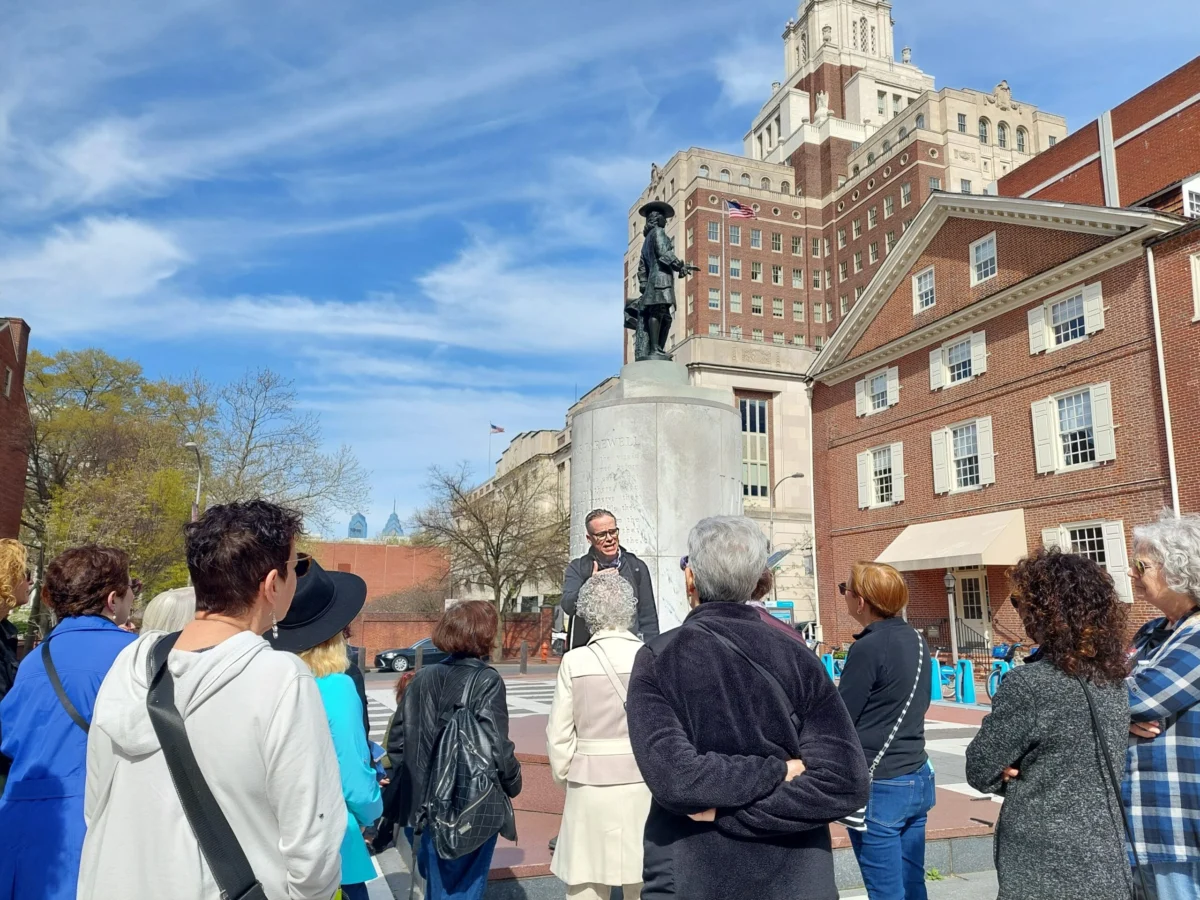
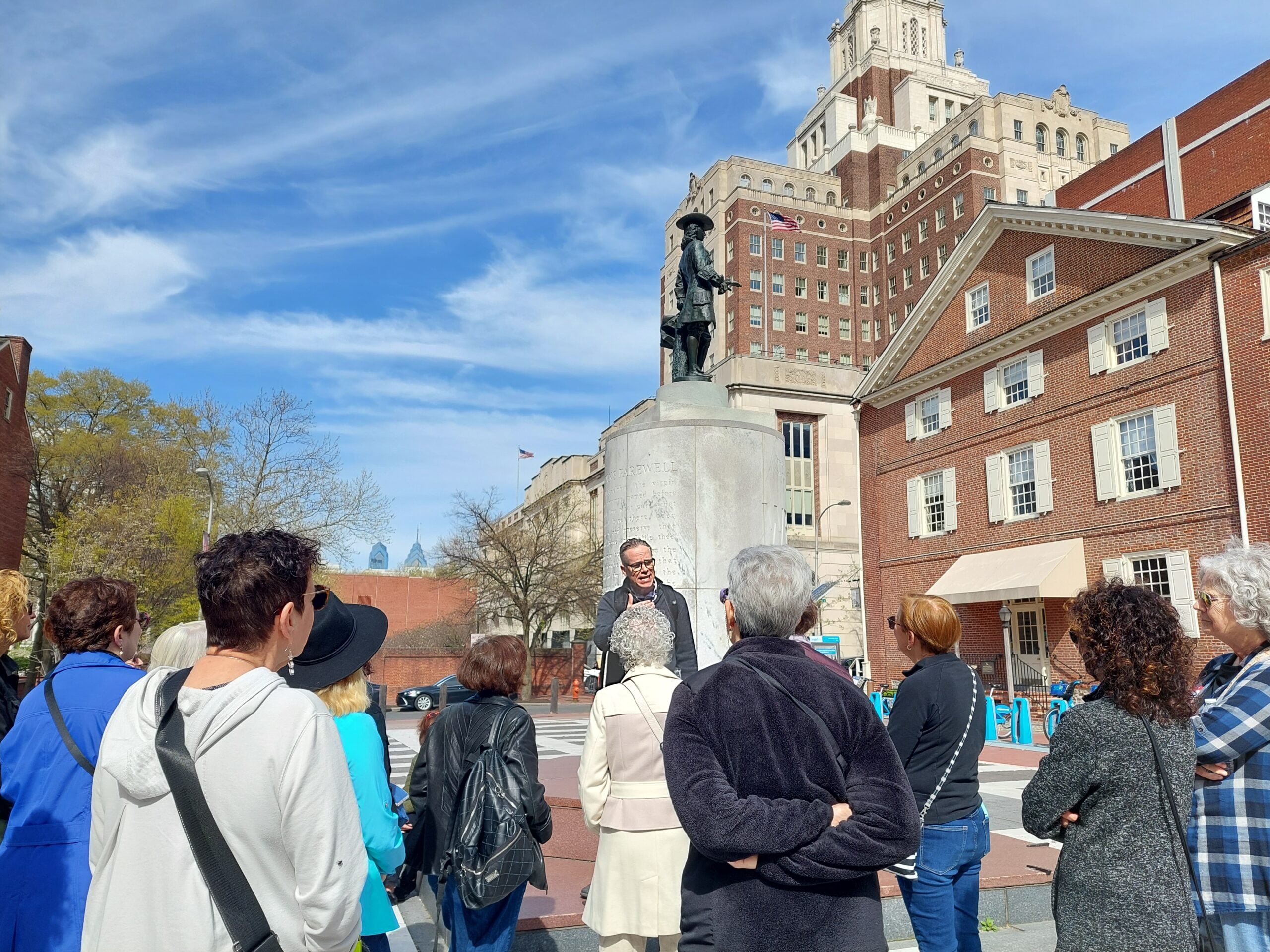
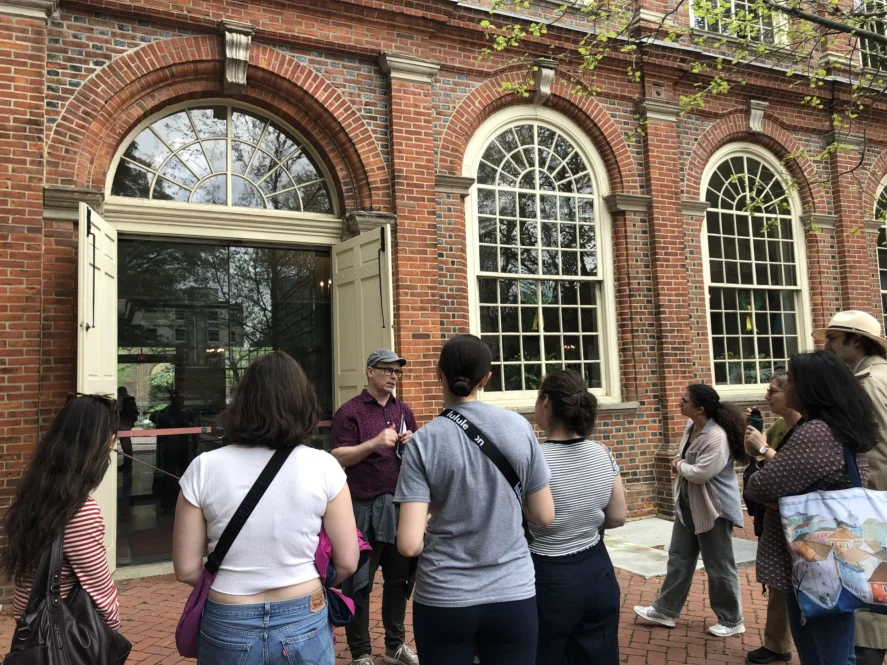
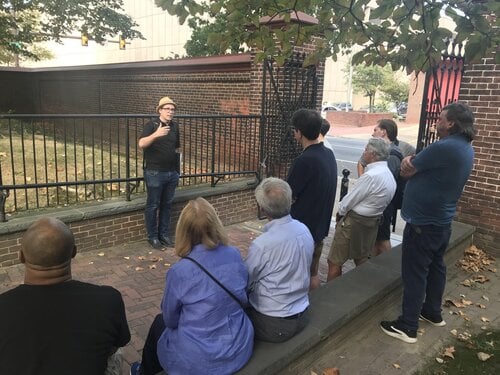
Today, one of the most immersive ways to experience this rich intersection of religious and civic history is by walking the very streets where these developments unfolded. Guided tours, such as those organized by the Dialogue Institute at Temple University and led by scholars like Executive Director David Krueger, bring these complex narratives to life. Tracing the earliest chapters of the colonial and revolutionary eras, a collection of six key historical sites illuminates how religious pluralism functioned in action throughout Philadelphia’s history. These locations, along with deeper contextual educational resources, can be further explored through the interactive Religious Freedom Trails digital application.
Arch Street Friends Meeting House
The narrative of Pennsylvania’s religious liberty begins deeply intertwined with the Society of Friends. William Penn, though raised in the established Anglican Church, experienced a profound spiritual awakening as a young adult and converted to Quakerism. The Quakers posed a direct challenge to the religious and social norms of the era by questioning established Anglican dogma, rejecting strict social hierarchies, permitting women to preach, and emphasizing the belief that every individual carried an inner light from God.
Because of these radical stances, Penn and many fellow Quakers frequently faced imprisonment and social ostracization in England. Seeking a safe haven, Penn looked for an opportunity to establish a colony where religious dissenters could live and worship freely. Following the death of Penn’s father, the British Crown—specifically King Charles II—owed a substantial financial debt to the family. Rather than demanding a cash payout that could complicate matters with an influential religious figure, the king chose to settle the ledger by granting Penn a vast charter of land in North America.
In 1682, Penn arrived on the shores of the Delaware River. Rather than claiming the territory solely by right of conquest, he famously negotiated a treaty with the indigenous Lenape residents, establishing a framework for peaceful coexistence and founding a colony that pointedly refused to impose a state-sanctioned religious establishment.
Benjamin Franklin Museum
Philadelphia’s most legendary adopted son was not a native Pennsylvanian. Benjamin Franklin grew up in Boston, a city situated firmly within a colonial environment where the Congregational Church held status as the established church. His parents initially envisioned a career in the ministry for him, but financial limitations within the family and Franklin’s own developing religious skepticism steered him away from the pulpit and into the printing trade alongside his older brother.
Seeking greater independence and broader horizons, a 17-year-old Franklin struck out on his own and relocated to Philadelphia. At the time, Philadelphia stood out as a significantly larger, more culturally vibrant, and religiously diverse urban center that offered boundless opportunities for a young, ambitious tradesman.
In this welcoming environment, Franklin established a thriving printing business and organized the Junto, an influential mutual-improvement society composed of local business leaders and intellectuals. The group met regularly to exchange progressive ideas, debate philosophy, and engineer practical solutions for pressing civic problems.
Franklin’s collaborative spirit and practical intellect catalyzed some of the nation’s most enduring civic institutions. Out of his organizing efforts emerged the country’s first public hospital, its first non-sectarian university, its first public lending library, and the American Philosophical Society. Franklin possessed a rare talent for bridging religious and cultural divides, mobilizing disparate groups to find common ground and build lasting infrastructure for the public good.
Christ Church
While Philadelphia’s founding ethos was built on religious pluralism, the broader geopolitical landscape was dominated by the Church of England. The Anglican Church served as the official state church of the British Empire, and its ministers were required to swear solemn allegiance to the British monarch—a dynamic that persisted even in Philadelphia, where no single denomination held a monopoly on faith.
When the Continental Congress adopted the Declaration of Independence, the leadership of Christ Church made the bold and consequential decision to align themselves with the revolutionary cause. One of their very first symbolic actions was to physically cross out passages within the traditional Book of Common Prayer that offered blessings and allegiance to the king. This act served as a direct precursor to the creation of an independent American Episcopal Church. Furthermore, Christ Church stands as a historical landmark where many of the nation’s earliest presidents regularly worshipped.
Just around the corner from the church grounds stands a historical marker commemorating a modest boarding house. It was here that Gouverneur Morris, the man credited with drafting the historic preamble to the United States Constitution, resided during the sweltering summer of the Constitutional Convention in 1787. Historians frequently note the poetic significance of Morris crafting the immortal opening words, "We the People," within the borders of the largest, most religiously and culturally diverse city in the young republic.
St. Augustine’s Catholic Church
During the 1730s, Philadelphia held the unique distinction of being the sole location across the British North American colonies where it was legally permissible for Roman Catholics to publicly celebrate Mass. This allowance stemmed directly from the sweeping protections outlined in William Penn’s founding charter.
Naturally, the city’s dominant Protestant leaders frequently voiced complaints and anxieties when Catholics began gathering for worship, largely driven by lingering political suspicions regarding potential loyalties to rival Catholic colonial powers such as Spain and France. Despite this ambient hostility and social suspicion, the fledgling Catholic community was permitted to practice openly under the legal umbrella of Penn’s charter commitments.
However, legal protection did not insulate the community from periodic violence. In 1844, simmering sectarian tensions boiled over when members of the anti-immigrant "Native American" political party systematically targeted and burned down several immigrant Catholic churches, including St. Augustine’s. Demonstrating resilience, the Catholic community rebuilt their sacred spaces and went on to establish educational institutions that continue to serve and thrive in the city today.
Mother Bethel AME Church
The history of Philadelphia is also inextricably linked to the complex realities of slavery and the protracted struggle for civil rights. The institution of slavery was present in William Penn’s colony from its earliest days; the Penn family fortunes were built in part upon enslaved labor, and Penn himself was an enslaver. Simultaneously, however, Pennsylvania gradually emerged as a vanguard in the movement to abolish slavery, transforming the city into a vibrant center of free Black life and organized mutual aid by the late eighteenth century.
A central figure in this movement was Richard Allen. Born into slavery, Allen managed to purchase his freedom and eventually converted to the Methodist faith in his youth. His powerful preaching and spiritual leadership drew a massive influx of new Black attendees to St. George’s Methodist Episcopal Church.
As the Black congregation swelled, the white church leadership imposed restrictive and humiliating segregated seating policies. Faced with this indignity, Allen led the vast majority of Black members out of the church in a historic walkout. They initially established a separate congregation inside a former blacksmith shop, naming it Bethel Church. Despite intense legal opposition and resistance from white ecclesiastical authorities, Allen successfully secured approval from a state court in 1816 to formalize the separation, giving rise to the African Methodist Episcopal (AME) Church, the nation’s first independent Black denomination.
Kahal Kadosh Mikveh Israel
Founded in 1740, Kahal Kadosh Mikveh Israel stands as the oldest continually operating synagogue in the United States. Often referred to as the "Synagogue of the Revolution," the congregation earned the moniker through the steadfast support its members offered to the Patriot cause during the War of Independence.
Although Jewish residents enjoyed the freedom to practice their faith under Penn’s colonial framework, significant legal restrictions remained regarding their ability to run for public office or hold government positions. In Pennsylvania law, candidates were required to take a specific religious oath affirming that both the Old and New Testaments of the Bible were the divine, revealed Word of God. This mandate created an insurmountable barrier not only for Jewish citizens, but also for Deists and members of numerous other faiths.
In 1787, Jonas Philips, a prominent member of Mikveh Israel, took decisive action by dispatching a formal letter to the delegates of the Constitutional Convention. Philips appealed to the framers to omit any religious test as a qualification for holding public office or public trust. He argued persuasively that Jewish Americans had willingly shed their blood and given their lives in the Revolutionary War and were fully entitled to participate equally in the leadership of the new nation.
The framers ultimately heeded these arguments, culminating in the adoption of Article VI of the United States Constitution, which explicitly establishes that no religious test shall ever be required as a qualification for any office or public trust under the United States, cementing Philadelphia’s legacy of religious freedom into the foundational law of the land.
Wordlessly, Rivera moved in slow, dancer-like steps toward a piece of wood held steady
beneath one bare foot. Taking several deep, measured breaths, she closed her eyes, centering herself before beginning the physical labor of friction fire-making. With one hand, she pressed a wooden spindle downward into a board on the ground, while her other hand guided a handmade bow back and forth. The repetitive sawing motion generated friction between the spinning wood and the baseboard, accompanied only by the sound of her rhythmic breathing.
Before long, wisps of pale smoke began to rise from the drilled hole, signaling the formation of a fragile coal. Rivera carefully transferred this glowing ember into a soft tuft of shredded cedar tree bark. Kneeling beside it, she blew gentle, controlled breaths into the fibers until soft, golden flames erupted. She then transferred the nascent fire to a intricately carved "feather stick"—a piece of wood featuring thin, curled shavings designed to catch and hold a flame—before finally introducing it to the central fire pit.
The demonstration was brief; due to an active seasonal fire ban, the flames had to be extinguished almost immediately after they caught. Yet throughout the entire sequence, the roughly 50 attendees stood completely transfixed. Aside from the soft rustle of Rivera’s breathing and the eventual crackle of the wood, absolute silence hung over the gathering. For author and researcher Elizabeth Doerr, who attended the retreat as part of her ongoing exploration of modern preparedness, watching Rivera operate went far beyond the acquisition of a practical wilderness skill. It felt profoundly, undeniably spiritual.
Reflecting on the experience, Doerr acknowledged the slight hesitation she felt in applying spiritual terminology to an outdoor skills workshop. Such language can sometimes feel overly cliché within the context of a modern back-to-the-land movement. However, watching Rivera generate fire from seemingly raw elements while shutting out the attention of more than a hundred watching eyes revealed a deeper truth. It became clear that mastering fire-making requires far more than technical mechanics; it relies heavily on intuition, presence, and a profound attunement to the natural world.
That realization was reinforced later when participants broke into smaller groups for hands-on workshops. Rivera led the fire-making session, introducing the attendees to the various tools used in primitive friction techniques, including bow drills, cedar bark, feather sticks, and kindling. As she laid out the equipment, anticipation rippled through the group at the prospect of finally learning how to coax fire from the surrounding landscape using nothing more than natural materials.
Then, Rivera delivered a perspective shift that fundamentally challenged conventional notions of wilderness survival. Explaining the use of modern survival gear, she noted that while carrying pre-made tools or artificial accelerants can be useful, they ultimately serve as a direct compensation for a person’s lack of familiarity and integration with their surrounding environment.
Reflecting on her own past camping trips—where she had struggled to ignite a primitive fire using a ferro rod and kindling before ultimately resorting to a disposable lighter out of sheer desperation to feed her family—Doerr absorbed the weight of Rivera’s philosophy. The long-term goal of truly knowing the land eliminates the absolute reliance on manufactured gear, though building that level of deep ecological literacy takes considerably longer than a weekend workshop.
As the session progressed into practical applications, Rivera demonstrated the rigorous preparation required before attempting to ignite a flame. The curriculum covered wood-chopping, fuel gathering, feather-stick creation, and standard fire-lighting techniques utilizing a ferro rod and a knife. Watching the meticulous steps unfold, Doerr noted a significant linguistic and philosophical distinction: Rivera consistently used the phrase "getting fire" rather than "making fire."
When questioned about the phrasing, Rivera explained that securing a flame demands emotional attunement alongside technical execution. In her view, fire is fundamentally ingrained in human physiology and history, serving not only as a physical center for community but as a reflection of human identity itself.
Approaching the task as "getting fire" implies that the flame already exists within the environment, waiting for the practitioner to become open and receptive to it. This perspective reframed the hard and soft skills of wilderness survival not as opposing categories, but as points on a continuous spectrum. While quantifiable, objective hard skills are built through time and physical labor—such as gathering the correct type of bark, striking a ferro rod at the precise angle, or processing wood into properly sized kindling—they offer no absolute guarantee of success. Reaching the threshold of ignition requires qualitative, subjective soft skills like patience, critical thinking, and heightened situational awareness.
By the conclusion of the workshop, Doerr successfully navigated the physical components of the challenge. She processed wood, crafted functional if imperfect feather sticks, scraped the inner lining of a cedar bark plank to harvest tinder, and used a ferro rod to generate a spark that caught a small piece of charred denim. Gently nursing the spark with breath, she transferred it to the cedar tuft and established a working flame in the pit.
However, the limits of this newly acquired mindset were tested during a timed evaluation requiring participants to start a fire using a single match within five minutes. Under the pressure of the clock, Doerr’s heart raced, frustration set in, and her attempt failed. Staring at the unlit tinder, she questioned her capability to handle emergency scenarios.
Recalling Rivera’s earlier guidance provided a crucial perspective shift. Rivera had previously emphasized that remaining calm and failing to produce a flame is preferable to panicking and accidentally forcing a dangerous situation. Furthermore, she had advised students to invite the fire rather than force it. Doerr realized that under the pressure of the timed test, she had attempted to force the outcome rather than cultivate the necessary mental space to receive the fire. The failure, paired with Rivera’s teachings, underscored that technical execution alone is insufficient without psychological composure.
This integration of mindfulness and technical training defined the overarching ethos of the Wild Women’s Weekend. The curriculum structured by the Wilderness Awareness School carefully balanced softer, mindfulness-oriented nature sessions with harder, skill-based workshops in fire-building and plant identification. Yet even the most technical subjects demanded a foundational awareness of nature and self that leaned heavily into the intuitive end of the spectrum.
For Doerr, whose research into survivalism often distanced itself from the hyper-masculine, rigidly technical focus of traditional prepper communities, the approach offered a welcome alternative. The Wilderness Awareness School model provides a framework of grace, acknowledging that individuals progress along a diverse spectrum of learning without chasing an impossible standard of ultimate mastery. Instead of a competitive race, survival skill development emerges as a lifelong cultivation of intuition—a capability that, combined with foundational knowledge, forms an essential key to navigating the uncertainties of the future.
In today’s modern society, it has become virtually impossible to navigate a single day without interacting with technology and the internet. From school assignments and socialization to basic daily logistics, digital access is woven into the fabric of everyday life. Children and teenagers increasingly demand—and in many ways, require—greater access to the online world. Yet, for parents and caregivers, granting that access is frequently met with hesitation and careful deliberation.
This hesitation is often magnified for families formed through adoption and foster care. Many children impacted by adoption and foster trauma have already experienced profound loss, early adversity, or broken trust. Because of these formative experiences, the online world can introduce unique risks and intense emotional triggers that may hit these children harder than their peers. Consequently, the ongoing challenge for parents is not merely restricting access, but actively walking alongside their children to foster healthy boundaries, ensure physical and emotional safety, and maintain strong familial connection.
Experts in child welfare and family support emphasize that helping children navigate the digital landscape requires a thoughtful approach tailored to individual stories rather than arbitrary age milestones.
Choose devices and access based on your child’s needs, not just their age.
A universal, one-size-fits-all approach to technology rarely succeeds in households, and this is especially true when caring for children with complex backgrounds. When evaluating technology access, parents are encouraged to weigh a child’s chronological age, maturity level, and practical requirements. While a young child has no need for unmonitored smartphone access, an older teenager who is driving independently may require reliable communication tools for safety and coordination.
For children impacted by trauma and loss, experts emphasize the importance of looking beyond calendar age to consider developmental maturity. A young person who experienced early adversity may be a teenager on paper, but still struggle significantly with self-regulation, impulse control, and critical decision-making. Child advocates note that this developmental gap is not a negative reflection on the child, but rather a direct result of their unique history. It serves as a vital reminder that these youth often require extended support, intentional structure, and close guidance, particularly when first engaging with new technologies.
To bridge this gap, many families choose to begin with specialized communication devices designed with younger users in mind. Often referred to as restricted-access or simplified phones, these devices frequently block open internet browsing while allowing calls and messages only to pre-approved contacts. Alternatively, families utilize robust parental control applications that enable caregivers to monitor activity and customize access settings for specific apps and functions.
Create screen-free zones and times—and provide needed support during transitions.
Establishing clear, predictable boundaries around where and when digital devices can be used is another cornerstone of healthy tech management. Common screen-free zones in many households include bedrooms, bathrooms, and family dining spaces during meals. To reinforce these boundaries physically, some families establish a designated charging station—often mounted on a wall in a common area—where devices must be parked. Keeping phones plugged into a central location overnight transforms the device into a makeshift landline, removing the temptation of late-night digital browsing.
Establishing predictable offline hours, such as from bedtime through the start of the morning routine, is a common practice among parents utilizing shared charging spots or parental control software. Pediatric experts consistently highlight that adequate sleep is vital for every growing child and teenager, and it holds even greater importance for youth whose brains and bodies are actively working to learn safety, emotional regulation, and stability.
However, moving away from a screen is rarely seamless; turning off a device requires a transition, and transitions can present significant challenges for children who have experienced trauma. Child development specialists note that giving advance notice before screen time ends—such as offering a gentle five-minute warning before a device must be plugged in—can significantly reduce anxiety. Similarly, providing a sense of agency through controlled choices, such as asking whether the child wants to place the phone on the charger themselves or have a parent assist, can prevent frustration and help the child feel empowered rather than controlled.
Normalize monitoring and rules.
Transparency around digital boundaries helps transform restrictions from a punitive measure into a supportive framework for safety. Parents are encouraged to communicate clearly with children and teens from the outset, letting them know that online activity, including text messages, contact lists, social media interactions, and downloaded applications, will be monitored. Framing this supervision as a tool for safety and trust-building rather than an invasion of privacy helps mitigate fear and defensiveness.
For teenagers utilizing social media platforms, many caregivers establish baseline requirements, such as maintaining private account settings and keeping parents informed about follower lists and connections. By openly discussing these expectations before a device is ever handed over, families reinforce a shared understanding of safety.
At the same time, experts remind caregivers that rules around technology are rarely successful in isolation. Parents set powerful examples through their own digital habits, making personal mindfulness regarding screen usage an integral component of household expectations.
Keep discussions open around tech use.
Maintaining an ongoing dialogue about technology helps normalize the topic, ensuring it remains a subject of regular conversation rather than a one-time lecture. Encouraging children and teens to report any uncomfortable, strange, or unsafe online encounters without fear of harsh consequences creates an essential safety net. Child advocates frequently stress that a secure, trusting relationship between a child and their caregiver remains the single most effective protection against online harms.
Regularly checking in with children regarding emerging digital trends, popular applications, and online culture allows families to evaluate potential risks together in real time. Moreover, when children or teenagers approach caregivers with thoughtful compromises or alternative suggestions regarding household tech guidelines, experts suggest celebrating those moments. Collaborative problem-solving and respectful negotiation are critical life skills that parents strive to instill, and remaining open to these discussions demonstrates that a child’s voice is valued within the family unit.
Families navigating these daily challenges often share strategies and insights through community networks and supportive programming. Organizations such as Show Hope provide ongoing resources, including video features and structured educational subscriptions like the Hope for the Journey initiative, designed to assist families in caring for children and teens through the everyday realities of modern life.
For years, a pervasive cultural movement dominated the online spaces frequented by mothers. Across parenting blogs, Facebook status updates, and brightly filtered Instagram feeds, the archetype of the "yes mom" reigned supreme. The philosophy was simple, enthusiastic, and exhausting: whenever possible, avoid telling your children no.
During the height of this trend, mothers documented their efforts to embrace spontaneity and perpetual accommodation. The digital landscape was flooded with snapshots capturing those golden moments of parental compliance. Yes, the children could have ice cream before dinner. Yes, they could leap fully clothed into a mud puddle. Yes, the family could drop everything to play an impromptu board game.
It was, by all accounts, a fabulous concept—one whose implementation resulted in genuinely wonderful memories and spontaneous bouts of joy. For many parents, including veteran homeschoolers who wanted to cultivate a vibrant, child-centered atmosphere, saying yes felt like the ultimate expression of love and engagement.
Yet, beneath the polished veneer of endless accommodation, a quieter, more urgent reality began to surface. It is a reality that seasoned parents eventually confront out of sheer necessity: it is not only acceptable to say no, but it is fundamentally essential for the health of the entire household.
Moms, in particular, often carry a heavy psychological burden of trying to say yes to every external demand, school requirement, and domestic expectation. The inevitable result is a population of exhausted, overwhelmed, and deeply burned-out women. Beneath the titles of educator, caretaker, and household manager lies a fundamental truth that is frequently forgotten in the whirlwind of modern parenting: mothers and fathers are human beings, too.
Parents require rest, personal hobbies, quiet downtime, and unstructured white space to maintain their mental equilibrium. For those who navigate the compounding demands of parenting alongside the intensive oversight of homeschooling, the need for personal boundaries becomes even more critical. Particularly for introverted parents, the lack of solitude can lead rapidly to emotional and physical depletion. Consequently, a growing chorus of experienced parents is encouraging a cultural shift back toward a healthy, balanced boundary: it is completely acceptable to say no.
Navigating the Pressures of Community Volunteering
One of the most persistent battlegrounds for parental overextension involves community and church volunteering. Within homeschooling circles, service is frequently championed as a cornerstone of character development. Giving back to the community and teaching children the intrinsic value of serving others are noble and worthwhile objectives.
However, when volunteer opportunities are chosen without careful discretion, they can quickly transform into sources of chronic stress. Because homeschooling families are frequently perceived as possessing an abundance of unstructured free time due to their flexible schedules, they are often inundated with requests to fill volunteer vacancies.
Years ago, when her children were still infants, Kris Bales regularly volunteered to work in the church nursery on Sunday mornings. At the time, aside from one dedicated senior member who served every week, the responsibility fell almost exclusively on the mothers of young children. Looking back, those hours offered a welcome respite—an opportunity to hand off the babies to someone else while recharging for a brief moment in a quiet room.
As the children grew older, however, the nature of the expectations shifted. Because she was a homeschooling mother, it was routinely assumed that she would be the ideal candidate to lead children’s church on Sunday mornings. After spending the entire week directly facilitating her own children’s education, the prospect of managing another classroom on her designated day of rest held zero appeal. Yet, constrained by a reluctance to disappoint others, she initially struggled to decline the responsibility.
Over time, experience brings a necessary fortitude. Modern parents frequently learn to transition from reluctant compliance to graciously, but firmly, declining commitments that induce undue stress. Interestingly, as children grow into adulthood and leave the nest, the perspective on service often comes full circle. Having navigated the trenches of early motherhood, veteran parents often return to nursery duty with a renewed appreciation, knowing firsthand how deeply the parents of small children value a safe, reliable environment where they can briefly catch their breath.
Evaluating the Co-Op Culture
Another major pressure point for families navigating alternative education is the traditional homeschool co-op. Organized co-ops have become a staple of modern homeschooling culture, offering structured group classes, social opportunities for children, and shared teaching responsibilities among parents.
For families who utilized alternative schooling paths for over fourteen years, formal, organized co-ops were never part of the routine. Aside from an informal nature study group shared with a single family for a brief period when the children were young, and a later government study group involving a couple of teenage peers, the family largely charted an independent course.
When a friend initially invited them to join an established co-op during their very first year of homeschooling, the invitation was declined with a deliberate focus on the immediate priority: spending that foundational year at home to find their footing as a newly minted educational unit. Subsequent discussions about joining other co-ops failed to generate genuine interest from the children. Despite missing out on traditional co-op experiences, the children developed into well-adjusted, independent individuals.
This historical track record highlights an important distinction for modern families. If joining a co-op actively serves a family’s specific needs for socialization, group instruction, or specialized academic coursework that is difficult to manage at home, it can be a tremendously valuable resource.
The danger arises when families enroll in co-ops driven primarily by outside pressures, social comparisons, or unfounded guilt regarding perceived educational gaps. Children are demonstrably better off spending their days at home with a calm, centered parent than they are commuting to a guilt-induced class taught by an overextended, perpetually stressed instructor.
The Courage to Decline Fun Outings
Overextension does not solely stem from formal obligations and educational co-ops; it frequently masquerades as leisure and fun family outings. The calendar of a modern household can easily become packed with driving children to various events, shopping trips, and recreational activities that ultimately drain the remaining energy reserves of the household.
Consider a typical weekend schedule for a family with active teenagers. A Saturday morning request from a daughter to go shopping so she could spend her birthday money might seem like a simple, harmless parental duty. Yet, when evaluated against the backdrop of the preceding days, a different picture emerges.
The previous Wednesday might have been entirely consumed by chauffeuring the teenager to the Department of Motor Vehicles to secure a learner’s permit—a successful endeavor, but one requiring hours of waiting and transit—followed by running errands for an older sibling, transporting the younger daughter to a photography class, picking her up afterward, navigating a fast-food drive-thru, and dropping her off at church for worship team practice.
Thursday typically brings its own marathon of responsibilities, such as accompanying a child to an extended medical appointment, returning home to hurriedly clean the house, and baking cookies in preparation for a birthday party hosted that very evening. Sandwiched between domestic chores and party hosting is usually a trip to an indoor trampoline park, complete with the inevitable frustration of sitting in dense, standstill traffic that leaves the family and their guests half an hour late.
Friday rarely offers relief, often demanding a rush to complete weekly grocery shopping, hurriedly stowing perishables, and immediately rushing off to transport the children to an evening study group. Add in the logistical puzzle of delivering a forgotten item to a party guest from the previous day, dropping children off at a concurrent birthday celebration, and squeezing in personal errands, and the weekend landscape changes dramatically.
Under such exhausting conditions, declining a shopping trip on Saturday morning requires zero psychological guilt. Choosing to stay home, rest, and recover from a week of relentless transit is not a failure of parenting; it is a vital act of self-preservation. When the weekend arrives with no major disasters, staying indoors becomes a deeply restorative victory.
The accumulated weight of modern family life demonstrates that parents do not need to say yes to every single opportunity, event, or obligation that comes their way. While the impulse to be a accommodating parent is rooted in a desire to create joy, it must be balanced against the very real dangers of chronic burnout.
Ultimately, saying no to outside pressures can open the door to genuine family connection. Parents cannot cultivate meaningful memories when they are perpetually exhausted and stretched thin across an unsustainable array of commitments. Protecting one’s time and emotional energy ensures that when parents do say yes, those moments are met with genuine enthusiasm rather than hollow fatigue.
MONTREAL — Long before she understood the crushing weight of personal tragedy, a younger Rachel Abugov sat in a university developmental psychology classroom and encountered a curriculum concept that felt entirely alien. Back when dinosaurs roamed the plains, as she jokingly recalls, students learned that each stage of human growth carried specific psychological tasks. For seniors, the prescribed task was accepting and learning to live with profound loss.
To her mid-thirties self, the concept was incomprehensible. She simply could not fathom what such an experience would even feel like.
Now, unfortunately, she knows through lived experience. Abugov finds herself in the early, turbulent stages of navigating the unthinkable: the loss of her son, Kevin, in January of this year, followed just ten weeks later by the death of her only brother, Ian. While she had learned how to deal with the passing of her parents years prior—accepting it as part of the natural order of things—the sequence of losses she faces today represents an entirely different reality.
Before cancer entered their lives like a Trojan horse, attacking her son from the inside, Abugov and Kevin shared a lighthearted relationship. She used to joke with him about eventually becoming a crotchety old lady whom he would simply have to put up with. In response, Kevin bought her a t-shirt featuring Sophia from The Golden Girls and routinely sent her memes of the iconic "Where’s the beef?" commercial lady.
Those moments of humor gave way to a relentless medical education. Abugov became fluent in the language of oncology, learning about chemotherapy and its common and rare side effects, and growing adept at searching for clinical trials. But all that research culminated on a final, shattering day in the emergency room, when a doctor stated bluntly, "He’s not going to make it. He’s dying."
In that instant, Abugov was forced to learn how to break the devastating news to extended family members. Worst of all, she had to figure out how to tell her daughter-in-law—who was at home with Abugov’s sleeping grandson—that she was just hours away from becoming a widow.
Abugov never learned to come to terms with cancer. She had fervently prayed that her son would be cured and discharged from the overcast realm of medical treatment into the brilliant sunshine. While the sun continues to shine, her son is no longer around to enjoy it. It stands as a grim coincidence that the day Kevin learned his time on Earth was limited was the exact day a major solar eclipse darkened the skies. Though they had purchased special viewing glasses, they never got to use them; they didn’t need to. Their entire world went pitch-dark and simply stayed that way.
Yet, amid the shadows, there were still pockets of joy and normalcy. There were moments like when Kevin played his final two gigs with his punk band, or when his young son celebrated his first birthday. Just two weeks before Kevin passed away, he, his wife, and Abugov went out for lunch to one of their favorite Vietnamese restaurants. Over bowls of pho, they talked about wanting to see the new Superman movie and discussed which television shows were worth binge-watching.
It felt just like old times, provided one ignored the fact that they had specifically chosen that restaurant because it was wheelchair-accessible, or that Kevin was eating very lightly because chemotherapy had severely affected his digestive system. They masked their feelings, smiled, and pretended that everything was cool. They even talked about the next time they would get together and where they would go for lunch next. There was, as Abugov notes, no next time.
Today, Abugov is actively working to come to terms with the cascading losses of both her son and her brother. She has engaged with the grieving process through various support structures, participating in both in-person and online groups while leaning on cherished family members. Her new connections through her local chapter of The Compassionate Friends have proven to be lifesavers, even if members only see each other for an hour and a half every month. She describes them as true foxhole buddies who genuinely understand what she is enduring.
Along the way, Abugov has also acquired an unexpected companion: Grief. While not a best friend in the traditional sense, Grief shadows her as persistently as her cat follows her whenever she nears the treat cabinet. In Abugov’s mental imagery, Grief looks like an eccentric old lady—the kind who overcompensates for lost youth by wearing purple cat-eye glasses and loud leopard prints, wanting to be easily recognized.
Not all of Abugov’s emotions are quite that considerate. On the advice of her bereavement counselor, she has been working on labeling her feelings, but that remains an ongoing process.
Grief makes her presence known in unexpected places, such as when Abugov experiences a sudden emotional meltdown in the potato chip aisle at Walmart, struck by the sudden, agonizing realization that she can no longer pick up a bag of Sriracha chips for Kevin because he is gone. Grief attempts to help her accept this "New Normal," offering the perspective that everyone walks around carrying a metaphorical stone in their shoe that they can never quite shake out, no matter how hard they try. At first, Abugov’s reaction was sheer disbelief, but as she began talking openly with others, she realized how universally replicated that hidden grief is among the people she knows.
Initially, her reaction to her constant companion was blunt and defensive: "Look, Grief. I don’t wanna hang out with you! Leave me alone," often seasoned with a few well-placed expletives. However, she soon realized that she was expending so much energy fighting Grief that it was rapidly draining what little physical and emotional reserves she had left in her tank.
That realization prompted a shift toward radical acceptance.
She began to wonder what might happen if she simply sat down on the couch next to Grief and allowed her to hand over tissue after tissue while she sobbed and mourned the losses of her son and her brother. Could it possibly help? After all, she reasoned, she couldn’t possibly feel any worse than she already did.
To her surprise, the experiment worked. Much like a chef’s trick of soaking raw onions in cold water to decrease their pungency, Grief began to lose her sharpest edges. While Abugov was not exactly welcoming her presence with open arms, she was resisting her less. Whether she was finally coming to terms with her New Normal or simply watching her acute pain transition into a chronic, manageable state, the experience shifted. The pain remains, but it feels different.
Whatever the underlying reason, Abugov no longer spends as many days confined to bed, lost in endless doomscrolling. While she has always been an early riser, her identity has expanded; she now identifies as a mourning person just as much as a morning person. Honoring her lost loved ones no longer looks like lying in bed with the lights dimmed. Instead, it can look like hopping on a plane with her niece to attend a music festival because Kevin’s and Ian’s favorite bands are playing, proudly wearing their t-shirts so they remain present in some form.
The bottom line, Abugov acknowledges, is that Grief is here to stay. She will remain a part of her as long as she is here. And when her own time on Earth eventually ends, Abugov jokes that she will ask Grief to be a faithful shadow to everyone who loved her. It is a tough job, as she notes, but somebody has to do it.