An Open Call for Interfaith Solidarity: Addressing Islamophobia and the Politics of Identity in America
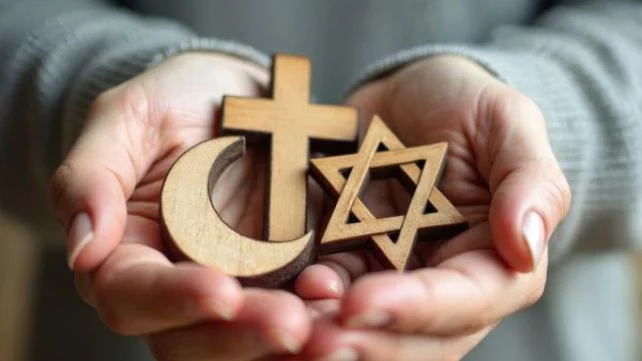
In an era defined by deep political polarization and cultural friction, communities of faith across the United States are increasingly finding themselves at the intersection of public discourse and identity politics. Recently, that friction was brought into sharp relief during a political rally in Dalton, Georgia, prompting a coalition of Muslim community advocates to issue an open letter to their Christian, Jewish, and other interfaith neighbors. The message is both a reflection of collective hurt and a principled call to action, urging solidarity in an environment where Islamophobia has, in their view, been artificially stirred up by bad-faith actors for political utility.
The focal point of the community’s recent distress occurred during a campaign event on Friday, October 16. Addressing the crowd, the speaker made light of names originating from the Middle East, offering a remark suggesting that if someone’s name is uncertain, one could "just say ‘Mohammad’—you have about a 65% chance." The remarks took a more direct turn when directed at a Muslim Senate candidate from Michigan, with the speaker adding, "I can call you whatever the hell I want."
According to reports from Reuters, the immediate response from the crowd was notably muted—a quiet reaction that community leaders suggest speaks volumes. For many observers and citizens, making casual jokes at the expense of a person’s name and the religious heritage it honors crosses a line of decorum traditionally expected in public life. For Muslim Americans, the remarks struck a deeply personal nerve. Millions of believers carry the name Muhammad out of reverence for the Prophet, a tradition shared by fathers, sons, and brothers across the nation. To hear that name used as a punchline or dismissed casually at a political gathering felt to many like an affront not just to an individual, but to a foundational element of their identity.
The open letter draws a parallel designed to resonate across religious boundaries, asking readers to picture a crowd at a major public event laughing aloud at the name Mary, Moses, or Joseph. Those names, held sacred by Christians and Jews alike, also belong to beloved family members—a mother, a grandfather, a son. The comparison underscores a universal truth: names connected to faith and family carry profound emotional and spiritual weight, and treating them with disrespect erodes the baseline of mutual respect necessary in a diverse society.
The Broader Context: Attacks on Muslims in the Name of Sharia
Community advocates emphasize that this incident did not occur in a vacuum. Over the past several months, Muslim Americans have frequently been framed as a cultural or legal threat through political rhetoric concerning "Sharia law." Representatives of Muslim civil rights and community organizations point out a fundamental disconnect in this narrative, noting that no American Muslim organization has ever advocated for the replacement of the United States legal system with religious law. American Muslims live, work, and raise their families under the U.S. Constitution and state legal frameworks, participating fully in the civic life of the country.
Despite the absence of any institutional push for religious jurisprudence in American courts, legislative proposals and heated public speeches continue to target the phantom threat of Sharia. When viewed alongside other cultural flashpoints—such as educational materials labeling historical figures or traditions in overly hostile terms, or political rhetoric mocking culturally and religiously significant names—a broader pattern emerges.
Community leaders argue that these occurrences are not isolated incidents. Taken together, a joke about the name Muhammad at a rally, a contentious classroom lesson, and legislation warning against a nonexistent legal threat all transmit a singular, exclusionary message: that Muslims do not fully belong in the American fabric. For people of various faith traditions who study history and sociology, the destination of such exclusionary messaging is painfully familiar, underscoring the urgent need for cross-community vigilance and dialogue.
Muhammad Ali and the Meaning of a Name
To contextualize the dignity, resilience, and ultimate public acceptance associated with the name Muhammad, the open letter invokes the enduring legacy of one of America’s most iconic figures: Muhammad Ali. When the legendary heavyweight boxing champion formerly known as Cassius Clay formally adopted the name Muhammad Ali in 1964, the transition was met with intense resistance. Many sportswriters, promoters, and fans steadfastly refused to use his new name, often using it as a vehicle for public mockery and criticism.
The challenges Ali faced extended far beyond sports journalism. In 1967, citing his religious convictions, he refused induction into the United States military draft during the Vietnam War. The consequences were severe: he was stripped of his heavyweight title, banned from boxing during the prime of his athletic career, and threatened with imprisonment. Yet, he stood firm in his principles, a legal battle that culminated in a unanimous 8-0 ruling by the United States Supreme Court in his favor in 1971.
Decades later, the perception of his name and his faith underwent a profound transformation. By the latter years of his life, Muhammad Ali had become a unifying symbol of American athletic excellence, humanitarianism, and moral courage. In 1996, he stood before a global audience to light the Olympic flame in Atlanta, Georgia. In 2005, he was awarded the Presidential Medal of Freedom, the nation’s highest civilian honor.
When Ali passed away in 2016, his hometown funeral in Louisville, Kentucky, transcended religious boundaries, manifesting as a grand interfaith service. Muslim, Christian, Jewish, and other religious leaders took part in the ceremonies, fulfilling a blueprint that Ali himself had meticulously planned. His life demonstrated that a man bearing the name Muhammad could not only endure public skepticism but ultimately become a source of pride for the entire nation.
For contemporary interfaith groups seeking to navigate conversations about faith, identity, and public dignity, the story of Muhammad Ali remains a powerful touchstone. It illustrates the capacity of American society to move from division and misunderstanding toward profound appreciation and shared respect. As the open letter concludes, the expressions of gratitude from the Muslim community for those willing to stand against contemporary prejudice are met with a reciprocal pledge: as others stand in solidarity against bigotry, the Muslim community stands ready to do the same.
