Navigating the Algorithmic Age: Why Education Must Anchor Itself in Deep Thinking and Human Connection
Long before the advent of digital screens, algorithms, or generative artificial intelligence, philosophers were already grappling with the profound tensions that arise when human beings invent tools that alter the nature of memory and thought. In Plato’s classic text Phaedrus, Socrates offers a timeless caution regarding the invention of writing. He warns that the externalization of memory might ultimately weaken the human mind, creating the deceptive appearance of wisdom while eroding true, internalized understanding. Socrates was not rejecting writing as a medium; rather, he was interrogating how a powerful technological innovation reshapes human cognition precisely when it begins to supplant dialogue, genuine interpersonal relationships, and lived experience.
Today, humanity stands at a remarkably comparable historical juncture with the rapid proliferation of artificial intelligence. This technological wave forces modern educators, policymakers, and communities to ask critical questions about how these tools should be integrated into classrooms. More fundamentally, it compels society to reevaluate whether the core goals of education need to change in an environment that is intensely and pervasively algorithmic. As schools chart a path forward, educators face the challenge of reorienting toward a future where human beings must still learn to create independently, think deeply, persist through difficulty, and ultimately find meaning and thrive within society.
The Impacts of AI on Critical Thinking, Engagement, and Motivation
As school districts grapple with these shifts, researchers are actively measuring the psychological and cognitive consequences of introducing advanced technologies into learning environments. When MIT researchers surveyed school leaders about their perspectives on the integration of artificial intelligence in education, cognitive offloading emerged as the primary fear. This anxiety is far from unfounded, especially considering that existing research involving adult populations already demonstrates a pronounced human propensity to offload critical thinking tasks entirely to algorithmic systems.
Recent empirical data reinforces these concerns. A study presented at the ACM CHI Conference on Human Factors in Computing Systems examined how generative artificial intelligence affects professional knowledge work. The findings revealed that while generative AI tools successfully improved efficiency in certain tasks, they simultaneously reduced critical engagement and fostered long-term dependence. As participants’ confidence in the performance of the AI rose, their cognitive effort shifted away from active problem-solving and toward passive verification and integration, thereby weakening independent human reasoning over time.
A separate study conducted out of a business school in Switzerland explored similar dynamics but introduced a crucial variable regarding guidance. Researchers observed participants preparing to answer interview questions with the assistance of artificial intelligence, split into groups with and without structured prompting support. The unguided AI users engaged in heavy cognitive offloading without experiencing any improvement in the quality of their reasoning. Conversely, participants who received structured prompting assistance significantly enhanced both their critical reasoning and their reflective engagement. Translated to the educational sphere, these results underscore that the impact of AI on learning depends heavily on whether students and teachers receive proper training and guidance.
Beyond critical thinking, artificial intelligence possesses the capacity to make tasks so frictionless that it can trigger an immediate negative effect on human motivation. A study published in Nature.com discovered that while collaboration with artificial intelligence enhanced immediate task performance, it simultaneously led to a measurable decline in intrinsic motivation and an increase in boredom. This finding highlights a stark trade-off between short-term productivity gains and long-term human engagement, making a compelling case for caution regarding the deployment of such tools for young learners.
The Importance of Preserving Offline Learning
To understand how technological assistance alters cognitive processing, researchers have turned to physiological monitoring. In an MIT study, subjects were asked to write several SAT essays using either OpenAI’s ChatGPT, Google’s search engine, or no technological assistance at all. Electroencephalogram (EEG) results from the experiment reinforced the premise that students learn best without technological interference, and particularly without the crutch of artificial intelligence.
Mastering foundational writing skills offline increases brain connectivity and helps students internalize language, reading comprehension, and the structural nuances of written communication. This rigorous offline foundation preserves linguistic fluency and deep comprehension. Consequently, when students eventually do interact with artificial intelligence tools later in their development, they approach them from a position of mastery—acting as editors and authors rather than passive recipients of prompts.
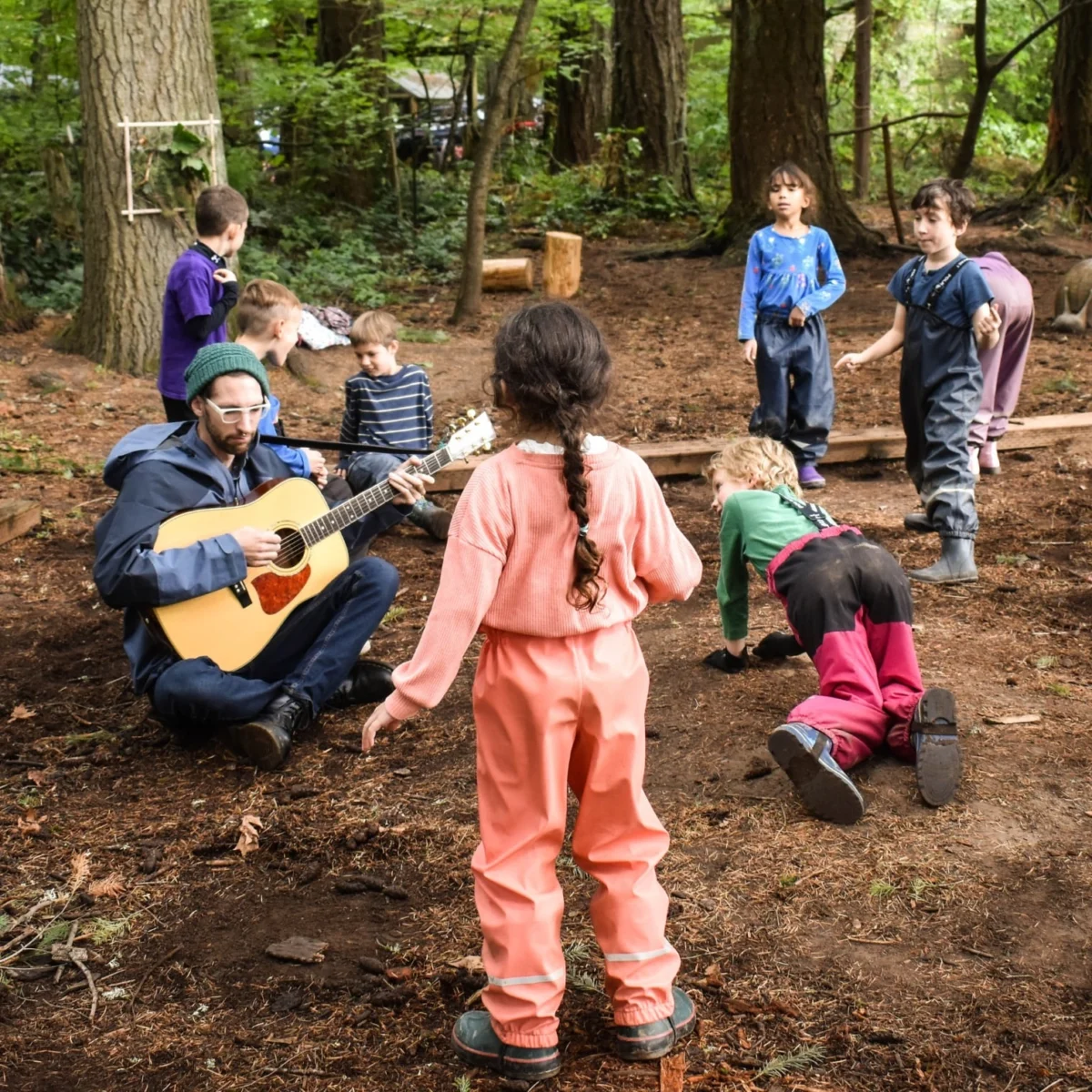
Engaging learners in the offline world remains the key to preserving natural curiosity and internal motivation. Resilience and willpower are cultivated most effectively through productive struggle. For younger students, practical arts applications such as learning to play the violin, engaging in woodworking, or practicing knitting shine brightly in this endeavor. These moments of tangible, hands-on difficulty build essential perseverance, frustration tolerance, and an embodied understanding of the world in a way that feels inherently engaging and joyful. In an AI-enhanced world where friction is systematically removed, the human capacity to stay with difficulty becomes a profound advantage.
A Sense of Identity and Human Relationships at the Heart of Schooling
Because artificial intelligence systems interact with users in highly personalized ways, foundational life skills must be firmly established before children are granted access. A warning issued by UNICEF highlights the psychological risks: the persuasiveness of advanced AI systems, combined with personality engineering designed to appeal to the human desire for praise and validation, means that children’s beliefs, behaviors, and developing senses of identity can be heavily influenced by algorithms during a sensitive developmental window. Malicious use or unmonitored exposure could render children vulnerable to manipulation, online exploitation, and abuse, ultimately undermining their agency, freedom of thought, and independent personal development.
These concerns intensify significantly when artificial intelligence is positioned at the center of learning environments for children. The American Academy of Child and Adolescent Psychiatry, in a dedicated informational resource titled "Is AI Dangerous for Children?", highlights a wide range of risks. These include potential overattachment to conversational chatbots, a corresponding reduction in meaningful face-to-face social interactions, data privacy vulnerabilities, the proliferation of deepfakes, and the gradual erosion of hands-on, creative, and critical learning experiences.
At its core, this ongoing technological transition brings the fundamental value of real-world human relationships into sharp focus. Human relationships should remain at the very center of formal education. A robust body of educational research demonstrates that the bonds formed between teachers and students, among peers, and within the broader community serve as primary catalysts for empathy, responsibility, and social awareness, while simultaneously boosting academic outcomes. These distinctly human capabilities cannot be replicated by any machine; rather, they represent the essential capacities required for a grounded, meaningful life.
Ultimately, if society wishes to properly prepare children for an increasingly AI-enhanced world, education’s most urgent task is not to accelerate cognition or outsource human thinking. Instead, the priority must be to anchor children securely in deep thinking, authentic relationships, and lived experiences. Only from this resilient foundation can artificial intelligence truly serve human development rather than quietly reshaping what it means to be human.
