Bridging Faith and Modern Medicine: Interfaith America Grant Propels Santa Clara University Into Global Health Conversations
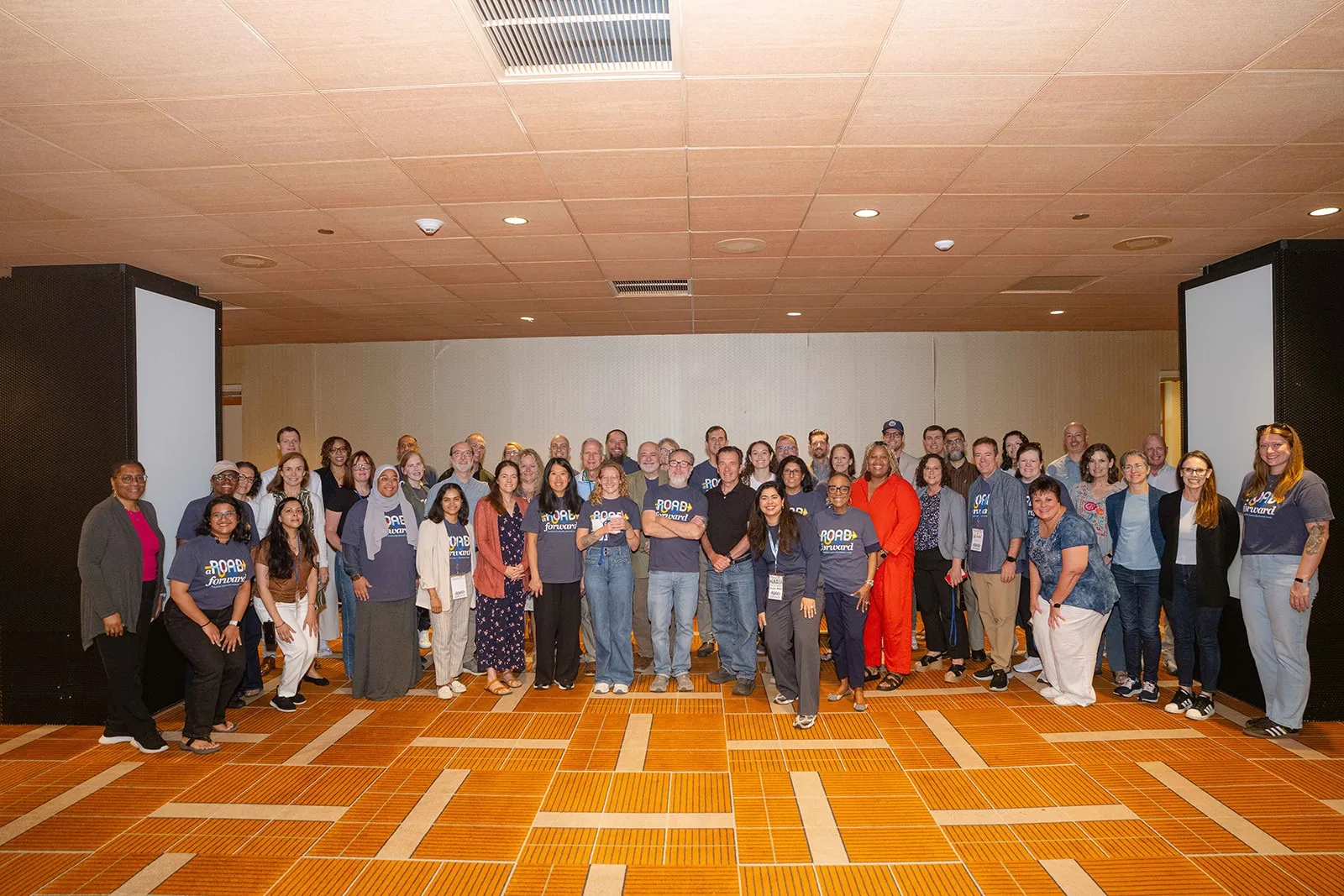
SANTA CLARA, Calif. — In an era where the divisions between modern science and spiritual traditions often seem pronounced, a major initiative at Santa Clara University is actively weaving the two back together. Awarded in 2024, the Interfaith America Faith & Health Grant has become a transformative catalyst for the university, shaping its academic trajectory across multiple fields and placing the institution squarely in the global conversation surrounding holistic well-being.
The grant, which provides critical funding for projects blending faith and health, has empowered faculty members to pursue deep interdisciplinary research, revamp curricula, and foster a robust campus network dedicated to this unique intersection.
According to religious studies professor Jaime Wright, who serves as one of the principal investigators for the grant, the funding arrived at an ideal time to support long-held academic passions.
"It gave us some funding to do the things that we’re passionate about, things we want to study, and also to strengthen a network of other faculty on campus who are also working at this intersection of faith and health," Wright said. As a principal investigator, Wright’s role involves not only securing the financial support but also organizing and directing how the grant resources are utilized across the university.
To fully understand the scope of the projects supported by the initiative, Wright emphasizes that both "faith" and "health" are intentionally defined in broad terms.
"When I say faith in health, both are defined very broadly," Wright explained. "So faith can be something like official religion, something like Catholicism or Buddhism, it could be someone’s spirituality, it could be frameworks for meaning, or groups that function to bring people together. And then when we talk about health, we’re not just talking about clinical settings. We’re also talking about mental health, and we’re also talking about public health."
This expansive vision has allowed the university to translate theoretical concepts into tangible campus events and community engagements. Among the most anticipated offerings funded by the grant is a campus viewing of the 2025 documentary The Chaplain and the Doctor, directed by acclaimed filmmaker Jessica Zitter. Scheduled for October 20 at the Recital Hall within the Music and Dance Building, the film presents a real-world look at how medical doctors and hospital chaplains can collaborate effectively within high-stakes clinical environments.
Psychology professor Thomas Plante, who joins Wright as a principal investigator for the grant, noted that the documentary screening will offer students and faculty a rare interactive experience. Following the film, attendees will participate in a remote Q&A session with individuals directly featured in the documentary, offering direct insight into the practical realities of integrating spiritual care into medical practice.
Beyond major screenings, the grant has underwritten an active speaker series, bringing diverse voices directly into classrooms and auditoriums to discuss faith- and health-related subjects.
"In terms of bringing people on campus, some of these speakers have just come to people’s classes," Wright said. "Some have been opened up to kind of a broader faculty and students on campus. But we’ve had community health activists come speak, we’ve had a spiritual care minister speak."
Expanding Academic Horizons
The impact of the Interfaith America grant is perhaps most visibly felt in the classroom, where it has directly facilitated the development and refinement of specialized courses. New and updated classes now span undergraduate and graduate levels, creating dedicated spaces for students to critically examine the relationship between spiritual traditions and modern medical care.
Among these offerings are courses such as Religion, Spirituality, and Global Health, Sacred Nature: Indigenous Relations with the Earth, and a specialized graduate-level class titled Suffering and Human Flourishing: Moral and Pastoral Reflections. These courses are carefully designed to help university students navigate the complex and often overlooked spaces where healthcare systems intersect with human belief systems, and vice versa.
Beyond the boundaries of standard coursework, the grant has also provided essential financial backing for cutting-edge faculty research. Professor Plante is currently spearheading an innovative study examining whether structured prayer reflection can significantly improve mental health outcomes among struggling patients.
In this study, Plante’s research team is comparing outcomes among a group receiving secular treatments, a group utilizing prayer reflection, and a standard control group. While the study is pioneering in its methodology, it is not slated to be the last of its kind. The research group is already expanding its scope internationally, conducting a parallel study at a specialized drug and treatment facility in Mexico.
Plante compares the potential trajectory of this research to cultural phenomena that have crossed over from traditional spiritual practices into mainstream secular wellness.
"A lot of people know about yoga. They may or may not care that it comes from Hinduism," Plante said, describing the study. "This could be the next yoga. It could be something that could be used in a spiritual, religious way, or it could be used in a secular way. But we think it can be quite effective to help people with a variety of issues, and so we’re trying to do a variety of studies to demonstrate that."
A Historical Intersection for a Modern Jesuit Institution
The intersection of faith and health is by no means a novel concept in human history; areas of overlap have been foundational to many ancient cultures and traditional societies. However, this holistic overlap is frequently marginalized or overlooked in modern, highly technocratic medical environments. As a Jesuit institution, Santa Clara University occupies a unique position to spearhead new paradigms for integrating spiritual dimensions into the professional medical world.
Classics professor Daniel Turkeltaub, who serves as a third principal investigator for the grant, emphasized the heightened relevance of this work in the current historical moment.
"People have different ideas about the role of health and medicine in their lives, about their relationship between health and religion, between their own relationship with their faith traditions," Turkeltaub observed.
Because of these diverse perspectives, Turkeltaub points out that the grant plays a vital role in supporting the university’s medical humanities minor. The curriculum aims to equip students pursuing future careers in healthcare with a foundation that goes beyond basic cultural awareness, cultivating genuine cultural sensitivity toward patients’ spiritual and existential needs.
"We’re really kind of in an interesting place to begin thinking about health more holistically," Wright added. "We should really be taking the whole person into consideration, and I think that our grant helps to create a foundation for that kind of work that’s already being done on campus."
Timing and Future Leadership
The arrival of the Interfaith America Faith & Health grant preceded several monumental announcements for Santa Clara University, amplifying its strategic impact. The funding was secured prior to the public announcement of the new Mark and Mary Stevens School of Medicine. Furthermore, these developments coincide with the historic physical relocation of the Jesuit School of Theology from Berkeley directly to the Santa Clara University campus.
Together, these developments have converged to make the study of faith, ethics, and healthcare more pertinent to the university’s mission than ever before.
"This gives us an added opportunity to establish a reputation for being concerned with healthcare in a more serious way, for integrating the University mission with an University identity with the healthcare education that it provides," Turkeltaub said.
Looking toward the horizon, Plante expressed immense optimism for the university’s future, capturing the collective enthusiasm of the campus community by remarking that it is "a great time to be a Bronco."
"We have a very unique opportunity to be really leaders, you know, nationally and globally, on some of these issues," Plante concluded. "And the pieces are all coming together to help us do so. We’re in Silicon Valley. We’re gonna get a medical school. We have the Jesuit School of Theology. There’s a lot of things coming together that can put Santa Clara really up the forefront, which I think is terrific for our students, for our faculty, really for the world."
