Catholic Leaders at Notre Dame Explore the Church’s Role in Pluralism and Religious Liberty Ahead of America’s Semiquincentennial
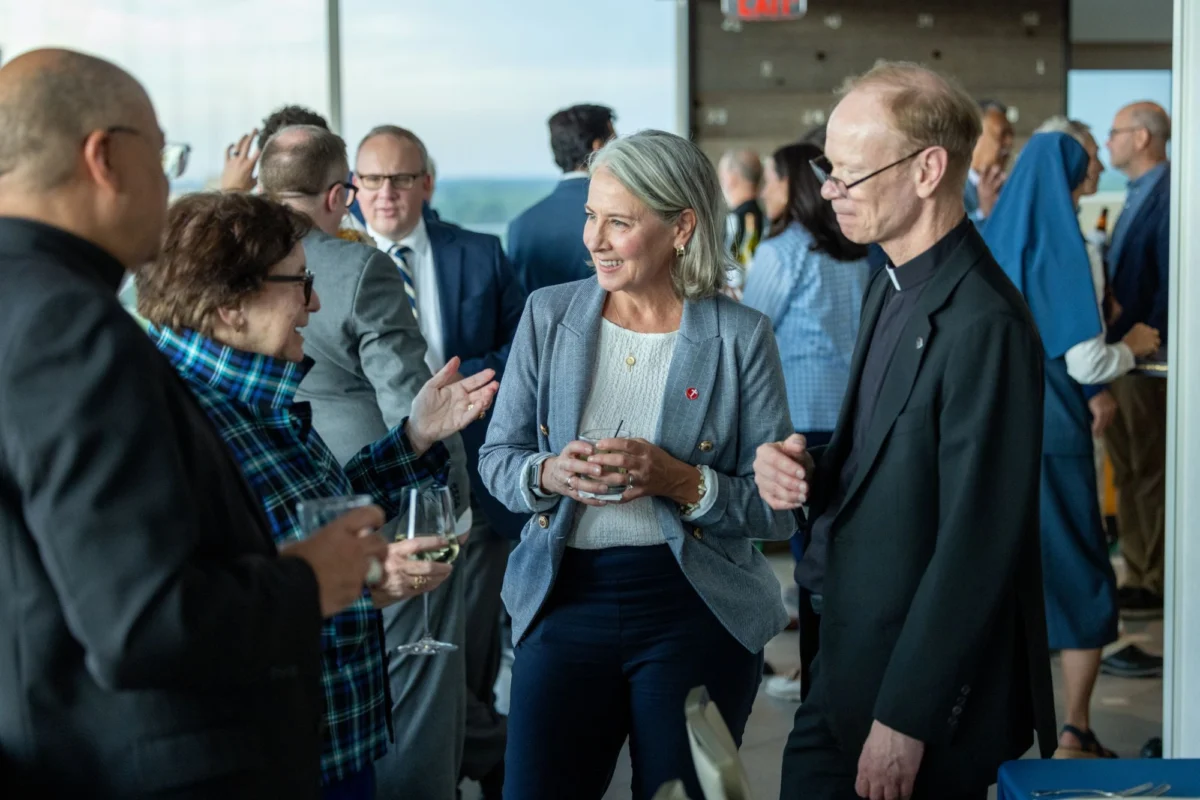
This fall, a diverse coalition of Catholic clergy, higher education leaders, women religious, and lay leaders convened at the University of Notre Dame for a significant gathering aimed at exploring the Catholic Church’s unique approach to pluralism and religious liberty. The symposium takes on added resonance as the United States prepares to celebrate its 250th anniversary, offering an opportunity for faith leaders to reflect on the intersection of Catholic theological traditions and American democratic principles.
Against the backdrop of a polarized national landscape, the participants sought to examine how Catholic social teaching and historical perspectives can contribute to a deeper understanding of religious freedom, civic unity, and human dignity. The discussions drew heavily on contemporary frameworks of pluralism, including those advanced by Interfaith America, prompting deep reflections on how faith communities can champion liberty not just for themselves, but for society at large.
At the heart of the dialogue was the fundamental Catholic teaching on the inherent worth of every individual. Attendees emphasized that the protection of human dignity serves as a foundational pillar for any pluralistic society.
"The Church of itself has always taught this dignity of every human being," said attendee Sister Nancy Usselmann, director of Pauline Media Studies, highlighting the theological underpinnings of the discussion. "Each person has specific dignity, and to respect them and love them for who they are is such a beautiful gift that the church gives."
This emphasis on individual worth naturally extends into the realm of conscience and religious practice, a theme that formed a central part of the academic and practical evaluations during the gathering at Notre Dame. Leaders considered how Interfaith America’s vision of pluralism intersects with ongoing efforts to uphold and protect religious liberty within the American democratic experiment.
For legal scholars and institutional leaders present at the event, the preservation of religious freedom is not merely a legal protection, but a moral and theological imperative. Marcus Cole, the Joseph A. Matson Dean and Professor of Law at Notre Dame, addressed the essential connection between genuine faith and freedom of choice during his remarks to the assembly.
"Religious pluralism is a key feature of American society. The only way to get people to embrace the truth of my faith is if they are free to embrace it," said Cole. "You can’t force faith on anyone. We want to make sure that we promote freedom of religion for everyone, for all faith traditions, and for people who come from no faith tradition at all."
This expansive view of religious liberty—one that encompasses believers of all creeds as well as secular citizens—resonated throughout the conference sessions. As the United States looks ahead to its semiquincentennial milestone, Catholic leaders expressed a collective hope that the values rooted in their tradition can serve as a healing balm in an era characterized by deep social and political divisions.
The role of the Church as a stabilizing and unifying force in public life was a prominent topic during the evening’s panel discussion, which brought together prominent voices from across the Catholic intellectual and pastoral spheres. Participants considered how centuries of tradition, moral theology, and community engagement position Catholic institutions to foster dialogue in a fractured society.
"I think we’re made for this polarizing moment, to be a unifying community and voice that helps democracy move forward," said Donna Carroll, president of the Association of Catholic Colleges and Universities, during the panel discussion. "We can not only help heal and bring people together, but we can actually model for our country what it means to serve."
Carroll’s remarks underscored the practical responsibility facing Catholic universities, secondary schools, parishes, and charitable organizations as they navigate contemporary cultural debates. By modeling service, humility, and open engagement, these institutions seek to demonstrate how diverse communities can work together toward common civic goals without compromising their distinct theological identities.
Adding a pastoral dimension to the forward-looking dialogue, Fr. James Martin reflected on the spiritual disposition required of believers as the nation approaches its historic 250th anniversary. He suggested that the most effective contribution the faith community can make to American public life is a renewed commitment to the core tenets of the Gospel.
"As America turns 250, what I hope we would think about is our desire to be more Christian, which is the desire to be more loving, more merciful, and more compassionate," Fr. Martin said.
The gathering at Notre Dame ultimately concluded with a shared sense of purpose among the clergy, educators, and leaders in attendance. By bridging theological commitments to human dignity with the practical realities of a multi-faith democracy, the participants mapped out an enduring role for the Catholic Church in fostering a more compassionate, free, and unified American society for generations to come.
