Catholic Leaders Gather at Notre Dame to Discuss Pluralism, Religious Liberty, and America’s Semicentennial
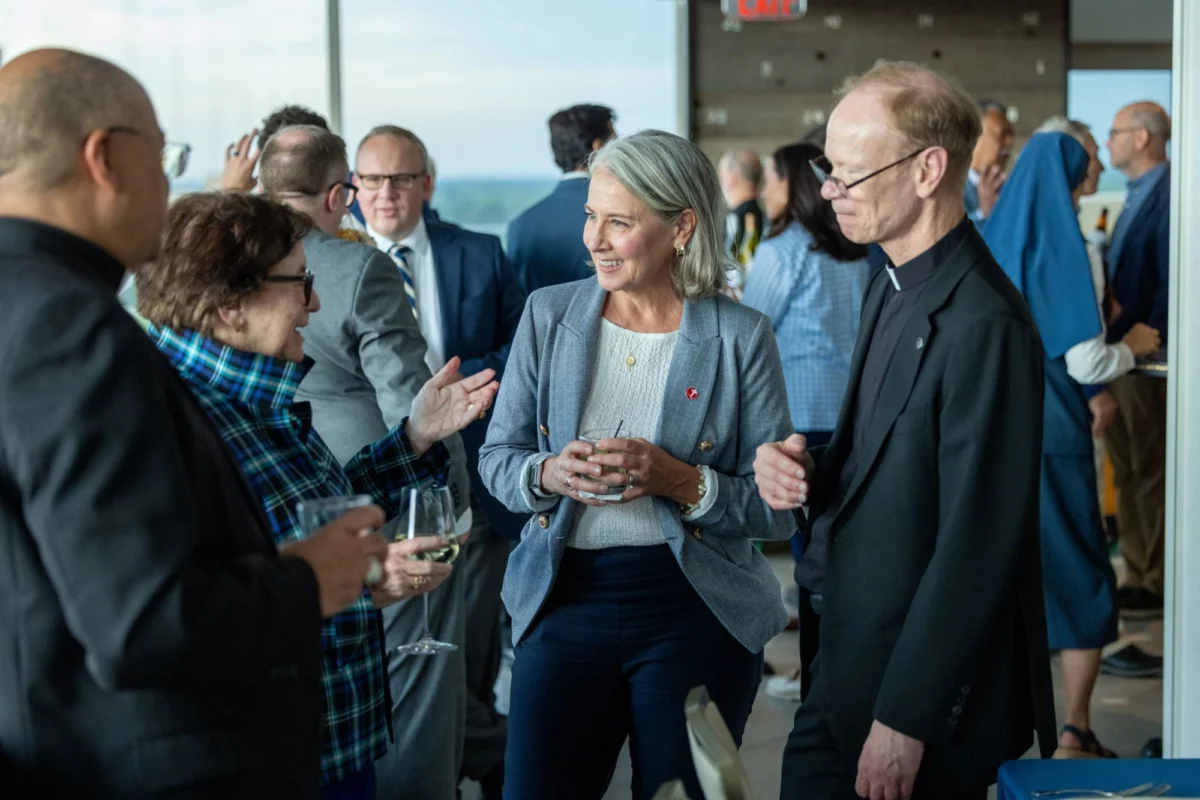
This fall, a diverse assembly of Catholic clergy, higher education leaders, women religious, and lay leaders converged at the University of Notre Dame to examine the Catholic Church’s unique approach to pluralism and religious liberty. The high-profile gathering took place as the United States approaches its historic 250th anniversary, providing a timely backdrop for deep reflections on the intersection of faith, democracy, and civic life in modern America.
The convening brought together prominent voices from across the Catholic intellectual and pastoral landscape to discuss how foundational Catholic teachings intersect with the American democratic experiment. Participants explored how the Church’s long-standing theological framework regarding human dignity can inform contemporary conversations about religious freedom, civic participation, and national unity during an era of significant social and political polarization.
At the heart of the discussions was the intrinsic dignity of the human person, a principle that attendees emphasized has always been central to Catholic doctrine. Sister Nancy Usselmann, director of Pauline Media Studies and a notable participant at the event, underscored this foundational belief during the sessions.
"The Church of itself has always taught this dignity of every human being," said Sister Nancy Usselmann. "Each person has specific dignity, and to respect them and love them for who they are is such a beautiful gift that the church gives."
This emphasis on inherent human worth served as a bridge to broader conversations regarding Interfaith America’s vision of pluralism, prompting leaders to reflect deeply on ongoing national efforts to uphold religious liberty within a pluralistic democracy. The dialogue directly addressed the challenges and opportunities of maintaining a society where diverse religious convictions can coexist harmoniously under a shared framework of constitutional rights.
Marcus Cole, the Joseph A. Matson Dean and Professor of Law at Notre Dame, offered a legal and theological perspective on the necessity of freedom in matters of faith. He noted that the protection of religious rights is not merely a legal convenience, but a fundamental prerequisite for authentic belief.
"Religious pluralism is a key feature of American society. The only way to get people to embrace the truth of my faith is if they are free to embrace it," said Marcus Cole. "You can’t force faith on anyone. We want to make sure that we promote freedom of religion for everyone, for all faith traditions, and for people who come from no faith tradition at all."
Dean Cole’s remarks resonated with the broader themes of the gathering, reinforcing the idea that true religious liberty must protect all citizens equally, regardless of their specific theological affiliations or lack thereof. This commitment to universal religious freedom was viewed by attendees as a vital contribution that the Catholic community can offer to the broader American civic project as the nation looks toward its milestone anniversary.
As the country looks ahead to its semiquincentennial celebration, Catholic leaders expressed a shared hope that the enduring values rooted in their tradition can serve as a powerful catalyst for national unity. In an era often characterized by deep divisions across political, cultural, and ideological lines, speakers at Notre Dame argued that the Church is uniquely positioned to help heal these fractures and model constructive civic engagement.
During the evening’s panel discussion, Donna Carroll, president of the Association of Catholic Colleges and Universities, addressed the vital role that religious institutions can play in bridging societal divides. She suggested that the current cultural moment calls for intentional leadership rooted in service and community building.
"I think we’re made for this polarizing moment, to be a unifying community and voice that helps democracy move forward," said Donna Carroll during the panel discussion. "We can not only help heal and bring people together, but we can actually model for our country what it means to serve."
President Carroll’s perspective highlighted the practical application of Catholic social teaching in higher education and public life, emphasizing that academic and religious communities hold a shared responsibility to foster environments where civil discourse and mutual respect can thrive. Her remarks underscored the potential for Catholic institutions to lead by example, demonstrating how diverse groups can work together toward common goals while honoring their distinct identities.
Adding to this vision of spiritual renewal and national reflection, Fr. James Martin reflected on the deeper moral aspirations that should guide the country as it marks two and a half centuries of independence. He pointed toward virtues that transcend political affiliations and call individuals to a higher standard of human interaction.
"As America turns 250, what I hope we would think about is our desire to be more Christian, which is the desire to be more loving, more merciful, and more compassionate," Fr. James Martin said.
The gathering at the University of Notre Dame ultimately provided a collaborative space for Catholic leaders to reaffirm their commitment to the American democratic framework while drawing deeply from their spiritual heritage. By engaging with the principles of human dignity, religious liberty, and pluralism, the participants mapped out a thoughtful path forward for the Church’s engagement with American society as the nation prepares to commemorate its 250th year.
