Breaking Bread and Building Bridges: How Interfaith America Network Partners Use Food to Foster Pluralism This Thanksgiving
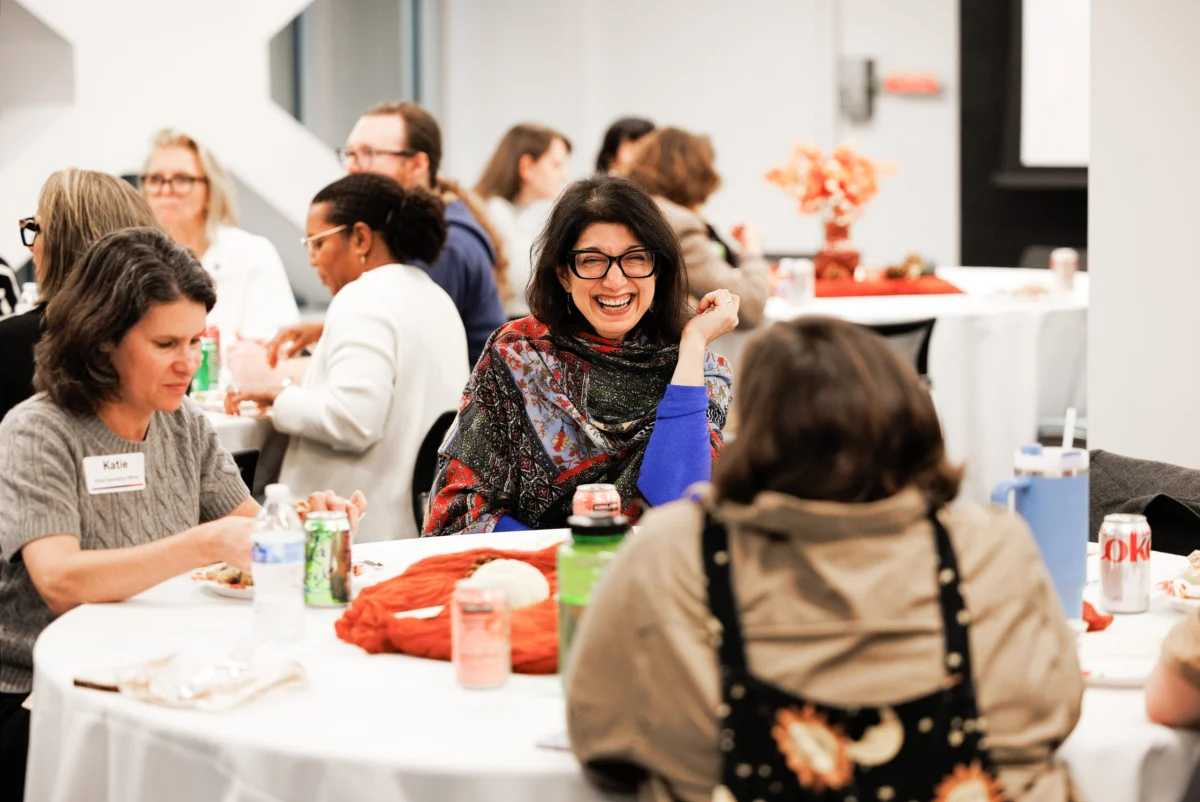
This Thanksgiving season, as communities across the nation pause to reflect on gratitude, Interfaith America (IA) has been connecting with network members from college campuses, local communities, and workplaces who believe deeply in the unique power of sharing food to bridge divides and illuminate shared values. Across the country, these dedicated partners are demonstrating what pluralism in action truly looks like. By gathering together for a meal, welcoming neighbors with mutual respect, and collaborating to serve those in need, they are proving that the simple act of sharing a table can help overcome differences and foster lasting human connection.
In an era often marked by ideological polarization and social fragmentation, the initiatives highlighted by Interfaith America offer a refreshing counter-narrative. Whether through campus festivals, recurring student dinners, nationwide community potlucks, or inclusive local food pantries, these programs show that food can serve as a powerful catalyst for civic engagement and social cohesion. Each partner reflects on how a shared table or a collective commitment to service can help bridge divides and cultivate deep, meaningful relationships across lines of difference.
On Campuses
If there is one universal constant that reliably brings people together, particularly in the dynamic environment of a college campus, it is food. A shared meal in a bustling dining hall or at a special campus event helps facilitate the crucial work that colleges and universities play in fostering community engagement, encouraging encounters across deep differences, and building enduring habits of civic leadership. Higher education institutions have long been incubators for social change, and today, campus organizers are leveraging the comfort of a shared table to bring diverse student bodies into conversation.
Dr. Jacqueline Brinton, a professor of religious studies at the University of Kansas, knows firsthand the transformative potential of sharing a meal. As a recipient of a Faith and Health Campus Grant and a key organizer of the university’s recent Interfaith Fall Fest—sponsored by the KU religious studies department—Brinton has seen how food lowers intellectual and social guards.
"I am a firm believer that sharing meals is one of the best ways to bridge differences," Brinton said. "Instead of asking people to engage intellectually, they are given the opportunity to share intimate, meaningful, human moments with one another."
The University of Kansas’s Interfaith Fall Fest, accompanied by a campus-wide food drive serving the broader local community, provides a vital opportunity for students to join together, rest, and reflect at the end of a busy, often stressful semester. By combining the celebration of diverse traditions with collective action to address hunger, the event embodies the intersection of spiritual reflection and civic responsibility.
This focus on recurring, relationship-building meals is echoed by other campus leaders across the network. Reflecting on the evolution of campus food initiatives, network participants point to programs that have successfully transitioned from isolated one-off gatherings into permanent fixtures of student life. One prominent example is the "Breaking Bread" initiative, which originated at Rollins College. Following his graduation from Rollins last spring, student organizer Pool has watched the program continue to bring students together in meaningful relationships over dinner.
Pool notes that a key to the success of the Breaking Bread model—both at Rollins where it began and on other campuses where the concept is now being adopted—is the commitment to offering recurring opportunities for students to connect week after week. It is this consistency, rather than the novelty of a single event, that builds enduring trust.
"That’s been the success," Pool explained. "It’s not the people who show up for the first time, but the ones who come back. You’re more willing to come to the table with someone you disagree with next time, and that relationship is what can eventually solve these world issues. It’s not the food itself that solves the world’s problems, but the food creates the relationship."
In Communities
Moving beyond university quads and residence halls, the power of food to unite people extends deeply into local neighborhoods and civic spaces. At the community level, when diverse groups of residents come together to share food and stories, the results can be transformative.
Karl Shatz, co-founder of the Maine-based nonprofit Community Plate, describes the phenomenon simply: "You get people together to share food and share stories, and it’s just magic." Shatz and his organization have been key partners in nationwide initiatives, such as "America’s Potluck," an event that invited communities across the United States to gather for potlucks in commemoration of America’s 250th anniversary. In civic spaces, food acts as a universal language that helps translate shared values of hospitality and service into tangible, collaborative community action.
This sentiment is shared by Denise Bartels, executive director of Catholic Charities of Omaha. Commemorating 100 years of continuous service this year, Catholic Charities of Omaha serves as a vital Team Up partner, addressing critical local needs through initiatives like their Market Choice Food Pantry. The pantry serves Nebraskans hailing from more than 41 different language backgrounds, encompassing a rich multitude of cultural and religious traditions.
"Food is the most human need everyone deserves," Bartels said, emphasizing the fundamental dignity inherent in providing a meal. "If we remove the labels, would we feed each other? And what does feeding really look like?"
Through programs that honor cultural preferences while addressing food insecurity, organizations like Catholic Charities demonstrate that the logistics of feeding a community can also be an exercise in radical hospitality and pluralism. By focusing on our most basic human requirements, communities can bypass complex ideological debates and meet one another in a spirit of shared humanity.
As network members gather this Thanksgiving season to break bread with colleagues, neighbors, and strangers alike, their collective message remains clear. Whether on a college campus navigating ideological diversity or in a bustling urban food pantry serving dozens of linguistic groups, the act of sharing food continues to lay the essential groundwork for empathy, understanding, and civic resilience. None of these organizations can build pluralism alone, but through the simple, enduring tradition of the shared table, they are proving that connection is always within reach.
