How Wilderness Awareness School is Redefining Nature Camps Through "Coyote Mentoring"
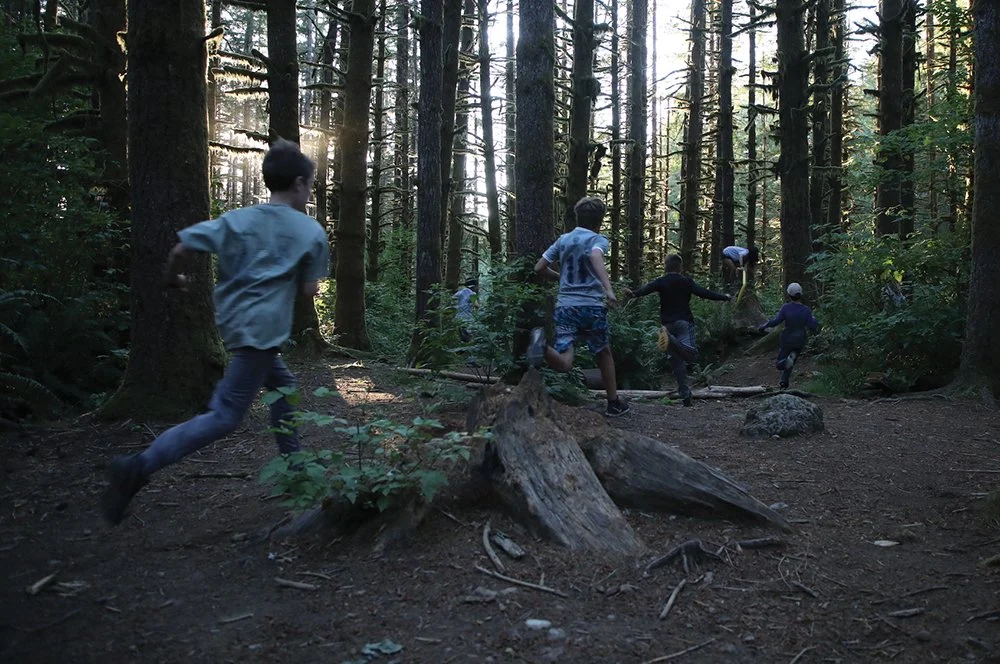
For the vast majority of human history, children learned through imagination, unstructured play, and direct interaction with the natural world. In an era long before television screens, video games, mass-manufactured toys, and digital devices dominated daily life, kids spent the bulk of their free time exploring woods, fields, and streams. Nature was their primary home, playground, and classroom combined.
Today, recapturing that ancestral connection to the outdoors requires a deliberate pedagogical shift, particularly as modern children grow up increasingly isolated from natural environments. At the Wilderness Awareness School, educators are tackling this challenge by doing things very differently than a traditional summer camp. While the daily schedule still features plenty of bug-hunting, muddy boots, camp songs, hands-on activities, and roasting food over an open campfire, a closer look reveals a sophisticated, highly intentional educational philosophy at work.
Piquing Curiosity Is Key
At the heart of the school’s curriculum is a signature teaching technique known as Coyote Mentoring. Throughout human history and across numerous cultural traditions, the coyote has appeared in folklore as a master of cleverness—a cunning creature that frequently uses wit and trickery to achieve a desired outcome. Coyotes live naturally on the boundary between the deep wild and human-developed landscapes, possessing the rare ability to move easily and unnoticed through both environments. Furthermore, a coyote epitomizes acute awareness, remaining fully tuned into its surroundings through all of its senses.
Rather than forcing information into the minds of children through traditional, top-down instruction, Coyote Mentoring draws learning directly out of them. This philosophy requires instructors to maintain a vigilant eye on the group, watching carefully for those fleeting moments when something in the environment captures a child’s attention. These moments create ideal, organic learning opportunities. By noticing what is sparking a camper’s natural curiosity, a mentor can use that exact spark as a catalyst to engage students in active learning. This subtle process creates a dynamic educational space where mentors can pass on profound ecological knowledge without campers ever realizing they are sitting in a classroom.
Teetering on the Edge
Enlisting the art of questioning is another primary method Coyote Mentors use to stir up organic curiosity. Instead of simply delivering a flat statement—such as telling a group that a specific feather discovered on the forest floor belongs to a Barred Owl—a Coyote Mentor engages the children with a carefully sequenced series of questions.
Mentors might ask what colors the kids are seeing on the plume, what size bird they believe the feather belonged to, how long it appears the feather has been resting on the ground, or how the feather might have come to be there in the first place. Instructors typically begin with a basic question that campers likely already have the answer to, gradually building toward more challenging intellectual levels until an educational edge has been reached.
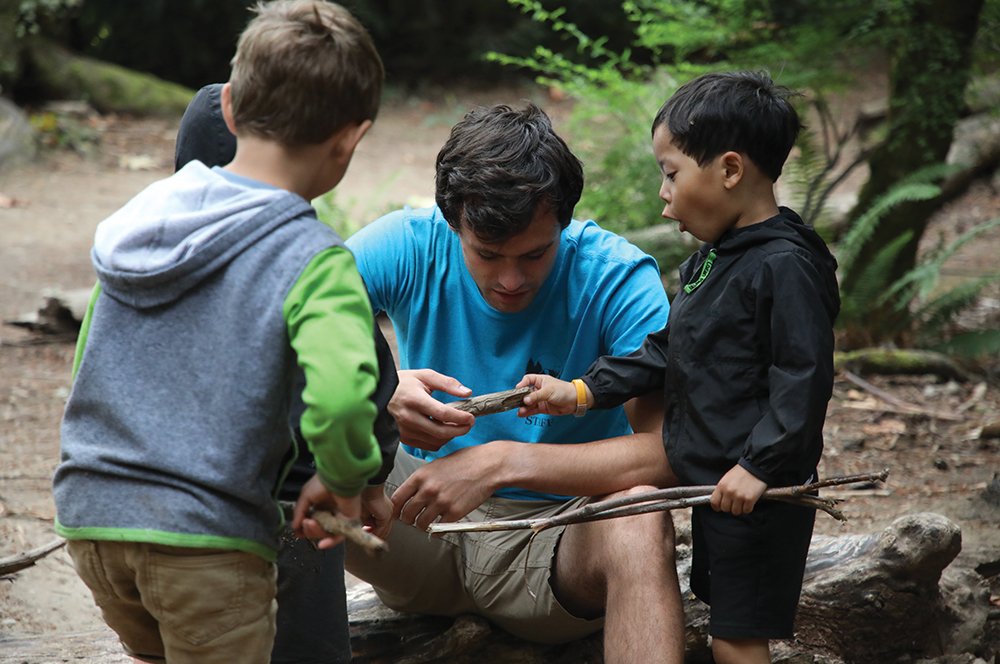
Recognizing and respecting a child’s "edge" is an essential component of the Coyote Mentoring framework. A camper who reaches the edge of engagement may temporarily appear scared, distracted, restless, or simply stuck. Mentors pay close attention to the emotional and cognitive states of the group, skillfully guiding a member to an intellectual or emotional edge while knowing precisely when to pause, take a break, and move on. At the same time, they remain vigilant for prime moments to re-engage the student.
Factors such as the time of day, individual communication styles, distinct learning preferences, and underlying personality traits are all critical considerations when assessing a student’s readiness. Rather than forcing a camper to adapt to a rigid teaching style, a Coyote Mentor adapts dynamically, catering to the student’s preferred learning style based on continuous observation.
Planting Seeds Engages an Audience
Instructors at the Wilderness Awareness School operate without a rigid, minute-by-minute daily agenda. Instead, they may outline activities for only the first part of the day, leaving the remainder of the schedule to be shaped organically by the natural flow, energy, and interests of the students.
Coyote Mentors typically begin each day with an energetic game designed to break the ice, foster camaraderie, and help children release pent-up physical energy. During these activities, mentors practice "planting seeds"—perhaps designating one camper as an eagle chasing several sparrows, or having children run around an imaginary mud pit. The instructors watch the group dynamics closely, waiting for the precise moment when a few campers begin to tire of the game, acting just before the entire group loses engagement. When the group’s collective energy dips naturally, the mentors pause the activity and gather the children to listen to a story.
Storytelling serves as yet another powerful opportunity to plant educational seeds. Stories offer a relatable, engaging way to draw out excitement and curiosity. For instance, a mentor might tell a narrative about a young girl who develops a special relationship with spiders and learns the art of weaving simply by observing eight-legged creatures in their natural habitat. Inspired by the tale, the group might then set off on an impromptu trek through the woods to look for spiders, deeply curious to discover firsthand how a spider spins its web.
During these outdoor adventures, campers are encouraged to step into their own awareness of the natural world and decide which elements of the landscape genuinely capture their interest. The Coyote Mentor observes quietly, choosing either to ask relevant questions in the moment or to weave these emerging curiosities back into the curriculum later in the day.
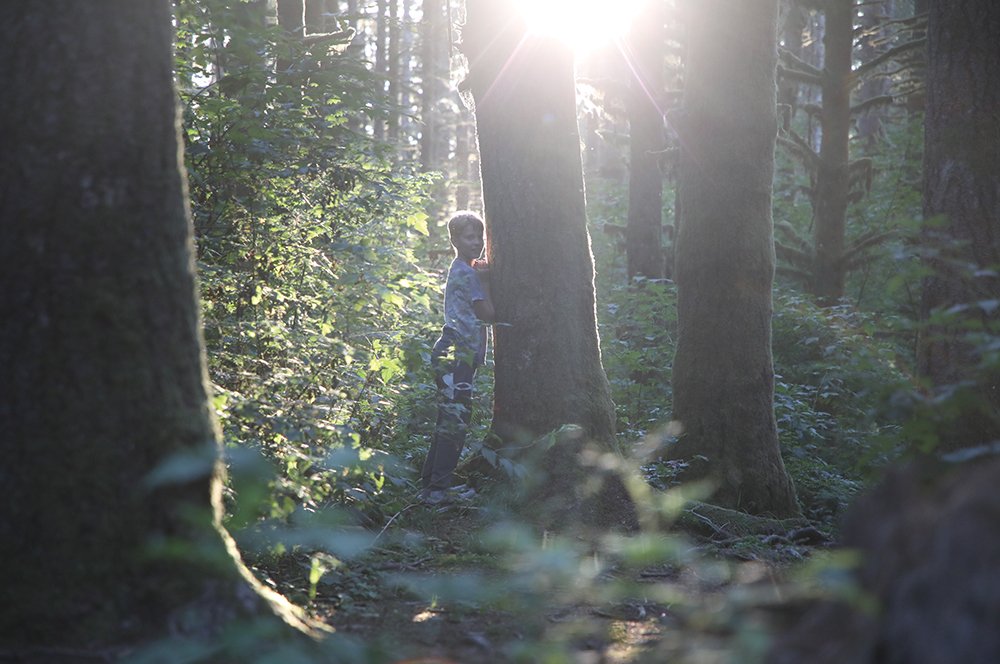
Recalling the educational seeds planted earlier during morning activities, mentors can further captivate campers by tying experiences together. Children who remember the morning’s imaginary mud pit, for example, are often delighted when an afternoon adventure leads them directly to a real, tangible mud pit. Here, they can reenact the morning’s game or simply dive in and get their hands dirty. Through this fluid approach, a standard day of summer camp blossoms into a cohesive, memorable narrative of its own.
Opportunities to Explore
By skillfully employing questioning, storytelling, flow learning, and acute observation, mentors utilize a diverse set of tools to help children forge deep relationships with the natural world and with one another. By fostering these meaningful connections, the Wilderness Awareness School has spent decades watching its students grow into resilient, compassionate, self-aware, and resourceful individuals.
While the Wilderness Awareness School might outwardly resemble a simple nature camp—offering campers a chance to get some fresh air and make new friends during the summer months—the underlying experience is carefully and expertly curated. The instructors, acting as modern coyotes, understand their campers, provide them with safe physical and emotional space to explore, orchestrate targeted opportunities for curiosity, and gently push their educational boundaries. When a camper eventually returns home from camp and surprises parents by leaving a digital tablet on the coffee table to ask if the family can go for a hike, the quiet work of the coyote is complete.
For those interested in exploring these educational philosophies further, the Wilderness Awareness School offers various training opportunities focused on the art of Coyote Mentoring. The institution publishes Coyote’s Guide to Connecting with Nature, a comprehensive manual available through its online store. The school also hosts a popular Coyote Mentoring Weekend each spring, alongside its intensive Nature Instructor Training program designed for a deep dive into the methodology.
