Beyond Enrichment: Growing Body of Research Cites Arts Education as Essential to Academic and Social Success
For well over a century, educators, cognitive scientists, and researchers alike have recognized a fundamental truth about human development: the arts are far more than mere enrichment or extracurricular window dressing. They are, in fact, essential to the core mechanics of learning. From music composition and dramatic performance to drawing, painting, and narrative storytelling, artistic expression has been repeatedly shown to strengthen academic achievement, foster robust creativity, enhance long-term memory retention, and build critical social-emotional skills. While many contemporary school districts and policy debates still treat the arts as optional fronds on the educational tree, a deep and mounting body of empirical research consistently demonstrates that creative disciplines are central to overall student growth and long-term success.
Education as an Art
The foundational idea that teaching itself is an art form has deep and enduring roots in pedagogical philosophy. Effective, transformative educators are not simply passive conveyors of standardized information; rather, they function as creative guides who awaken natural curiosity, invite deep exploration, and help students perceive the world around them in entirely new ways.
When lessons are thoughtfully infused with rhythm, imagination, and narrative structure, children find it vastly easier to connect abstract knowledge with lived experience. This dynamic was vividly illustrated in a major randomized trial conducted in Texas, entitled Investigating Causal Effects of Arts Education Experiences. The study provided compelling experimental evidence from the Houston Arts Access Initiative, demonstrating that students enrolled in schools with enhanced, comprehensive arts programming not only performed significantly better on standardized writing assessments, but they also displayed a notable reduction in disciplinary infractions alongside markedly higher levels of empathy toward their peers. When teaching is consciously approached as an art form, the scope of learning extends far beyond traditional academic metrics into the vital realms of character development, community building, and shared humanity.
Academic Achievement and the Arts
For decades, learning environments rich in the arts have been consistently linked to higher levels of overall academic performance across diverse student demographics. The landmark federal report Arts and Achievement in At-Risk Youth revealed a striking correlation: students who are deeply and consistently involved in the arts earn better grades across the board, graduate from high school at significantly higher rates, and exhibit a much greater likelihood of aspiring to and enrolling in higher education.
These findings have been reinforced more recently by the National Endowment for the Arts (NEA) in publications such as Snapshots of Arts Education in Childhood and Adolescence, which confirmed steady and consistent gains in fundamental reading, mathematics, and language skills when robust arts participation is maintained throughout a child’s schooling.
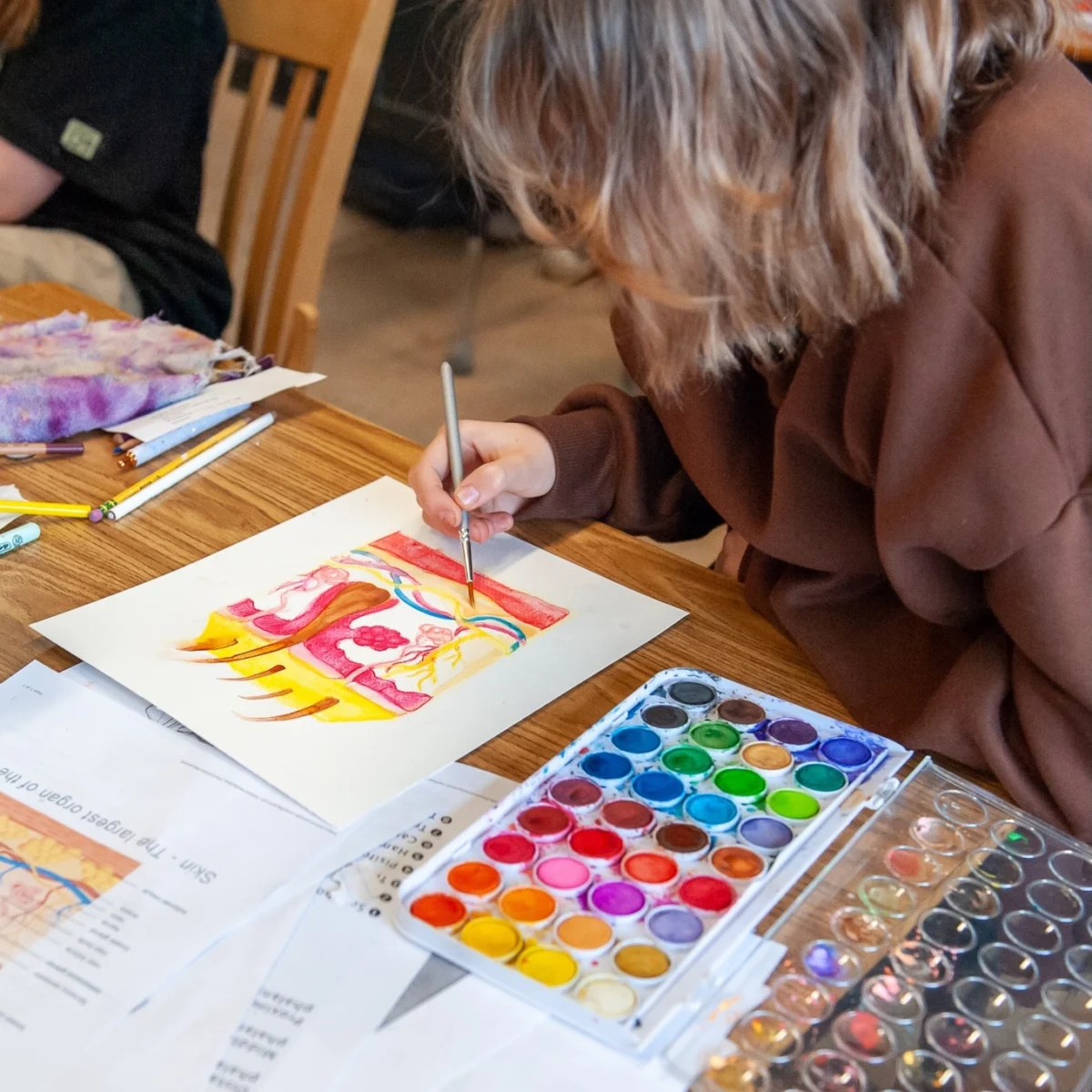
Further illuminating the cognitive mechanics at play, a prominent 2019 study by researcher Mariale Hardiman and her colleagues, titled The Effects of Arts-Integrated Instruction on Memory for Science Content, discovered that students who learned complex science concepts through arts-based methods retained and applied that knowledge far more effectively than control groups taught through traditional, lecture-based instruction. This research underscores a practice that many innovative classrooms have long utilized: abstract and complex concepts become significantly more accessible when introduced through hands-on artistic exploration. Whether it involves drawing geometric forms before attempting to solve advanced geometry formulas or illustrating the chemical phases of a science experiment as an integral part of the learning process, the arts serve as a cognitive bridge to understanding.
Creativity and Critical Thinking
In the rapidly evolving landscape of the modern global economy, creativity is no longer viewed as an optional luxury, but rather as an essential survival skill for the future workforce. A comprehensive report from the Organisation for Economic Co-operation and Development (OECD), titled Art for Art’s Sake?, highlights the profound ways in which structured arts education fosters flexible, innovative thinking among young learners.
Empirical studies consistently confirm that students who actively engage in artistic activities develop significantly stronger divergent thinking skills. This cognitive capacity enables them to generate truly original ideas, synthesize disparate concepts, and adapt fluidly to novel, unexpected situations. Whether a student is composing an original piece of music, performing a character in a drama production, or painting a detailed landscape, the creative process cultivates vital habits of mind: persistence, originality, and advanced problem-solving capacities that easily translate across academic disciplines and real-world challenges.
Memory, Engagement, and Multisensory Learning
The cognitive benefits of artistic practice extend deeply into the realms of memory formation and student engagement. The research spearheaded by Hardiman and her team demonstrates that arts-integrated instruction leads to deeper, more durable long-term recall of academic content.
This enhanced retention occurs primarily because the arts activate multiple sensory pathways simultaneously—incorporating visual, auditory, and kinesthetic elements—which effectively anchors new knowledge in embodied physical and emotional experience. Simple classroom techniques, such as reciting poetry with rhythmic movement, singing a complex mathematical formula, or illustrating historical turning points, embed learning into the brain much more powerfully than passive listening or rote memorization alone.
Social-Emotional Growth
Beyond traditional academic domains, the profound benefits of arts education spill over naturally into the social-emotional lives of students. The aforementioned Houston-based study documented increased compassion and markedly improved school engagement among students who experienced greater exposure to the arts.
Similarly, an NEA publication titled Arts in Early Childhood: Social and Emotional Benefits of Arts Participation documented empirical evidence showing that collaborative storytelling, group music-making, and dramatic play actively build cooperation, empathy, and psychological resilience in young learners. When children work together toward a common goal—such as rehearsing a theatrical play, participating in a school choir, or collaborating on a large-scale visual art project—they are forced to practice vital interpersonal skills. Collaboration, patience, conflict resolution, and shared responsibility are all forged in these creative spaces, serving as essential life skills that extend far beyond the classroom walls.
Equity and Access
Despite the overwhelming and unambiguous body of evidence supporting their value, arts and music programs are historically the very first areas to face severe budget cuts when school districts encounter financial tightening. Yet, extensive educational research demonstrates that consistent arts engagement can serve as a powerful equalizer for disadvantaged populations.
Landmark studies published by the NEA reveal that low-income students who maintain deep involvement in the arts consistently outperform their socioeconomic peers academically, demonstrate higher rates of college attendance, and show greater engagement in civic life and community affairs. Furthermore, nationwide initiatives like the Kennedy Center’s Turnaround Arts program confirm parallel outcomes, recording measurable improvements in daily student attendance, behavioral metrics, and overall school climate in historically underfunded schools that choose to embrace comprehensive arts integration.
A Universal Call
The collective weight of educational research presents an unequivocal conclusion: the arts are not peripheral distractions, but rather fundamental pillars of a complete education. They consistently elevate academic performance, spark vital creativity, deepen cognitive memory retention, and nurture human empathy. School systems that fully and courageously integrate the arts—whether through music, visual arts, movement, drama, or storytelling—directly embody what modern cognitive science and pedagogical research affirm as best practice for human learning.
For well over a century, alternative educational models such as Waldorf schools have provided a living example of what this holistic integration looks like in everyday practice, weaving the arts into every academic subject as an absolute matter of principle rather than an afterthought. Within these environments, the arts are recognized clearly for what they are: not mere add-ons, but the vibrant medium through which core academics are brought fully to life.
