Atlanta Faith-Based Nonprofit Steps in to House Senegalese Immigrants Amid Shifting Federal Policies
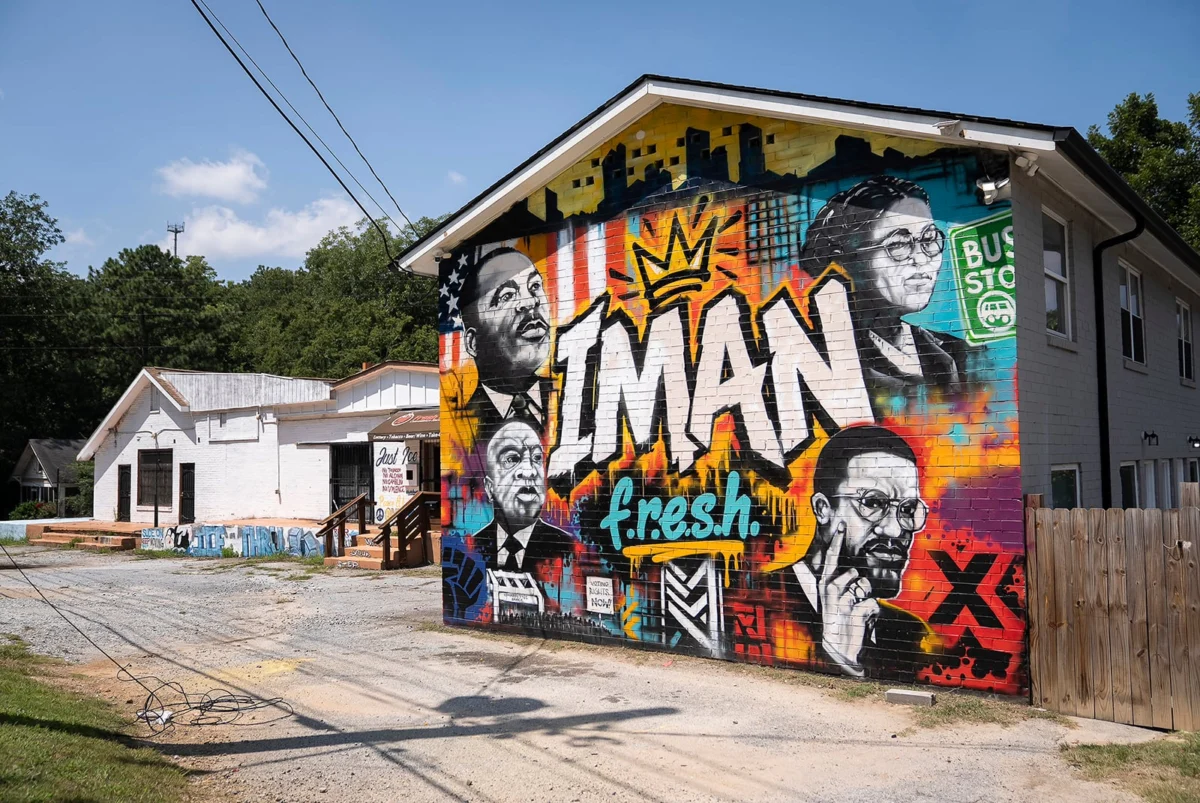
ATLANTA — When Mamdou Seck immigrated to the United States from Senegal in 2023, he arrived in Atlanta with a profound need for stability. Seeking employment and a path forward in an unfamiliar city, he found himself facing a daunting housing shortage common among newly arrived asylum-seekers. That is when the Inner-City Muslim Action Network-Atlanta (IMAN-Atlanta) stepped in to provide a lifeline.
Today, Seck shares an apartment complex known as Teranga Village with about a dozen other men, all of them fellow immigrants from Senegal. Launched in 2023, the IMAN transitional housing program offers subsidized accommodation, regular food supplies, and essential assistance in connecting with legal counsel to help residents navigate their immigration proceedings. The name of the village carries deep cultural resonance; "Teranga" translates to "hospitality" in Wolof, one of the most widely spoken languages in Senegal.
"If it wasn’t for IMAN, it would have been way more difficult to just kind of get on my feet," Seck, 34, said through a translator. "They are providing a way for me to get stable."
From Local Emergency to Coordinated Resettlement
IMAN launched the transitional housing program for new immigrants in 2023 after receiving an urgent request from the Atlanta mayor’s office. According to estimates from advocacy groups, hundreds of Senegalese immigrants had arrived in Atlanta after traveling through the southern border. Unable to secure immediate housing in a competitive market, dozens of newly arrived individuals were forced to spend their nights seeking shelter at local mosques.
The Atlanta mayor’s office turned to IMAN and several other local nonprofit organizations to help shoulder the sudden resettlement burden, according to Tiffany Green-Abdullah, IMAN-Atlanta’s director of development. While the faith-based nonprofit had no prior experience working directly with newly arrived migrants, it possessed a deep well of expertise in urban community integration and transitional support.
For years, the organization’s flagship Green Re-Entry Program has offered transitional housing, comprehensive job training, and other supportive services for formerly incarcerated individuals—referred to by IMAN as "returning citizens." Leadership recognized that the framework they had perfected over years of community work could be adapted to meet a different kind of displacement.
"We knew we had a successful program. We thought we could integrate new immigrants with returning citizens — and it worked," Green-Abdullah said.
Bridging Communities Through Shared Spaces
Today, the faith-based nonprofit owns two distinct apartment buildings on the city’s Westside, dedicating one facility to formerly incarcerated returning citizens and the other to newly arrived immigrants. The two groups frequently intersect, volunteering together in the center’s community garden. Through these shared daily activities, the Senegalese immigrants are able to practice and improve their English language skills, Green-Abdullah noted.
At the same time, the returning citizens offer the newcomers practical, localized guidance—what staff members describe as "street smarts"—such as learning which neighborhoods are safe to explore, how to navigate local transit, and where to find community resources.
The migrant housing initiative, designed to accommodate up to men at a time, was originally established in large part due to a $603,026 grant from a federal funding stream administered through the Federal Emergency Management Agency. Under FEMA’s Shelter and Services Program, the Atlanta city government received the grant funds and distributed them to IMAN as the nonprofit submitted verified receipts for covered operational costs, including food and shelter provisions.
Federal Funding Cuts Create Financial Pressure
The operational landscape for the program shifted significantly following political transitions at the federal level. On the first day of his second term, President Donald Trump issued an executive order titled "Protecting the American People Against Invasion," which directed federal agencies to audit and scrutinize grants supporting immigrant services. That directive effectively led to the termination of the FEMA grant program upon which IMAN had heavily relied to sustain its migrant housing efforts.
IMAN’s leadership estimates that the organization received approximately $250,000 of the initially promised $603,026 before the funding pipeline was cut off. Faced with a steep budgetary shortfall, the nonprofit has had to rely increasingly on private charity and modest internal program fees to keep the critical initiative running.
During Ramadan in 2025, IMAN collaborated with a local Islamic scholar and area mosques to spearhead a fundraising campaign that ultimately raised more than $40,000 from Muslim donors. This effort drew upon Zakat, the obligatory charitable giving required under the Islamic faith, Green-Abdullah explained. The organization applied these donations directly toward covering residents’ rent and food costs, bridging an immediate financial gap left in the wake of the federal grant cancellation.
Additionally, IMAN restructured the housing model to begin charging residents a reduced rent of approximately $500 a month, with each apartment accommodating up to three people.
Cultural Interpretation and the Path to Independence
The transitional housing provided by IMAN serves as a vital grace period for recent arrivals, according to Mohammed Ali, a case manager and chaplain who oversees the day-to-day operations of the program.
"They need that time to find their bearings," said Ali, who was hired the previous year in large part because he is fluent in both Arabic and Wolof, allowing him to communicate directly with the residents without barriers.
Ali assists the men with securing groceries, navigating job searches, and establishing connections for legal representation. Beyond logistical support, he acts as a cultural interpreter, helping the newcomers adapt to unfamiliar American social customs, such as offering a firm handshake or maintaining direct eye contact during professional interactions.
While some residents stay for as little as two months—saving enough money through employment to transition into independent housing—others, like Seck, have called Teranga Village home for more than a year, Ali noted.
The men participating in the program entered the United States under lawful immigration pathways established during the Biden administration, following official procedures to apply for asylum and, in many instances, securing legal work authorizations.
Broader Housing and Immigration Pressures in Georgia
Despite having legal work permits, finding stable, long-term housing remains an uphill battle. Language barriers often complicate the search, and private landlords can be hesitant to rent to tenants with pending asylum status, Green-Abdullah explained. For this vulnerable population, achieving basic stability is viewed as a major victory, whether that ultimate outcome involves living independently or remaining temporarily in supportive housing.
To work around these systemic barriers, IMAN-Atlanta has cultivated direct relationships with property managers at approximately five apartment complexes in the area that are willing to accept tenants from immigrant and formerly incarcerated housing programs, Ali said.
Other local organizations are also working to address the acute need for long-term housing among Atlanta’s growing immigrant population. Inspiritus, an Atlanta-based social support agency, assists Senegalese newcomers in locating available apartments, while the Senegalese Community for Aid and Self-Development (SENCAD) provides financial assistance to cover the first few months of rent, according to Ismaila Fall, a spokesperson for the organization.
Rising operational costs and the abrupt loss of federal funding have undoubtedly made the work harder to sustain. However, Ali emphasized that the organization remains deeply committed to its mission, describing the initiative as "the pinnacle of what it means to be a Muslim."
For the residents themselves, the challenges extend far beyond the immediate hurdle of finding an apartment. Georgia has consistently ranked among the top five states nationwide for federal immigration arrests, recording more than 13,600 confirmed enforcement actions between January 2025 and March 2026, according to an analysis by The Atlanta Journal-Constitution. Enforcement actions by Immigration and Customs Enforcement saw a sharp increase across the state over the summer months.
Koly Sissoko, a native of Senegal living at Teranga Village, said the climate of heightened enforcement has created widespread anxiety, noting that he knows individuals who are genuinely afraid to leave their residences. He added that he is deeply frustrated by the anti-immigrant rhetoric he frequently encounters online and in public discourse.
"People say immigrants are not good workers. That’s absolutely wrong," said Sissoko, who currently works as a package delivery driver while saving money to attend college and pursue his ultimate ambition of becoming a lawyer. "We’re just normal human beings. We’re not criminals."
