Beyond the Screens: How Wilderness Mentors are Reviving Childhood Through Nature
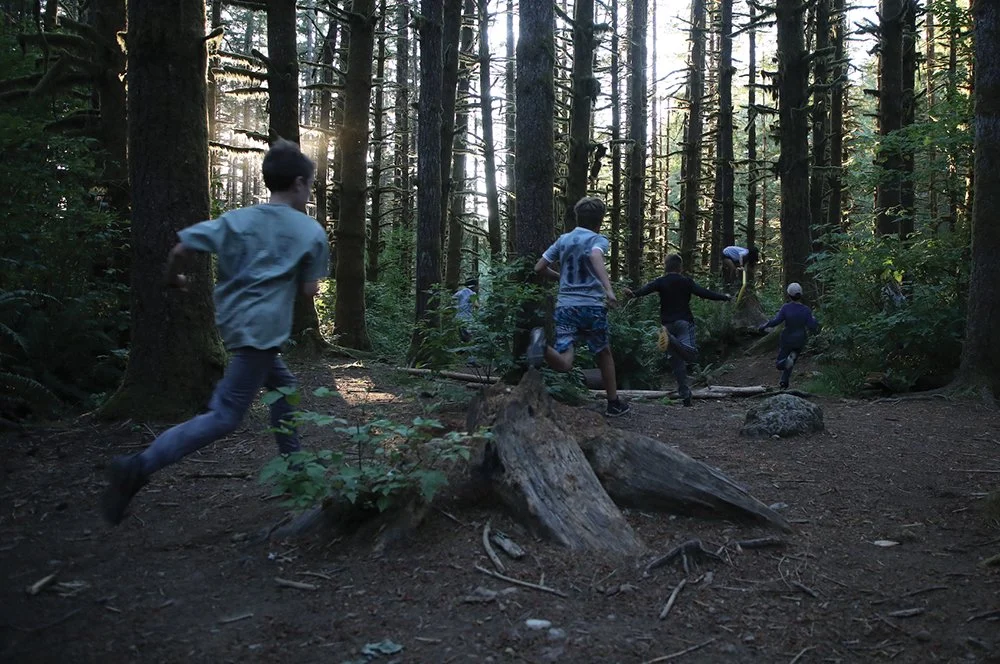
For the vast majority of human history, a child’s playground was not defined by plastic, pixels, or predetermined rules, but by the boundless expanse of the natural world. Long before the advent of television, video games, and mass-manufactured toys, generations of children spent their free time exploring forests, building forts out of fallen branches, tracking wildlife, and turning mud into masterworks. Nature was not merely a weekend destination; it was home.
In the modern digital age, however, that relationship has fundamentally shifted. Yet, nestled deep within the Pacific Northwest, the Wilderness Awareness School is working to reclaim that lost heritage. On the surface, the organization’s summer programs look much like any traditional nature camp: children spend their days catching bugs, singing songs, swimming in rivers, roasting food over open campfires, and getting thoroughly caked in mud.
Upon closer examination, however, these camps operate under an entirely different philosophy—one designed to awaken an innate, ancestral connection to the environment rather than simply keeping children occupied outdoors.
Piquing Curiosity Is Key
At the heart of the Wilderness Awareness School’s curriculum is a specialized teaching methodology known as Coyote Mentoring. Named after the legendary animal of folklore—a creature celebrated in indigenous stories for its cleverness, adaptability, and mastery of survival—the technique relies on trickery and subtlety to achieve its ultimate educational outcomes. In mythology and nature alike, the coyote lives on the edge of the wild, effortlessly navigating both dense wilderness and human-dominated spaces while remaining hyper-aware of its surroundings through acute sensory perception.
Coyote Mentoring flips traditional education on its head by drawing knowledge out of children rather than forcing information in. This approach requires instructors to maintain a vigilant watch over their campers, scanning the environment for the exact moments when something sparks a child’s genuine interest. These fleeting moments serve as prime learning catalysts. By building activities around these organic sparks of wonder, mentors create an immersive space where children absorb complex ecological and social knowledge without ever realizing they are sitting in a classroom.
Rather than imposing a rigid lesson plan, instructors act as facilitators of discovery. They observe what draws a camper’s attention—whether it is a tiny spider weaving a web, a strange footprint in the dirt, or the texture of tree bark—and harness that specific curiosity to drive active, hands-on learning.
Teetering On The Edge
One of the primary tools in a Coyote Mentor’s arsenal is the art of strategic questioning. Instead of robbing children of a discovery by simply providing an immediate answer, mentors use a ladder of inquiries to guide students toward their own conclusions.
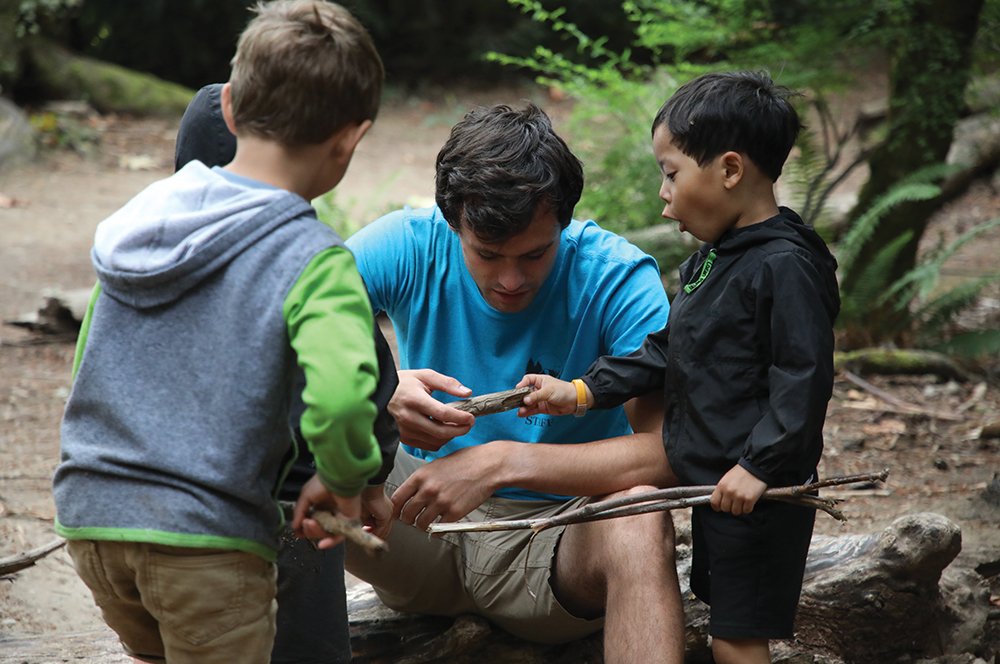
For instance, if a group of campers stumbles upon a discarded feather on the forest floor, a conventional instructor might immediately identify it as belonging to a Barred Owl. A Coyote Mentor, however, handles the discovery entirely differently. They initiate a dialogue: What colors do the children see in the feather? What size bird do they think could produce a feather like that? How long has it likely been resting on the ground? How might it have fallen from the canopy?
Mentors deliberately begin with simple questions that the children can easily answer, steadily increasing the complexity of the inquiry until the group reaches what educators call "the edge."
Recognizing and navigating a child’s edge is a critical component of the Coyote Mentoring framework. When a camper reaches their edge—the boundary where engagement begins to fray into frustration, distraction, or fatigue—they may appear stuck or overwhelmed. Skilled mentors pay close attention to these subtle behavioral cues, knowing precisely when to gently push a student past a mental barrier, when to call a break and pivot to a new activity, and when to create opportunities for re-engagement later in the day.
Achieving this level of awareness requires deep observation. Instructors must account for the time of day, individual communication styles, unique learning preferences, and the distinct personality traits of every child in their care. Rather than forcing students to adapt to a standardized teaching style, the mentors adapt to the students in real-time.
Planting Seeds Engages An Audience
To maintain this fluid, responsive environment, instructors at the Wilderness Awareness School deliberately avoid rigid daily agendas. While the morning may begin with a structured framework, the remainder of the schedule is left open to be shaped by the natural energy and interests of the students.
Days typically begin with high-energy games designed to break the ice, foster camaraderie, and help campers burn off excess morning energy. During these games, instructors "plant seeds"—subtle thematic ideas that will blossom later in the day. A game of tag, for example, might feature one child acting as an eagle chasing several sparrows, or campers racing around an imaginary mud pit.
As the mentors watch the group, they look for the exact moment when the children’s energy begins to wane, acting before total disengagement sets in. Capitalizing on this drop in physical energy, the instructors gather the children to tell a story.
Storytelling serves as another powerful method for planting educational seeds. A mentor might recount a tale about a young girl who forms a special bond with spiders, learning the geometry of weaving by quietly observing the eight-legged creatures in her garden. Captivated by the narrative, the group will often naturally decide to set off on a trek through the woods to search for real spiders, eager to witness how nature builds its intricate webs.
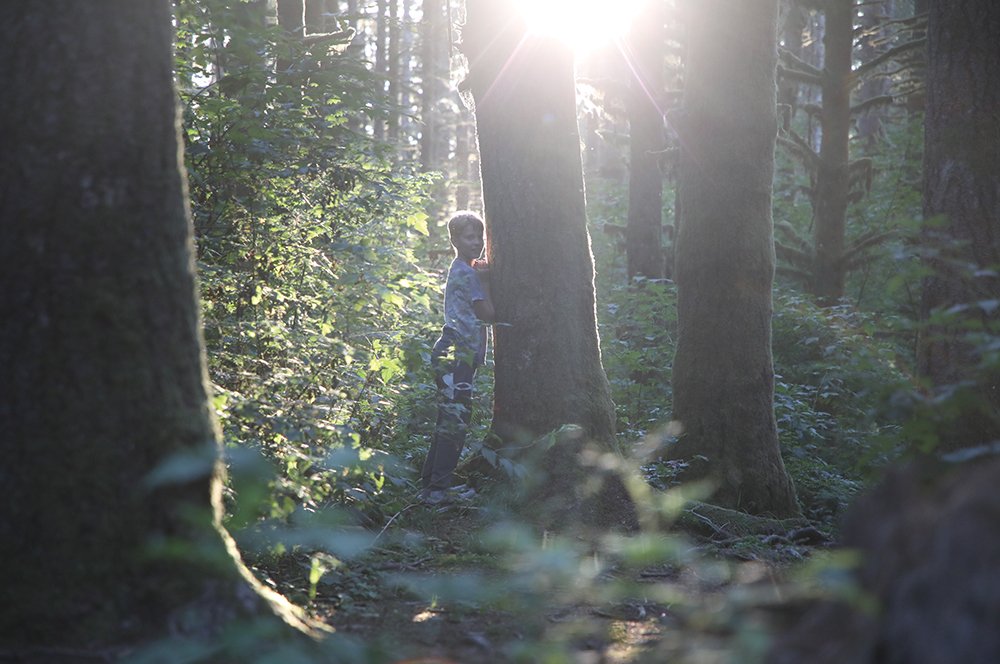
As the campers adventure through the forest, they step into a heightened state of environmental awareness, determining for themselves which aspects of the natural world capture their imagination. The Coyote Mentor observes the unfolding expedition, choosing which questions to ask in the moment and which curiosities to fold back into the curriculum later in the day.
When the afternoon sun beats down and the children’s energy shifts once again, mentors can recall the seeds planted earlier that morning. Reminding the group of the imaginary mud pit from the dawn game, instructors often lead them directly to a real, tangible mud pit. Delighted by the connection, the children eagerly reenact the morning’s game or simply dive in to get their hands dirty, transforming a standard summer camp day into an unforgettable, self-authored adventure.
Opportunities To Explore
Through the deliberate integration of targeted questioning, storytelling, flow learning, and keen observation, mentors at the Wilderness Awareness School forge deep, lasting connections between children and the natural world, as well as with one another. Over decades of operation, the school has observed that children immersed in this environment consistently grow into adults who are remarkably resilient, compassionate, self-aware, and resourceful.
While the program may outwardly resemble a traditional summer camp focused on fresh air and outdoor recreation, the experience is meticulously orchestrated by educators who understand the profound developmental value of unstructured play and guided curiosity.
Ultimately, the true measure of success happens long after the camp has ended. When a child returns home from a summer session, sets down their digital tablet on the coffee table, and turns to their family to ask if everyone wants to go for a hike in the woods, the work of the coyote is complete.
The Wilderness Awareness School continues to share these transformative educational philosophies through various training initiatives, including its foundational publication, Coyote’s Guide to Connecting with Nature, annual spring Coyote Mentoring Weekends, and comprehensive Nature Instructor Training programs designed for adults seeking to bring this ancient art of mentoring to the next generation.
