A New Paradigm in Maternity Care: Shifting from Risk Assessment to Salutophysiology
In the contemporary landscape of maternity care, the standard approach is often defined by a vigilant, almost defensive posture. Birth professionals are rigorously trained to act as sentinels, constantly scanning for potential complications, assessing risk, and preparing for the worst-case scenarios. While this model of care has undeniably saved lives and provided necessary interventions in emergencies, many practitioners have begun to voice a growing concern: in our clinical obsession with what could go wrong, we may be inadvertently losing sight of what is required to support health, trust, and the natural physiological process of birth.
A paradigm shift is now emerging in the form of "salutophysiology," a model of care that proposes a fundamental change in the starting point of the patient-provider relationship. Rather than beginning with a checklist of risks, salutophysiology invites clinicians to ask a different, more foundational question: What are the conditions that allow health to flourish?
The Origins and Philosophy of Salutophysiology
The term "salutophysiology" is rooted in the concept of salutogenesis, a term coined by medical sociologist Aaron Antonovsky, which shifts the focus of health research from the pathogenesis—the origins of disease—to the origins of health. In the context of maternity care, this framework was further theorized and refined by midwife Verena Schmid.
At its heart, salutophysiology rejects the idea that physiology is merely a series of mechanical steps that either function or fail. Instead, it posits that the human body is inherently responsive, deeply relational, and profoundly influenced by the environment. When a laboring person feels safe, respected, and supported, the body’s internal systems are far more likely to work in harmony. By viewing the birth process as a holistic event rather than a series of isolated medical tasks, professionals can gain a much deeper understanding of how labor unfolds, recognizing that the emotional, environmental, and physical aspects of birth are inextricably linked.
Why the Shift to Health-Oriented Care Matters
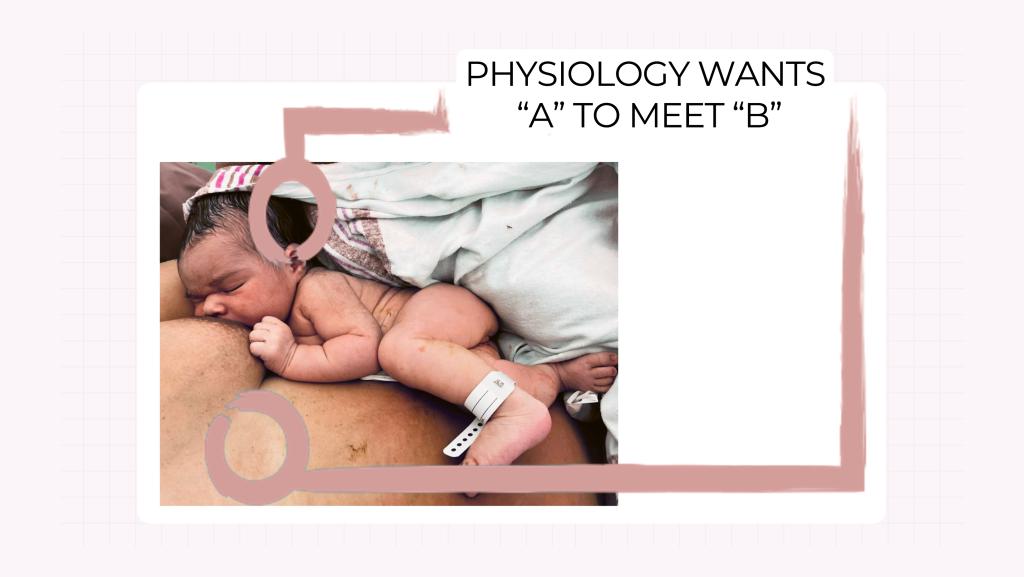
Birth is a profoundly embodied experience that does not occur in a vacuum. A person’s nervous system is in constant, rapid communication with their environment, and this ongoing assessment of safety directly dictates the hormonal cascade, muscle tone, and the body’s overall readiness for labor.
When a care environment is primarily driven by a risk-focused mindset, it often inadvertently creates an atmosphere of surveillance and anxiety. Even if well-intentioned, this clinical pressure can trigger a sympathetic nervous system response—the "fight or flight" mode—which can, in turn, hinder the physiological progression of labor. By focusing exclusively on avoiding risk, the healthcare system may paradoxically create the very stress that interferes with the natural birth process.
Salutophysiology provides a necessary corrective to this dynamic. It does not advocate for ignoring the realities of clinical risk or the necessity of medical intervention when complications arise. Rather, it builds a foundation of health that allows physiology to function more effectively, even within complex situations. By prioritizing the conditions that support the nervous system—such as trust, autonomy, and environmental safety—practitioners can foster a space where the body’s innate capabilities are maximized, making the labor process smoother and more predictable.
Aligning with the Spinning Babies® Approach
For the many birth professionals already utilizing the Spinning Babies® approach, the principles of salutophysiology will feel like a natural evolution. Spinning Babies® has long championed the idea that birth is a dynamic interaction between the body’s anatomy and the movement of the fetus. By focusing on balance, gravity, and maternal positioning, the approach looks beyond mechanical intervention to support the body’s ability to function as a unified system.
The integration of salutophysiology deepens this perspective. While Spinning Babies® provides the tools to support movement and fetal positioning, salutophysiology provides the philosophical framework to understand why those interventions are so effective. Together, they encourage a shift away from a "technique-based" mindset, where a provider simply applies a maneuver, and toward a "relationship-based" mindset, where the provider is in deep, active communication with the physiology of the laboring person. This shift allows for more nuanced care, where the professional is not just doing something to the patient, but working with the patient’s body as it navigates the birth process.
Transforming Practice in Real-Time
One of the most persistent challenges for birth professionals is the gap between theoretical knowledge of physiology and the practical application of that knowledge during the intensity of a birth. Salutophysiology offers a practical bridge for this gap. It provides a lens through which providers can interpret the signals of a laboring body in real-time.
Instead of reflexively asking, "What is the next clinical step I should take?" a provider trained in salutophysiology learns to pause and observe. They learn to ask: "What is this body responding to right now, and how can I adjust the environment or the support I am providing to better facilitate this process?" This inquiry changes the nature of clinical decision-making, turning it into a collaborative effort that honors the expertise of the laboring person and the wisdom of their physiology.
This shift is fundamentally a transition from fear to trust. It invites professionals to move away from the assumption that the body is a fragile, unpredictable machine that must be managed, and instead view it as a resilient, intelligent system that is highly capable when provided with the right support. It encourages providers to move away from the reactive nature of fear-based protocols and toward a proactive, trust-based model that honors the inherent capability of the birthing person.
New Educational Opportunities
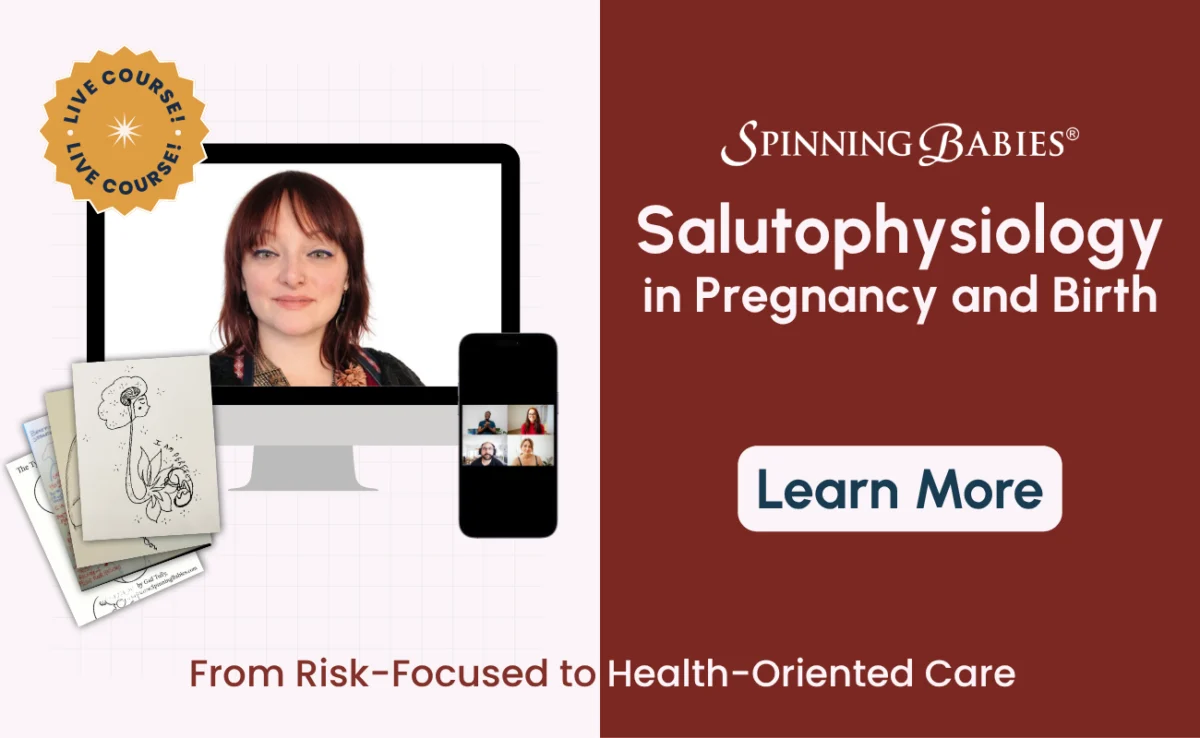
Recognizing the need to bring this framework into clinical practice, Spinning Babies® has entered into a strategic collaboration with Anna Maria Rossetti to offer a new, in-depth learning experience for birth professionals. This course is designed to explore the complex intersections of the nervous system, the birth environment, and human physiology throughout the pregnancy, labor, and postpartum periods.
The curriculum is structured to include live sessions that provide participants with the time and space to reflect on their own clinical biases, integrate new concepts into their existing practice, and apply these ideas in a supportive, community-based setting. This is an opportunity for midwives, obstetricians, nurses, doulas, and other birth workers to expand their clinical horizons alongside a community of like-minded peers who are also questioning the status quo and seeking to elevate the standard of care.
The course, titled Salutophysiology in Pregnancy and Birth: From Risk-Focused to Health-Oriented Care, is a joint initiative between Spinning Babies® and SEAO. It is designed for those who are ready to move beyond the traditional limitations of risk assessment and deepen their professional presence. By fostering a more connected and responsive way of supporting birth, this training aims to empower professionals to provide care that is not only safer but more aligned with the holistic needs of families. Registration for this program is now open, marking a significant step forward in the movement to integrate health-oriented, salutogenic principles into the modern maternity care system.
