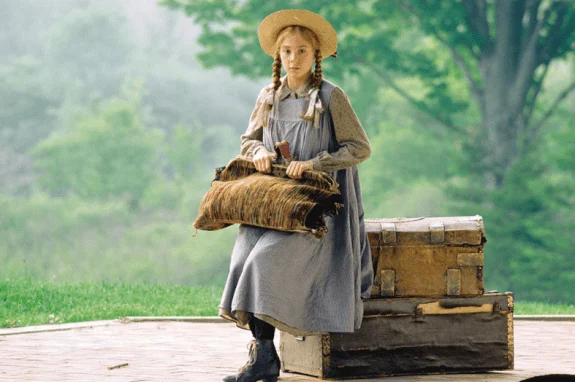
"There, there, Marilla, you can have your own way," said Matthew reassuringly, in one of the most enduring exchanges from L.M. Montgomery’s classic Canadian literature. "Only be as good and kind to her as you can without spoiling her. I kind of think she’s one of the sort you can do anything with if you only get her to love you."
For Jamie C. Martin, editor of Simple Homeschool, those words—and the freckled, red-headed orphan who inspired them—served as a foundational blueprint for life. As a 12-year-old reader, Martin spent countless hours under the literary influence of Anne Shirley. The fictional resident of Prince Edward Island offered more than just exciting adventures; she fundamentally shaped her young reader. Looking back, Martin realizes that Anne planted seeds that later grew into a full harvest in her adult life: seeds of adoption, a lifelong love for books, a passion for writing, and the unapologetic mindset of a starry-eyed dreamer.
The connection proved lasting. Martin read the entire Anne of Green Gables series multiple times throughout her teen and young adult years, alongside nearly everything else she could acquire by author L.M. Montgomery. The author’s distinctive voice resonated deeply with her formative experiences.
Years later, as a newly married woman, Martin experienced another profound shift when she read all five volumes of L.M. Montgomery’s selected journals. For dedicated fans of the series, these personal records offer a stark contrast to the whimsical fiction. This time, the author’s words altered Martin’s perspective in a less starry-eyed, more grounded manner. The journals revealed grown-up entries of joy mixed with deep sorrow, placing happiness side-by-side with heartbreak. It was a revelation that challenged her to look at the beloved fictional character in a completely new light.
Yet, it quickly became apparent that Anne Shirley had a few more lessons hidden up her proverbial puffed sleeves.
Applying a literary tradition suggesting that readers approach classic books with a specific, personal question in mind, Martin decided to re-evaluate the classic novel through the lens of her current life stage. Now a mother of three and an experienced home educator, she posed a singular inquiry to the text: What can a parent learn about raising children from Anne of Green Gables?
The surprising answer is a philosophy she has tried to implement ever since: loosen up and let maturity do its work.
The Value of Patience in Childhood Development
Throughout the classic novel, a tween and early teen Anne is constantly finding herself in various forms of mischief. Whether she is spinning elaborate tales, accidentally dyeing her greenish hair, falling off the ridgepole of a roof, or inadvertently getting her bosom friend Diana Barry intoxicated with homemade currant wine, Anne’s imagination frequently outpaces her judgment.
For parents navigating similar episodes of continuous childhood misbehavior, Anne’s fiery temperament provides both comic relief and a touch of realism. Her temper famously reaches a boiling point when she shatters a slate over Gilbert Blythe’s head after he publicly teases her about her red hair. Even when Gilbert attempts to make amends, Anne demonstrates a stubborn streak and a fierce capacity for holding a grudge.
As captured in the novel: "Gilbert took from his desk a little pink candy heart with a gold motto on it, ‘You are sweet,’ and slipped it under the curve of Anne’s arm. Whereupon Anne arose, took the pink heart gingerly between the tips of her fingers, dropped it on the floor, ground it to powder beneath her heel, and resumed her position without deigning to bestow a glance on Gilbert."
Despite such dramatic outbursts, tense and stern Marilla Cuthbert—who adopted Anne alongside her quiet brother Matthew—gradually softens her approach. Following the incident with the broken slate, Marilla takes the advice of a neighbor and grants Anne a reprieve, allowing her to stay home from formal schooling until she feels ready to return. During this interlude, Anne studies her lessons at home, manages her daily chores, and spends her autumn twilights playing outdoors.
Beneath the mischief and misbehavior lay genuine genius: a vibrant imagination, fierce creativity, sharp intelligence, and profound character development. These traits simply required time to find their proper expression. At the right season, that potential blossomed into intellectual and personal brilliance.
Trusting the Natural Clock of Children
Reflecting on Anne’s gradual maturation brings to mind insights from contemporary educational philosophy, such as the observations shared in the book Unschooling Rules: 55 Ways to Unlearn What We Know About School and Rediscover Education.
As noted in the text: "The truth here is that maturation is magic. Irrational teenagers do become rational. Calmness and focus return. All of childhood is filled with times of equilibrium and disequilibrium. Children’s bodies do each have their own clock. Each clock just may not match the expectations of the structures around the children."
For parents and homeschoolers who find themselves growing overly tense or stern under the pressures of daily instruction, the text offers a compelling challenge: What would it mean to truly allow maturity to do its work?
If educators and parents could learn to trust the natural developmental process, they might find space to relax, share a laugh amidst the inevitable mischief, and genuinely enjoy the journey of raising children. As the broader literary tradition suggests, a little appreciation often accomplishes just as much good as all the conscientious upbringing in the world.
In the quiet, often isolating aftermath of a profound personal tragedy, those who are grieving frequently encounter a heavy, silent burden that rarely receives the open discussion it deserves: the bewildering presence of joy alongside deep, unending sorrow. It is a psychological paradox as old as literature itself, famously captured nearly a century ago by poet Kahlil Gibran in his 1923 literary classic, The Prophet.
Writing in the section titled On Joy and Sorrow, Gibran offered language to a deeply complex human emotional experience that resonates across generations. “When you are joyous, look deep into your heart and you shall find it is only that which has given you sorrow that is giving you joy,” Gibran wrote. “When you are sorrowful look again in your heart, and you shall see that in truth you are weeping for that which has been your delight.”
For individuals living through the devastating loss of a loved one—particularly a child—this coexistence of light and dark is not merely poetic philosophy; it is a daily, sometimes jarring reality. Yet, when grieving individuals experience a genuine moment of happiness, a spontaneous laugh at a shared joke, or a fleeting sense of connection with the world around them, that emotion is frequently accompanied by a heavy wave of guilt and unease. Many struggle immensely to find a delicate balance between these two opposing forces. In the minds of the newly bereaved, enjoying an activity, making a connection with others, or simply experiencing a moment of peace can feel like a direct contradiction to the immense, all-encompassing sorrow that defines their grief.
During the early years following a profound loss, everything is often completely shrouded by pain. The world, once vibrant and predictable, loses its color and meaning. This sentiment was vividly illustrated by a young nine-year-old boy who, speaking to a grief counselor a couple of years after the tragic death of his brother, offered a heartbreakingly succinct description of his reality. “Since my brother died, my life lacks luster,” the boy said.
This exact feeling has been echoed in countless ways by people of all ages who are navigating the shattering reality of profound loss. For many, the simple acts of living, finding purpose, enjoying a fleeting moment, or forging meaningful connections with other human beings can seem entirely unattainable—or worse, impossible to ever experience again. The horizon of the future disappears behind a wall of permanent heartbreak, leaving individuals stranded in a perpetual winter of the soul.
Yet, organizations like The Compassionate Friends (TCF) work tirelessly to illuminate a different path, providing living, breathing examples of individuals who have walked through their absolute worst nightmare and ultimately found a way to cultivate meaning, purpose, community, and yes, even joy. These individuals serve as a testament to the fact that while life does not miraculously return to the way it was before the loss, and grief does not simply evaporate with the passing of time, healing is still possible.
There is no secret pathway beyond the pain, and there are no shortcuts through the darkness. Instead, through immense struggle, heartbreaking moments, hard-fought persistence, and the grueling daily work of moving from one moment to the next—with all the messy, unpolished realities that grieving entails—many people eventually find a way to carry both joy and sorrow simultaneously, mirroring the profound truth of Gibran’s enduring words.
Recent insights shared by grief experts emphasize that wherever individuals might find themselves in their journey of grief, rediscovering personal footing and agency remains entirely possible. These newfound coping mechanisms do not replace the grief; rather, the bereaved gradually learn how to carry their grief, adapting to the unfamiliar landscape of life after loss. Over time, they discover ways to construct a new life amid ongoing sorrow, while simultaneously carving out space for joy, meaning, and purpose.
This resilience is not an isolated phenomenon; it is a shared reality visible among communities of survivors who bear witness to one another’s endurance. This collective strength forms the bedrock of The Compassionate Friends. Within this supportive network, individuals extend a gentle hand to one another. When someone is overwhelmed by the weight of their sorrow, others step forward to offer support and care. When that person regains a measure of strength, they, in turn, reach out to support someone else who is just beginning the arduous journey.
At the heart of TCF’s mission is the fundamental belief that no one should have to walk this path alone. By walking alongside one another, members offer patience, deep understanding, and steady support through every single step of the process. The organization encourages families to stay connected, offer mutual support, and share resources with others who may desperately need a compassionate community of understanding peers.
To help families navigate these complex emotional terrains, the organization continues to expand its digital and community resources. Individuals seeking guidance, articles, and connection are encouraged to visit the official TCF website to learn more about the wide array of specialized programs offered. Additionally, those seeking deeper perspectives on life after profound loss can access recent educational materials, such as the organization’s comprehensive webinar titled Living, Coping, And Grieving After Profound Loss. This presentation offers candid perspectives from a panel of experienced individuals often referred to as “seasoned grievers,” who share their personal stories, coping strategies, and hard-earned wisdom.
Furthermore, the community is actively inviting the public to participate in its ongoing awareness initiative, titled I Know Someone, designed to foster greater empathy, visibility, and connection for bereaved families nationwide.
At the helm of these supportive efforts is Andy McNiel, MA, a nationally recognized author, trainer, bereavement support professional, and non-profit leader with three decades of experience facilitating support groups and providing compassionate care to grieving individuals of all ages. McNiel currently serves as the Chief Executive Officer of The Compassionate Friends, guiding the national non-profit in its mission to support families following the unimaginable death of a child.
Throughout a career spanning hospice care, regional and national grief organizations, and executive leadership, McNiel has dedicated his life to creating safe, empathetic spaces where bereaved people can connect with others who truly understand their pain. Highly regarded as a dynamic presenter, educator, and thought leader in the fields of grief and bereavement support, he lectures and delivers keynotes extensively on topics relating to loss and personal wellness. McNiel is also the author of Understanding and Supporting Bereaved Children: A Practical Guide for Professionals, alongside numerous book chapters and articles addressing grief and loss across the human lifespan.
His extensive professional commitments include serving as a member of the Tragedy Assistance Program for Survivors (TAPS) Advisory Board, acting as a national trainer for the American Foundation for Suicide Prevention, and maintaining membership in the International Workgroup on Death, Dying, and Bereavement. McNiel holds a Bachelor of Arts in Religion and a Master of Arts in Counseling, credentials that underpin his lifelong dedication to helping individuals find light even in the deepest shadows of sorrow.