How a Childhood Favorite Helped an Introverted Mother Find Perspective on Parenting
By Jamie C. Martin
"There, there, Marilla, you can have your own way," said Matthew reassuringly, in one of the most enduring exchanges from L.M. Montgomery’s classic Canadian literature. "Only be as good and kind to her as you can without spoiling her. I kind of think she’s one of the sort you can do anything with if you only get her to love you."
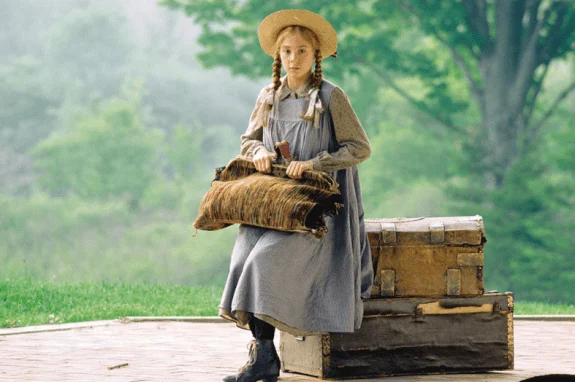
For Jamie C. Martin, editor of Simple Homeschool, those words—and the freckled, red-headed orphan who inspired them—served as a foundational blueprint for life. As a 12-year-old reader, Martin spent countless hours under the literary influence of Anne Shirley. The fictional resident of Prince Edward Island offered more than just exciting adventures; she fundamentally shaped her young reader. Looking back, Martin realizes that Anne planted seeds that later grew into a full harvest in her adult life: seeds of adoption, a lifelong love for books, a passion for writing, and the unapologetic mindset of a starry-eyed dreamer.
The connection proved lasting. Martin read the entire Anne of Green Gables series multiple times throughout her teen and young adult years, alongside nearly everything else she could acquire by author L.M. Montgomery. The author’s distinctive voice resonated deeply with her formative experiences.

Years later, as a newly married woman, Martin experienced another profound shift when she read all five volumes of L.M. Montgomery’s selected journals. For dedicated fans of the series, these personal records offer a stark contrast to the whimsical fiction. This time, the author’s words altered Martin’s perspective in a less starry-eyed, more grounded manner. The journals revealed grown-up entries of joy mixed with deep sorrow, placing happiness side-by-side with heartbreak. It was a revelation that challenged her to look at the beloved fictional character in a completely new light.
Yet, it quickly became apparent that Anne Shirley had a few more lessons hidden up her proverbial puffed sleeves.
Applying a literary tradition suggesting that readers approach classic books with a specific, personal question in mind, Martin decided to re-evaluate the classic novel through the lens of her current life stage. Now a mother of three and an experienced home educator, she posed a singular inquiry to the text: What can a parent learn about raising children from Anne of Green Gables?
The surprising answer is a philosophy she has tried to implement ever since: loosen up and let maturity do its work.

The Value of Patience in Childhood Development
Throughout the classic novel, a tween and early teen Anne is constantly finding herself in various forms of mischief. Whether she is spinning elaborate tales, accidentally dyeing her greenish hair, falling off the ridgepole of a roof, or inadvertently getting her bosom friend Diana Barry intoxicated with homemade currant wine, Anne’s imagination frequently outpaces her judgment.
For parents navigating similar episodes of continuous childhood misbehavior, Anne’s fiery temperament provides both comic relief and a touch of realism. Her temper famously reaches a boiling point when she shatters a slate over Gilbert Blythe’s head after he publicly teases her about her red hair. Even when Gilbert attempts to make amends, Anne demonstrates a stubborn streak and a fierce capacity for holding a grudge.
As captured in the novel: "Gilbert took from his desk a little pink candy heart with a gold motto on it, ‘You are sweet,’ and slipped it under the curve of Anne’s arm. Whereupon Anne arose, took the pink heart gingerly between the tips of her fingers, dropped it on the floor, ground it to powder beneath her heel, and resumed her position without deigning to bestow a glance on Gilbert."
Despite such dramatic outbursts, tense and stern Marilla Cuthbert—who adopted Anne alongside her quiet brother Matthew—gradually softens her approach. Following the incident with the broken slate, Marilla takes the advice of a neighbor and grants Anne a reprieve, allowing her to stay home from formal schooling until she feels ready to return. During this interlude, Anne studies her lessons at home, manages her daily chores, and spends her autumn twilights playing outdoors.

Beneath the mischief and misbehavior lay genuine genius: a vibrant imagination, fierce creativity, sharp intelligence, and profound character development. These traits simply required time to find their proper expression. At the right season, that potential blossomed into intellectual and personal brilliance.
Trusting the Natural Clock of Children
Reflecting on Anne’s gradual maturation brings to mind insights from contemporary educational philosophy, such as the observations shared in the book Unschooling Rules: 55 Ways to Unlearn What We Know About School and Rediscover Education.
As noted in the text: "The truth here is that maturation is magic. Irrational teenagers do become rational. Calmness and focus return. All of childhood is filled with times of equilibrium and disequilibrium. Children’s bodies do each have their own clock. Each clock just may not match the expectations of the structures around the children."
For parents and homeschoolers who find themselves growing overly tense or stern under the pressures of daily instruction, the text offers a compelling challenge: What would it mean to truly allow maturity to do its work?

If educators and parents could learn to trust the natural developmental process, they might find space to relax, share a laugh amidst the inevitable mischief, and genuinely enjoy the journey of raising children. As the broader literary tradition suggests, a little appreciation often accomplishes just as much good as all the conscientious upbringing in the world.
