The Crucible of Cognition: How Education Must Adapt as Artificial Intelligence Reshapes Human Thought
Long before the advent of digital screens, algorithms, or generative large language models, the foundational thinkers of antiquity were already grappling with the profound anxieties of technological disruption. In Plato’s classic dialogue, Phaedrus, the philosopher recounts a cautionary tale told by Socrates concerning the invention of writing. The ancient sage warned that written text would introduce forgetfulness into the souls of those who learned it, creating the mere appearance of wisdom while eroding true internal understanding. Socrates was not rejecting the written word outright; rather, he was interrogating a deeper philosophical question: how a powerful new medium might reshape human cognition when it begins to supplant active dialogue, interpersonal relationships, and direct lived experience.
Today, humanity stands at a remarkably similar crossroads with the rapid ascent of artificial intelligence. This technological wave compels modern educators, policymakers, and societies to ask not only whether or how these advanced tools should be integrated into classrooms, but whether the fundamental goals of education must fundamentally pivot in an increasingly algorithmic society. As intelligent systems shoulder more of our intellectual burdens, educational systems face the urgent challenge of reorienting toward a future where human beings can continue to create independently, think deeply, persist through difficulty, and ultimately find meaning and thrive within society.
The Impacts of AI on Critical Thinking, Engagement, and Motivation
As schools grapple with the day-to-day realities of generative tools, educators and administrators are confronting a growing wave of behavioral and cognitive shifts among students. Recent inquiries by MIT researchers into how K-12 school leaders perceive artificial intelligence reveal that cognitive offloading—the practice of relying on external tools to perform mental operations—is a primary and deeply justified fear. This concern is far from theoretical; a substantial body of research focusing on adult populations already demonstrates a strong, consistent propensity to offload critical thinking whenever generative AI is readily accessible.
This dynamic was further illuminated by a recent study presented at the ACM CHI Conference on Human Factors in Computing Systems. The research found that while generative AI tools reliably improved the efficiency of knowledge workers, they simultaneously reduced critical engagement and fostered long-term technological dependence. As participants grew more confident in the performance of the AI, their cognitive effort shifted away from deep problem-solving and toward passive verification and integration, thereby weakening independent reasoning over time.
A parallel study conducted at a Swiss business school yielded similar findings, though with a critical nuance regarding how these tools are introduced. Researchers examined participants tasked with preparing to answer interview questions with the help of artificial intelligence, split into groups with and without structured guidance. The unguided AI users engaged in heavy cognitive offloading without experiencing any improvement in the quality of their reasoning. Conversely, participants who received structured prompting assistance significantly enhanced both their critical reasoning and their reflective engagement. Translated to the educational sphere, these results underscore that the impact of AI on learning depends heavily on whether students and teachers receive proper training and intentional scaffolding.
Beyond critical thinking, artificial intelligence possesses the capacity to make tasks so frictionless that it can trigger an immediate, noticeable drop in student motivation. A study published in Nature revealed that while collaboration with AI enhanced immediate task performance, it simultaneously led to a measurable decline in intrinsic motivation and a notable increase in boredom. This highlights a stark trade-off between short-term productivity gains and long-term human engagement, adding further weight to arguments against the uncritical adoption of AI tools among young learners.
The Importance of Preserving Offline Learning
To better understand these neurological and cognitive trade-offs, MIT researchers recently conducted experiments where subjects were asked to write several SAT essays using either OpenAI’s ChatGPT, Google’s search engine, or no technological assistance at all. Electroencephalogram, or EEG, results from the study reinforced the compelling idea that students learn best without technological assistance, and particularly without the intervention of artificial intelligence.
Mastering foundational writing skills entirely offline increases neural connectivity and helps individuals internalize language, reading comprehension, and the intricate structures of written communication. Maintaining this baseline fluency and comprehension ensures that when students eventually do interact with AI tools later in life, they approach them from a position of authority—acting as editors and authors rather than passive prompt recipients.
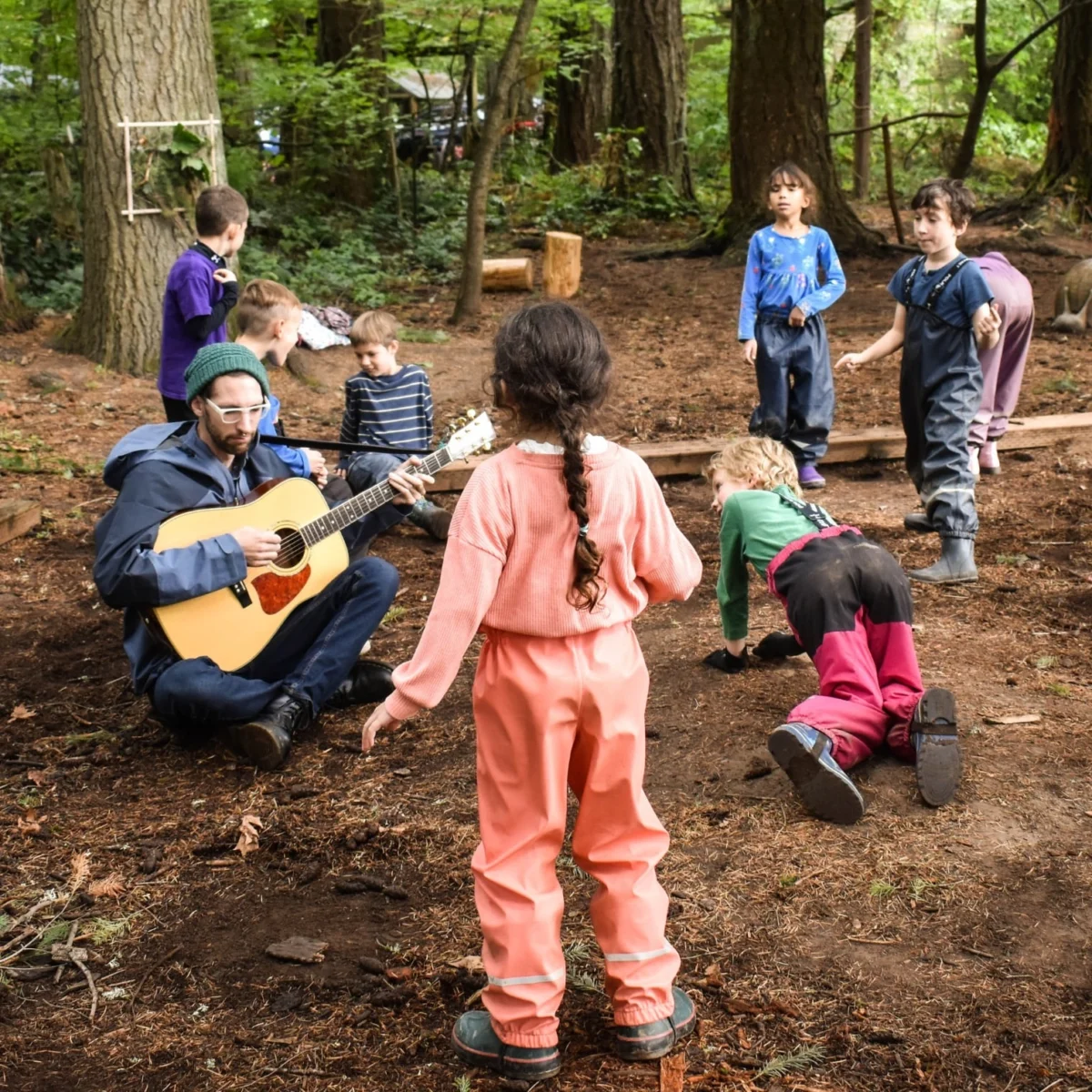
Engaging learners in the offline world will ultimately remain the key to preserving natural curiosity and internal motivation. Human resilience and willpower are traits best forged through productive struggle. For younger students, practical arts applications such as learning to play the violin, engaging in woodworking, or taking up knitting shine brightly in this endeavor. These moments of tactile, hands-on difficulty build perseverance, frustration tolerance, and an embodied understanding of the world in a way that is profoundly engaging and joyful. In an AI-enhanced world where friction is systematically engineered away, the human capacity to stay with difficulty becomes a rare and decisive advantage.
A Sense of Identity and Human Relationships at the Heart of Schooling
Developing intellectual discernment is a crucial skill that must be carefully cultivated in children long before they are granted access to algorithmic tools. A warning issued by UNICEF highlights this exact vulnerability, noting that the persuasiveness of modern AI systems—combined with personality engineering designed to exploit the human desire for praise and validation—means that children’s beliefs, behaviors, and even their core sense of identity could be shaped by these systems during a sensitive period of personal formation. Malicious or unchecked use could render children vulnerable to manipulation, online exploitation, and abuse, ultimately undermining their agency, their right to freedom of thought, and their capacity for independent development.
These concerns intensify dramatically when artificial intelligence is positioned at the center of learning environments for young people. In an informational guide titled "Is AI Dangerous for Children?", the American Academy of Child and Adolescent Psychiatry outlines a sweeping array of risks. These include potential overattachment to conversational chatbots, a reduction in meaningful real-world relationships, data privacy vulnerabilities, the proliferation of deepfakes, and the gradual erosion of hands-on, creative, and critical learning experiences.
At the core of these anxieties lies the fundamental importance of authentic, real-world relationships, which many experts argue are what is truly at stake in the modern classroom. Human relationships must remain at the center of education. A robust body of research demonstrates that the bonds formed between teachers and students, among peers, and within broader communities serve as primary drivers of empathy, responsibility, and social awareness, all while measurably boosting academic outcomes. These are not merely human abilities that machines cannot replicate; they are the essential capacities required for a grounded, meaningful life.
Ultimately, if society wishes to properly prepare children for an AI-enhanced world, education’s most urgent task is not to accelerate cognition or outsource thinking, but to anchor young people in deep thought, genuine relationships, and rich lived experiences. Only from this secure foundation can artificial intelligence truly serve human development rather than quietly reshaping what it means to be human.

Leave a Reply