Tracing the Roots of Pluralism: How Philadelphia’s Historic Sites Bring American Religious Freedom to Life
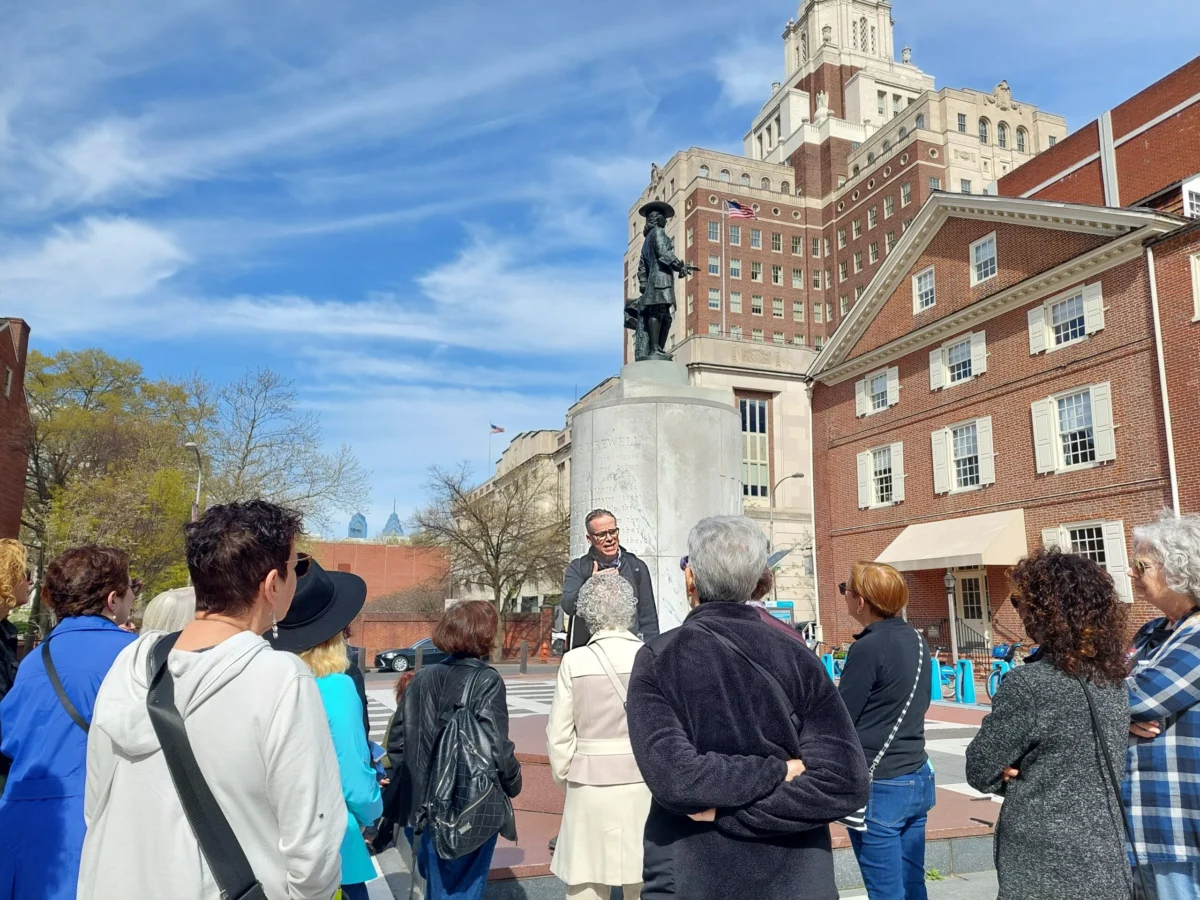
While Philadelphia is internationally celebrated as the birthplace of American democracy, historians and civic leaders frequently emphasize another equally transformative legacy: it is the birthplace of American religious freedom. Long before the drafting of the U.S. Constitution or the Bill of Rights, the streets of Philadelphia bore witness to a radical experiment in human liberty—one that would eventually
shape the ideological foundation of the entire nation.
Founded by the English Quaker William Penn between the late seventeenth and early eighteenth centuries, the colony of Pennsylvania offered a profound departure from the rigid religious conformity seen throughout much of the colonial world. Penn’s founding charter introduced a visionary promise: all residents who acknowledged God and lived peaceably within society would be protected from prejudice regarding their religious persuasions and would never be legally mandated to attend specific religious worship services.
This unprecedented tolerance transformed Pennsylvania into a magnetic destination for settlers holding a wide spectrum of faith commitments. Although the daily experience of religious freedom was uneven and occasionally marred by sectarian tensions, Penn’s endeavor—frequently characterized as a "holy experiment"—ultimately served as a living blueprint. It demonstrated to the nation’s future founders and framers that individuals representing diverse, and sometimes competing, faith commitments could successfully forge a shared civic identity.
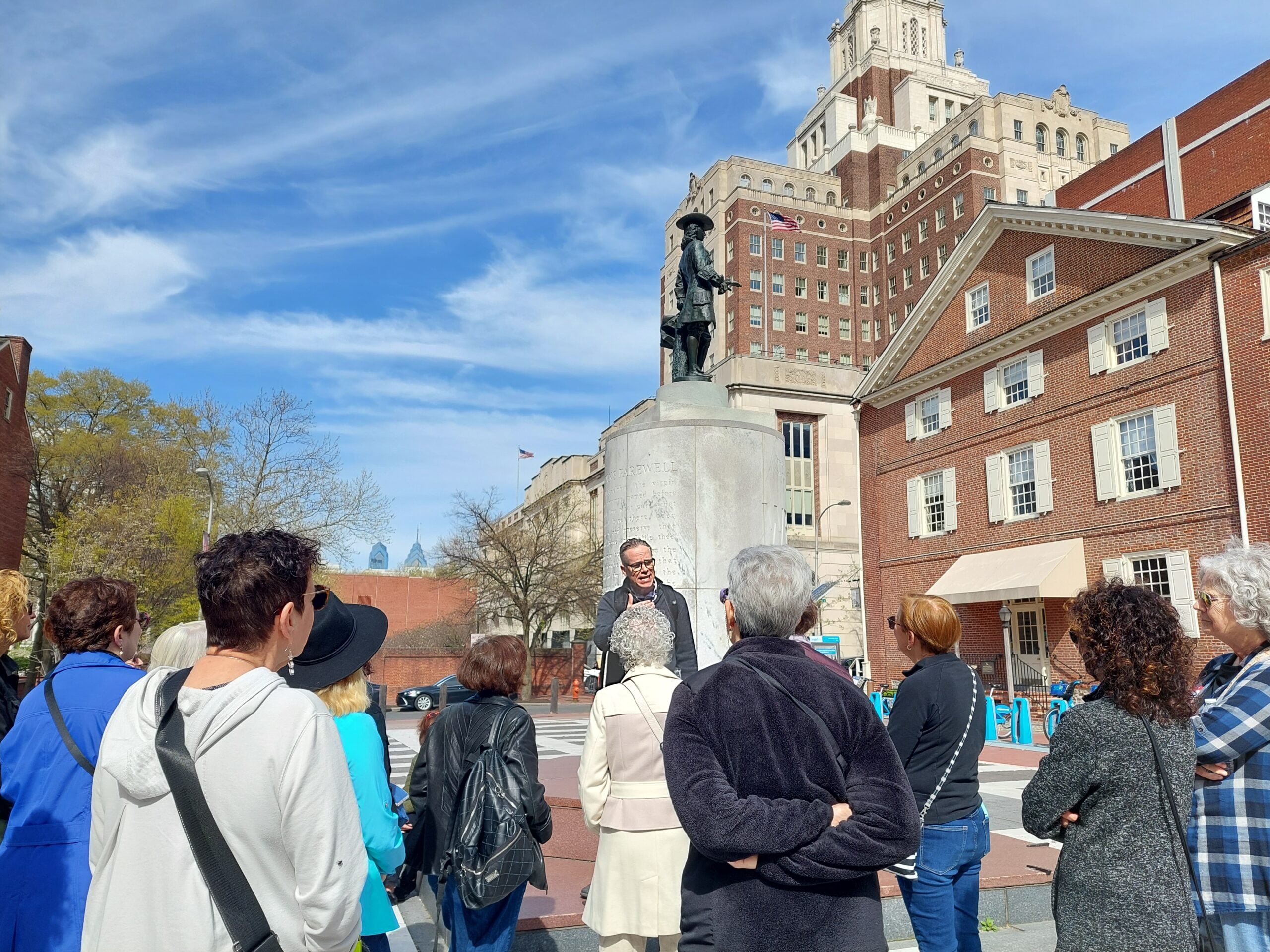
Today, exploring this complex intersection of religious liberty and civic history is made possible through immersive public history initiatives. Among these are the walking tours offered by the Dialogue Institute, led by scholars such as Executive Director David Krueger. These guided experiences traverse key historic locations across Philadelphia, illuminating pluralism in action throughout the city’s storied past. Enthusiasts and students of history can further examine these locations using the digital Religious Freedom Trails app, which catalogs the complex narratives behind each historic destination.
Arch Street Friends Meeting House
The narrative of Philadelphia’s religious pluralism begins with its founder. Raised within the established Anglican church, William Penn experienced a profound spiritual awakening as a young adult, leading to his conversion to the Religious Society of Friends, commonly known as the Quakers. The Quakers challenged the fundamental structures of the established religious order by rejecting traditional social hierarchies, empowering women to preach, and championing the belief that every human being possessed an inner divine light.
Because of these subversive views, Penn and his fellow Quakers frequently faced harassment, social ostracization, and imprisonment for promoting their beliefs. Seeking a sanctuary from persecution, Penn envisioned a colony where religious dissenters could live and worship freely.
An unexpected opportunity arose following the death of Penn’s father. King Charles II of England owed the Penn family a substantial financial debt. Rather than liquidating the debt through a direct cash payment to a prominent religious dissenter, the king opted to grant Penn a vast charter of land in North America. In 1682, Penn arrived on the shores of the Delaware River, established diplomatic and peaceful treaties with the native Lenape residents, and successfully laid the foundations for a colony governed without a state-mandated religion. The Arch Street Friends Meeting House, located at 320 Arch Street, stands today as a enduring monument to this early chapter of Quaker heritage.
Benjamin Franklin Museum
Paradoxically, Philadelphia’s most famous historic resident was not a native Pennsylvanian. Benjamin Franklin, born in 1706, grew up in Boston within a Massachusetts colony dominated by the established Congregational Church. Although his parents initially envisioned a career for him in the ministry, financial constraints within the family and Franklin’s own burgeoning skepticism toward orthodox religious dogmas diverted him into the printing trade, where he worked alongside his older brother.
At the age of seventeen, Franklin decided to break away from Boston, migrating southward to Philadelphia. At the time, Philadelphia offered a significantly larger, culturally and religiously diverse environment characterized by boundless economic and intellectual opportunities. Settling into the city, Franklin built a highly successful printing enterprise and subsequently organized the Junto, a mutual improvement society composed of local business and trade leaders who met regularly to debate ideas and devise practical solutions for pressing civic challenges.
Franklin’s collaborative philosophy catalyzed the creation of numerous foundational American institutions, including the nation’s first public hospital, the first non-sectarian university, the first public lending library, and the American Philosophical Society. Franklin possessed a rare talent for bridging religious and cultural divides, mobilizing disparate communities to find common ground and construct lasting institutions for the public good. The Benjamin Franklin Museum, situated at 317 Chestnut Street, preserves the legacy of this quintessential Enlightenment figure.
Christ Church
While Pennsylvania fostered an environment of religious diversity, the broader British Empire maintained the Anglican Church as its officially established institution, requiring Anglican clergy to swear direct allegiance to the crown. Even in Philadelphia, where no single denomination held a monopoly on faith, Christ Church operated within this imperial framework.
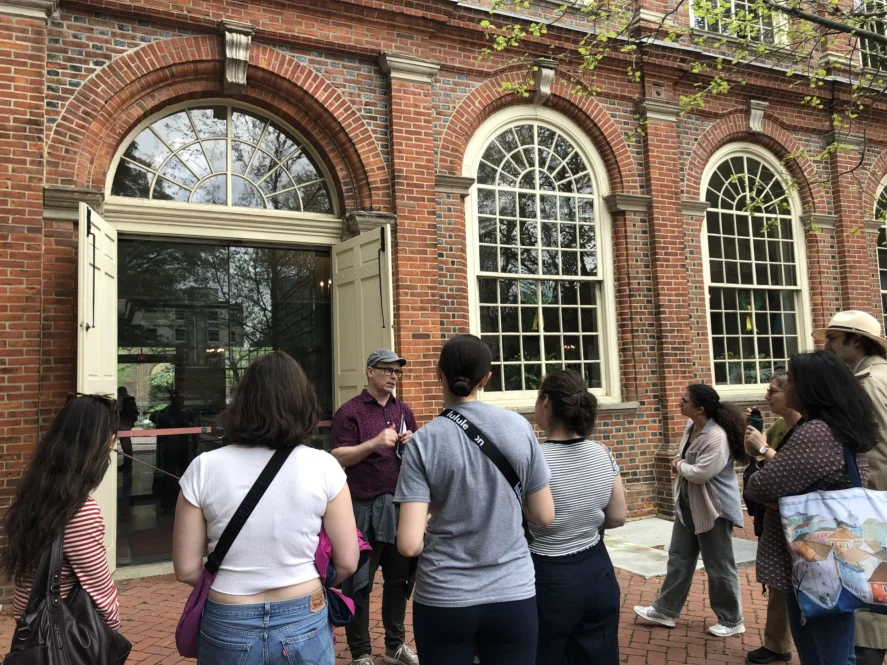
However, as the American Revolution gained momentum, the leaders of Christ Church made the momentous decision to align themselves with the Patriot cause rather than the British crown. Among their first symbolic acts of independence was the physical crossing out of passages within the Book of Common Prayer that offered blessings to the king—a bold liturgical precursor to the formal establishment of the independent Episcopal Church denomination in the United States. Christ Church also served as the place of worship for several of the nation’s earliest presidents.
Just around the corner from the historic sanctuary, a historical marker notes the site of a former boarding house where Gouverneur Morris, the primary author of the preamble to the U.S. Constitution, resided during the Constitutional Convention of 1787. Historians frequently note the symbolic weight of Morris crafting the immortal opening words, "We the People," within the borders of the largest, most religiously and culturally heterogeneous city in the fledgling republic.
St. Augustine’s Catholic Church
During the 1730s, Philadelphia held the distinction of being the sole location across the British North American colonies where Catholics were legally permitted to celebrate Mass. This allowance, however, was rarely frictionless. Local Protestant leaders frequently voiced alarm and suspicion as Catholic communities gathered for worship, driven by deep-seated geopolitical anxieties regarding potential allegiance to rival Catholic colonial powers such as Spain and France.
Despite these widespread suspicions, the fledgling Catholic community managed to persist, shielded by the robust religious-freedom guarantees enshrined in William Penn’s original charter. Yet, legal protection did not insulate Catholics from popular hostility. In 1844, violent anti-immigrant sentiment fomented by the so-called "Native American" political party erupted into riots, resulting in the arson and destruction of several immigrant Catholic churches, most notably St. Augustine’s. Demonstrating remarkable resilience, the Catholic community rebuilt their houses of worship and went on to establish educational and charitable institutions that continue to serve the Philadelphia metropolitan area to this day.
Mother Bethel AME Church
The history of Philadelphia is also inextricably tied to the struggle against human bondage. Slavery was present in William Penn’s colony from its very inception; the Penn family fortunes were built upon enslaved labor, and Penn himself was an enslaver. Nevertheless, Pennsylvania gradually emerged as a leader in the early abolitionist movement, and by the late eighteenth century, Philadelphia had become a vital national center for free Black life, culture, and mutual aid societies.
Among the towering figures of this era was Richard Allen, who had been born into slavery before purchasing his own freedom. Having experienced a powerful religious conversion to Methodism in his youth, Allen was eventually invited to serve as a preacher at St. George’s Methodist Episcopal Church. Allen’s dynamic preaching attracted a rapidly growing congregation of Black attendees, prompting the church’s white leadership to institute a policy of segregated seating.
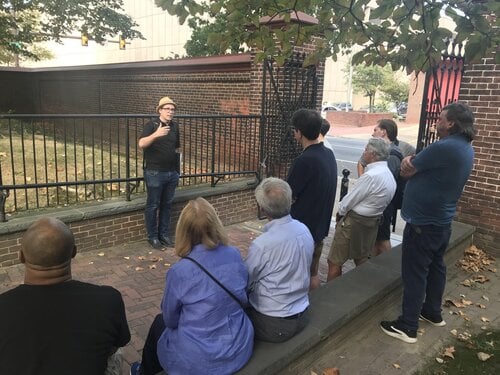
Confronted with this indignity, Allen led a decisive walkout of the majority of Black members. The group initially gathered in a former blacksmith shop, naming their fledgling fellowship Bethel Church. Despite persistent opposition from white institutional leadership, Allen successfully secured approval from a state court in 1816 to formalize their separation. This landmark legal victory resulted in the establishment of the African Methodist Episcopal (AME) Church, the nation’s very first independent Black Christian denomination.
Kahal Kadosh Mikveh Israel
Philadelphia is also home to Kahal Kadosh Mikveh Israel, the oldest continually operating synagogue in the United States, which was established in the city in 1740. Often referred to as the "Synagogue of the Revolution," Mikveh Israel earned the moniker due to the fervent, active support its members provided to the Patriot cause during the War of Independence.
Although Jews enjoyed relative freedom to practice their faith under Penn’s colonial framework, significant legal restrictions remained concerning their ability to hold public office. In Pennsylvania, holding public office required candidates to take a religious oath affirming that both the Old and New Testaments of the Bible were the divine, revealed Word of God. This legal requirement presented an insurmountable barrier for Jews, Deists, and other non-conformist citizens.
In 1787, Jonas Phillips, a prominent member of Mikveh Israel, took decisive action by dispatching a formal letter to the delegates of the Constitutional Convention. Phillips implored the framers to refrain from inserting religious tests as a prerequisite for holding public office or public trust, arguing eloquently that Jewish citizens had spilled their blood in the American Revolution and were fully entitled to participate in the leadership of the new nation.
The framers were ultimately persuaded by these appeals. Article VI of the U.S. Constitution permanently altered the relationship between faith and governance by declaring that no religious test shall ever be required as a qualification for any office or public trust under the United States.
David Krueger serves as the executive director of the Dialogue Institute at Temple University, co-editor of the Journal of Ecumenical Studies, and director of the Religious Freedom Trails project. He is a scholar, author, and educator dedicated to public history, religious literacy, and civic dialogue.
