Navigating the Transition from Homeschooling to Higher Education: How Families Build Comprehensive High School Transcripts
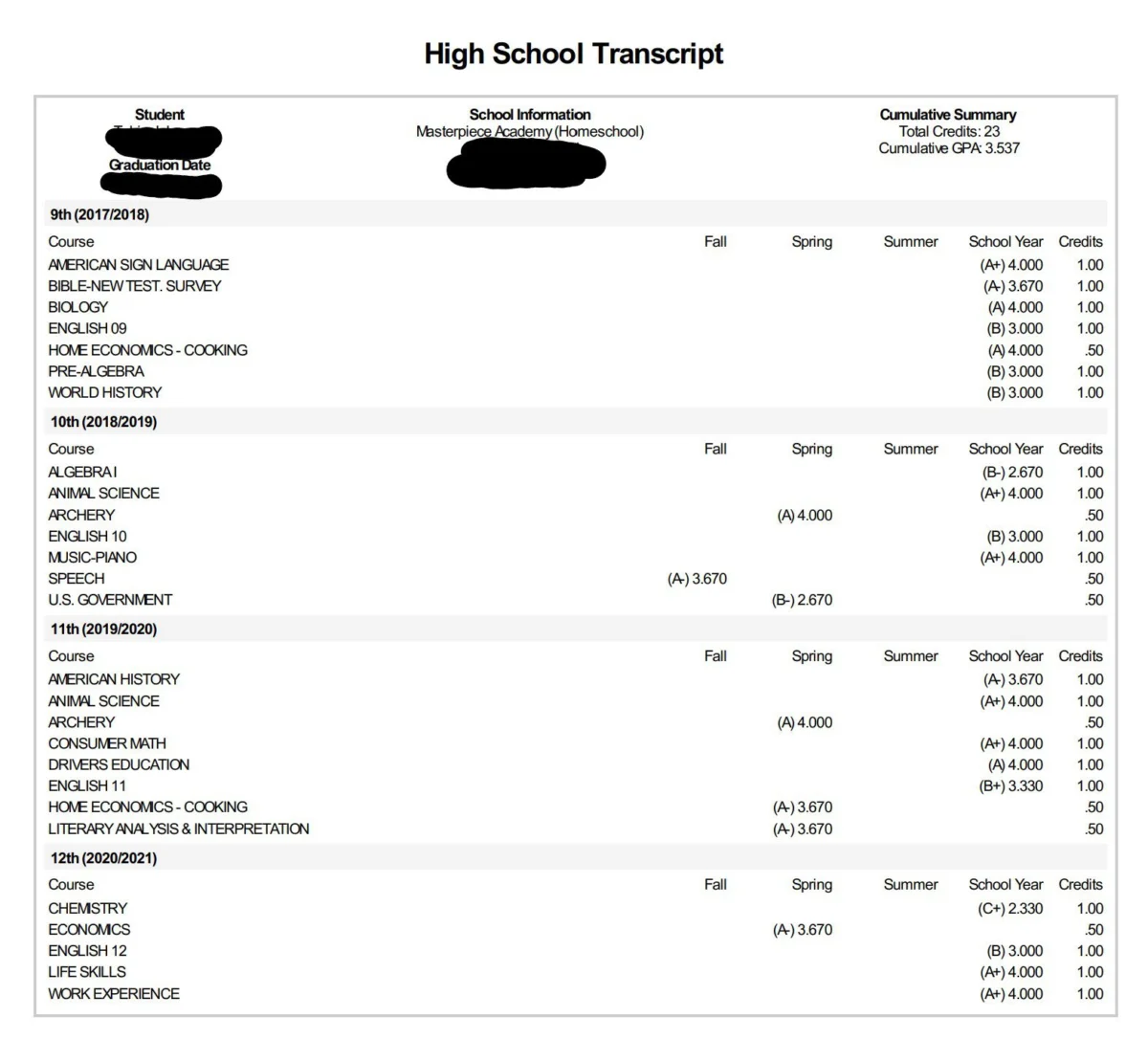
For many families navigating the world of home education, the culmination of a student’s high school journey brings both a deep sense of accomplishment and a unique administrative challenge. Behind every completed essay, solved proof, and rigorous seminar table discussion lies years of dedicated study. Yet, translating those cumulative years of learning into a standardized, one-page document that colleges, trade schools, and employers will take seriously remains a vital milestone for homeschooling parents.
Kyleen Bontrager, a homeschool educator and writer for Classical Conversations, emphasizes that a student’s years of faithful academic work deserve an equally faithful record. A well-built homeschool transcript serves as an official snapshot of a student’s high school career, capturing courses, grades, credits, and grade point averages (GPAs) in a format recognized by academic and professional institutions alike.
Building a comprehensive high school transcript does not have to be an overwhelming endeavor, nor do parents need to construct the document entirely from scratch. Specialized resources, such as the CC Connected Transcript tool designed for Classical Conversations members, streamline the process by organizing coursework, tracking grades, and automatically calculating student GPAs.
The process of developing a professional high school record typically begins years before graduation. Experienced educators recommend sitting down with students prior to their freshman year to establish a collaborative high school vision. This forward-looking conversation allows families to map out potential academic trajectories, discuss future goals without premature limitation, and integrate meaningful extracurricular activities. By regularly evaluating how daily schedules align with long-term aspirations, families can ensure that every credit earned serves a distinct purpose in their student’s broader educational narrative.
As coursework progresses, recording academic performance requires a consistent approach to grading. Homeschooling families generally utilize one of two primary assessment methods: letter grades or numerical percentages. Many parent-educators evaluate students based on a combination of completed assignments and demonstrated character, often assigning standard letter grades such as A, B, and C. Because the emphasis in many classical home education models is placed on mastery, failing grades are frequently absent from these systems, though families who prefer precise statistical measurements may opt for numerical grading scales.
For older students participating in concurrent enrollment programs, academic records can extend beyond the home environment. Through partnerships with institutions like Southeastern University, participating high school students completing advanced curriculum levels can earn formal college credit. Evaluators review specific coursework to generate official college transcript records, with each completed course simultaneously translating into high school credit on the student’s homeschool transcript.
Calculating a cumulative GPA involves multiplying individual course grade points by the corresponding credit values, summing those totals, and dividing by the aggregate number of credits earned. While grading systems can vary, most homeschool households rely on a standard unweighted 4.0 scale. Organizations such as the Home School Legal Defense Association (HSLDA) provide ongoing guidance to help families accurately compute these figures.
Maintaining the transcript requires steady, year-by-year documentation rather than a frantic compilation at the eleventh hour. Updating records at the close of each semester or academic year ensures that no details are forgotten. Specialized transcript tools and generators simplify this task by providing structured templates that automatically compute cumulative statistics, eliminating much of the administrative anxiety traditionally associated with homeschool administration.
When a student reaches the end of their senior year, four years of accumulated data culminate into a single master transcript. Once finalized, official records can be securely transmitted to universities and admissions offices through digital delivery networks such as Parchment.
Alongside the official transcript stands its traditional companion: the homeschool diploma. As the primary educational authority, the parent-educator formally issues the diploma once the student satisfies all state-mandated graduation requirements. To mark the occasion, many homeschooling communities participate in formal commencement ceremonies, including national graduation events that celebrate graduates in traditional academic regalia.
Questions regarding post-graduation pathways frequently center on how homeschool transcripts are received by higher education institutions. Admissions offices routinely review homeschool transcripts alongside supplementary materials such as standardized test scores, course descriptions, and reading lists to gain a holistic view of an applicant’s academic background. Universities frequently seek out homeschool graduates, recognizing the independent study skills and intellectual discipline fostered in home education environments.
Beyond traditional four-year universities, a robust transcript remains essential for graduates pursuing technical trade schools, military service, or direct entry into the workforce. Employers evaluating entry-level candidates frequently look for formal validation of a student’s academic diligence.
Ultimately, a completed homeschool transcript represents far more than a mere administrative requirement. It gathers years of reading, writing, reasoning, and academic inquiry into a single, cohesive document, honoring the dedication of both the student and the family while opening the door to future opportunities.
