Health-Conscious Food Enthusiast Reinvents Takeout Classics with Sesame Ginger Cabbage Rolls
For many home cooks seeking a transition toward whole-ingredient meals, breaking free from the gravitational pull of fast-food takeout can prove to be a significant hurdle. Years ago, one dedicated culinary creator faced this exact challenge, moving away from heavily processed, Americanized versions of Asian cuisine commonly found at nationwide chains like Panda Express. What followed was a long-term culinary experiment centered on developing fresh, nutrient-dense alternatives that capture the complex, vibrant profiles of traditional Asian cooking without relying on refined additives, excessive sodium, or MSG.
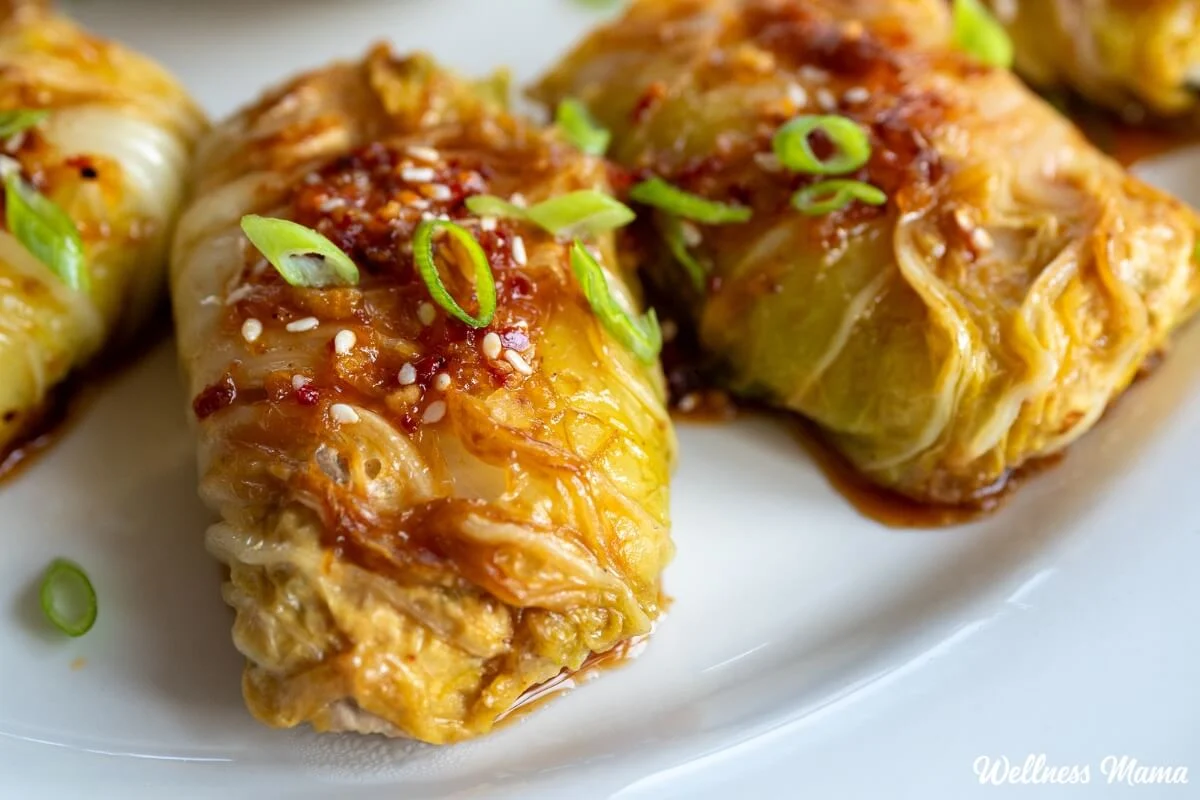
The latest result of this kitchen experimentation is a dish designed to bridge the gap between heavy comfort food and light, vegetable-forward dining: sesame ginger cabbage rolls. Packed with lean protein and fresh produce, these rolls deliver familiar flavor notes—such as toasted sesame oil, pungent ginger, and savory coconut aminos—in a format that requires minimal hands-on preparation. Whether served as a savory appetizer or integrated as the centerpiece of a larger evening meal, the dish offers a streamlined approach to home-cooked meals that can easily be scaled up for batch cooking and meal prep.
Sesame Ginger Cabbage Rolls
For individuals who appreciate the taste profile of traditional dumplings or potstickers but prefer to avoid the tedious labor of rolling individual wrappers, these cabbage rolls offer a practical alternative. While commercially prepared wonton wrappers certainly save time in the kitchen, they often contain refined ingredients that do not align with a whole-foods philosophy. Napa cabbage, by contrast, transforms dramatically after a brief blanching process, becoming remarkably tender, pliable, and easy to manipulate. Furthermore, substituting cabbage for traditional flour-based wrappers introduces an extra serving of vegetables directly into the meal without compromising the savory integrity of the filling.
When selecting proteins for the filling, home cooks have considerable flexibility, though lean ground chicken stands out as an optimal choice. Because chicken has a relatively neutral profile, it readily absorbs surrounding aromatics like fresh garlic and ginger rather than overpowering them, all while providing a substantial source of protein. To ensure the lean poultry remains succulent throughout the cooking process, finely diced shiitake mushrooms can be folded directly into the meat mixture. The mushrooms not only contribute a deep, earthy umami flavor but also help retain moisture within the filling as the rolls cook.
The culinary anchor of the dish, however, is the accompanying dipping sauce. By combining coconut aminos—a naturally soy-free alternative that mirrors the deep, savory profile of traditional soy sauce with a hint of natural sweetness—alongside earthy ginger, aromatic sesame, and chili crisp for heat, the dish achieves layers of complex flavor. Every bite offers a robust taste experience completely detached from the ultra-processed condiments typically associated with fast-food dining.
Tips for the Best Cabbage Rolls
Achieving optimal results with this recipe relies heavily on proper ingredient selection and handling, starting with the cabbage itself. Napa cabbage is specifically favored for its soft, flexible leaves, which roll smoothly around a filling once blanched. If a leaf features a thick, stiff white stem at the base, simply trimming it away prior to filling and rolling prevents the leaf from tearing and makes the assembly process seamless.
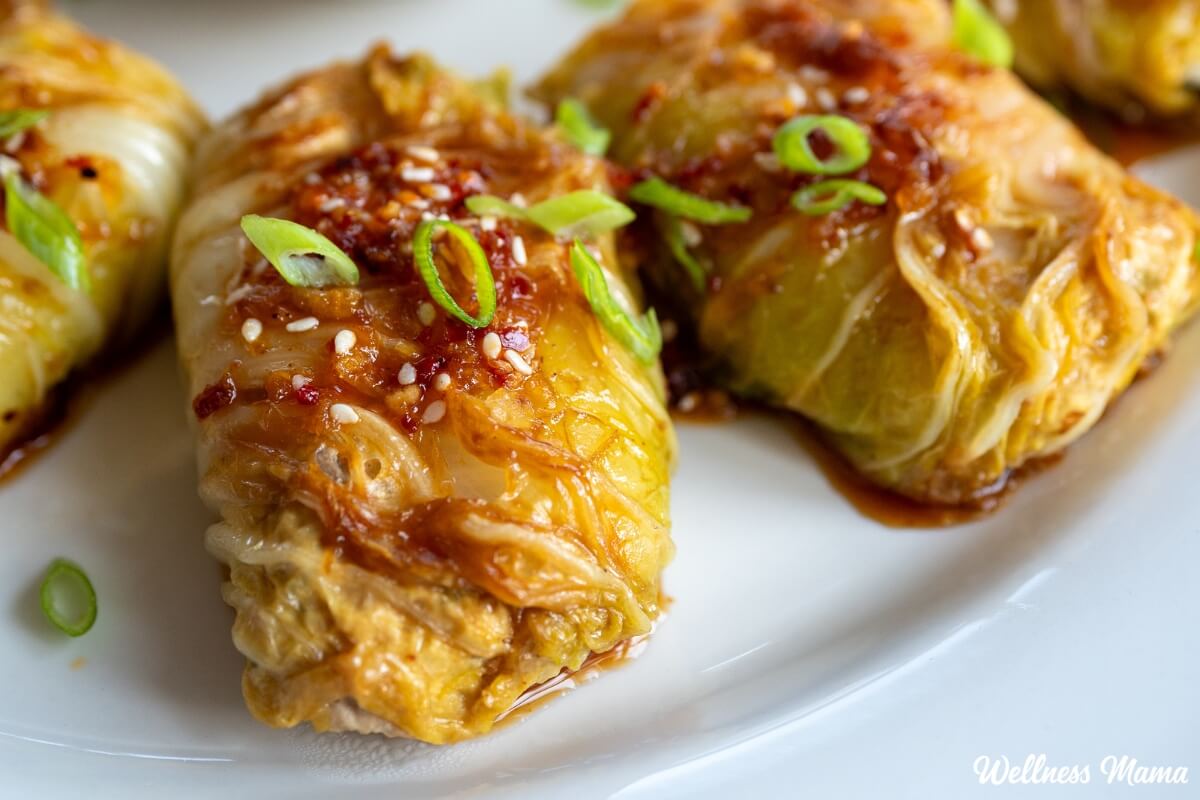
Portion control during the wrapping phase is another critical factor. Maintaining a modest portion of filling—approximately one-third of a cup per leaf—ensures that the rolls remain manageable and do not burst during cooking. Should a leaf split unexpectedly, the fix is straightforward: simply overlapping a secondary piece of cabbage around the compromised area reinforces the structure. Once steamed, any structural imperfections disappear entirely, leaving a cohesive, neat package.
Cooking techniques also play a role in the final texture of the dish. After initially browning the bottoms of the rolls in a skillet for a couple of minutes to develop flavor and color, adding a small amount of liquid and covering the pan allows the cabbage to steam while the chicken filling cooks through completely. Removing the lid for the final moments of cooking encourages any residual moisture to evaporate, yielding a lightly textured base.
Easy to Customize
The inherent adaptability of the recipe makes it well-suited for a variety of dietary preferences and pantry inventories. Ground turkey or shredded pork can easily substitute for chicken, while the addition of finely shredded carrots introduces natural sweetness and color. For diners who prefer added textural contrast, folding finely chopped water chestnuts into the raw filling mixture provides a pleasant crunch.
The practical nature of the rolls extends well beyond initial preparation, as the finished product holds up exceptionally well in storage. Storing leftovers in an airtight container in the refrigerator for up to three days makes the dish a viable option for weekly meal prep. Reheating is easily accomplished by placing the rolls in a covered skillet with a splash of water on the stovetop, restoring their original texture and warmth for a quick lunch or weeknight dinner.
Ultimately, these sesame ginger cabbage rolls serve as a functional shortcut for households seeking homemade comfort food without the added labor of traditional dumpling making. By substituting processed wrappers with tender, nutrient-dense cabbage leaves, home cooks can enjoy familiar savory flavors while maintaining a commitment to whole-food ingredients.
