Swapping Facebook Feuds for Freshly Baked Bread: How One Arizona Community Leader is Using Food to Combat Political Polarization
In an era defined by polarized social media feeds and increasingly fractured civic relationships, finding common ground with neighbors who hold opposing political views can feel like an insurmountable challenge. Across the United States, kitchen tables and family gatherings are frequently sidelined by ideological clashes, leaving communities more isolated and distrustful than in decades past.
Yet, for one Arizona community leader, a routine Sunday afternoon argument on Facebook served as the catalyst for a much-needed reminder about the enduring power of human connection, local relationships, and the simple act of sharing food.
The experience dates back to the height of the 2000 presidential election cycle. Like millions of Americans, she spent her time scrolling through social media, observing the political commentary posted by family members, neighbors, and fellow churchgoers. Coming home from Sunday services, she noticed a post published by a fellow member of her congregation regarding the upcoming election.
Opting to engage rather than scroll past, she weighed in with a different perspective. What followed was an hour-long volley of replies, with other church members tracking the online debate and clicking "like" on responses from both sides. In real-time, the interaction transformed into a digital arena for choosing sides and deepening ideological divisions. Finally, feeling drained by the hostility, she stepped back, recognizing that the online persona she was adopting did not reflect who she truly wanted to be.
We don’t grow connectedness by cutting off ties.
The realization hit home because the man on the other side of the screen was far more than an abstract political opponent. His family had previously watched her children when she and her husband traveled out of town, and she had spent countless hours serving alongside his wife in their church’s youth ministry. She faced a pivotal question: Would their relationship be permanently defined by their intended votes, and would her political identity become the primary lens through which she viewed her community?
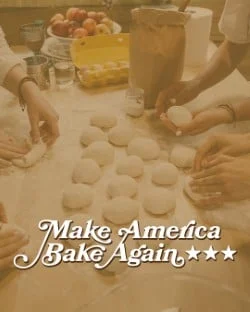
Opting for offline reality over online friction, she instructed her husband to load the family into the minivan while she prepared a batch of freshly baked chocolate chip banana bread. Grabbing a makeshift sign bearing a spontaneous, lighthearted phrase—"Make America Bake Again"—she headed to her fellow congregant’s home.
When the church friend opened his front door to find her family standing on his porch, he was visibly surprised. Her message was direct and disarming: "You are my friend. We have so much more in common than that Facebook exchange suggests. I don’t want to forget that."
Reflecting on the encounter, she acknowledges that she does not always respond thoughtfully to politically charged situations. Nevertheless, she expresses a sincere desire to do so, particularly as families, cities, and states navigate a civic culture marked by deep division. Her approach is rooted in an effort to push back against the daily currency of polarization and instead invest in the power of pluralism.
This perspective aligns closely with the central concerns raised by sociologist Robert Putnam in his seminal book, "Bowling Alone," where he argued that the decline of social capital represents one of the most pressing threats to modern society. Social capital—the networks of relationships among people who live and work in a particular society—does not expand when individuals conform to the norms of polarization. Instead, it erodes when people opt out of neighborhood gatherings, civic organizations, and family events simply because political differences feel too difficult to navigate.
Cutting off ties does not foster community resilience. Rather, encountering disagreements serves as an opportunity to listen, grow, and connect, rather than a reason to walk away from vital relationships.
We need more shared experiences.
Translating this philosophy into action, she has taken her commitment back to the kitchen. Looking ahead, she is organizing her inaugural annual Make America Bake Again Voter Prep Party. By casting a wide net, she is inviting community members of all backgrounds to join her for an evening centered around baked goods and open dialogue regarding upcoming ballot measures. The goal is to provide a fun, informative, nonpartisan, and welcoming environment to prepare for civic participation.
Participants are encouraged to bring homemade treats to share, drawing inspiration from historical recipes, including traditional cookies associated with various First Ladies and a centuries-old recipe for Election Cake. Among the offerings will be Pat Nixon’s Lemon Sugar Cookies.
The initiative draws inspiration from the observations of the famed American chef and author James Beard, who once wrote that "food is our common ground, a universal experience." Society, she suggests, is in urgent need of more shared experiences—specifically those characterized by low-stakes, high-calorie interactions. Sharing a cookie or sitting down for a meal can act as a catalyst for community-building, allowing individuals with diverse lived experiences and perspectives to bridge gaps that might otherwise remain wide.
In her professional role in Arizona, where she leads the Civic Engagement Impact Team for the local nonprofit Valley Leadership, she sees firsthand the impact of structured communal gatherings. Part of her responsibilities includes organizing the organization’s Dinners & Dialogues Program. Through this initiative, participants gather for a shared meal before engaging in moderated, small-group conversations focused on critical issues facing Arizonans, ranging from public education to declining trust in civic institutions. These dinners lay the groundwork for constructive dialogue centered on collaborative, shared solutions.
The broader application of this approach requires little more than a recipe book and a willingness to reach out. Whether it means delivering a batch of chewy gingersnaps to a neighbor with differing views and asking about their family, thanking local election workers with a delivery of Abigail Adams’ Molasses Raisin Cookies, or organizing a neighborhood dinner to discuss local community-building efforts, deliberate actions can leave a lasting, positive impact.
Political differences do not inherently require division, and civic conflict does not need to result in ongoing contention. As Yuval Levin, author of "American Covenant," observed, "Unity doesn’t mean thinking alike. Unity means acting together."
For communities seeking a path forward through political turbulence, unity may also begin at the kitchen table, proving that breaking bread can be a powerful antidote to a divided nation.
