From Silicon Valley Burnout to the Forest Floor: How One Startup Refugee Found Transformation in Wilderness Rites of Passage
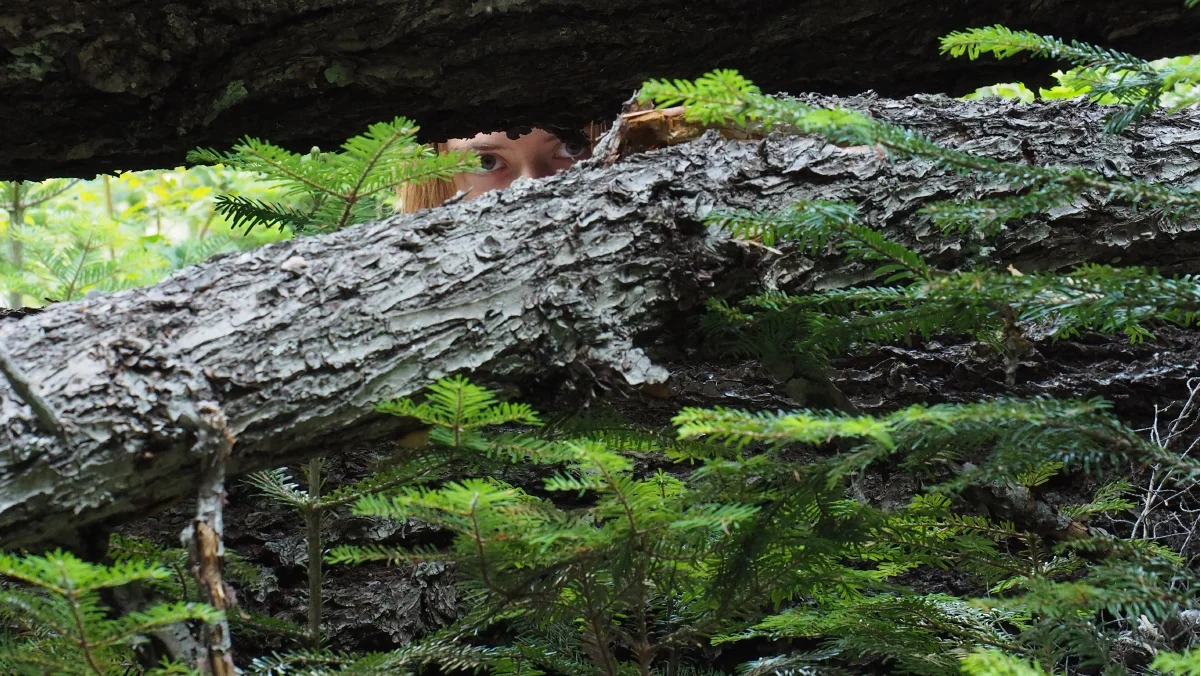
For Carlin Gettliffe, the turning point did not arrive with a strategic breakthrough or a major funding round. It came in the form of bone-deep exhaustion, the hum of fluorescent office lights, and the relentless pressure of a startup environment defined by ten to fifteen phone calls a day and endless hours hunched over a computer screen.
Like many professionals navigating the hyper-connected demands of the modern digital economy, Gettliffe reached a breaking point. The antidote he chose, however, was as radical as it was traditional: he walked away from the screen and stepped straight into the woods.
That leap led him to Duvall, Washington, where he enrolled in a demanding nine-month adult immersion program at the Wilderness Awareness School. Tucked quietly near the end of the curriculum, Gettliffe encountered something that would fundamentally alter the trajectory of his life: wilderness rites of passage.
It was not the cinematic, highly romanticized encounter often packaged for modern consumers seeking a weekend adventure. Instead, Gettliffe describes his introduction to ancient threshold work as gritty, strange, and deeply uncomfortable, though quietly threaded through with unexpected moments of grace. Stripped of creature comforts for days and nights on end in the deep forests of the Pacific Northwest, the rigid scaffolding of modern life—plans, schedules, and strategic schemes—began to dissolve.
In their place, a more primal rhythm emerged. When he was cold, he moved. When he was tired, he curled up in the damp moss. When he was hungry, he ate. When fear tightened his chest, he paused to listen. His body reclaimed the role of navigator, communicating through the immediate, unfiltered language of belly grumbles, shivering muscles, tension, and release.
That visceral shift opened the door to experiences entirely foreign to the urbanized mind. Gettliffe recalls a night spent laying his head directly on the earth after a long, dark wander through the trees. Hovering on the fragile border between wakefulness and sleep, he heard a family of mice softly chattering and cooing to one another in the nearby grass. Paralyzed by the fear of startling them, he lay completely still for what felt like hours, feeling mysteriously tethered to those tiny, unseen lives by a fragile universe of shared sound.
Yet the journey into the wild was not merely a romantic idyll of gentle woodland creatures. At other moments, his psyche felt as though it were free-falling through empty, terrifying space. Deeply held personal assumptions and old psychological armor cracked and crumbled. Fear seized him, shaking him awake. He found himself swallowed, both literally and figuratively, by the dark.
Yet in surrendering to that darkness—in letting go of the white-knuckled struggle for control, comfort, and intellectual understanding—a profound space opened up for something entirely different to emerge.
Articulating that presence defies easy language. Gettliffe suggests words like presence, resonance, or the quiet vulnerability of belonging, though noting it is just as accurate to simply call it oak tree, owl, water, and wind. More than anything, it is an act of remembering—a long-awaited return to what poet Mary Oliver famously termed our "place in the family of things."
True wilderness rites of passage, Gettliffe discovered, are rarely tests of raw physical endurance or survivalist skill. Instead, they serve as a rigorous test of an individual’s willingness to be pierced—by beauty, by grief, by fear, and by the profound realization of how desperately humans need the living world, and how much the living world, in its own silent way, needs us in return.
Through this crucible, participants often uncover something far more enduring than individual ambition, corporate recognition, or status: a deep-seated kinship and devotion to life itself. This devotion does not spring from a high-minded, intellectual desire to "do good," but rather from a connection grounded quite literally in the dirt under one’s fingernails, the texture of moss beneath the cheek, and the haunting, solitary call of a saw-whet owl cutting through the midnight air.
This kind of remembrance offers no tangible currency for modern life. It provides no notches for a resume belt, no professional credentials, and no marketable skills for the contemporary gig economy. It will not lead to riches, nor will it bring fame. In fact, far from making a person happier, it is likely to put them directly in touch with reservoirs of buried grief they never knew they carried. It functions as a psychological trust fall, offering zero guarantees, no safety nets, and no easy paths.
What it does dismantle, however, is the stubborn modern illusion that individuals are meant to navigate existence entirely on their own—a notion that Gettliffe firmly rejects. It shatters the ego-driven belief that a person’s private scramble for comfort and control sits at the center of the universe, while replacing it with an undeniable awakening: the realization that every human life is desperately needed by the whole.
When those truths finally land, they arrive simultaneously as an immense, exhaling relief and as an urgent new call to devotion. Our first and last responsibility as human beings, Gettliffe argues, is to the intricate web of relationships and wholeness that not only contains us, but fundamentally depends upon our care.
Rites of passage, viewed through this lens, are the ancient cultural technologies through which humans tend to that web and repair the fraying edges of contemporary society. They do not exist merely for the personal edification of the individual; rather, they exist for the health of the village. Modern culture, Gettliffe notes, rarely pauses to recognize or honor moments of genuine transformation and import in a person’s life.
To help bridge that cultural deficit, Gettliffe now serves as the lead instructor for the Shadowcraft Intensive and the Sacred Dark weekend program at the Wilderness Awareness School. Shadowcraft is designed as a deliberate modern ode to ancient rites of passage—an offering to the wild spaces waiting to meet individuals willing to step off the beaten path. True thresholds, he observes, are remarkably rare, and most people can count the genuine turning points of their lives on one hand. Through programs like Shadowcraft, participants are given a rare structured opportunity to traverse those thresholds within, alongside, and in humble service to both human community and the wider, more-than-human world.
