Navigating Rising Islamophobia: How American Mosques Can Lead with Resilience, Openness, and Community Engagement
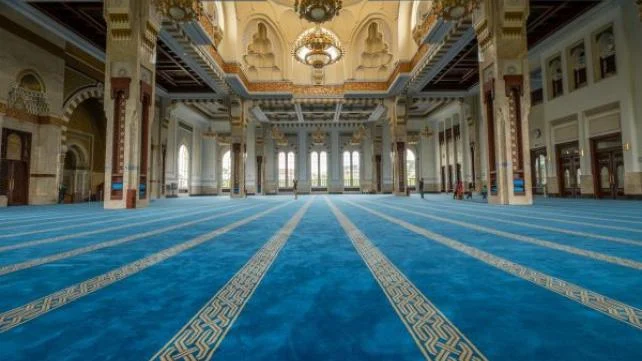
The landscape for American Muslims has grown increasingly fraught as political rhetoric and legislative initiatives converge to target the community. Across the United States, mosques and Islamic institutions find themselves at a critical crossroads. Navigating a climate where politicians and bad-faith actors increasingly incite Islamophobia requires a delicate yet resolute balance. Leaders of these institutions must determine how best to protect their congregations, defend their faith, and respond to systemic marginalization without falling into the traps of reactionary anger or passive isolation.
This rising tide of hostility is not an abstract concern; it manifests clearly in educational policies, political rallies, and federal actions. In Texas, the State Board of Education has approved educational frameworks and lessons that falsely depict the Prophet Muhammad, peace and blessings be upon him, as "brutal." This institutionalized misrepresentation enters public classrooms, shaping the perceptions of young minds. Meanwhile, the political mainstream has amplified these derogatory tropes. Most notably, the President turned the revered name Muhammad into a rally joke, weaponizing a name cherished by nearly two billion people worldwide and given with love and hope by Muslim parents to their sons in towns and cities across America.
The mocking of the Prophet’s name is part of a broader, systemic campaign designed to paint Muslims as perpetual foreigners and cultural outsiders. This political strategy has translated directly into legislative and administrative actions across multiple states. In April, Florida enacted a law barring state courts from utilizing "religious or foreign law," explicitly naming Sharia in a move intended to stigmatize Islamic jurisprudence. Similarly, Texas Governor Greg Abbott vowed in September to fully ban Sharia law, while the state Attorney General initiated investigations into an Islamic mediation group based in Dallas. At the federal level, the legislative branch has seen the formation of the "Sharia-Free America Caucus," which has quickly garnered more than 60 congressional members.
The pressure on high-profile Muslim figures has also escalated dramatically. Federal agents recently raided the home of Representative Ilhan Omar, one of the most prominent Muslim women serving in the United States Congress. News reports indicate that the raid was part of an aggressive effort aimed at stripping her of her citizenship and ultimately expelling her from the country. These compounding developments leave local communities anxious and uncertain about their safety and future in the United States.
When faced with such hostility, congregations often experience internal division regarding the appropriate response. Some community members demand that the local masjid issue strong, highly vocal denunciations and mount aggressive political pushback. Others, out of a very real and understandable fear for their safety, advocate for keeping a low profile, avoiding the public eye, and weathering the storm in silence.
However, community leaders argue that a masjid can and must rise above this false dichotomy. Instead of choosing between reactive anger and fearful silence, a mosque can lead with calm dignity, actively connect with its geographic and civic neighbors, and deliberately open its doors to the wider public. By doing so, the institution transforms from a mere house of worship into a pillar of community resilience and education.
Thinking points for masjid leaders
For masjid leadership navigating these turbulent waters, understanding the broader political and social ecosystem is essential. The trivialization of sacred names and the legislative crackdowns on Islamic practices are not isolated incidents; they fit into a calculated wider campaign that seeks to marginalize American Muslims and question their civic belonging.
Leaders must contextualize these events for their congregations, explaining that political maneuvers—such as newly formed congressional caucuses, state-level bans on foreign law, and targeted executive actions against elected officials—are designed to normalize prejudice. Recognizing this pattern helps leaders guide their communities away from panic and toward strategic, long-term responses that emphasize civil rights, civic participation, and interfaith solidarity.
Talking points for your imam and spokesperson
When addressing the media, local officials, or the congregation itself, imams and institutional spokespeople need a unified and measured vocabulary. Messages should pivot away from defensiveness and toward humanizing the Muslim experience.
Spokespeople can emphasize that for nearly two billion people globally, the name Muhammad represents a beloved Prophet of peace, mercy, and compassion, and that Muslim parents in local towns bestow this name upon their children with deep affection and hope for their futures. Articulating this personal and human element helps counter the abstract, caricatured portrayals pushed by bad-faith actors. Furthermore, leaders can reiterate that the community’s response to mockery and marginalization is rooted in civic contribution, service to neighbors, and an unwavering commitment to open dialogue.
What your masjid can do
Practical action at the local level is the most effective antidote to systemic prejudice. Masjids can implement several initiatives to foster goodwill and dismantle misconceptions within their towns and cities. Organizing structured open house events, inviting local civic leaders, law enforcement officials, and neighbors inside the mosque helps demystify Islamic spaces and traditions.
Additionally, institutions can ramp up community service projects—such as food drives, neighborhood cleanups, and interfaith charity initiatives—that demonstrate the active, positive role Muslims play in their local municipalities. Establishing open lines of communication with local faith leaders and press outlets ensures that when hostile rhetoric flares up, the masjid already possesses a foundation of established local allies who know the congregation personally and are willing to stand in solidarity against bigotry.
Sample statement for your masjid
To assist local institutions in articulating their stance clearly and gracefully, communities can adapt standardized messaging that reflects both sorrow over public mockery and a proactive commitment to community engagement. A model statement illustrates this balanced approach:
"[Masjid name] is saddened that the name Muhammad was made into a joke at a public rally. For nearly two billion people, it is the name of a beloved Prophet, may God’s blessings be upon him. Muslim parents in our town give it to their sons with love and hope. We do not answer mockery with anger. We answer it by serving our neighbors and opening our doors. We invite everyone in [city] to our open house on [date] at [time] to meet the people behind the name. We thank the faith leaders and neighbors who have already reached out to us."
This measured approach allows masjids to maintain their dignity, protect their communities, and build bridges in an increasingly polarized environment.
Related resources and further reading on navigating anti-Muslim rhetoric and community advocacy are available through established educational platforms, including guides on talking points regarding public mockery, strategies for responding when sacred names are ridiculed, and resources for having difficult conversations with children about hate and bigotry.
