Embracing the "Crone Era": How Modern Jewish Women Are Finding Community Through Traditional Hobbies
As the milestone of age 50 looms closer on the horizon, Rabbi Sari Laufer has come to a somewhat alarming yet deeply comforting realization: she is apparently becoming her grandmother. Well, not actually her own biological grandmother, but rather the stereotypical bubbe archetype straight out of Brooklyn—or, in her specific case, the Upper East Side via Los Angeles.
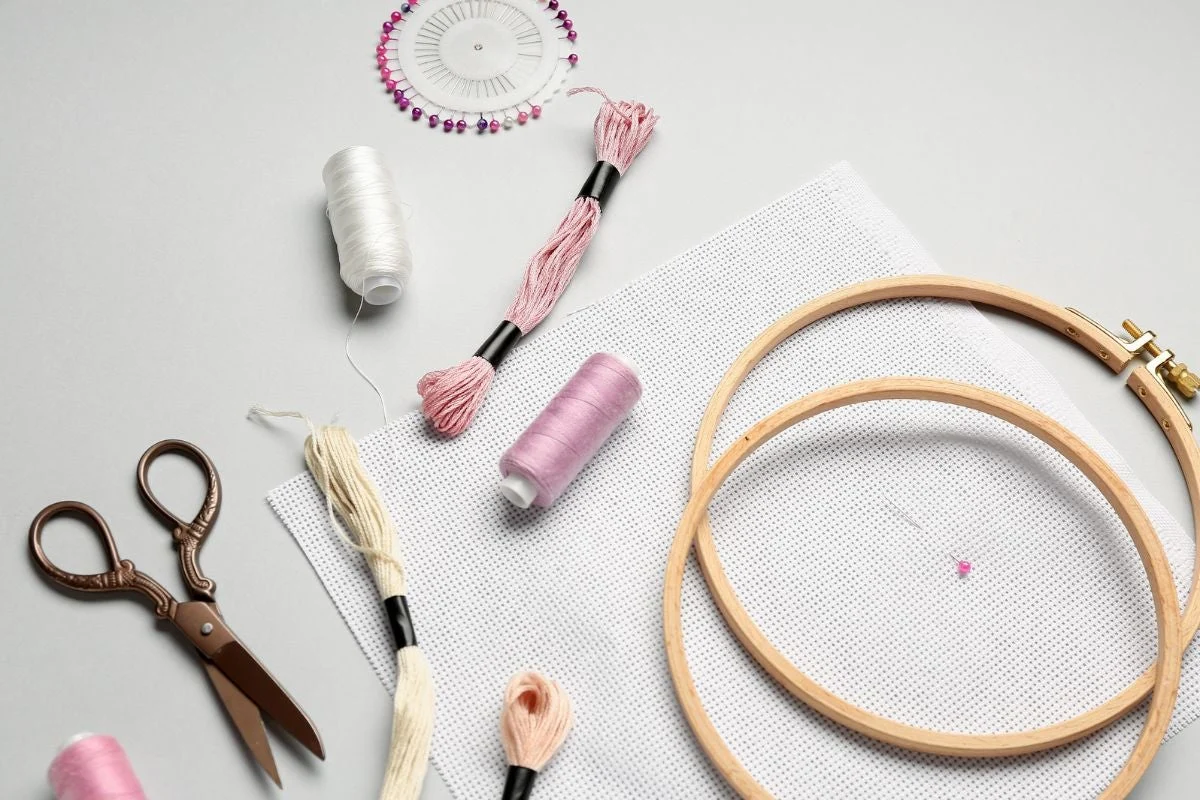
Laufer’s transformation is not merely a psychological shift; it is actively manifested in her weekly schedule and leisure habits. She plays mah jongg, she teaches mah jongg, and she holds remarkably strong opinions regarding the quality, texture, and authenticity of mah jongg tiles. Alongside her devotion to the tiles, she has become an avid needlepointer, accumulating an ever-growing inventory of blank canvases, making an alarming financial investment in a rainbow of colorful threads, and developing equally fervent opinions about stitching techniques and materials. Somewhere along the way, her precious free time became entirely devoted to what contemporary internet culture has affectionately dubbed "granny hobbies."
And as it turns out, she couldn’t be happier about it.
As a Reform rabbi and a mother of two children, Laufer spends the vast majority of her waking life thinking about, anticipating, and tending to other people’s needs, schedules, and spiritual or emotional experiences. Her profession—which she genuinely loves—is fundamentally centered on building community, fostering connections, and holding space for others. Furthermore, like countless women navigating the modern landscape, she also carries the heavy, often invisible burden of managing the endless logistics and mental load of family and household life.
What she had not anticipated, however, was that embracing these so-called granny hobbies would deliver something she did not necessarily know she was actively looking for in her late 40s: entirely new friendships, profound creative fulfillment, and dedicated spaces where she could simply show up, drop the weight of responsibility, and enjoy herself purely for the sake of enjoyment.
Reflecting on this unexpected pivot, Laufer has begun to wonder whether our grandmothers, and the generations of women who came before them, instinctively understood something vital that contemporary women have simply been too busy, stressed, and overextended to truly appreciate. There is something profoundly unique and restorative about gathering around a mah jongg table, an atmosphere distinct even from traditional sacred spaces like a Shabbat dinner table or a Passover seder table.
For generations, women have historically been the primary architects of those other tables. They are the ones who traditionally ensure that the settings are immaculate, the festive meals are meticulously prepared, and the ancestral traditions are successfully passed down from one generation to the next. But at the mah jongg table, the dynamic shifts entirely. Women are not there to serve, host, or manage logistics; they are there for themselves. The tiles provide a structural reason and a welcoming excuse to come together on a regular basis, but the free-flowing conversations, the shared laughter, and the organic formation of deep friendships are what consistently keep them coming back week after week.
Laufer has discovered an almost identical phenomenon through her immersion in needlepoint. What might easily appear from the outside to be a solitary, quiet hobby has successfully introduced her to organized stitch nights, specialty needlepoint shops, vibrant online communities, and an entirely new, multifaceted circle of friends. Both pursuits come fully equipped with their own rich rituals, specialized vocabulary, generational traditions, and steep learning curves. More importantly, both hobbies are populated by enthusiastic people who are more than delighted to welcome newcomers into their slightly obsessive, deeply comforting worlds.
Illustrating the power of these unexpected connections, Laufer recalls a sunny Monday morning at a random mah jongg meetup where she happened to meet a woman who has since blossomed into a treasured friend, a trusted confidante, and her unofficial needlepoint sherpa. Thanks to the camaraderie found at regular stitch nights, she has found herself integrated into active group chats with women she likely never would have crossed paths with otherwise. In these digital and physical spaces, they swap creative ideas, share progress photos of ongoing projects, and converse about matters that extend far beyond threads and canvases. They share their oys and their joys, finding the exact kind of genuine belonging that Laufer spends so much of her professional life trying to cultivate for others—which is to say, they have built authentic, lasting friendships.
This realization has led Laufer, as a feminist scholar of Torah, to reexamine ancient texts through a fresh lens. In the biblical book of Exodus, as the Israelites diligently prepare to build the Mishkan—the portable sanctuary that will accompany them through their arduous journey across the wilderness—the Torah details the vital contributions of the women who spun the fabrics required for its construction.
Exodus 35:25 reads: "And all the skilled women spun with their own hands, and brought what they had spun, in blue, purple, and crimson yarns, and in fine linen."
As a scholar, Laufer has always been deeply captivated by this specific moment in sacred history. But as she officially enters her own "crone era," she finds herself wondering less about the physical objects they manufactured and considerably more about the interpersonal dynamics of what happened while they were sitting together making them.
In her mind’s eye, she pictures those ancient women gathered closely around their looms, talking animatedly about their children, their romantic relationships, their daily worries, and the general trials of their lives. She pictures them laughing, complaining, offering unsolicited advice, and simply listening to one another. In truth, she realizes, she is simply imagining her own friends and herself at a typical stitch night or during their weekly mah jongg game—albeit with significantly fewer snacks from Trader Joe’s.
Of course, the historical women of the Mishkan were not merely crafting items to pass the time or alleviate boredom. Their meticulous handiwork was destined to become an integral part of the sacred sanctuary where the entire Israelite community would gather. Yet, having spent ample time seated at mah jongg tables and participating in evening stitch circles, Laufer can state with absolute confidence that modern women are also making far more than physical needlepoint canvases or winning tile combinations. Through the intentional time they spend together, they are actively manufacturing friendships, forging resilient connections, and building robust communities.
Ultimately, Laufer has come to terms with the idea that becoming a stereotypical bubbe is not nearly the alarming developmental milestone she initially feared it might be. As it turns out, there is a remarkably long, rich, and honorable tradition of women making things with their hands—and in the process, making crucial time for themselves and one another.
She does, however, harbor one lingering historical suspicion: she strongly suspects that the industrious women of the Mishkan had far fewer options available when it came to choosing their threads.
