Nurturing Faith and Excellence: How Educators and Parents Are Introducing the Concept of ‘Ihsan’ to Young Children
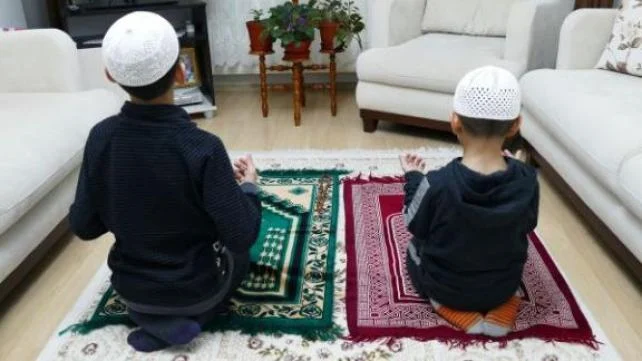
The concept of spiritual awareness—the deep-seated understanding that a higher power is constantly watching, guiding, and observing human actions—has long formed the bedrock of religious upbringing across various faiths. For one writer and educator who transitioned from a Catholic upbringing to Islam, this foundational awareness remained a constant thread. Growing up with the understanding of a Creator who is All-Hearing, All-Seeing, and All-Knowing naturally served as a moral compass, deterring wrongdoing and encouraging virtue. Upon embracing Islam, that same theological principle seamlessly carried over into a new way of life, anchoring a broader spiritual framework centered on three interconnected levels: Islam, iman, and ihsan.
Within Islamic theology, these three levels define the depth of a believer’s practice and connection to the divine. While foundational instruction traditionally focuses heavily on the outward practice of the five pillars of Islam and the six pillars of iman, or faith, the third and most advanced tier—ihsan, or spiritual excellence—often receives less attention in early childhood education. Defined explicitly in the revered Hadith of Jibril as worshiping Allah as though one sees Him, and knowing that even if He is not seen, He undoubtedly sees the worshiper, ihsan represents the pinnacle of God-consciousness, or taqwa.
Educators and parents are increasingly examining how this advanced spiritual concept can be made accessible to young minds. While children may not initially grasp the full metaphysical depth of ihsan, early childhood specialists suggest that introducing the core sentiment—teaching children that Allah sees their efforts, recognizes their good deeds, and remains aware of them even when no one else is watching—can lay a robust foundation for lifelong spiritual development. Simple, everyday reminders help bridge the gap between abstract theology and a child’s lived experience, transforming spiritual education from a rigid set of rules into a deeply personal relationship with the Creator.
The Hadith of Jibril, an authentic prophetic narration that serves as a cornerstone for Islamic studies, offers a natural narrative vehicle for introducing these concepts. Beyond its doctrinal significance, the narration is widely regarded as a storytelling masterpiece. It details the striking arrival of a mysterious traveler—described as wearing exceptionally white clothes with deep black hair and bearing no signs of a physical journey—who approaches the Prophet Muhammad and sits knee-to-knee with him in front of his companions. Through a structured dialogue, the stranger asks sequential questions about Islam, faith, and excellence before departing, only to be revealed later by the Prophet as the Angel Gabriel, who came to teach the community its religion.
Because of its comprehensive narrative structure, the Hadith of Jibril is frequently utilized to introduce Islamic studies to audiences of all ages. For young children, parents and educators often focus specifically on the sequential inquiry into Islam, iman, and ihsan, leaving more complex eschatological discussions, such as the inquiries regarding the Hour, for later developmental stages.
Some parents have taken creative approaches to make this prophetic narration accessible to toddlers and young children. One educator, reflecting on her own experience raising bilingual children, transformed the narrative of the Hadith of Jibril into an illustrated picture book. By retelling the story in accessible language and pairing it with colorful imagery depicting the historical setting—while carefully avoiding any visual depiction of the Prophet Muhammad or his companions—the project aimed to share the foundational text with her children in both Spanish and English. While self-publishing bilingual picture books is by no means a mandatory requirement for parents, the effort highlights a growing demand for creative, age-appropriate resources that translate classical Islamic texts into engaging modern formats.
The core narrative of the Hadith, as preserved in historical collections such as Sahih Muslim, outlines these progressive dimensions of faith:
Umar ibn al-Khattab reported that while sitting with the Messenger of Allah, a man appeared whose appearance was immaculate yet unfamiliar. The man asked the Prophet to define Islam, to which the Prophet replied that Islam is testifying to the oneness of God and the messengership of Muhammad, establishing prayer, giving charity, fasting during Ramadan, and performing the pilgrimage if able. Upon hearing this, the stranger verified the truth of the answer, prompting surprise among the observing companions. The man then asked about faith, receiving an explanation that encompassed belief in Allah, His angels, His holy books, His messengers, the Last Day, and divine decree, both its good and its harm.
After again validating the response, the stranger posed his final core question regarding excellence. The Prophet answered that excellence is to worship Allah as if one sees Him, for if He is not seen, He surely sees the worshiper. Following the stranger’s departure, the Prophet revealed to Umar that the visitor was the Angel Gabriel, dispatched to instruct the community in their faith.
This multi-tiered framework illustrates that religious knowledge and spiritual maturity are progressive, unfolding over time through patience, practice, and persistence. Educators note that this developmental perspective can be deeply encouraging for children, framing spiritual growth not as an instant perfection but as a continuous journey involving the intellect, heart, and spirit. By encouraging children to reflect on their surroundings, notice the signs of creation, and connect daily experiences with divine awareness, parents can cultivate a natural and enduring sense of God-consciousness.
Integrating these lessons into daily life does not require formal classroom settings; rather, it thrives through gentle, organic reminders woven into everyday conversations. Parents often use relatable scenarios to help children internalize the omnipresence of the divine. Simple prompts—such as asking children why they would not take something from a store without paying, and discussing concepts like hidden surveillance cameras—can smoothly transition into broader conversations about integrity. These dialogues help children understand that moral behavior matters even in total privacy, because Allah is constantly aware of human actions.
Furthermore, striving for ihsan involves active spiritual practice through sincere worship, including supplication, remembrance, and focused prayer. By encouraging children to minimize distractions during worship and incorporating regular moments of remembrance into their daily routines, families can foster a deeper, more mindful relationship with the Creator. Viewing spiritual growth as a progression—from practicing Islam outwardly as a Muslim, to internalizing belief as a believer, and ultimately striving for excellence as a muhsin—provides children with a tangible framework for understanding their faith as a lifelong journey toward spiritual closeness.
